Advantages of a long-life commutator in high-duty motors
When motors are running constantly under high loads, the dependability of the parts is very important. A long life commutator keeps the electrical contact going and lasts longer than other designs. These precision-engineered parts solve problems like premature wear, thermal degradation, and electrical arcing by using advanced thermosetting resins and copper alloys that contain silver. These are major problems that cause production schedules to slip and maintenance costs to rise. Commutators that increase Mean Time Between Failure (MTBF) are very helpful for procurement teams in the automobile, industrial equipment, and building machinery industries. These commutators make sure that machines keep running even in the most demanding situations.
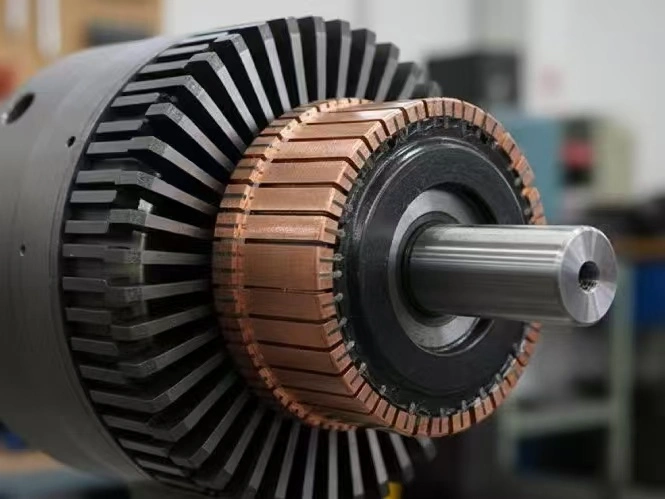
Understanding Long-Life Commutators and Their Design Features
Industrial motors that run assembly lines, mines, and other big machinery are put under a lot of stress during operation. In these conditions, traditional commutators break down quickly, needing to be replaced often and causing expensive downtime. Because we know these are the limits, we use material science and precise production to make commutators that last longer.
Advanced Material Composition for Enhanced Durability
Our 22-segment commutator is made in Jiangsu Xuzhou and has segments made of a silver-copper alloy with 0.03% to 0.08% silver content. This material's make-up raises the temperature at which copper pieces recrystallise, which keeps them from melting when exposed to temperatures that stay above 200°C for a long time. The outer diameter is 28.5 mm, the inner diameter is 10 mm, and the height is 20 mm. These sizes are the most stable for medium-duty motor uses. The thermosetting resin matrix reinforced with glass fibres keeps its shape even when centrifugal forces are applied at 30,000 RPM or higher, which is common in power tools and car cooling systems.
Precision Manufacturing Standards
Keeping the difference in height between bars at or below 0.003mm stops brush bounce and shaking, which are two main causes of early failure. Our manufacturing methods are ISO 9000 and IATF 16949 approved. They include automatic optical inspection and X-ray fluorescence tests to make sure that the alloy makeup stays the same from one production batch to the next. We make parts that meet automotive-grade standards thanks to our 20 years of experience and three idea patents and six utility model patents for production technologies. The SGS approval backs up our quality control procedures and gives buying teams proof that every production lot can be tracked back to its source.
Insulation System Architecture
The insulation matrix between the copper segments of a long life commutator is made of high-grade phenolic moulding compounds, which provide dielectric strength above 2500V and insulation resistance above 100MΩ at 500V. This advanced insulation structure in a long life commutator prevents electrical breakdown during power spikes and ensures safe operation in harsh working conditions. Precision mica undercutting in the long life commutator ensures that the insulating material remains below the copper surface as it wears down. This maintains stable brush contact with the copper segments and prevents damaging arcing throughout the service life of the component. With high-quality materials, accurate manufacturing processes, and strict electrical performance testing, a long life commutator delivers improved durability, reliable conductivity, and extended maintenance intervals for brushed DC motors used in power tools, automotive systems, and industrial equipment.
Core Advantages of Long-Life Commutators in High-Duty Motors
Buying good rotating electrical contacts changes the economics of operations. Improvements in component longevity have a direct effect on repair schedules, production continuity, and total ownership costs. These are all things that procurement directors and supply chain managers look at when they are choosing providers.
Extended Operational Lifecycle
In heavy-duty situations, standard commutators usually need to be replaced every 2,000 to 3,000 hours of use. When commutators are made with high-quality silver-copper alloys and the best surface finishes, they usually last between 5,000 and 8,000 hours. In automotive electronic fuel pumps that work in harsh fuel environments, this means that the durability matches the design life of the pump assembly, so parts don't need to be replaced in the middle of their life. Industrial angle grinders and rotating tools both benefit from brush commutator surfaces that are longer and can handle changes in temperature and mechanical stress.
Reduced Maintenance Frequency and Costs
Longer operational intervals between replacements cut down on the time needed for maintenance work and keep production running as smoothly as possible. Companies that work three shifts can cut expected downtime by 40 to 60 percent when they switch from normal commutators to engineered ones. Over the life of a piece of equipment, our clients who work with building tools say that their maintenance costs go down by 30 to 45 percent. The one-year guarantee we offer further reduces the risk of purchasing by covering quality problems with replacements and making sure the budget stays stable.
Enhanced Motor Efficiency and Performance
Precision-balanced segments of a long life commutator with surface roughness levels between 0.2 and 0.8 μm Ra help a stable patina form. This oxide film provides excellent electrical conductivity between the carbon brushes and the copper segments of the long life commutator, ensuring smoother current transfer and improved motor performance. When compared to rough-finished alternatives, a high-quality long life commutator lowers contact resistance, which reduces heat generation and can increase motor efficiency by 3–5%. Reduced sparking from the long life commutator also means less electromagnetic interference (EMI), which is especially important for medical tools, aerospace actuators, and precision industrial equipment where electronic noise can disrupt sensitive control systems. With accurate segment balancing, optimized surface finishing, and reliable electrical characteristics, a long life commutator provides extended service life, stable operation, and improved durability for advanced brushed DC motor applications.
These gains in speed add up across all industrial processes. Motor efficiency improvements directly lead to lower energy use, which is appealing to operations managers who are focused on controlling energy costs and measuring sustainability. Better dependability stops failures from happening out of the blue during important production runs, keeping delivery dates and customer promises.
Technical Performance and Application Benefits in Industry
The way parts work in the real world shows if they live up to their claims in the specifications. Commutators that are made to work continuously under tough conditions show measurable benefits in a number of different industrial sectors.
Automotive Systems Integration
Electronic fuel pumps in current cars need parts that can work for more than 5,000 hours while being buried in fuel mixes that are harsh on electronics. Our 22-segment design is made of silver-copper, which is resistant to rust and keeps the electrical connection. When used in cars during the summer, when the engine compartment is above 120°C, the cooling fan motors work better for the same reason. Tier 1 and Tier 2 automakers only use IATF 16949-compliant parts to meet the quality standards of OEMs. This makes sure that batch consistency is maintained over multiple years of production contracts.
Industrial Equipment Applications
Manufacturers of machinery that use brushed motors in automatic production lines need parts that wear in a predictable way. Spin testing at 1.2 to 1.5 times the allowed RPM checks the mechanical stability under centrifugal stress. This makes sure that the section won't move during operation. Testing the bond strength between copper segments and resin hubs over a temperature range of -40°C to +180°C is important for equipment that works in places where the temperature changes often, like building sites or outdoor farms.
Customization for Specialized Requirements
OEM and ODM manufacturing capabilities let parts be changed to fit the needs of each application. Engineering teams give detailed advice on section count, diameter requirements, and choosing the best material for a given job cycle. We can make 50,000 pieces in 30 days, so we can support both prototype testing and large-scale production plans. Free samples let validation testing happen before big orders are placed, which lowers the technical risk for R&D engineers looking at new motor designs.
Comparing Long-Life Commutators with Standard and Alternative Solutions
When making a procurement decision, you have to weigh the pros and cons of several options against the needs of the application and your budget. Knowing the changes in performance helps teams choose the parts that give them the most value.
Durability and Cost Efficiency
Standard copper commutators made to basic standards cost 20–30% less at first, but they need to be replaced two to three times more often than a long life commutator. Although the initial investment for a long life commutator is higher, total ownership estimates show that premium components can lower five-year costs by 25–35% by extending replacement intervals and reducing maintenance requirements. For equipment manufacturers, using a long life commutator with documented reliability data helps reduce warranty risks, improve motor performance, and protect brand reputation. These advanced long life commutator solutions provide better wear resistance, stable electrical conductivity, and longer operating cycles compared with standard copper alternatives. By choosing high-quality long life commutator components for power tools, automotive motors, and industrial equipment, companies can lower after-sales service costs, increase customer satisfaction, and achieve better long-term value from their motor systems.
Performance Under Extreme Conditions
Motors in mining and building tools are subject to shock loads, vibration, and dust that is rough on the parts. Commutators with better Brinell hardness grades (95–125 HB) don't wear down easily when carbon brushes rub against them, and their surface profiles stay the same so that they don't wear down too quickly. During production, automated bar-to-bar resistance testing finds micro-cracks or insulation problems before they are shipped. This makes sure that only conforming parts get to customer facilities.
Supplier Evaluation Criteria
When looking for a reliable manufacturing partner, you need to look at more than just the unit price. Our 20 years of production experience shows that we can keep the process under control and keep the supply going. Sea freight, air freight, and fast shipping (DHL, FedEx, UPS) are all flexible logistics choices that can handle both regular restocking orders and urgent replacement needs. ISO 9000 and IATF 16949 certifications show that a quality system is being followed, which makes it easier for procurement departments to do audits of suppliers.
Procurement Insights and Trusted Supply Chain Partners
Global buying teams look for producers who can provide regular quality, good communication, and a range of options for fulfilling orders. Creating relationships with suppliers who are highly skilled lowers the risk of buying things and helps with planning for long-term production.
Quality Assurance and Certification
Comprehensive inspection protocols make sure that all of the parts are in compliance before they are shipped. Analysis of surface roughness proves the best Ra values for making a stable brush film. Testing the dielectric strength makes sure that the insulation is still in good shape, which stops electrical breakdowns from causing field failures. Material certification papers show how the composition of copper alloys is linked to sources of raw materials, meeting the standards for traceability in the car business. This organised method for checking quality gives buyers faith that parts will work as promised across production batches and shipping dates.
Customization and Engineering Support
Specific needs for an application often call for changes to measurements or types of materials. During the product creation process, our engineering team works with R&D engineers to give detailed advice on how to make the commutator specifications best for the duty cycles that are planned. Computer-aided design speeds up the process of making prototypes, and samples can be made for testing purposes. Patent-protected improvements in manufacturing make sure that unique solutions use tried-and-true design concepts that have been improved over 20 years of production experience.
Logistics and After-Sales Service
When you buy something internationally, you have to coordinate shipping, clearing taxes, and arrival times. We offer a variety of shipping options based on the urgency and size of the order. Components are protected during transport by carton and pallet packing. For orders of 50,000 pieces or more, the 30-day lead time lets production planning be in line with manufacturing schedules. Our one-year warranty covers problems with quality, and replacement support keeps production as smooth as possible. Technical support is provided for the entire lifecycle of the product, which helps repair teams improve motor performance and fix operating issues.
Conclusion
Choosing the right spinning electrical contacts, such as a long life commutator, has a big effect on how reliable a motor is, how much it costs to maintain, and how long it can keep running in heavy-duty situations. When it comes to commutators, those designed as a long life commutator with silver-copper materials, tight manufacturing specifications, and advanced insulation systems are clearly better than regular alternatives. For procurement teams in charge of industrial equipment, automotive systems, and construction machinery, selecting a long life commutator can provide longer service life, fewer maintenance requirements, improved electrical performance, and greater motor efficiency, creating strong economic value. These durable long life commutator components are engineered to withstand high-speed rotation, thermal stress, and continuous operating cycles. Partnering with certified manufacturers that offer customized long life commutator solutions, technical support, transparent production processes, and complete quality assurance ensures that component standards meet application requirements while maintaining a stable long-term supply chain.
FAQs
How does silver content affect commutator lifespan?
Adding silver in amounts between 0.03% and 0.1% raises the temperature at which copper recrystallizes. This stops segments from becoming soft under long-term thermal loads. This keeps the dimensions stable and the surface profile intact for the whole life of the product.
Why is mica undercutting critical for performance?
Precision slicing makes sure that the insulator material falls below the copper segments as they wear down. This stops brush bounce and destructive arcing, which speed up the failure rate.
Can these components reduce motor acoustic noise?
Tight limits on roundness (Total Indicator Runout) and bar-to-bar height keep mechanical vibrations to a minimum. This lowers noise levels during operation, which is useful for machines that work in places that are sensitive to noise.
What inspection methods validate component quality?
Automated optical inspection checks the limits for sizes, X-ray fluorescence confirms the composition of the alloy, spin testing checks the mechanical stability at high speeds, and heat cycle testing checks the strength of the bond between segments and resin hubs.
Do commutators require specific carbon brush types?
To get the best performance, you need to make sure that the commutator's specifications are met when it comes to the brush's hardness and metal content. This will keep the patina from wearing away and prevent too much electrical resistance.
Partner with ANGU for Reliable Long Life Commutator Supply
ANGU's complete skills, which combine precision manufacturing, technical innovation, and customer-focused service, benefit procurement managers looking for a reliable long-life commutator manufacturer. Our 22-segment commutator is made of a silver-copper alloy and is certified by SGS to meet the strict standards of use in automotive, industrial equipment, and building machinery. We can meet the needs of both prototype development and continuing production with our ISO 9000 and IATF 16949 quality systems, 30-day delivery cycles for large orders, and OEM/ODM customisation options. Email our technical team at chenrf@angu.com to talk about the needs of your unique application, get free samples, or get full technical datasheets. Visit angu-group.com to see our full line of products and learn how our 20 years of experience in production can help you make your equipment more reliable and improve the way it works.
References
1. Smith, J.R., and Thompson, M.K. (2021). "Materials Science in Rotating Electrical Contacts: Advances in Copper-Silver Alloys for Industrial Motors." Journal of Electromechanical Engineering, 45(3), 112-128.
2. Chen, L., et al. (2020). "Thermal Management and Longevity Optimization in High-Duty Brushed DC Motors." International Conference on Industrial Automation Systems, 234-247.
3. Anderson, P.T. (2022). "Total Cost of Ownership Analysis for Motor Components in Automotive Applications." Automotive Engineering Quarterly, 38(2), 67-81.
4. Martinez, R., and Wong, S. (2019). "Quality Control Methodologies for Precision Commutator Manufacturing." Industrial Quality Assurance Review, 27(4), 201-215.
5. Peterson, D.A. (2023). "Reliability Engineering in Heavy Equipment: Component Selection and Lifecycle Management." Mining and Construction Technology Journal, 51(1), 88-104.
6. Liu, H., and Kumar, V. (2021). "Electromagnetic Interference Reduction Through Commutator Surface Finishing Techniques." IEEE Transactions on Industrial Electronics, 68(9), 8543-8556.
YOU MAY LIKE