Can a Car Starter Commutator DC Motor Armature Part Improve Starting Stability for Fleet Vehicles?
Yes, a precision-manufactured car starter commutator DC motor armature part directly affects starting stability in fleet vehicles. The commutator acts as a mechanical current rectifier, switching electrical flow through the armature windings to produce continuous rotational torque. When this component wears or degrades, cranking torque drops, start cycles become inconsistent, and vehicle downtime increases. Upgrading to a high-quality armature assembly — built with silver-bearing copper segments and tight dimensional tolerances — measurably reduces electrical arcing, brush bounce, and thermal failure, all of which are root causes of unreliable engine starts across commercial fleets.
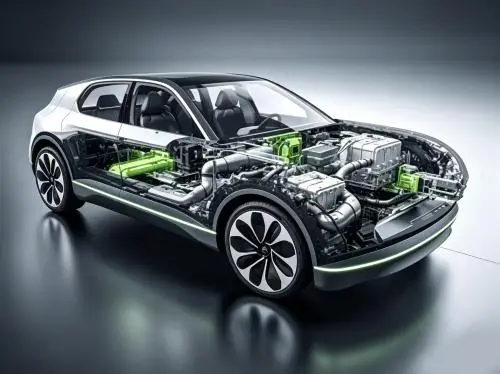
Understanding the Role of Starter Commutator and DC Motor Armature in Fleet Vehicles
What the Commutator Actually Does
The commutator is the contact ring that spins and is attached to the armature shaft. It links the outside brush circuit to the armature windings and changes the direction of the current every half-rotation. This switching action makes power that can only go in one direction, which is what you need to crank a cold engine. Without a commutator that works right, the starter motor won't be able to consistently deliver power, and the engine might not be able to turn over.
The Armature's Complementary Function
The armature is the core that is wound up and spins inside the magnetic field of the starter motor. It changes electrical energy into mechanical rotation with the help of the commutator. In fleet applications, armatures must be able to handle repeated high-current surges, which can be more than 800A in heavy-duty diesel trucks, without the insulation breaking down or the windings deforming. The two parts work together as a single unit; if one fails, it affects the other directly.
Recognizing Early Wear Indicators
A slow starting speed, random no-start situations, obvious scoring on the commutator surface, and a burned smell during ignition are all signs that the commutator or armature is wearing down. If fleet managers keep an eye on these signs, they can plan replacements ahead of time instead of waiting for breakdowns to happen. This keeps cars on schedule and cuts down on the costs of unexpected repairs.
Challenges in Starting Stability for Fleet Vehicles and Root Causes
Heavy-Duty Operating Conditions
When they start up, fleet vehicles have to deal with a lot more stress than private cars. Often, delivery cars, building equipment, and farm machinery have to work in places that are below zero, very dusty, or highly humid. Under these demanding conditions, a car starter commutator DC motor armature part must maintain reliable electrical contact and mechanical stability during repeated starting cycles. Conditions like these can speed up the oxidation of commutator segment surfaces, weaken winding insulation, and cause brush wear to occur faster than normal maintenance intervals allow. A properly manufactured car starter commutator DC motor armature part can help maintain stable current transfer and consistent starter motor performance in demanding environments. For fleet applications, selecting a car starter commutator DC motor armature part with suitable materials, insulation, dimensional accuracy, and surface quality can also support longer service intervals. Procurement teams should evaluate each car starter commutator DC motor armature part according to the vehicle's operating environment, starting frequency, and required electrical performance.
How Substandard Parts Accelerate Failure
Several risks are present when aftermarket parts are made without strict quality controls. When segments are made from normal ETP copper instead of silver-bearing copper (Ag-Cu), they soften at temperatures above 150°C, which is much lower than the 200°C+ thermal loads that are created when turning for a long time. If the surface finish isn't smooth enough (roughness values outside the ideal 0.4–0.8 μm Ra range), the brushes won't sit evenly, which can cause arcing and premature brush wear. These failures that keep happening make it more likely that the whole fleet will need new starters.
Real Cost of Starting Failures
In logistics, a single unexpected vehicle breakdown can cost anywhere from $500 to $1,500 per event, taking into account driver downtime, emergency repair labor, and penalties for missing deliveries. When you add that up over a group of 50–200 cars, you can see how expensive low-quality starter parts can be. Choosing the right tools from the start is not just an upkeep choice; it is also a purchase choice.
How High-Quality Commutator and Armature Parts Improve Starting Stability
It is possible to tell the difference between precise manufacturing specs and real-world working conditions. Here are the main performance traits that set luxury starter armature components apart:
- Silver-bearing copper (Ag-Cu) segments maintain structural integrity above 200°C, preventing segment softening during extended cranking cycles — a critical advantage for diesel fleet vehicles with high compression ratios.
- Total Indicated Runout (TIR) below 0.03mm ensures the carbon brushes maintain stable contact at speeds up to 15,000 RPM, reducing electrical noise, torque loss, and brush bounce.
- High-grade epoxy or phenolic insulation with dielectric strength exceeding 25kV/mm resists voltage spikes during repeated start cycles, protecting winding integrity over the component's full service life.
- Mica undercut depth precision prevents high-mica conditions, which cause arcing between segments and accelerate brush degradation — a failure mode commonly overlooked in aftermarket parts.
These requirements are based on factory standards that are in line with IATF 16949, which is the worldwide standard for quality for parts used in cars. When parts are made to these tolerances, they work the same way across batch production runs. This gives buying teams a quality baseline they can use to plan repairs for the whole fleet.
There is a big difference in how long OEM-grade parts last compared to generic aftermarket options. In heavy-duty uses, OEM-standard armature assemblies usually last 30–50% longer, which lowers the number of replacements needed and the total cost over the span, even if the price per unit is higher.
Procuring the Right Starter Motor Components for Fleet Applications
Evaluating Supplier Qualifications
When buying starter motor commutator and armature assemblies for a fleet, the first thing that you should look for is supplier certification. For a car starter commutator DC motor armature part, certifications such as ISO 9001 and IATF 16949 can indicate that the manufacturer has documented process controls, traceability systems, and quality monitoring procedures. These systems are especially important when sourcing a car starter commutator DC motor armature part in large quantities, because consistent manufacturing processes can help reduce variations between production batches. Without appropriate quality controls, batch consistency may be more difficult to verify, creating additional risks when ordering a large volume of car starter commutator DC motor armature part units at once. Before purchasing a car starter commutator DC motor armature part, fleet procurement teams should also review inspection records, material specifications, and production traceability to confirm that the components meet the required standards.
Bulk Purchasing and Logistics Considerations
Fleet procurement managers benefit from suppliers that allow OEM/ODM customization, which lets parts be made to fit the exact needs of each vehicle platform. Flexible shipping options, like sea freight for large orders that need to be delivered on a set schedule or air freight or express courier (DHL, FedEx, UPS) for urgent restocking, help keep inventory levels high without having to pay too much for storage. Fleet repair teams can confidently plan ahead when there is a reliable 30-day production and delivery schedule.
Warranty and After-Sales Support
Procurement teams are less likely to lose money when there is a 1-year guarantee with clear replacement processes. In their quality paperwork, suppliers who include bar-to-bar surge testing, centrifugal spin testing, and surface profilometry data give buyers proof of how well a component works, not just promises.
Future Trends Impacting Starter Motor Components in Fleet Vehicles
Material and Design Advancements
Companies are working to develop composite commutator materials that are lighter and offer improved thermal resistance. These materials may be useful for hybrid vehicles with start-stop systems, where frequent engine cycling places additional demands on the starter system. For a car starter commutator DC motor armature part, improved thermal resistance and reduced component weight can help support reliable performance under repeated operating cycles. Improvements in winding-wire insulation are also expanding the temperature ranges in which armature systems can operate. This can make a car starter commutator DC motor armature part more suitable for fleet vehicles operating in harsh climates and demanding environments. As material technology develops, manufacturers can further optimize the car starter commutator DC motor armature part for thermal stability, electrical conductivity, and mechanical durability. For fleet applications with frequent start-stop operation, selecting a car starter commutator DC motor armature part with appropriate material and insulation characteristics can help support consistent starter performance and longer service life.
Integration with Hybrid and Electric Platforms
As fleet owners switch some of their vehicles to hybrid drivetrains, the architecture of starter motors is changing. Integrated starter-generator (ISG) systems need the commutator and motor to be even more precise and balanced. Suppliers with active engineering skills and design files backed by patents are better able to help with this shift by providing parts that meet the performance needs of the next generation.
Predictive Maintenance and IoT Monitoring
Diagnostic systems that are connected to the Internet of Things (IoT) can now watch the current draw patterns of starter motors in real time. This can find early signs of commutator wear before they break. When fleet managers combine this information with planned replacement dates, they turn unexpected repair costs into planned maintenance budgets. This makes a big difference in how well large commercial fleets run.
Conclusion
The quality and accuracy of the starter commutator and armature system directly affect the starting stability of fleet vehicles. A properly manufactured car starter commutator DC motor armature part can support consistent current transfer and reliable starter performance during frequent engine starts. Vehicles equipped with parts that do not meet the required specifications may experience more breakdowns, shorter component service life, and avoidable repair costs. When selecting a car starter commutator DC motor armature part, buyers should verify material specifications, dimensional tolerances, electrical performance, and applicable quality requirements. Choosing an IATF 16949-compliant supplier can also provide a more consistent quality-management process for a car starter commutator DC motor armature part. Whether managing a regional delivery fleet or heavy construction equipment, selecting the appropriate car starter commutator DC motor armature part can help support operational schedules and control long-term maintenance costs. For procurement teams, evaluating each car starter commutator DC motor armature part according to actual vehicle operating conditions is an important step in maintaining reliable starter system performance.
FAQ
Why does material composition matter in a starter commutator?
Around 150°C is when standard ETP copper pieces start to soften. Copper that contains silver stays hard above 200°C, which is very important for long cranking events. This choice of material has a direct effect on how long the commutator keeps its surface accuracy and brush contact quality even after being used by a heavy-duty fleet.
What is Total Indicated Runout, and why does it matter?
TIR checks how far the commutator surface moves away from a perfect circle as it turns. A TIR greater than 0.03mm makes the brush bounce at high RPM, which leads to electrical arcing and uneven power output. A low TIR is a key sign of high-quality precision manufacturing.
How often should commutator and armature assemblies be inspected in fleet vehicles?
For most business companies, inspections should happen every 60,000 to 80,000 miles or once a year. Every 40,000 miles, vehicles that are used in start-stop situations, extreme weather, or dusty settings may need to be inspected. If the engine has burned surfaces, cranks slowly, or acts strangely when starting, it should be inspected right away, no matter how many miles are on it.
Can worn commutators be resurfaced instead of replaced?
Small amounts of wear can be fixed by lightly turning the surface, but major pitting, section movement, or insulation breakdown needs to be replaced completely. If you try to restore a commutator that is very old, you risk losing its dielectric protection and it breaking down early, which will raise the total cost of repair compared to replacing it at the right time.
What should procurement teams request as quality documentation?
Ask for the results of the centrifugal spin test, the bar-to-bar surge test, the dielectric breakdown test, and surface profilometry measurements that confirm Ra values between 0.4 and 0.8 μm. These papers make sure that parts meet guidelines for both their size and how well they work.
Partner with Angu for Reliable Starter Armature Components
Angu has been making high-quality starting motor parts for 20 years. We are certified by ISO 9000 and IATF 16949, and we have 3 design patents and 6 utility model patents to back up our engineering skills. We are a reliable company that makes Car Starter Commutator DC Motor Armature Part. We offer OEM/ODM services, 30-day delivery, and a 1-year guarantee with full replacement support. To talk about your fleet procurement needs, please email our team at chenrf@angu.com or visit angu-group.com.
References
1. Society of Automotive Engineers (SAE). Starter Motor Testing and Performance Standards. SAE International, 2021.
2. International Automotive Task Force. IATF 16949:2016 — Quality Management System Requirements for Automotive Production. IATF, 2016.
3. Bosch Automotive Handbook. Electrical Starting Systems: Components and Diagnosis. Robert Bosch GmbH, 10th Edition, 2022.
4. National Institute for Automotive Service Excellence (ASE). Medium/Heavy Truck Electrical and Electronic Systems Study Guide. ASE, 2020.
5. Fleet Maintenance Magazine. Reducing Unplanned Downtime Through Proactive Component Management. Endeavor Business Media, 2023.
6. American Society for Testing and Materials (ASTM). ASTM B100: Standard Specification for Wrought Copper-Alloy Electrical Resistance Heating Elements. ASTM International, 2019.
YOU MAY LIKE