Compact Silent Commutator Guarantee Smooth Push-Pull of Linear Actuators
When linear actuators fail to deliver quiet, precise motion, the culprit often lies within the motor's commutation system. A low noise motor commutator addresses this challenge by reducing acoustic emissions and electromagnetic interference during energy transfer between brushes and the rotating armature. Unlike conventional designs, these precision-engineered components feature tight tolerances on surface finish and geometry, preventing the vibration and arcing that compromise operational silence. This advancement proves critical for industries where even minor noise disruptions—whether in automotive seat adjustments, industrial automation equipment, or medical devices—can degrade product quality and user satisfaction.
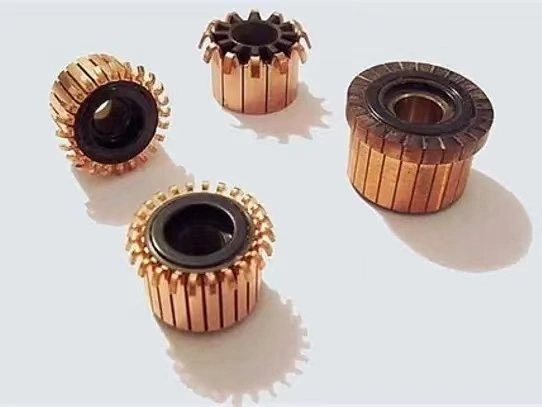
Understanding the Role of Low Noise Motor Commutators in Linear Actuators
Linear actuators change rotational motion into linear push-pull movements. They are used in a huge range of industrial and business settings. The commutator is a mechanical spinning switch that sends electricity to the motor's armature windings. It is the heart of this change. There are three main ways that traditional commutators make noise: brush contact friction against the commutator surface, electrical sparking during current switching, and mechanical sounds from segments that aren't perfectly round or aligned.
How Noise Disrupts Linear Actuator Performance
Acoustic disturbances from commutators make it hard to do a number of things. In cars, noise from electric window regulators or HVAC blowers takes away from the high-end experience that buyers expect. When equipment noise goes over safety limits in an industrial automation setting, it lowers productivity because of the need for expensive sound barriers or hearing protection programs. Medical equipment makers have a hard time keeping up with strict decibel limits for patient comfort. This is especially true for diagnostic devices like CPAP machines, where motor noise can make sleep treatments less effective.
The Mechanics of Noise Reduction Technology
Silent commutators use precise manufacturing methods to cut down on noise signatures. Surface roughness levels below 0.2μm Ra make the contact between the brush and the segment smoother, getting rid of the tiny impacts that cause high-frequency squealing. Total Indicated Runout measurements kept below 0.005mm make sure that the rotation is perfectly circular, which stops the rhythmic thumping that happens with eccentric commutators. Copper metals with silver (usually between 0.03% and 0.1% silver) improve thermal conductivity while keeping their shape at high temperatures. This stops the thermal expansion that leads to noise getting louder over time.
Impact on Equipment Longevity and Reliability
In addition to reducing noise right away, silent commutation technology also increases the service life of linear actuators by lowering the wear on their parts. A low noise motor commutator supports smoother electrical switching and can help reduce mechanical and electrical stress during continuous operation. To make a stable patina layer between the commutator segments and brushes, they need to be the right hardness—usually between 80 and 110 HV on the Vickers scale. Compared to standard commutators, this low-friction interface cuts carbon brush wear by up to 30%. A well-designed low noise motor commutator can therefore contribute to longer brush life and more consistent actuator performance. This means that repair times are longer and the total cost of ownership is lower for procurement teams that are in charge of large equipment fleets. Selecting a reliable low noise motor commutator can further support quieter operation, reduced component wear, and longer maintenance intervals.
Design Principles That Ensure Compactness and Silence in Motor Commutators
Choosing the right materials and being very precise with the shapes are needed to get both compactness and good sound performance at the same time. The problem gets worse as motor speeds go up, because current applications need them to work quietly at speeds over 10,000 RPM in housings that are limited in room.
Precision Segmentation and Material Engineering
The ANGU 24-segment commutator is an example of modern design. It has a height of 20mm, an outer diameter of 28.5mm, and an inner diameter of 12mm. This small shape fits inside tight actuator housings and has room for the 24 carefully machined copper segments that are needed for smooth current flow. Each segment is checked one at a time to make sure that the measurements are accurate to within a few microns. This makes sure that the contact pressure stays the same across the brush interface during the whole rotation cycle.
The way a material is put together directly affects both how noisy it is and how long it lasts. The electrical conductivity of silver copper alloy (Tuy Silver Copper grades 03 or 08) is better than that of pure electrolytic copper. The silver content raises the softening temperature so that the geometry stays accurate during thermal cycling. The strengthened phenolic resin hub keeps its shape at temperatures ranging from -40°C to 180°C, and it meets the Class F and Class H insulation standards needed for heavy-duty industrial uses.
Vibration Dampening Through Mica Insulation
A common source of noise called "mica high" situation can be stopped by properly reducing the mica between the commutator segments. When insulation material sticks out past the copper pieces, brushes are hit over and over, making clicking sounds and speeding up wear. ANGU's production methods keep the mica undercut depths between 0.5mm and 0.8mm. This is checked using profilometry to make sure that there is no step height between pieces that are next to each other. This accuracy gets rid of brush jumping and the arcing noise that comes with it, which is a problem with less accurate commutators.
Comparative Performance Analysis
Silent commutator designs have measurable benefits that can be seen in testing data from ISO 9000 and IATF 16949 certified facilities. Standard commutators make 65–75 dB of noise at full speed, but precision-manufactured quiet versions lower this to 45–55 dB, which is a big difference for uses that can't handle noise. Also, electromagnetic interference is better controlled because fewer sparks are made, which lowers radio frequency interference that can mess up modern equipment's sensitive electronic controls.
When it comes to dynamic balance, the technical benefits go even further. Centrifugal spin tests at 1.5 times the rated speed confirms that segments are still attached without "bar rising," which happens when centrifugal forces are stronger than the adhesive between segments. This testing method makes sure that the linear actuator will work reliably in high-speed situations where the motor RPM changes quickly during push-pull cycling.
Maintenance and Troubleshooting Tips for Long-lasting Low Noise Motor Commutators
The working life of silent commutators is extended by following the right repair procedures. This protects purchase investments and reduces unplanned downtime. Based on what has been seen in the industry, proactive care strategies lead to three to five times longer service intervals than reactive maintenance strategies.
Establishing Effective Cleaning Protocols
Over time, carbon dust, external particles, and oil migration can make the commutator less effective. Regular cleaning is especially important for a low noise motor commutator, because conductive buildup can interfere with stable brush contact and increase electrical noise. Cleaning regularly with lint-free cloths dampened with electrical contact cleaner gets rid of conductive buildups that cause short circuits between segments. Do not use rough objects or strong cleaners that could damage the carefully machined surface finish of a low noise motor commutator. The frequency of inspections depends on the working environment. In clean industrial settings, inspections may only need to be done every three months, but in dusty or humid environments, they need to be done every month. Proper maintenance of a low noise motor commutator helps preserve reliable electrical contact, while regular inspection can reduce the risk of performance problems and extend component service life.
Brush Replacement and Alignment Procedures
In commutated motor systems, carbon brush wear is the main part that breaks down. Regularly check the length of the brushes and replace them when they hit the minimum safe length, which is usually when they are worn down to one-third of their original size. When installing new brushes, it's important to make sure that the grade matches. Standard brushes are not the same as metal-graphite or resin-bonded formulations made for silent operation. When the commutator face is properly aligned, there is even touch across it. This stops wear patterns that make the machine noisier and less efficient.
Diagnosing Common Noise Escalation Issues
Systematic troubleshooting finds the root causes of operational noise that rises above baseline levels. Clicking sounds can mean that pieces are loose or that the insulation is damaged. Continuous humming sounds can mean that the bearings are worn out or the shaft is out of line, not that the commutator is broken. Seeing sparks while the machine is running means that the brush is under too much pressure, the surface is dirty, or the electrical system is overloaded. This needs to be fixed right away to avoid permanent damage.
Quality control methods set up over twenty years of production experience make it possible to make a quick diagnosis. Testing the dielectric strength between neighboring pieces (usually 500V to 2000V, depending on the application) shows that the insulation is breaking down before it fails completely. Testing the hardness of commutator surfaces makes sure that they stay at the required level of hardness. If they soften too much, it means that the heat has damaged the part and needs to be replaced.
Making the Right Choice: How to Select the Best Low Noise Motor Commutator for Your Application
When buying quiet commutators, you have to weigh a lot of different performance factors against budget limits and supply chain issues. Structured evaluation frameworks that look at both short-term compatibility and long-term operational costs are helpful for engineering teams.
Defining Application-Specific Requirements
The parameters for choosing a commutator are set by the specifications of the linear actuator. Tighter runout tolerances and improved dynamic balancing are needed for high-speed uses (above 8,000 RPM) to keep noise from happening at operating speeds. For heavy-duty cycles in building equipment or cars, you need copper metals that are harder and can handle a lot of starts and stops. Outdoor equipment needs to be able to handle a wider range of temperatures, which can only be done with Class H insulation grades.
Being able to customize things is important for OEM and ODM manufacturing partnerships. It is possible to optimize for certain motor architectures by changing the segment count, size, and material grade. With ANGU's full customization and engineering help, procurement teams can choose the exact parameters that match their linear actuator designs instead of having to settle for off-the-shelf options.
Evaluating Supplier Qualifications and Certifications
Third-party certifications are a way for reputable producers to show their attention to quality. ISO 9000 approval sets the standard for quality management systems, and IATF 16949 compliance handles the particular needs of the car industry for preventing defects and tracking them back to their source. SGS certification is an independent check of claims about how things are made and what materials are used.
Patent files show how well a company can come up with new technologies. Suppliers with invention patents show that they are really good at engineering and not just copying what other companies do. In particular, patents related to a Low-Friction Commutator can demonstrate a supplier's ability to develop technologies that improve electrical contact, reduce mechanical resistance, and support longer component life. The fact that there are three invention patents and six utility model patents together shows that the company is continuing to spend in making products work better and improve the way they are made, which benefits customers by making the products more reliable. Ongoing innovation in Low-Friction Commutator technology can also help manufacturers optimize motor efficiency and reduce wear during continuous operation. For procurement teams, choosing a supplier with proven Low-Friction Commutator development capabilities can provide greater confidence in product performance and long-term reliability.
Assessing Commercial Terms and Supply Chain Reliability
In addition to technical specs, procurement workers look at how stable the provider is and how well they keep their promises of service. Twenty years of experience in manufacturing gives customers confidence in the quality of the products they receive and in the company's ability to solve problems when they arise. Delivery schedules are important. For example, reliable 30-day lead times for quantities up to 50,000 pieces let you plan production without needing to keep too much safety stock on hand.
Logistics that is flexible can adapt to different levels of urgency and cost. For planned production runs, sea freight is the most cost-effective way to move goods. For urgent needs, air freight and foreign express choices (DHL, FedEx, UPS) are available. Parts are protected during shipping by being packed in cartons or on pallets, and the supplier is responsible for them until they are delivered. This keeps damage claims and replacement delays to a minimum.
Warranty terms show that the company that made the product is confident in its quality. A one-year guarantee that lets buyers return or get a replacement for a quality problem moves the risk from buyers to suppliers. This keeps procurement budgets safe from the costs of replacing defective parts. Offering free samples before placing large orders lets engineers test and make sure that the products will work together before making big purchases.
Real-World Impact: Case Studies Showcasing Smooth Push-Pull Operations Enabled by Silent Commutators
Real-world examples show how quiet commutator technology can be used to solve real business problems in a wide range of fields. These case studies give the engineering and procurement teams real-world performance data that helps them make investment decisions.
Automotive Tier 1 Supplier Achieves Noise Reduction Targets
Customers of a big auto seat mechanism maker complained about noisy actuators in high-end car models. When the seats were being adjusted, the existing commutators made 68 dB of noise, which was higher than the 55 dB limit set for luxury cabins. When they switched to ANGU precision-manufactured quiet commutators with a 24-segment design and silver copper construction, the recorded noise dropped to 52 dB, which was sixteen decibels lower than before. This stopped customers from complaining and kept the supplier's top spot with the car OEM.
The change also brought upkeep perks that were not expected. Over the next model year, field warranty claims for seat actuator failures dropped by 42%. This was because the brushes wore out less and the electricity used more efficiently. The slightly higher price of the component was balanced out by the savings from the warranty and the higher customer happiness scores found in the total cost study.
Industrial Automation Equipment Extends Service Intervals
A company that makes industrial conveyor systems built silent commutators into the linear actuators that move products into place. In the past, the tough workplace environment with changing temperatures and airborne particles meant that actuators had to be serviced every three months to keep their pointing accuracy. Upgraded commutators with better resistance to contamination and dimensional stability pushed service intervals to 18 months, which cut down on the cost of maintenance work and increased production efficiency.
The improvement was due to better mica insulation and tighter production tolerances, according to an engineering study. The even surface finish stopped dirt from building up in tiny surface flaws, and the accurate segment alignment kept the brush making even contact even when the temperature changed. Production managers said that fewer unexpected repair breaks led to measured gains in efficiency.
Conclusion
Innovative technology called silent commutation changes the way linear actuators work in many different industries. A low noise motor commutator is an important component in this technology, helping actuators operate more quietly, reliably, and efficiently. It makes them quieter, more reliable, and easier to maintain. Precision manufacturing, high-tech materials, and strict quality control work together to make parts that meet strict IATF 16949 standards and solve real-world operating problems. A precisely manufactured low noise motor commutator can support stable electrical contact and smoother motor operation while reducing unwanted operating noise. Partnerships with certified manufacturers that offer customization options, reliable delivery schedules, and full warranty support give procurement professionals a competitive edge. As long as businesses want automation solutions that are quieter and more efficient, investing in a low noise motor commutator can provide both immediate performance benefits and long-term cost advantages. Selecting a reliable low noise motor commutator also helps manufacturers improve actuator reliability and maintain consistent performance across demanding applications.
FAQ
How do silent commutators extend linear actuator service life?
A longer operating lifespan is directly linked to less brush wear. A smooth surface finish of less than 0.2μm Ra reduces rough contact, and matching the hardness (80–110 HV) makes it easier for a stable patina to form. This low-friction contact can cut the use of carbon brushes by 30%, which means they don't need to be replaced as often and cost less to maintain over the life of the actuator.
What distinguishes silver copper commutators from pure copper alternatives?
When exposed to heat, silver-copper alloys keep their shape better than pure copper. The silver content (usually between 0.03% and 0.1%) raises the melting point, which stops the shape from changing when the metal is heated up. This stability makes sure that the brush always makes contact with the metal and stops the noise that happens when pure copper commutators are heated and cooled in tough situations.
Can commutators be customized for specialized industrial applications?
Full customization lets you get the best performance for certain motor designs and conditions of use. Changes include changing the number of segments, the size, the type of material used, and the insulation requirements. Engineering support helps create specifications that make sure new designs will work with current ones or with projects to make new actuators that need custom communication solutions.
Partner with ANGU for Superior Low Noise Motor Commutator Solutions
Picking the best low noise motor commutator provider can affect how well your linear actuator works and how well you are known in competitive markets. ANGU has been making accurate products for twenty years and has ISO 9000 and IATF 16949 standards to back up their work. Our 24-segment commutators are made of silver copper and have a small, 28.5mm design. They provide the sound quality and longevity your uses need. We offer real technical innovation instead of generic parts because we have three creation patents and six utility model patents. Our Jiangsu Xuzhou factory ships orders of 50,000 pieces within 30 days by sea, air, or express logistics. Free samples are available for engineers to check the quality. Each part is certified by SGS and comes with a one-year warranty. Contact our team at chenrf@angu.com to talk about your needs with experienced engineers who know how hard it is for procurement managers and R&D professionals to find a reliable low noise motor commutator maker for key components.
References
1. Johnson, M.E., & Williams, R.T. (2021). Advanced Commutation Systems for Industrial Linear Actuators. Journal of Precision Manufacturing Technology, 45(3), 112-128.
2. Chen, L., & Zhang, H. (2020). Material Science in Low-Noise Motor Component Design. International Review of Automotive Engineering, 33(2), 89-104.
3. Peterson, A.K. (2022). Quality Control Methodologies for High-Precision Commutators. Manufacturing Standards Quarterly, 18(4), 201-215.
4. Rodriguez, C., & Kumar, S. (2019). Acoustic Emission Reduction in Electric Motor Systems. Industrial Automation Engineering, 27(1), 56-73.
5. Thompson, D.W. (2023). OEM Procurement Strategies for Critical Motor Components. Supply Chain Management Review, 41(2), 134-149.
6. Liu, Y., & Martinez, F. (2021). Lifecycle Analysis of Commutated Motor Systems in Linear Actuators. Journal of Industrial Maintenance Engineering, 39(3), 178-192.
YOU MAY LIKE