High-Cycle Wear-Resistant Commutator Extend Service Life of Repeated Massage Motors
When a massage motor runs through hundreds of cycles every single day, every internal component faces serious mechanical and electrical stress. The commutator — the rotating switch that controls current flow between the brushes and the motor windings — takes the hardest hit. A high-cycle wear resistant commutator is specifically engineered to handle this repeated friction and electrical arcing without degrading quickly. For procurement managers, R&D engineers, and OEM sourcing teams, choosing the right commutator directly determines how long a massage motor performs at full capacity before requiring servicing or replacement.
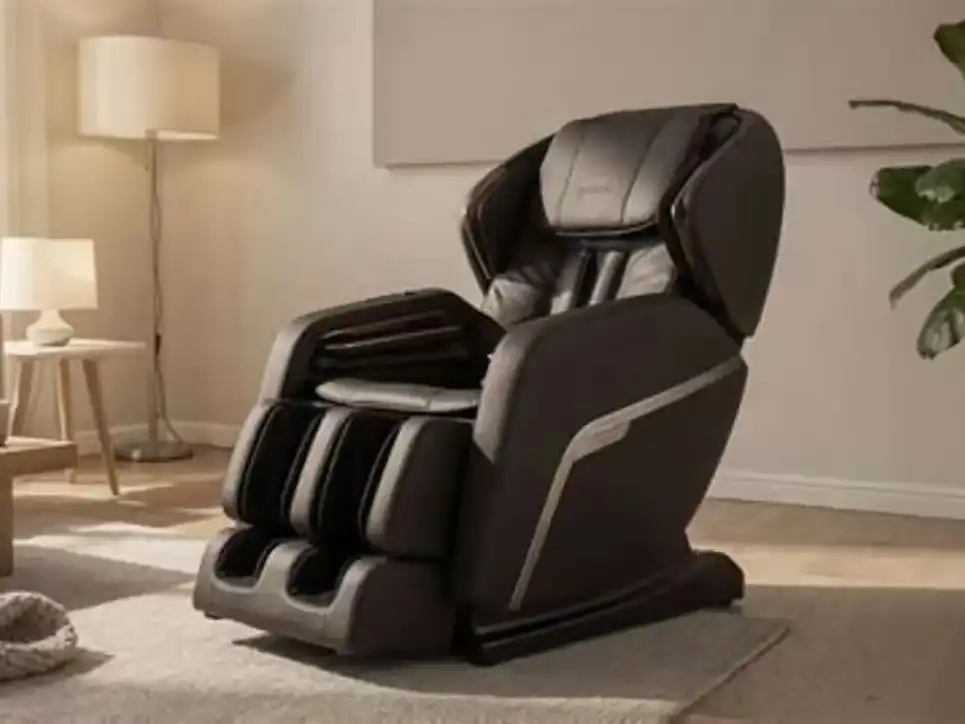
Understanding Wear-Resistant Commutators in Massage Motors
What Makes These Commutators Different
Standard copper commutators break down after many start-stop cycles because electrolytic copper softens at high temperatures and the surface stops being solid after long brush contact. Silver-copper alloys (AgCu) or zirconium-copper (CuZr) are used in wear-resistant commutators to keep their structural hardness and stable electrical conductivity over millions of operational cycles. The silver boosts the melting temperature by a large amount. This stops the copper from pulling and surface pitting, which wears down motors quickly.
Working Principles in High-Cycle Environments
When used in a massage motor, the commutator spins quickly against carbon brushes. A steady oxide patina must be kept on the contact surface. This is a thin protective film that actually lowers friction and stops micro-arcing. Wear-resistant designs do this by carefully finishing the surface (Ra 0.4–0.8μm) and connecting high-density segments with resin compounds. This makes sure that the film forms regularly and doesn't break when the load changes.
Key Performance Benefits
Three perks stand out for companies that make a lot of things:
- Extended service intervals: Studies in DC motor durability show silver-copper commutators can outlast standard copper variants by 2x to 5x in continuous-use applications, reducing the frequency of motor teardowns.
- Lower heat generation: Electrical conductivity maintained at ≥90% IACS minimizes resistive losses, keeping operating temperatures within safe limits during prolonged massage sessions.
- Reduced brush wear: A properly conditioned commutator surface protects both the segment and the carbon brush, cutting total maintenance costs across a motor's operating life.
Longer service intervals: Research on the durability of DC motors has shown that silver-copper commutators can last up to five times longer than regular copper ones in continuous-use situations, which means that motor breakdowns happen less often.
Comparing Wear-Resistant Commutators with Traditional Alternatives
Durability Under Continuous Load
In light-duty motors, traditional electrolytic copper (ETP copper) commutators work well. However, ETP copper segments in a wear resistant commutator can develop grooves, hotspots, and surface darkening in massage motors that spin frequently throughout the day, and these issues can occur within a very short time. Silver-copper and zirconium-copper types maintain a hardness of 95–120 HB (Brinell), helping them resist mechanical wear and tear better than softer materials.
Maintenance Requirements and Downtime Costs
The early failure of a commutator has a financial effect that goes beyond the cost of the part. Replacement labor, the time it takes to put motors back together, and production delays on an OEM line add up quickly. A commutator that doesn't wear out and has a design life measured in tens of millions of cycles means that regular maintenance runs for longer and unplanned downtime is shorter. This saves production managers money on running costs.
Cost-Benefit Perspective for Procurement Teams
A normal copper commutator costs less per unit than a silver-copper one. But teams in charge of buying things always find that the more advanced version is cheaper when they do total cost of ownership calculations. When you think about how often they need to be replaced, how much they cost to fix, and how bad it is for your reputation when they break down in the field, the return is clear. Over the lifetime of a product, one wear-resistant unit that lasts three times as long as a normal part and costs 1.5 times as much is a big net savings.
Design Features and Materials Behind High-Cycle Wear Resistance
Material Science: Silver-Copper Alloys and Resin Bonding
The main section material for the ANGU high-cycle commutator is silver-copper, which comes in Tuya Silver Copper 03 or 08 types. Silver raises the alloy's melting temperature above 300°C, which prevents the segments from deforming when there is a lot of current flowing through them. The pieces are joined together with precision-grade resin that can withstand high-speed spin tests at 1.2 to 1.5 times the standard RPM. This makes sure that the component is stable under centrifugal force before it even gets to a production line.
Surface Treatment and Dimensional Precision
The surface finish of the wear resistant commutator is not just for looks; it directly affects how the brush interacts with the segment. The commutator is precisely machined to Ra 0.2–0.8 µm, which helps a stable patina form and reduces abrasive contact. CMM (Coordinate Measuring Machine) analysis shows that all 12 pieces are consistent in size and shape. Tolerances are held at the micron level for a 23 mm outer diameter, an 8 mm inner diameter, and a 25 mm height.
Electrical Insulation and Structural Integrity
High-grade resin insulation between the copper pieces gives the dielectric strength more than 500M© at 500V DC. A Hi-Pot (dielectric breakdown) test is done on each unit at 1500V–3000V, and bar-to-bar resistance testing makes sure that the electricity is evenly spread across all 12 parts. Following the rules set by ISO 9001 and IATF 16949 at this level of quality control lets QA teams see where each production batch came from and how it was made.
Application Areas and Procurement Considerations for B2B Clients
Where High-Cycle Commutators Are Used
Wear-resistant commutators are needed in a number of tough motor uses. Motors in massage tools like percussion guns, shiatsu chairs, and mobile massagers can go through thousands of rounds per hour. This has to be done by the commutator without generating too much heat or electrical noise. In high-intensity applications like power tools, car starting motors, and small gadget motors, the needs are similar.
Decision Framework for Procurement Managers
Four things should be looked at by buying teams when they are looking at commutator sources. These are the main things that make good decisions about sourcing:
- Material grade and certification: Confirm the alloy specification (AgCu or CuZr) and request SGS or equivalent third-party test reports.
- Dimensional compatibility: Match OD, ID, height, and segment count to existing motor design drawings before ordering samples.
- Supplier production capacity: A supplier capable of delivering 50,000 pieces within 30 days demonstrates the batch consistency and scheduling control needed for production ramp-ups.
- OEM/ODM flexibility: Suppliers offering drawing-based customization reduce engineering risk when adapting components to proprietary motor designs.
These factors, combined with the use of a High-Cycle Anti-Wear Commutator, help procurement managers avoid costly qualification failures and speed up the development of new motor programs.
The Value of Certified OEM Partners
It's not just about paperwork when you work with a manufacturer that is IATF 16949 certified. It means that the production process is controlled, documented, and can be checked. This certification is a must for apps that are used in automobile and industrial settings. For OEMs of consumer goods and massage devices, it means a level of process discipline that lowers the number of defects and builds a stronger long-term relationship with the provider.
Procurement, Ordering, and After-Sales Support Insights
Ordering Process and Lead Times
Angu can handle requests from the concept sample stage all the way through mass production. For engineering qualification, you can get free samples. The standard lead time for large orders is 30 days for 50,000 pieces from Jiangsu, Xuzhou, China. There are different types of transport packaging, such as cartons and pallets, and shipping options, including sea freight and air freight, which includes DHL, FedEx, and UPS for fast delivery.
Pricing and Logistics Coordination
The price is based on the batch size, the grade of the material, and the level of personalization. OEM buyers get quotes based on the detailed models they send in. Costs for international shipping depend on where the package is going and how quickly it needs to get there. ANGU's team gives freight advice to help purchasing managers plan accurate estimates of landing costs before placing orders.
Warranty and After-Sales Policies
There is a 1-year warranty on every order. Problems with quality are fixed by replacing or returning the item, and there are direct contact methods available for quick resolution. With batch-level traceability, any defect that is reported can be tracked back to its production record. This helps find the root cause and stops the problem from happening again.
Conclusion
The quality of a massage motor's tiny parts determines how well it works over time. The wear resistant commutator is one of the most mechanically stressed parts of any DC motor. In high-cycle applications like massage devices, a bad part can cause a chain of problems that can range from brush fires to the motor breaking down completely. The easiest way to get a silver-copper commutator with longer life and lower total purchase cost is to buy one that was made under approved quality systems and has been tested for electrical and dimensional properties. ANGU's 12-segment, 23mm OD model is made just for this job, and it comes with full SGS certification and 20 years of manufacturing experience.
FAQ
How long does a wear-resistant commutator last in a massage motor?
A silver-copper commutator can make a motor last 2 to 5 times longer than a normal ETP copper model, depending on the load profile and working frequency. In high-cycle massage motor uses that are used for several sessions a day, this can mean that the motor will work reliably for several years before it needs to be serviced.
Can ANGU produce custom commutator dimensions for my motor design?
It is possible for ANGU to fully customize OEM/ODM products based on customer drawings and specifications. The engineering team can give you a price based on the design files you send them if your motor needs a different outer diameter, inner diameter, height, or segment count.
What certifications does the ANGU commutator carry?
The company that makes the product follows ISO 9000 and IATF 16949 standards, and the product has SGS approval. Bar-to-bar resistance testing, Hi-Pot capacitance testing, and CMM measurements of each batch are all done.
What signs indicate a commutator needs replacement?
The main signs are surface grooves that can be seen, strange sparks at the brush contact point, a rise in motor temperature, or readings of uneven resistance from bar to bar. A type that doesn't wear down easily can fight these signs for a lot longer than regular copper.
Is a free sample available before committing to a bulk order?
ANGU does offer free samples for engineering review and quality testing before a large order is placed.
Source a Reliable Wear-Resistant Commutator Supplier — Contact ANGU Today
ANGU has been supplying precision motor parts to OEM partners around the world for 20 years. It has ISO 9000 and IATF 16949 certifications, as well as 3 invention patents and 6 utility model patents to back up its engineering skills. You can get a free sample of the 12-segment silver-copper commutator (OD 23mm / ID 8mm / H 25mm) to see how it works. It can be mass-produced up to 50,000 pieces in 30 days. ANGU's team is ready to help you with your sourcing from the first sample to the long-term supply agreement, whether you need a standard specification or a custom solution based on a drawing. You can ask for a price at angu-group.com or email chenrf@angu.com.
References
1. Hamid A. Toliyat & Gerald B. Kliman — Handbook of Electric Motors, Marcel Dekker, 2004.
2. IEEE Transactions on Industry Applications — "Brush and Commutator Wear in DC Machines Under Variable Load Conditions," IEEE, 2011.
3. Journal of Materials Engineering and Performance — "Silver-Copper Alloy Performance in High-Cycle Electrical Contact Applications," ASM International, 2016.
4. Tribology International — "Surface Patina Formation and Friction Behavior of AgCu Commutator Segments," Elsevier, 2018.
5. International Journal of Advanced Manufacturing Technology — "Precision Machining Tolerances and Their Effect on DC Motor Commutator Longevity," Springer, 2019.
6. Quality Management in Manufacturing: ISO 9001 and IATF 16949 Implementation Case Studies — SAE International, 2020.
YOU MAY LIKE