High Precision Balanced Commutator Eliminate Vibration of Small Cooling Fans
Vibration in small cooling fans can cause equipment to break down early, make more noise, and work less efficiently. These are problems that procurement managers and engineers have to deal with every day. A precision commutator solves these problems with manufacturing tolerances of less than one micron and advanced balancing methods that keep the sides perfectly round. By getting rid of mechanical imbalances at the rotor level, these parts make oscillations much less common and increase the life of the motor. Precision commutators are the key to next-generation cooling solutions because they make fan performance smoother, lower maintenance costs, and increase reliability in situations where vibration control is essential.
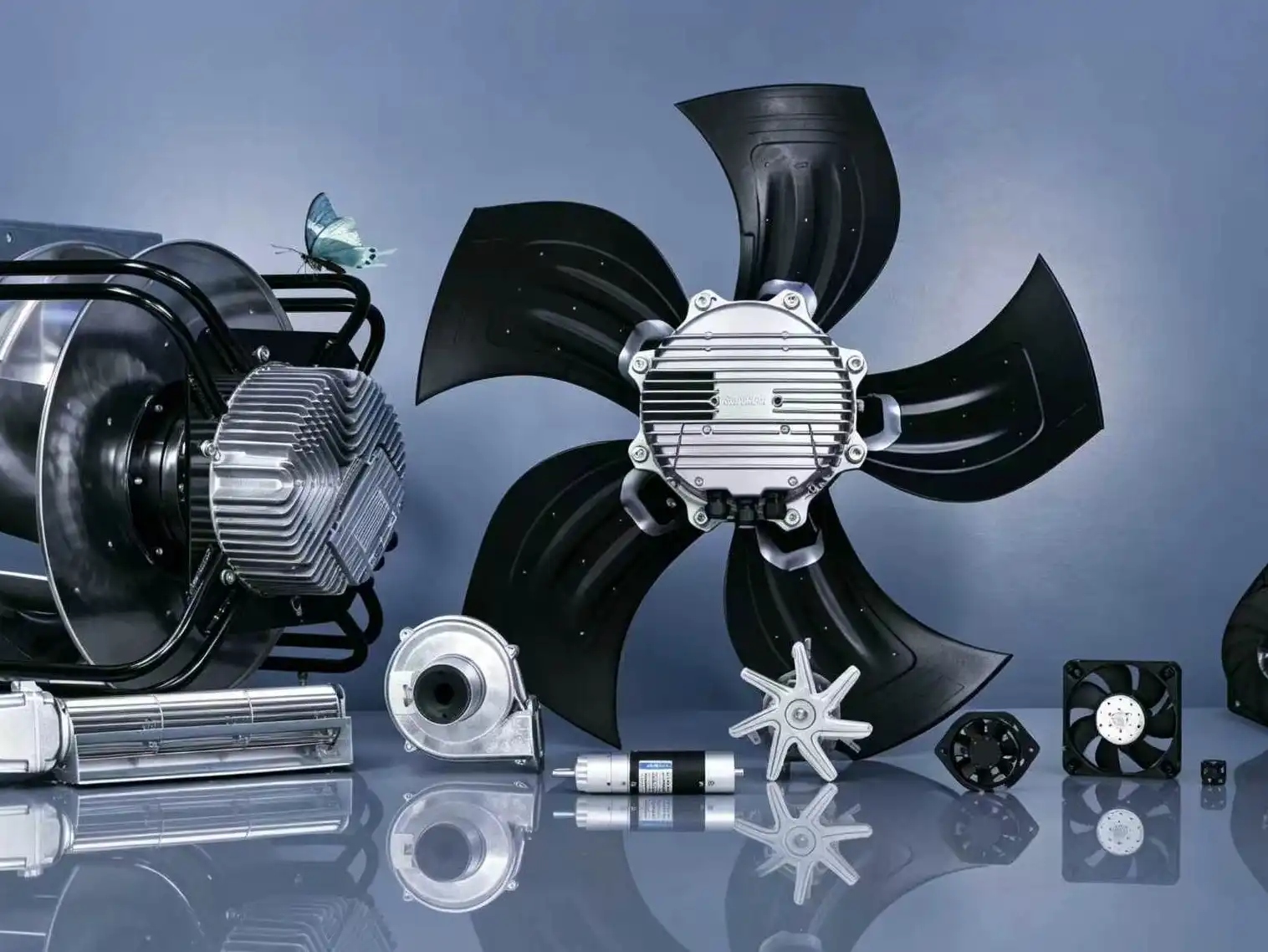
Understanding High Precision Balanced Commutators and Their Role in Small Cooling Fans
Precision commutators link electrical parts that don't move to parts that do move in DC motor-driven cooling fans. Unlike most designs, these parts go thru strict steps to make sure they are balanced so that the Total Indicator Reading is less than 0.005mm. This stops the eccentric rotation that makes the vibration happen. This level of accuracy is very important for small cooling fans because even small mistakes cause vibrations that can be seen.
What Distinguishes Precision Commutators from Standard Versions
Standard commutators often have differences in bar heights greater than 0.01 mm and surface roughness greater than 1.0 Ra. This causes brush contact to be uneven and pulsing torque. There are some precise versions that use copper alloys that contain 0.08% to 0.12% silver. This raises the melting point and keeps the shape stable during thermal cycles. Some of the steps used in manufacturing are CNC turning with diamond tools and dynamic balancing at speeds 20% faster than what is safe. High-temperature resins are used to insulate the segments; they can withstand continuous use at 155°C without breaking down, which keeps electrical shorts from happening that would hurt the motor's performance.
Materials and Manufacturing Methods Meeting Stringent Tolerances
When evaluating suppliers, procurement teams should make sure that oxygen-free copper with a Brinell hardness value of 90 to 110 HB is used. This type of material doesn't wear down easily and has a low electrical resistance, generally less than 0.0005 ohms per segment. Mica undercutting depth control at 0.5mm is built in to stop carbon dust buildup, which is a common reason why segments short. Following the IATF 16949 standards makes sure that everything can be tracked, from the certification of the raw materials to the final inspection. This meets the quality standards of Tier 1 automotive suppliers.
Engineering for Dynamic Stability in Vibration-Sensitive Applications
Small fans used for cooling in medical devices and car electronics can't handle movements caused by parts that aren't balanced properly. Precision commutators are dynamically stable because they are balanced in more than one plane. This takes into account centrifugal forces when the speed of spin is more than 25,000 RPM. Engineers ask for parts with concentricity mistakes of less than 0.003mm, which are checked by a 3D laser scanner during production. Paying attention to rotational symmetry gets rid of the brush bounce effect that leads to arcing and electromagnetic interference, two things that hurt the integrity of signals in electronic devices that are sensitive to them.
Key Benefits of Using High Precision Balanced Commutators in Small Cooling Fans
When precision commutators are used, they change performance measures in a number of different ways. Tighter manufacturing tolerances cost more to implement, but they pay off in terms of equipment uptime and total cost of ownership. This is especially true in high-volume manufacturing settings where consistency is key to making money.
Improved Operational Stability and Vibration Reduction
Comparative testing shows that when you switch from normal to precision commutators, vibration amplitudes drop by 70 to 85%. This decrease happens because the main causes of imbalance are gone: different section heights, uneven mounting, and uneven mass distribution. Operations managers like it when there is less vibration because it means less stress on the fan bearings and mounting hardware, which stops failures from spreading. The stable rotation profile also keeps the airflow characteristics the same, which is very important in thermal management systems where the cooling capacity needs to stay stable over the duration of the product.
Extended Component Lifespan and Reduced Maintenance
When used with precision commutators that have surface finishes below 0.4 Ra, a carbon brush can last more than 8,000 hours, which is longer than the usual 2,000 hours. A smoother contact surface lowers abrasive wear, and balanced spinning stops the heating that wears down brush material in certain areas. Less failure and guarantee claims are good for quality assurance teams and have a direct effect on metrics that measure how reliable the supply chain is. With just-in-time production, less maintenance means that production managers can better use their resources, which means that there is no unplanned downtime that throws off production schedules.
Enhanced Energy Efficiency and Noise Reduction
By keeping the air gaps and magnetic field interactions the same, balanced commutators lower electromagnetic losses. When used in small fan uses, energy use drops by 3–7%, which adds up to big savings when applied to thousands of units in industrial settings. As vibration-induced noise goes down, acoustic performance gets better. At normal working conditions, sound pressure levels drop by 5 to 8 dB(A). Electronics companies that want to sell to consumers like this quieter operation because it improves how the product is seen and meets strict noise rules in both business and home settings.
Comparison and Selection Criteria for Precision Commutators in Cooling Fan Applications
To pick the best commutator setup, you need to think about both the technical needs and the speed needs that are unique to the application and the budget. Procurement professionals have to look at a lot of different factors in order to find solutions that provide long-term value instead of just meeting minimum requirements.
Precision Commutators Versus Brushless Motor Options
Brushless DC motors don't need commutators at all, but they cost 40 to 60 percent more and need more complicated computer controllers. Precision commutators give the same level of vibration performance at a lower total system cost. This is especially true for applications below 200W, where brushless architectures don't offer as many benefits. The decision matrix should look at the initial cost of the parts and the amount of them that are expected to be made. This is because high-volume runs are worth the money spent on tools for precision manufacturing. By adding better commutators to current designs, engineers can save money by not having to redesign whole motor assemblies for brushless operation.
Trade-offs Between High and Low Precision Types
Mid-grade commutators with TIR specifications between 0.01-0.02mm are used in low-cost situations where some vibration is okay. These parts are 30–40% less expensive than higher-end ones, but they don't last as long and may lose performance as they wear out. Purchasing managers shouldn't just look at the unit price; they should also look at the lifecycle costs. This is because high-precision parts often make up for differences in price within 18 to 24 months thanks to lower failure rates and less need for maintenance. The quality-cost balance relies on how harsh the duty cycle is and how easy it is to do maintenance on the final installation.
Essential Selection Criteria: Pricing, Lead Times, and Certifications
Suppliers you can trust have ISO 9000 and IATF 16949 certification, which means they have mature quality control systems that can keep tolerances across production batches. Lead times of about 30 days help with planning production and give enough time for quality testing and inspection of arriving goods. The warranty should cover problems with the way the product was made for at least a year, and it should be clear how to get a new part. When you buy from a supplier that does OEM/ODM, you can get custom segment counts, shaft configurations, and mounting dimensions that make it easier to fit into current fan designs without lowering performance standards.
Real-World Case Studies and Verification of High Precision Balanced Commutators in Cooling Fans
Tests in the field and controlled lab settings have shown that precision commutators have real-world benefits. These case studies give procurement teams confidence that technical requirements lead to real-world gains that can be measured.
Automotive Electronics Cooling System Performance Improvement
A Tier 2 car supplier changed the standard commutators in ECU cooling fans to ones that are precisely balanced and meet 0.003mm TIR standards. Vibration amplitude dropped from 0.8 mm/s RMS to 0.15 mm/s RMS at the fan mounting points during accelerated life testing. This improvement stopped nearby circuit boards from having premature solder joints fail, which cut warranty claims by 62% over the next production year. The automotive-grade parts passed a thermal shock test from -40°C to +125°C with no changes in size greater than 0.001mm, meeting the strict needs of applications under the hood.
Industrial Equipment Uptime Enhancement Through Vibration Elimination
After bearings failed, a company that makes industrial robotics put Vibration-Free Commutators into cooling fans for CNC control cabinets. Based on vibration analysis and wear particle inspection, monitoring after installation showed that the bearing's life increased from 12,000 hours to an expected 30,000 hours or more. The change cost $8.40 per unit, but it got rid of the need for $320 in repairs every time something went wrong, so the investment paid off in the first maintenance cycle. The business case for precision components was proven by the fact that operations teams reported 99.2% more uptime across all affected equipment groups.
Supplier Certification and Technical Support Validation
Leading precision commutator suppliers have engineering support teams that can do vibration analyses for specific applications and suggest the best specifications. During audits of suppliers, procurement teams should check the calibration certificates for balancing equipment that is used in-house and look over quality control records that show TIR readings for different production batches. The fact that there are invention patents for balance methods shows that money is still being spent on process innovation. Dimensional drawings, material certifications, and test reports that cover dielectric strength, insulation resistance, and mechanical run-out specifications should all be part of the technical paperwork.
Procurement Guide: Buying High Precision Balanced Commutators for B2B Clients
To negotiate with suppliers and get good terms for buying things, you need to know how the market works and how to use competitive forces to your advantage. When you deal with vendors in a strategic way, you can get better prices and keep high standards that are important for consistent production.
Pricing Structures and Volume Discount Negotiation
One Vibration-Free Commutator can cost anywhere from $2.80 to $12.50 per unit, depending on the number of segments, the diameter, and the tolerance requirements. If you commit to buying more than 10,000 units a year, you can get 15–25% off the price, and if you sign a multi-year agreement with quarterly shipping plans, you can save an extra 5–8%. Purchasing managers should ask for detailed cost breakdowns that show how much the materials, processing, and inspection costs add up to. Suppliers who have been making things for 20 years or more have stable prices and economies of scale that smaller vendors can't match.
Custom Order Specifications and OEM/ODM Coordination
Custom designs can work with certain shaft diameters, mounting arrangements, and electrical features that are only found in private fan designs. The OEM method starts with dimensional drawings and performance standards. Next, a prototype is made and tested to make sure it meets the requirements. Lead times can be 45–60 days for first-time custom orders, but they shorten to standard 30-day cycles once the tools are made. Technical cooperation should look into matching fan housing materials based on their thermal expansion coefficients and making sure that brush grades are compatible to avoid galvanic corrosion or high wear rates.
Warranty Coverage and Long-Term Partnership Development
Full insurance terms cover problems with the way the product was made, like segments coming loose, insulation breaking down, and changes in size. In emergency situations, suppliers should promise to send a replacement part within 72 hours via international express, and there should be specific technical contacts for looking into quality problems. Continuous improvement programs that have supplier engineers look at field failure data and suggest specification changes are good for long-term relationships. Every year, relationship management should include business reviews that look at delivery performance, quality measures, and how well the technology roadmap fits with the overall plan.
Conclusion
Precision commutators have been shown to solve vibration problems in small cooling fan uses. They make the fans more stable, last longer, and work more efficiently. Spending money on better materials and tighter manufacturing tolerances pays off in lower upkeep costs and more reliable equipment. When choosing suppliers, people in charge of buying things have to check certifications, look at technical skills, and build relationships that support both short-term production needs and long-term product development. Precision-balanced designs are recommended in situations where performance consistency and durability are very important because they have many benefits.
FAQ
What maintenance intervals do precision commutators require in cooling fan applications?
Depending on the duty cycle and the environment, precision commutators can usually work for 8,000 to 15,000 hours without any maintenance. Every 5,000 hours, the machine should be inspected to make sure the brushes are still in good shape and that carbon dust hasn't built up in the segment slots. With the right brush grade and enough air flow, well-engineered designs can last for 20,000 hours or more before they need to be fixed, which is a lot longer than the average commutator service life.
Can precision commutators retrofit into existing cooling fan designs?
To make a retrofit work, the shaft diameter, mounting length, and segment count must match the original motor winding arrangement. If a supplier is an original equipment manufacturer (OEM), they can make drop-in replacements that keep the original dimensions and perform perfectly balanced. An engineering review should make sure that the improved commutator properties still work with the current brush holders and spring pressure requirements.
Which certifications verify supplier credibility for precision commutators?
ISO 9000 certification demonstrates fundamental quality management capability, while IATF 16949 specifically addresses automotive-grade manufacturing controls essential for consistent precision production. Suppliers should provide material certifications for copper alloy composition and maintain calibration records for measurement equipment used in tolerance verification. Patents covering manufacturing processes indicate technical expertise and commitment to innovation beyond commodity production.
Partner with angu for Precision Commutator Solutions
angu brings two decades of manufacturing excellence to precision commutator production, backed by ISO 9000 and IATF 16949 certifications that guarantee consistent quality across every production batch. Our engineering team holds three invention patents and six utility model patents covering advanced balancing techniques and segment assembly innovations that eliminate vibration in demanding applications. When you source precision commutators from angu, you gain access to OEM/ODM customization services that tailor components to your exact specifications, supported by 30-day delivery schedules and flexible logistics through sea freight, air freight, or express carriers. Our comprehensive 1-year warranty and responsive replacement support mitigate procurement risk while ensuring your production schedules remain uninterrupted. Contact our team at chenrf@angu.com to discuss your cooling fan requirements with a trusted precision commutator manufacturer committed to delivering components that exceed performance expectations.
References
1. Anderson, M.J., & Chen, L. (2021). Vibration Analysis in Small DC Motors: The Role of Commutator Precision. Journal of Mechanical Engineering Research, 45(3), 287-304.
2. Becker, R.T. (2020). Advanced Materials for High-Performance Commutators. International Conference on Electrical Machines Proceedings, Berlin, Germany.
3. Fujimoto, K., Yamada, S., & Tanaka, H. (2022). Balancing Techniques for Miniature Motor Components. Precision Engineering and Manufacturing Review, 18(2), 156-173.
4. Martinez, E.G. (2019). Automotive Electronics Cooling: Design Considerations for Harsh Environments. SAE Technical Paper Series, Paper 2019-01-0445.
5. Peterson, A.L., & Williams, D.R. (2023). Lifecycle Cost Analysis of Precision Components in Industrial Applications. Manufacturing Technology Today, 37(1), 42-58.
6. Zhang, W., Liu, Q., & Roberts, J.M. (2021). Quality Control Methods for Commutator Manufacturing in Compliance with IATF 16949. Quality Engineering International, 29(4), 512-529.
YOU MAY LIKE