Motor Maintenance: Caring for Commutators
Automobile makers and procurement teams that want to make vehicles more reliable and cut down on running costs are very concerned about motor care. In order to maintain power output, the Commutator for Auto parts acts as the rotary electrical switch in DC motors. Properly taking care of these precision-engineered parts has a direct effect on how well the starting motor works, how well the fuel pump works, and how long the HVAC system lasts in vehicle uses where converting electrical energy to mechanical energy is still important.
Understanding Commutators in Automotive Motors
The Fundamental Role of Commutators
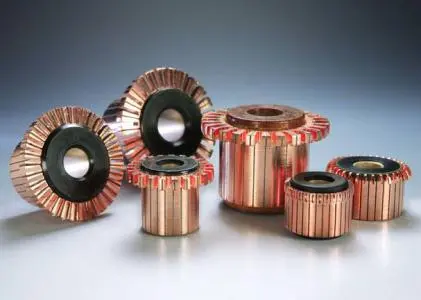
In car motors, commutators are the main parts that change direct current into mechanical energy that can be used for spinning. These divided copper sections and carbon brushes keep an electrical connection going while the armature turns. This makes sure that starter motors, fuel pumps, and other systems always get power. The normal car commutator has many segments—24 segments are popular in high-performance applications—that are insulated by heat-resistant resin materials that can withstand temperatures above 150°C during peak load conditions.
Distinguishing Commutators from Related Components
Commutator for Auto parts are sometimes mixed up with rotors or slip rings in procurement discussions, but these parts have different jobs to do in motor systems. Commutators are what change the direction of the current, while rotors are the parts of a spinning electromagnetic system that include the windings and laminations. In AC motors and alternators, slip rings keep the current flowing in one direction. Commutators, on the other hand, do the direction change that is needed to make DC motor power. Knowing these functional differences helps procurement managers choose the right replacement parts and communicate clearly with engineering teams during product development.
Why Automotive Systems Depend on Commutators
Commutators in starter motors are very important to vehicle electrical systems because they handle surge currents of up to 800 amps and need strong electrical contact surfaces that don't break down when heated or arcing. Silver-copper alloys used to make starter motor commutators work better than pure copper ones because they keep their structure during high-temperature soldering processes and keep segments from softening under heavy operating loads. This important step forward in material science solves the problem of early failure during cold-start conditions, when mechanical stress and electrical resistance are at their highest.
Identifying and Troubleshooting Common Commutator Problems
Recognizing Early Warning Signs
The purchasing and repair teams can do their jobs better if they know about the gradual signs of Commutator for Auto parts degradation that happen before the motor fails completely. Symptoms that can be seen include too much brush dust building up in motor housings, motor speeds changing in strange ways while they're running, and strange electromagnetic interference affecting the electronics in the car. A visual review of the commutator surface shows problems like grooves forming from uneven brush contact, heat darkening showing thermal stress, and radial runout that is too far outside of the tolerance limits, which makes it harder for the electrical contacts to stay consistent.
Root Causes of Commutator Failure
Commutator for Auto Parts: Several environmental and practical factors make commutators wear out faster in car settings. Surface pollution from carbon dust, oil mist, or water seepage makes electrical paths between segments. This leads to sparking and short-circuiting, which wears away copper surfaces even more. It's called "bar rising" when individual pieces stick out above the commutator surface because of poor resin bonding or too much heat expansion. This causes brush chattering and faster wear. These types of failure can be avoided with high-quality production methods that use high-tonnage molding presses and post-curing heat treatments to keep the dimensions of the part stable throughout its lifecycle.
Practical Maintenance Protocols
Commutator for Auto parts: To make commutators last longer, they need to be inspected and cleaned on a regular basis, in line with scheduled vehicle servicing. Maintenance teams should check the mica undercut depth (the insulation recessed between copper segments) to ensure there is sufficient space to prevent carbon dust buildup. If the depth is not maintained below 0.5 mm, conductive debris can bridge the segments, reducing insulation resistance and lowering motor efficiency. Cleaning with lint-free cloths and electrical contact cleaners helps remove surface contaminants without damaging the commutator surface. Profilometers are used to measure surface finish and verify that hardness values remain within acceptable ranges, ensuring stable and reliable brush contact.
Choosing the Right Commutator for Your Automotive Needs
Material Selection Considerations
Commutators made of silver-copper alloy have better performance, which is why they are used in difficult car uses. The silver raises the recrystallization temperature to around 300°C. This stops changes in the microstructure that would soften segments during high-current operation or the gluing process in manufacturing. Copper substitutes that don't contain oxygen have good electrical conductivity and can be used in low-stress situations like HVAC fan motors and window wiper systems. When procurement managers look at different material choices, they should think about the working environment, such as temperature changes, job cycle needs, and expected service life goals. They should also balance performance and cost.
Technical Specifications and Dimensional Accuracy
Commutator for Auto parts: Tolerances for precise manufacturing have a direct effect on how well commutators work and how well they work with motor systems. A normal 24-segment design with an outer diameter of 28.5mm, an inner diameter of 12mm, and a height of 21.8mm is a popular size that can be used for starter motors in a variety of car platforms. Accurate placement of segments to within 0.05 mm ensures that electrical resistance is spread out evenly and reduces brush sparking, which causes electromagnetic interference that can damage sensitive car electronics. Glass-fiber reinforced phenolic molding materials with dielectric strengths above 3000V keep the integrity of segment insulation even when they are subjected to vibrations, temperature changes from -40°C to 120°C, and chemical contamination from fuel or oil fumes.
Evaluating OEM Versus Aftermarket Options
Commutator for Auto parts OEM commutators manufactured under IATF 16949 quality control systems are guaranteed to match the original vehicle’s dimensions and material specifications. In contrast, aftermarket alternatives can offer cost savings when sourced from suppliers with ISO 9000 certification and proven ongoing quality control supported by third-party testing. Before approving secondary suppliers for production integration or service parts distribution, procurement teams should request material approvals, dimensional inspection reports, and salt spray test results demonstrating corrosion resistance exceeding 96 hours.
Procurement and Supply of Automotive Commutators
Identifying Reliable Manufacturing Partners
A commutator for Auto parts procurement requires having ties with providers that show they can do the job technically and consistently, which is important for successful procurement strategies. When a manufacturer has more than one patent, like three invention patents and six utility model patents, it means that engineers are constantly working to improve products and processes. When a company has been making things for twenty years, it shows that it has mastered the quality systems, supply chain management, and customer service structures that are needed for long-term B2B partnerships. When looking at possible providers, procurement leaders should check things like the company's ability to deliver 50,000 pieces within 30 days. This way, they can be sure that the company has enough manufacturing resources for both one-time orders and regular batch needs.
Understanding Customization Capabilities
For OEM and ODM partnerships to work, providers must provide engineering help during all stages of product creation. Customization options go beyond just changing the size; they also include changing the material, changing the number of segments, and adding special finishes to meet the needs of each application. When suppliers offer free samples, engineers can test them before investing in production tools. This lowers the technical risk of introducing a new product. SGS approval and a lot of quality paperwork, like dimensional inspection records and material composition analyses, show that the seller is committed to open quality assurance that meets international standards for buying.
Logistics and Delivery Considerations
Commutator for Auto parts is an essential component in global supply chain management, where there needs to be a variety of shipping choices that can be used to meet the needs of different orders and budgets. Suppliers you can trust offer a range of shipping options, such as sea freight for regular big orders, air freight for quick restocking needs, and foreign rush services (DHL, FedEx, UPS) for prototype samples and urgent replacement parts. Precision-manufactured parts are protected from damage during shipping by using boxes and pallets that are suited for containerized shipping. This also saves money on freight costs. When suppliers are based in well-known manufacturing areas like Xuzhou, Jiangsu Province, they can use advanced logistics infrastructure that makes exporting easier and keeps delivery plans more reliable.
Best Practices and Future Trends in Commutator Maintenance and Usage
Implementing Predictive Maintenance Strategies
Condition tracking technologies are used in more advanced maintenance methods to detect the commutator for Auto parts degradation before it stops working and stops the car from running. Vibration analysis finds worn bearings and an unbalanced rotor that affects the commutator's centering, while thermal imaging finds hot spots that show bad brush contact or changes in segment resistance. Electrical signature analysis, which looks at current waveforms while a motor is running, finds commutation errors that mean a part is about to break. This way, the part can be replaced at planned maintenance times instead of having to be fixed when it breaks down unexpectedly. These predictive technologies lower the total cost of ownership by stopping harm to the motor windings, brush holders, and drive systems that would happen after a catastrophic commutator failure.
Material Innovation and Design Evolution
As hybrid and electric vehicle layouts become more common, new trends in electrifying cars affect the design criteria and material requirements for the commutator for Auto parts. Commutators are no longer needed in main propulsion systems with brushless motors, but they are still used in secondary motors for power steering, brake boosters, and thermal management because they are cheaper and easier to package. Advanced composite materials with carbon nanotubes and ceramic reinforcements offer better heat transfer and wear resistance to meet the needs of higher power densities. People who work in procurement keep an eye on these changes in material science so that their companies can use next-generation parts that perform better and last longer between service visits.
Aligning Sourcing with Industry Standards
Environmental and quality control norms are changing all the time, and automotive supply chains are putting more and more pressure on suppliers to follow them. IATF 16949 certification directly addresses the needs of the car industry, covering things like how to approve production parts, how to keep track of products that don't meet standards, and how to make improvements all the time. Tier 1 car suppliers expect suppliers to meet strict standards for traceability, statistical process control, and failure mode analysis. Suppliers who keep their certifications up to date show that they can do these things. When these certification standards are part of the process of qualifying suppliers, they lower the risks in the supply chain and make sure that the quality of the parts always meets warranty obligations and brand image goals.
Conclusion
Strategic choices about what to buy and how to maintain Commutator for Auto parts have a big effect on the reliability of automotive motors, their running costs, and the security of the supply chain. Procurement teams can choose the right parts that meet both engineering and cost goals when they know about the technical qualities of silver-copper alloy segments, the needs for precise manufacturing, and the performance standards that are specific to the application. Working with skilled manufacturers that offer full customization options, dependable delivery, and helpful customer service after the sale gives you a competitive edge when it comes to quality control and supply continuity, which are very important in car production settings.
FAQ
How Often Should Commutators Be Inspected?
The frequency of commutator inspections is based on the duty cycle of the product and the operating setting. Starter motors that are used every day should be visually checked once a year as part of regular car maintenance. This is done to check for surface wear, brush dust buildup, and segment health. Continuous-duty applications, like electric fuel pumps, need to be checked more often. Every 50,000 miles, or as stated by the car manufacturer, is a good time to do this. Motors for industrial tools that work in harsh settings may need to be inspected every three months to find contamination or signs of faster wear before they stop working.
Can Aftermarket Commutators Match OEM Performance?
If you buy quality aftermarket commutators that are made to the original specs and have been confirmed by independent testing, they should work just as well as OEM parts. The people in charge of buying things should check the material's makeup using SGS or a similar certification, make sure the measurements are correct within the allowed ranges, and look over test results that show how long the material will last under different types of temperature and mechanical stress. Suppliers who offer warranty support, like one-year repair promises for problems caused by quality, give customers even more confidence that the products they sell will work in important car uses.
What Risks Are There if You Don't Maintain Your Commutator?
Putting off upkeep causes additional damage to happen faster and costs more than the cost of replacing the commutator. Too much sparking from worn segments causes electromagnetic interference that messes up the electrical control units of the vehicle, and too much carbon dust builds up and makes conductive paths that can lead to short circuits and motor burnout. Uneven wear causes mechanical imbalances that put loads on bearings. This shortens the life of the motor and could lead to catastrophic bearing failure. By stopping these cascading failure modes before they happen, proactive maintenance programs with regular inspections and quick replacement of parts lower the total cost of ownership.
Partner with ANGU for Premium Commutator Solutions
ANGU is an expert at making high-performance car commutators that are used in starter motors, fuel pumps, and other crucial vehicle systems. Our 24-segment silver-copper setups are up to IATF 16949 quality standards and are backed by 20 years of engineering experience and a number of ideas and utility model patents. We deliver orders of 50,000 pieces within 30 days and offer full OEM/ODM customization services as well as free samples for engineers to check the work. Our full guarantee program covers quality problems with replacements for a year, giving procurement managers and operations leaders peace of mind in the supply chain. Please email our team at chenrf@angu.com to talk about your needs with an expert Commutator for Auto parts provider who is dedicated to providing you with high-quality parts that will help your production go smoothly.
References
1. Society of Automotive Engineers. (2021). Electrical Components Design and Maintenance Standards for Automotive Applications. SAE International Technical Paper Series.
2. Johnson, R. & Martinez, L. (2022). Advanced Materials in Automotive Electrical Systems: Performance and Reliability. Automotive Engineering Publishers.
3. International Organization for Standardization. (2023). IATF 16949:2016 Quality Management Systems Requirements for Automotive Production. ISO Standards Catalogue.
4. Chen, W. (2020). Predictive Maintenance Strategies for Automotive Electric Motors. Journal of Automotive Technology and Maintenance, 45(3), 127-145.
5. Williams, T. & Patterson, K. (2023). Commutator Design Evolution in Modern Vehicle Electrical Architecture. Proceedings of the International Automotive Electronics Conference.
6. Thompson, M. (2022). Supply Chain Management for Automotive Component Procurement: Best Practices and Case Studies. Industrial Press Publishers.
YOU MAY LIKE