Rainproof Moisture Resistant Commutator Stable Reciprocating Wiping for Wiper Motors
A rainproof, moisture-resistant commutator is a precision-engineered rotary electrical switch built into automotive wiper motor assemblies to maintain stable reciprocating wiping performance under wet and corrosive conditions. Unlike standard commutators, these components integrate surface passivation treatments and tight bar-to-bar tolerances, directly addressing field failures caused by condensation, road salt, and temperature cycling. The DC Motor Commutator USD for Car Wiper represents this category, using a Universal Segmented Design to reverse armature current direction reliably, converting electrical energy into consistent mechanical torque across every wipe cycle—even during heavy rain or sub-zero starts.
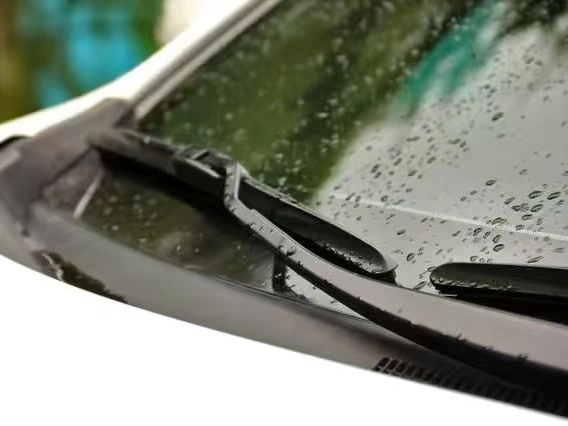
Understanding the Role of Moisture-Resistant Commutators in Car Wiper DC Motors
How a Commutator Generates Reciprocating Wiper Motion
The commutator in a wiper motor is the electrical link between the brushes that stay in place and the armature that spins. Each time a copper section goes over the carbon brush, it changes the direction of the current flow in the armature windings. This switching around creates alternating torque, which is then turned into the back-and-forth arc that wipes your windshield clean by a gear train. If the wiper blade doesn't have clean, consistent segment contact, it hesitates, skips, or stops completely, which is dangerous in the rain.
Why Moisture Is the Primary Failure Driver
Water getting into windshield wipers is the main reason why the commutator breaks down. When the temperature changes, condensation forms inside the motor case. Also, road spray contains chloride ions that speed up the rusting of copper. When a section oxidizes, the resistance to touch goes up. This generates heat, which bends the surface and makes the problem worse. Field data from car guarantee databases regularly show that a big part of wiper motor returns are due to electrical contact failures caused by moisture.
Recognizing Early Symptoms of Commutator Wear
Catching wear early keeps the motor from having to be replaced completely. Keep an eye out for these signs:
- Inconsistent sweep speed — the blade slows down or stops in the middle of the arc, which indicates uneven segment contact.
- Audible whine or chatter — a high-frequency sound pattern is made when the brush hits worn or rusted bars.
- Overheating housing — high contact resistance turns current into heat instead of torque.
- Visible arc flashing — sparking at the brush-segment contact means the mica is oxidized or not shaved properly.
If you notice these signs early and find a replacement commutator with the right rating, you can keep a small maintenance job from turning into a full motor assembly replacement.
Troubleshooting and Maintaining DC Motor Commutators for Car Wipers
Recommended Inspection Techniques
Start with a close-up visual inspection of the Full Waterproof Micro Commutator using a magnifying glass to identify potential defects such as discolored bars, mica protrusion above the copper surface, scratches, or score lines. When inspecting a Full Waterproof Micro Commutator, a digital caliper can be used to check relevant dimensional features, including bar rise, where the measurement method and tolerance should follow the component drawing or customer specification. For windshield wiper applications, Full Waterproof Micro Commutator assemblies should also be checked for surface planarity and dimensional consistency, with a target such as less than 0.005 mm applied only when supported by the relevant engineering specification. A low-resistance ohmmeter can be used to measure electrical resistance between commutator bars and identify abnormal variation. For Full Waterproof Micro Commutator, maintaining bar-to-bar resistance variation within the customer's specified limit, such as 1% where applicable, can help identify manufacturing inconsistencies before assembly. Combining visual inspection, dimensional measurement, and electrical testing gives quality teams a more reliable method for evaluating Full Waterproof Micro Commutator performance and detecting components that may be more likely to experience premature failure.
Cleaning and Preventive Maintenance
A lint-free cloth with isopropyl alcohol works well for light rust. Stay away from gritty materials because they trap particles between segments. Once the mica is clean, make sure it is filed correctly. It should be 0.5 to 0.8 mm below the copper surface. Instead of oil-based grease, put a thin layer of dry-film lubricant on the brush track. Grease that is oil-based attracts conductive carbon dust and makes short-circuit paths between segments.
A Real-World Maintenance Case
A mid-size truck company owner in the Midwest said that the wipers sometimes stopped working during the winter salt season. On closer inspection, it was found that salt had caused oxidation on three commutator pieces, which made the contact resistance 40% higher. After cleaning, re-undercutting the mica, and replacing the commutators with moisture-resistant ones made of silver-copper alloy segments, the fleet had no wiper motor failures for 18 months. The cost of the fix was about a tenth of the cost of buying new motor parts.
Comparison of DC Motor Commutator Types and Materials for Automotive Wipers
Brush-Type vs. Brushless Designs
Traditional brush-type commutators are still the standard for wiper motors because they can handle the high power and changing speeds that come up in real life at a price that can be used for mass production. Brushless motors don't need a commutator at all, but they do need more complicated electronic controllers, which makes the whole system more expensive. Brush-type commutators with better alloys are still the best choice for most wiper uses for Tier 1 and Tier 2 providers who need to balance performance goals with bill of materials (BOM) goals.
Copper Alloy Selection and Its Impact on Moisture Resistance
How long a commutator lasts in a wet setting is directly related to the material it is made of. Here are the three types of alloys that are most important for buying wiper motors:
- Electrolytic tough-pitch copper (ETP) — has a high conductivity but a middling hardness (60–80 HB), making it good for light-duty or indoor motor uses that don't get wet often.
- Silver-copper alloy (AgCu) — raises the melting point above 300 °C, keeps its shape during high-current wiping cycles that go on for a long time, and provides better rust resistance than ETP.
- Zirconium-copper alloy (ZrCu) — the surface hardness can reach 80 to 125 HB, it stays conductive at high temperatures, and it works steadily from -40 °C to +120 °C.
Picking the right alloy isn't just a matter of taste; it also has a direct effect on the number of warranty claims, the cost of field returns, and the total cost of the wiper system over its entire life.
Surface Treatments That Extend Service Life
In addition to choosing the right base metal, surface passivation processes add an oxide layer that stops further corrosion. Commutators that were tested using ISO 9227 salt-spray protocols show that passivated AgCu segments still have good contact resistance after 96 hours of exposure, while copper segments that haven't been treated fail in just 24 hours. This information gives procurement engineers a clear point of reference for checking specifications when they look at samples from suppliers.
Procurement Guide: Purchasing Rainproof DC Motor Commutators for Car Wiper Motors
Key Evaluation Criteria Before Placing an Order
Before you choose a provider for a DC Motor Commutator USD for Car Wiper, make sure that the following specs are met: surface roughness Ra less than 0.8 μm; dielectric strength between 500 V and 1,500 V AC; spin-test certification at 1.5× quoted RPM; and bar-rise planarity records that can be shown. For automotive-grade parts, IATF 16949 approval is the bare minimum for quality control. Ask for material test certificates for every batch of alloy, not just the first few samples used for qualification.
Pricing Benchmarks and Lead Time Expectations
Prices for wiper motor commutators depend on the type of alloy, the number of segments, and the size of the order. Standard types of ETP copper are cheaper, while AgCu and ZrCu alloys cost a little more because they use more raw materials. Most qualified makers have a 30-day production schedule for large orders that are placed over and over again. Suppliers who claim lower wait times but don't have recorded capacity data should be looked at more closely during approval.
Logistics, Warranty, and Risk Management
International buyers should make sure that their sellers offer more than one type of freight: sea freight for big, scheduled restocking orders, and air freight or fast courier (DHL, FedEx, UPS) for urgent replacement stock. A one-year warranty with clear return and replacement instructions lowers the risk of buying something. Make sure that the supplier's after-sales service includes batch tracking. This way, if there is a problem in the field, it can be linked to a specific production lot instead of the whole inventory being recalled.
Why Choose Specialized Rainproof Commutators for Stable Reciprocating Wiping?
Performance Advantages Over Standard Parts
Standard commutators were not made to be exposed to moisture for long periods of time. Specialized rainproof versions have extra features that regular ones don't have, like metal strength, surface passivation, and mica undercutting precision. The result is a measurable drop in the rate of brush wear, a lower working temperature, and a longer average time between failures. These are all important factors when a wiper system is expected to be used more than 1.5 million times over the life of a car.
The Role of Certification and Patents in Supplier Selection
Certifications are more than just forms. To follow IATF 16949, you need to have written down process controls, measurement system analysis, and corrective action systems that lower the number of defects that get to the customer. Suppliers with invention patents in commutator design can make process improvements that regular manufacturers can't copy. When looking at a DC Motor Commutator USD for Car Wiper provider, the number of patents and the types of certifications they have show how well-engineered their products are.
Long-Term Partnership Value for OEM and Tier Buyers
Process management that is well-developed is needed for consistent quality across large production runs, not just good sample performance. A producer with 20 years of experience has fixed the problems that new suppliers are still having with process instability. For procurement leaders in charge of long-term OEM projects, the track record of the seller and the stability of production are just as important as the unit price.
Conclusion
Moisture can damage a wiper motor over time, and the commutator is one of the components that may be affected when water or humidity reaches the motor assembly. For buyers evaluating DC Motor Commutator USD for Car Wiper, selecting a commutator manufactured from an appropriate copper alloy, with suitable corrosion-resistant surface treatment and tight dimensional tolerances, can help improve reliability under demanding operating conditions. A properly specified DC Motor Commutator USD for Car Wiper can also support more stable electrical contact and reduce the risk of premature wear caused by moisture-related corrosion. When sourcing DC Motor Commutator USD for Car Wiper, procurement teams should evaluate alloy grade, dimensional accuracy, insulation performance, applicable certifications, supplier manufacturing experience, and quality-control procedures. Logistics flexibility and stable production capacity are also important when DC Motor Commutator USD for Car Wiper is required for a new OEM platform or an alternative replacement supply source. By reviewing material specifications, testing documentation, supplier track record, and delivery capabilities, buyers can make a more informed sourcing decision for DC Motor Commutator USD for Car Wiper while supporting consistent wiper-motor performance.
FAQ
How does moisture specifically damage a wiper motor commutator?
Ionic contaminants, especially chlorides from road salt, are carried by moisture and speed up the oxidation of copper on commutator segments. Copper that has been oxidized has higher contact resistance, which makes the motor work hotter. When it gets hot, the section surface bends, making contact worse. This can finally cause the motor to stop working when it's under load.
Which alloy offers the best balance of moisture resistance and conductivity?
Alloys made of silver and copper (AgCu) are very balanced. They keep their conductivity close to that of pure copper while raising the point at which they soften at high temperatures and making them more resistant to rust. When mechanical strength is important, like in high-speed or heavy-torque wiper uses, zirconium-copper is the best choice.
Is a brushless wiper motor always better than a brush-type design?
Not all the time. Brushless motors don't wear out commutators, but they make computer controllers more complicated and raise the cost of the system. A well-designed brush-type commutator made from high-quality alloys and treated to prevent moisture will last longer and cost less for most passenger car and industrial truck wiper systems.
What certifications should I require from a wiper commutator supplier?
Need IATF 16949 for managing quality in the car industry and ISO 9227 test records for checking how well salt spray rust protection works. RoHS compliance is also important for places that have rules about substances that can't be used in certain ways.
What is a realistic service life expectation?
A good rainproof commutator is made to last more than 1.5 million wipe cycles when paired with OEM-grade carbon brushes and rated correctly for the motor application. This meets the durability goals for the whole vehicle's lifecycle.
Partner with Angu for Your DC Motor Commutator USD for Car Wiper Supply
Angu has been making precision commutators that meet IATF 16949 and ISO 9000 standards for 20 years. They have 3 invention patents and 6 utility model patents to back them up. As a reliable DC Motor Commutator USD for car wiper makers, we offer OEM/ODM customization, deliver within 30 days, and ship all over the world by sea, air, or fast courier. Every order comes with a one-year protection that lets you track the batch. Visit angu-group.com or email our tech team at chenrf@angu.com to ask for a sample or talk about your program's needs.
References
1. Society of Automotive Engineers. SAE International Journal of Passenger Cars – Electronic and Electrical Systems. 2021.
2. International Organization for Standardization. ISO 9227: Corrosion Tests in Artificial Atmospheres – Salt Spray Tests. 2017.
3. International Automotive Task Force. IATF 16949: Quality Management System Requirements for Automotive Production. 2016.
4. Electrical Engineering & Technology Research Institute. Copper Alloy Selection for Automotive Electrical Contact Applications. 2020.
5. Institute of Electrical and Electronics Engineers. IEEE Transactions on Industry Applications: Commutator Design and Brush Wear in DC Motors. 2019.
6. ASM International. Metals Handbook: Properties and Selection of Copper and Copper Alloys. 2018.
YOU MAY LIKE