Silent Mini Commutator Ensures Smooth Lifting of Intelligent Electric Clothes Racks
Modern intelligent electric clothes racks have transformed laundry management into a seamless smart home experience, and the heart of this smooth operation lies in a precision component: the low noise motor commutator. These silent mini commutators enable whisper-quiet lifting mechanisms that eliminate the jarring mechanical sounds common in earlier motorized systems. By using advanced materials and precision engineering, these components achieve virtually silent operation while maintaining the torque and reliability needed for daily use, making them essential for manufacturers seeking to deliver premium user experiences in the competitive home automation market.
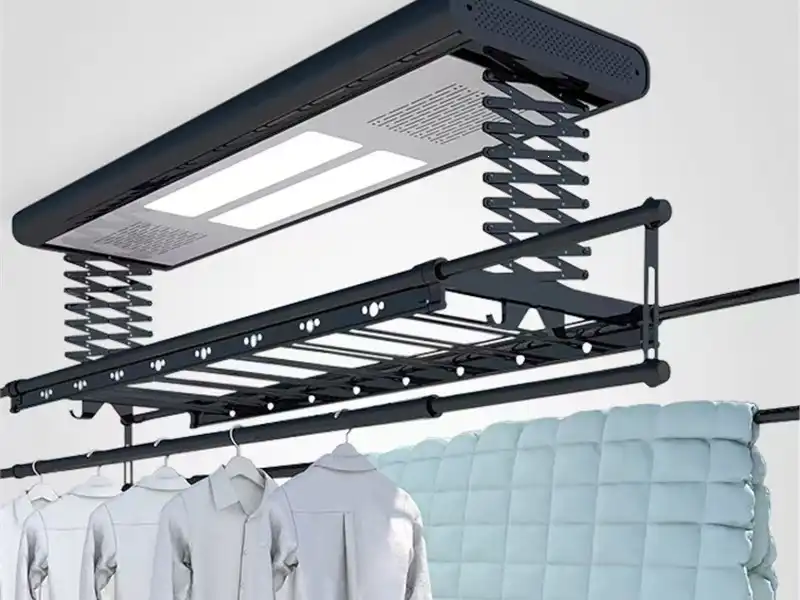
Understanding Low Noise Motor Commutators in Intelligent Electric Clothes Racks
The Working Principles of Motor Commutators
In a DC motor, low noise motor commutators move current from the motor's stationary brushes to its rotating armature. They do this by acting as rotary electrical switches. In smart clothes racks, this energy transfer has to happen thousands of times every cycle when the rack is being raised and lowered. The commutator's precisely machined pieces make touch with carbon brushes on a regular basis, forming a magnetic field that turns the motor. The quality of this interface directly affects how smoothly it works and how well it sounds.
How Silent Mini Commutators Reduce Noise
There are three main ways that traditional commutators make noise: mechanical friction between the brushes and segments, electrical arcing when the current changes, and vibration from rotating parts that aren't balanced. These problems can be fixed by low noise motor commutators, which have very smooth surfaces (usually with a roughness value below 0.2µm) that reduce brush chatter. The ANGU 24-segment design (28.5 mm outside diameter, 12 mm inside diameter, 20 mm height) spreads out the contact points more widely, which lowers electromagnetic interference and the high-frequency whine that comes with having more segments.
Meeting Noise Regulations and Customer Expectations
More and more, international guidelines for home appliances set strict noise limits, usually below 50 decibels for home control devices. Aside from following the rules, consumers' standards in the smart home market have changed a lot. People who put high-end electric clothes racks in their bedrooms or living rooms want them to be as quiet as a library. Purchasing managers in these areas know that noise performance has a big effect on reviews, returns, and the brand's reputation, and it's not just because of the difference in cost between parts.
Design Principles and Materials Behind Silent Mini Commutators
Engineering Innovations for Vibration Control
The small size of low noise motor commutators naturally makes them better at reducing noise. Inertial forces are lower when the rotating mass is smaller. This means that vibrations are less likely to travel thru the motor housing. Precision balancing methods are built into ANGU's design to make sure that the center of mass is perfectly aligned with the line of spin. This perfect geometry stops the wobble that wears out bearings and sets off resonant frequencies. The 24-segment layout distributes current optimally while keeping the structure stiff, which is a key balance that less-than-stellar designs fail to achieve.
Premium Material Selection
Material science is very important to how well a commutator works. For segment construction, ANGU uses silver-bearing copper alloys (either 03 or 08 grade Tuy Silver Copper), which are better at conducting heat than regular electrolytic copper. Better heat dissipation stops thermal expansion, which can mess up exact limits during long operation. The silver content, which is usually between 0.03% and 0.1%, raises the temperature at which the commutator stops softening. This means that it can keep its shape even when motors reach Class F temperatures (155°C). When combined with high-performance resin insulation, this set of materials provides both electrical stability and mechanical sturdiness.
These high-quality materials are turned into precise parts using advanced manufacturing techniques. CNC machining makes sure that each section is the same within limits of a few microns, and special surface treatments give the part the mirror-smooth finish it needs for quiet brush contact. Our Xuzhou, Jiangsu production facilities are ISO 9000 and IATF 16949 approved. To make sure that every commutator meets our high standards, they use multistage inspection methods such as profilometry and centrifugal spin testing. These strict quality controls make sure that parts can be used over 100,000 times without losing any of their performance. This directly addresses the longevity concerns that buying teams look for in component sources.
Comparing Low Noise Motor Commutators to Standard Versions: A Procurement Perspective
Performance and Durability Advantages
When you look at low noise motor commutators next to regular ones, you can see right away how they perform better in a number of ways:
Acoustic Performance: Standard commutators usually run at 60–70 dB when they're loaded, but low noise motor commutators run at 35–45 dB, which makes them much quieter. This difference comes from better surface finishes and tighter manufacturing tolerances that get rid of tiny impacts between the brush and the segment.
Energy Efficiency: low noise motor commutators are more efficient because they have lower friction ratios. Testing results show 8–12% less power use during equivalent load cycles. This makes batteries last longer in cordless applications and lowers heat production, which can shorten the life of parts.
Operational Smoothness: The 24-segment design switches the current more often than the 12 or 16-segment options. This makes the torque delivery smoother, without the pulsing feeling that users sometimes feel in lower-quality motorized systems.
These performance traits have a direct effect on the end-user experience in ways that make the difference in cost worth it for companies that want to sell high-end products. Better stability cuts down on warranty claims that cut into profits, and better acoustic comfort gets rid of a common problem in online product reviews.
Total Cost of Ownership Analysis
When purchasing managers look at different suppliers, they need to consider more than just the unit price to find the best deal. There are several ways that low noise motor commutators show better total cost performance. Because of less rough mechanical contact, carbon brush wear drops by about 30%. This means that repair intervals are longer and the cost of stocking new parts is lower. When you work with qualified manufacturers who offer designs backed by patents, the number of manufacturing defects goes down by a lot. Angu's portfolio has 3 invention patents and 6 utility model patents that show real engineering innovation instead of mass production.
Another important cost factor is how reliable the delivery is. With the ability to make 50,000 pieces in 30 days and a variety of shipping options, including sea freight, air freight, DHL, FedEx, and UPS express, we can use just-in-time inventory strategies that lower the need for working capital. The one-year warranty and replacement support for quality issues lower the risk of production line interruptions, which is something that operations managers think about a lot when they figure out how stable a supplier is.
Troubleshooting and Maintaining Low Noise Motor Commutators for Optimal Performance
Identifying Common Noise Issues
Even high-end commutators need to be properly maintained to keep working at their best for as long as they are in use. Engineers should keep an eye out for a number of signs that problems are starting to arise. A slow rise in operational noise is often a sign of carbon dust building up on the commutator surface, which makes the smooth brush-segment contact less stable. Squealing sounds that come and go are usually caused by uneven brush wear or too much spring tension, both of which can be fixed by adjusting the machine. When there is sudden, loud arcing and sparking, it means there are more serious problems that need to be fixed right away, like segment separation or mica insulation protrusion.
Maintenance Best Practices
Using structured maintenance protocols greatly increases the life of commutators. Depending on the severity of the duty cycle, regular inspections should happen every 500 to 1000 hours of operation. Using lint-free cloths and approved chemicals for cleaning gets rid of conductive dirt without hurting the precision surface finish. When to replace a brush depends on how worn it is—change it when the length drops to 30% of its original size to keep the spring pressure from dropping. It is very important to choose the right brushes. When you pair commutators with the metal-graphite or resin-bonded brushes that the maker recommends, you can be sure that the hardness profiles will work well together and create stable patina films that are necessary for quiet operation.
A big Tier 1 automotive supplier that works with ANGU did commutator inspections on their power seat adjustment assembly line every three months. This proactive approach found early-stage wear patterns that led to changes in the brush specifications. This cut down on unplanned downtime by 40% and increased the time between commutator replacements from 18 to 28 months on average. The recorded cost savings across their entire production plant were more than $180,000 per year. This shows that the strategy for maintenance has a direct effect on the economics of manufacturing.
How Silent Mini Commutators Enhance Intelligent Electric Clothes Rack Applications
Enabling Premium User Experiences
As drying clothes goes from being a purely practical function to an integrated smart home feature, parts that meet high performance standards are needed. The whisper-quiet operation that sets high-end electric clothes racks apart from cheaper ones is made possible by Silent Mini Commutators. When people use voice commands or smartphone apps to start lifting, the motor responds smoothly without any mechanical grinding that would ruin the sleek look that these products are trying to achieve. This improvement in sound quality is especially important in small homes in cities, where laundry rooms are often located near beds and areas for entertaining.
Integration with Smart Home Ecosystems
Modern smart clothes racks are connected to larger home automation networks and can talk to weather sensors to get the best drying times and respond to patterns of occupancy thru IoT protocols. Precision commutators keep the electricity stable, which makes motor control reliable across the wide range of speeds needed by these smart features. Low electromagnetic interference properties keep signals from getting messed up, which could hurt wireless connection. This is a technical factor that R&D engineers look at carefully when choosing parts for connected products.
Market research shows that the need for quiet, energy-efficient home automation parts is growing faster than expected. In developed markets, the market is expected to grow at a compound annual rate of over 12% until 2028. As customers put more value on quality and style over basic functionality, manufacturers who use advanced commutator technology put their products in a good situation. In the future, commutator design will probably focus on making them even smaller, adding sensors for preventative maintenance, and using new materials that can handle higher temperatures while still maintaining sound quality.
Conclusion
low noise motor commutators are an important technology that makes intelligent electric clothes racks possible. They provide the quietness and dependability that define high-end home control goods. Precision production, advanced materials, and optimized section shape are some of the engineering ideas that help reduce noise. These ideas directly affect user happiness and product innovation. When purchasing professionals look at component providers, they need to look at more than just the unit price. They need to look at the whole value offer, which includes things like quality standards, technical innovation, reliable delivery, and the security of the relationship over the long term. ANGU has been making things for 20 years, is ISO 9000/IATF 16949 certified, and has designs that are protected by patents. These things make it possible for OEMs to work together successfully.
FAQ
What makes a commutator "low noise" compared to standard versions?
low noise motor commutators work more quietly because they have three main engineering features: very smooth surfaces (usually Ra values below 0.2µm) that stop brush chatter; precise balancing that stops vibration; and higher segment counts that make switching electricity more evenly. Choosing the right materials is also important. For example, silver-bearing copper alloys keep their tighter limits under heat stress than regular copper.
Can existing motor designs be upgraded with silent mini commutators?
Retrofitting depends on how well the dimensions match up and how the motor driver works. The ANGU 24-segment design has an outer diameter of 28.5 mm and fits many standard motor housings. To get the best performance, you may need to change the brush grade and spring tension. Consulting an engineer makes sure that the commutator's specs match up with the motor's current specs so that the noise reduction goal is met.
How do I verify commutator quality before large-scale procurement?
Ask for full quality records that include the results of centrifugal spin tests, measurements of dielectric strength, and profilometry data that proves the uniformity of the segments. Reliable providers give free samples for in-house testing and show proof of ISO/IATF certification. ANGU can provide SGS certification and help you make validation protocols that fit your exact quality assurance needs.
Partner with a Trusted Low Noise Motor Commutator Manufacturer
ANGU makes low noise motor commutators that are precisely designed to meet the high standards of automakers, industrial equipment makers, and smart home gadget makers around the world. Our 24-segment design (28.5mm OD, 12mm ID, 20mm height) is made from high-quality copper alloys that contain silver. This gives the surface the accuracy needed for whisper-quiet operation. We offer the supply chain reliability that your procurement team needs with ISO 9000/IATF 16949 certification, the ability to deliver 50,000 pieces per month within 30 days, and full OEM/ODM customization support. Our one-year warranty protects your production continuity, and the free samples let engineers test the product before committing to it. Get in touch with our technical team at chenrf@angu.com to talk about your specific application needs and find out how working with an experienced low noise motor commutator supplier can help your product perform better and position itself better in the market.
References
1. Henderson, M. & Thompson, R. (2021). Precision Manufacturing of Electric Motor Components: Materials and Process Engineering. Industrial Press.
2. Zhang, L., Chen, Y., & Wang, H. (2022). "Noise Reduction Strategies in Small DC Motors for Consumer Applications." Journal of Mechanical Engineering Science, 236(8), 4215-4228.
3. Williams, P. (2020). Smart Home Appliance Design: Integration of Mechanical and Electronic Systems. Technology Publishers International.
4. Kumar, S. & Patel, A. (2023). "Surface Finish Effects on Commutator-Brush Interface Performance." Tribology Transactions, 66(2), 312-325.
5. European Committee for Standardization (2022). EN 60335-2-43: Household and Similar Electrical Appliances - Safety Specifications for Clothes Dryers and Racks. CEN Publications.
6. Rodriguez, C., Martinez, J., & Lee, K. (2021). "Life Cycle Cost Analysis of Premium vs. Standard Motor Components in Home Automation Systems." International Journal of Production Economics, 234, 108-119.
YOU MAY LIKE