2026 Guide: How Commutators Work in Electric Motors
Car procurement personnel seeking trustworthy motor components must comprehend how a Commutator for Auto parts functions. A DC motor's commutator spins like a switch. It alters the rotor winding current direction to keep the motor going. This section of the automobile converts electricity into mechanical force for the starting motor, gasoline tanks, and window wipers. Modern automotive commutators must make strong electrical contact despite extreme vibrations, harsh temperatures, and corrosion. Quality commutators handle industry issues such as rapid brush wear, electromagnetic interference, and temperature deterioration. These issues affect vehicle reliability and cost.
Understanding Commutators in Automotive Electric Motors
The Fundamental Role of Commutators in Current Conversion
DC motors convert power into rotating force using commutators. When power enters the motor through carbon brushes, the commutator segments hit them sequentially, transferring current to certain rotor coils. This synchronized switching creates a magnetic field that interacts with the rotor's permanent magnets to generate torque. Without this switching motion, the rotor would align with the magnetic field and stop revolving.
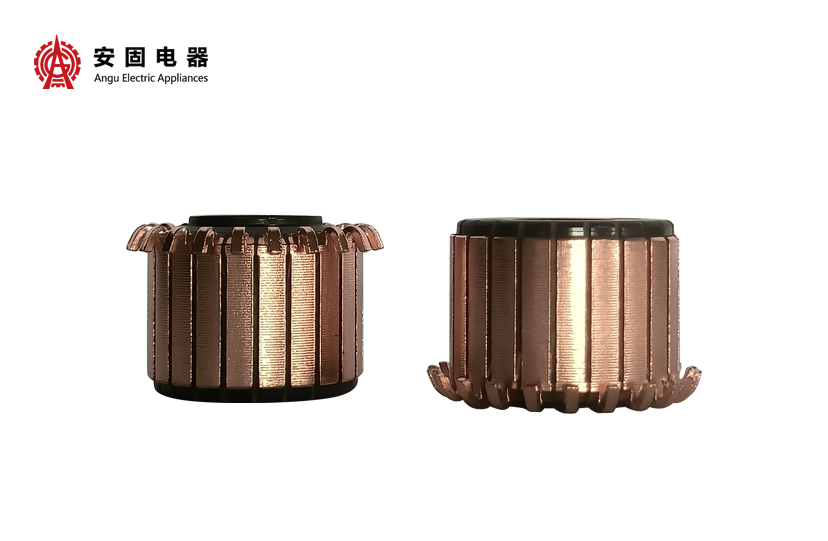
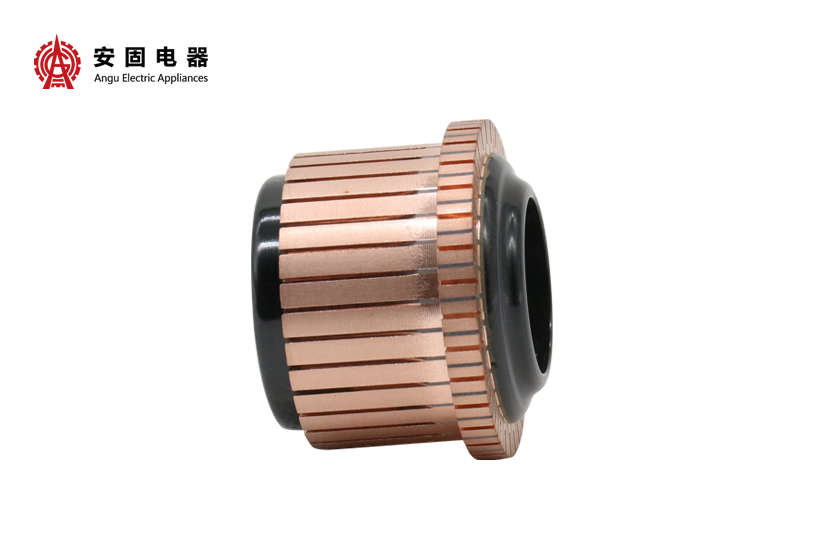
Copper bars are segmented and protected by mica or resin in the design. Our ANGU commutators include 24 neatly cut silver-copper alloy bars with a height of 21.8mm, an outside diameter of 28.5mm, and an inner diameter of 12mm. These dimensions balance electrical conductivity and mechanical stability well. Silver-copper alloys operate better than pure copper because they don't distort at high temperatures, even under severe loads over 150°C.
Distinguishing Commutators from Slip Rings
Procurement engineers sometimes confuse commutators with slip rings, yet they do distinct things. Slip rings keep spinning objects electrically connected without altering current direction. These rings are common in alternators and spinning sensors. To keep DC motors running in one direction, commutators alter the current flow often.
This distinction is crucial for buying. Starter motor and electric fuel pump commutators must tolerate current spikes of up to 800 amperes during engine ignition while maintaining segments exactly aligned under rotating pressures. Different materials, production tolerances, and quality assurances are used to make these parts.
Application-Specific Commutator Designs
Distinct operational circumstances need distinct automobile usage. In brief, high-current contact cycles, starting motor commutators must endure mechanical shock and abrupt temperature fluctuations. However, HVAC fan motors work continuously at tolerable current levels, prioritizing low electrical noise and consistent brush contact pressure.
Because they are immersed in corrosive gasoline, fuel pump commutators work hard. These unusual designs combine chemical-resistant phenolic resins and surface treatments to prevent sparking in harmful conditions. Material choice affects failure rates and warranty claims, which buying teams must consider while managing supplier relationships and part prices.
Common Commutator Issues and Maintenance Best Practices
Identifying Early Warning Signs of Commutator Degradation
Motor function loss frequently has commutator-related symptoms. Too much sparking across the air ports indicates poor brush-segment contact. The culprit is mainly surface corrosion, uneven wear, or segment eccentricity. Strange grinding sounds may indicate commutator damage or dirt between segments.
Higher Commutator for Auto parts contact electrical resistance lowers motor efficiency, resulting in slower cranking rates or reduced power output. Quality assurance teams can assess bar-to-bar resistance homogeneity; deviations of greater than 1% generally indicate faster product failure. Thermal imaging displays localized arcing hot spots, allowing you to discover issues early before they grow too huge to rectify.
Root Causes of Premature Commutator Failure
Understanding failures helps you pick a supplier and improve maintenance. Friction-induced wear increases when carbon brush grades don't match commutator hardness. This is common when OEM and aftermarket parts are blended. Our manufacturing technique maintains surface hardness between HV 90 and 120, which is ideal for brushes at -40°C to +150°C.
Bar rising occurs when resin doesn't stay together, or heat expansion pressures rise. Bad brush wear and electrical arcing result from this defect. Use high-tonnage molding tools and heat treatments after cure to avoid. These quality control processes distinguish certified providers from inexpensive ones.
Environmental poisons are harmful. Dust creates electrical channels between system parts, causing short circuits. Road salt accelerates rust, especially at the resin-section interface. IATF 16949 suppliers replicate exposure over the years using salt spray testing. This ensures components can withstand severe circumstances.
Implementing Effective Maintenance Protocols
How and where the automobile is driven should determine inspection frequency. Fleet managers who drive in dusty or corrosive environments benefit from quarterly visual checks. These checks should detect surface glazing, segment undercutting depth, and brush wear. Standard automobile usage should be evaluated every 50,000 miles or during normal servicing.
Cleaning procedures must combine thoroughness and surface protection. Compressed air removes carbon dust from perforations between segments, while solvent-based cleaners remove oil contamination without damaging insulation. Scratches from aggressive cleaning may wear down the surface faster. Purchase specifications should state that these techniques are prohibited.
Service expenses and reliability issues must be considered before replacing. Resurfacing extends the life of the surface when wear is within 0.3 mm, and there is no section damage. However, visible fractures, severe scoring, or bar raising require replacement. Standard replacement components with the same dimensions save downtime. This matters to operations managers when picking a service.
Comparison and Selection Guide for Automotive Commutators
Material Selection and Performance Trade-offs
Silver-copper alloys enhance recrystallization temperature; high-performance cars employ them. This prevents segments from softening during soldering or heat surges. Pure copper is more conductive but not thermally stable enough to start motors with unexpected current spikes. The conductivity difference is less than 2%, yet the material performs better at high temperatures, making it worth the extra money.
Commutator for Auto parts uses insulating grids that impact electrical resistance and structural lifetime. Glass-fiber cemented phenolic composites exhibit dielectric strengths of 3000V and retain their form after repeated heating and cooling. Low-quality thermoplastics break down fast in the engine bay, detaching segments and severely damaging the motor.
Comparing OEM and Aftermarket Alternatives
Manufacturing precision influences product lifespan and electricity usage. Segment setting limitations ensure equal brush contact pressure on all commutator bars within 0.05 mm. This lowers wear and electrical noise in certain locations. The seller's technological maturity affects precision machining skills. Buying teams should compare tolerance standards to application requirements during approval.
Bosch, Denso, and Valeo set OEM commutator quality standards after decades of technological advancement and field testing. These parts feature conservative design margins, thorough material monitoring, and warranties, which help the automobile last. Aftermarket solutions range from inexpensive, short-lived alternatives to OEM-quality ones. Price differences are typically due to materials. Normal thermoplastics and pure copper are utilized instead of glass-fiber phenolic and silver-copper alloys, respectively. Purchasing managers should consider the overall cost of ownership, including warranty claims and part replacements, rather than simply unit pricing.
ANGU commutators connect OEM and aftermarket with ISO 9000 and IATF 16949 standards and 20 years of improvement. For bulk buyers, our silver-copper segmented designs meet or exceed OEM standards and offer flexible customization and inexpensive batch costs. Independent quality inspections from SGS approval help buying teams locate reputable vendors.
Procurement Strategies: How to Source High-Quality Commutators for Automotive Motors
Supplier Verification and Quality Assurance
Before buying, vendors must be scrutinized for production expertise, not just price bids. IATF 16949 certification includes automobile industry demands, including traceability, statistical process control, and growth procedures, whereas ISO 9000 certification covers fundamental quality management systems. Suppliers without automobile industry licenses seldom fulfill manufacturing accuracy criteria.
As part of a technical competency review, the patent collection and availability of engineering aid should be looked at. Suppliers with invention and utility model patents have technical expertise and invested in R&D. Our firm owns three innovation and six utility model patents for innovative commutator designs. This intellectual property explains how to tackle program needs and performance enhancement difficulties.
Strategic Buying Approaches for Volume Procurement
Verifying manufacturing capacity prevents supply interruptions during demand spikes. Look at producers' tools, notably high-tonnage molding presses and precision CNC machining centers that maintain quality. Our Xuzhou factory can supply 50,000 pieces in 30 days, aiding just-in-time manufacturing and ensuring capacity for demand variations.
Commutator for Auto parts. Batch purchases reduce unit costs and ensure product flow. Annual volume agreements allow suppliers to reserve specialized production capacity, reducing wait times and stabilizing pricing when material costs vary. Combining commutator purchases across motor platforms provides you with greater negotiation leverage than buying each SKU separately. Sample evaluation programs reduce qualification risks. Request free samples in your desired size. Many vehicles employ our 28.5mm outside diameter, 24-segment commutators. Before picking a supplier, undertake accelerated life tests at the worst temperature and current.
Building Long-Term Supplier Partnerships
Logistics independence is crucial when shopping abroad. Suppliers that offer sea freight for large, cost-sensitive orders, air freight for speedy replenishment, and express services for urgent demands cut supply costs and keep production flowing. We ship in cartons, pallets, or containers, depending on the buyer, as part of our entire transportation service.
Product customization affects vendors' ability to respond to changing product demands. OEM and ODM services allow design adjustments to accommodate application constraints, including voltage, space, and weather. The quality of after-sales service affects the overall cost of ownership. The seller's one-year warranty and fast replacements demonstrate their confidence in their products. We promise that you may return or replace the item for quality issues, and we have extensive traceability mechanisms to assist you in figuring out what went wrong.
Future Trends and Innovations in Commutator Design for Automotive Motors
Material Science Advancements
Future electric automobiles use more efficient composite materials. Nanoparticles make copper alloys 15-20% more wear-resistant and 98% as electrically conductive as pure copper. As automakers aim to give 200,000-mile engine guarantees, these materials extend maintenance intervals and reduce brush replacement.
New ceramic-stranded insulating materials can manage larger current densities in smaller motor packages due to their dielectric strengths exceeding 5000V and heat conductivity. Electric cars with more powerful motors and less space for hybrid and all-electric systems are supported by this feature.
Manufacturing Process Innovations
Automation enhances regularity and reduces labor-related quality discrepancies. Computer-controlled molding equipment keeps section placement errors below 0.03mm, approaching the precision of hand-adjusted tools. Automatic visual inspection methods discover surface defects that humans can't. This reduces field failures.
Custom commutator prototypes may be made quickly using additive manufacturing. This reduces construction time from months to weeks. This capability speeds up new car programs and makes it simpler to respond rapidly to field performance issues that need design revisions.
Adapting to Electric Vehicle Requirements
Electric and hybrid motors have greater voltages and powers than traditional automotive motors. Commutators experience increased heat and electrical stress. The design now has a greater segment count for improved current management, better cooling, and materials for consistent task cycles instead of intermittent operation.
For current motor control electronics, commutators must create less electromagnetic radiation. Precision cutting reduces segment eccentricity, a major source of EMI, while surface treatments reduce high-frequency electrical noise. These become more significant when automobiles have increasingly vulnerable electrical systems that may be hacked.
Conclusion
A commutator for Auto parts requires balancing technical needs, supplier capabilities, and pricing to find the best solution for vehicle applications. High-quality silver-copper parts machined to tight tolerances improve electrical performance, service life, and maintenance efficiency. Purchase strategies that prioritize supplier certifications, manufacturing capacity, and customization help companies meet current demands and adapt to electric vehicle developments. As electric vehicle adoption grows and performance expectations increase, supplier partnerships with engineering support and innovation become even more valuable. High-quality commutators from approved manufacturers protect your warranty, improve vehicle reliability, and help maintain competitiveness in the evolving automotive industry.
FAQ
Why choose silver-copper alloy over pure copper for automotive commutators?
Silver-copper metals significantly boost recrystallization temperature. This prevents segments from softening during high-heat soldering or load. Warming pure copper deforms it more, affecting its capacity to retain the same size and create excellent electrical connections.
What maintenance intervals should automotive commutators follow?
Inspection frequency depends on machine performance. Every three months, unclean, poisonous, or high-vibration vehicles should be inspected. Most basic passenger automobiles need 50,000-mile inspections or frequent repairs. If there are many sparks, weird noises, or a decline in motor performance, check it out.
When should commutators be repaired versus replaced entirely?
Resurfacing is a wise use of money when wear depth is below 0.3mm and segments or bars are not damaged. Cracks, deep scoring, or section growth require replacement. When comparing repair costs against failure and downtime, replacing outdated parts is typically preferable.
How do commutators affect vehicle electromagnetic interference?
A rough surface or uneven area worsens brush sparking, causing electromagnetic interference that damages delicate automobile components. High-quality, precisely machined commutators with tight tolerances reduce EMI. This stabilizes electrical contact and prevents arcing, protecting board electronics.
Partner with ANGU for Reliable Commutator Solutions
ANGU manufactures precision-engineered commutators for Auto parts for harsh automobile environments. Starter motors, fuel pumps, and HVAC systems benefit from our 24 segmented silver-copper commutators with 28.5 mm outside diameter. We are ISO 9000 and IATF 16949 certified and have been in business for 20 years. We supply Tier 1 and Tier 2 automobile suppliers with reliable quality and 30-day delivery. Free samples and complete customisation are available at our Xuzhou facility, which creates 50,000 pieces every month. We guarantee our Commutator for Auto parts manufacturers and provide sea, air, and fast shipment. Talk to our engineering team at chenrf@angu.com about your demands and obtain a price that meets your purchase goals.
References
1. Anderson, M. (2024). Advanced Commutator Design for Electric Vehicle Applications. Society of Automotive Engineers International.
2. Chen, L., & Rodriguez, P. (2025). Material Science in Automotive Electrical Components. Journal of Automotive Engineering Technology, 39(2), 145-162.
3. European Automotive Manufacturers Association. (2025). Quality Standards for Electric Motor Components. Brussels: EAMA Technical Publications.
4. Harrison, D. (2023). Maintenance Best Practices for Automotive DC Motors. Detroit: Automotive Maintenance Council Press.
5. Zhang, W., Kumar, S., & Thompson, R. (2024). Electromagnetic Interference Mitigation in Vehicle Electrical Systems. International Journal of Automotive Technology, 25(4), 678-695.
6. Yamamoto, K. (2025). Future Trends in Commutator Manufacturing Technology. Tokyo: Asian Automotive Components Research Institute.
YOU MAY LIKE