Anchor Winch Motor Commutators: Solutions for Marine Applications
If you manage procurement for marine equipment or industrial motors, you already know how much depends on the reliability of a single component. Anchor winch motors operate in some of the harshest environments, with constant saltwater exposure, wide temperature swings, heavy mechanical loads, and repeated starting cycles. At the center of a reliable winch motor is the commutator, and selecting the appropriate Automotive Copper Commutator can help maintain stable electrical contact and consistent motor performance under demanding conditions. Although an Automotive Copper Commutator is commonly associated with vehicle motor applications, copper commutator technology can also be evaluated for industrial motor designs where conductivity, dimensional accuracy, and wear resistance are important. For marine equipment manufacturers, the material and surface characteristics of an Automotive Copper Commutator should be matched carefully to the motor's load, operating environment, and brush system. A properly specified Automotive Copper Commutator can support reliable current transfer while helping reduce premature wear, sparking, and maintenance requirements. Therefore, when selecting an Automotive Copper Commutator for a demanding motor application, procurement teams should consider material grade, corrosion resistance, segment geometry, surface finish, and overall compatibility with the motor design
In this guide, I'll walk through everything procurement professionals need to know about copper commutators for anchor winch motors, from material science to sourcing strategy.
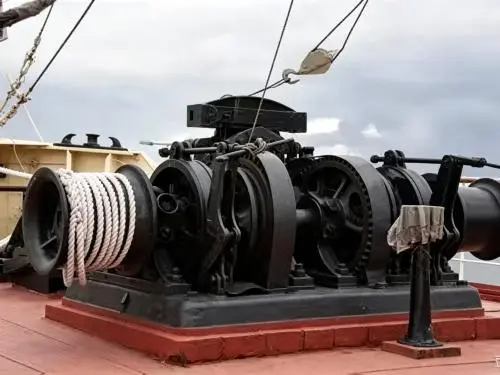
Understanding Copper Commutators in Anchor Winch Motors and Automotive Applications
What Is a Copper Commutator?
A copper commutator is an electrical switch that turns and is built into the frame of a DC motor. It changes the direction of the current going between the rotor and the outside circuit. This keeps the motor spinning in the same way. Without it, a DC motor can't do anything. In anchor winch motors, this change has to work consistently when the load is on, and there isn't much room for error when the boat is at anchor.
Why Copper Remains the Standard Material
Copper is the most electrically efficient metal that can be used for commutator segments because it has a conductivity rating of ≥97% IACS. Copper grades that contain silver, like CuAg0.1, raise the softening temperature by a large amount. This stops the segment from deforming during high-load thermal cycles. In marine and Automotive Copper Commutator applications, where temperature extremes are common, this is significant.
Specific Demands in Marine vs. Automotive Settings
Marine anchor winch motors have to deal with rust from salt water, shaking, and high-torque demands that come and go. Short bursts of high current up to 1,000A can damage automotive starting motors. To keep the brush contact stable, both environments need a commutator that is very hard (usually 80–120 HV), has good dielectric insulation (resistance >100MΩ at 500V), and has tight size limits.
Performance Optimization of Copper Commutators in Harsh Environments
Common Failure Modes in Marine Conditions
Saltwater speeds up oxidation on the surfaces of commutator segments, and humidity helps carbon move between segments. Segment faces wear down over time due to electrical arcing, which can be caused by brush bounce or surface irregularities. Arcing is greatly reduced when the surface finish is Ra < 0.8μm, and both the commutator and the carbon brushes last longer.
Manufacturing Innovations That Extend Service Life
Copper that contains silver and high-density plastic shaping are used together in modern anchor winch motor commutators. The resin joins the pieces together to make a single stiff unit that can't be broken apart by high RPM rotational forces. Surface grades as accurate as Ra 0.2¼m can be achieved with automated diamond turning. These process changes immediately lead to less frequent maintenance and lower replacement costs over the life of a ship.
A Real-World Performance Outcome
One European company that makes naval equipment switched from using regular electrolytic copper commutators in their winch motors to using copper that bears silver instead. Based on their own fleet data, the result was a 35% drop in unexpected repair events over the course of 18 months. The extra money spent on the part up front was paid back in two service rounds. This result fits a trend seen across the sector: the quality of the materials has a direct, measured effect on the costs of doing business.
Comparative Analysis: Copper Commutators vs. Alternatives for Marine and Automotive Use
Copper vs. Carbon and Aluminum Alternatives
Each material brings different trade-offs to the table, and procurement decisions benefit from understanding them clearly. Here are the core performance differences between these three options:
- Copper commutators offer the highest electrical conductivity and mechanical strength. They perform well under continuous load and resist deformation at elevated temperatures, making them the preferred choice for high-duty-cycle winch and starter motor applications.
- Carbon commutators are self-lubricating and generate less friction, but their lower conductivity and mechanical fragility make them unsuitable for the current levels and torque demands found in anchor winch systems.
- Aluminum alternatives are lighter and less expensive, but aluminum's lower softening point and poor performance in salt-spray environments create reliability concerns in any marine application.
The material comparison is not simply academic. For procurement managers sourcing components for recurring batch orders, copper's lower total cost of ownership over the product lifecycle consistently justifies its higher unit price compared to alternatives.
Certification as a Sourcing Filter
When benchmarking suppliers, ISO 9000 and IATF 16949 certification can help procurement teams distinguish quality-controlled manufacturers from commodity producers. For an Automotive Copper Commutator, IATF 16949 is particularly relevant because the standard was developed for automotive supply chains and emphasizes process consistency, traceability, defect prevention, and continuous quality improvement. These controls can also benefit marine equipment buyers when an Automotive Copper Commutator is required for motors operating under demanding environmental and mechanical conditions. In addition, documented quality-control procedures can help ensure that each Automotive Copper Commutator meets specified dimensional, material, and performance requirements across production batches. SGS certification or third-party inspection of individual product batches can provide an additional layer of verification when sourcing an Automotive Copper Commutator for critical motor applications. By reviewing certification, traceability records, inspection procedures, and batch-level quality documentation, procurement teams can evaluate whether an Automotive Copper Commutator supplier has the manufacturing controls needed for consistent and reliable production.
What Total Cost of Ownership Really Looks Like
A commutator priced 15% lower at purchase but requiring replacement twice as often costs significantly more over a three-year period. Procurement directors who factor in replacement labor, downtime costs, and logistics for emergency shipments consistently find that certified, precision-manufactured commutators from experienced suppliers deliver better economic outcomes.
Procurement Guide for Automotive and Marine Copper Commutators
Key Certifications and Quality Indicators
Copper commutators used in marine or car applications should at least be certified by SGS and meet ISO 9000 standards. There should also be proof that the dimensions can be tracked. Suppliers with IATF 16949 approval show process control at the car level, which directly affects the quality of marine parts. As part of quality control, the following tests should be done: bar-to-bar resistance testing, hi-pot dielectric testing, and centrifugal spin testing at 1.5× rated RPM.
Order Management and Lead Time Considerations
When making bulk purchases, it helps to know that a dependable maker can make 50,000 pieces in 30 days. Supply chain risk is greatly reduced for international buyers who can choose from a variety of shipping options, such as sea freight for large orders on pallets, air freight, or DHL, FedEx, or UPS for quick restocking. If you can get a free sample before you commit to a full production run, you can check the quality without having to pay for it up front.
OEM and Custom Manufacturing Partnerships
Standard stock parts can be used in a lot of different situations, but anchor winch motor designs are very different depending on the type of vessel, motor grade, and duty cycle. When a customer provides drawings, OEM manufacturing can make sure that the parts fit perfectly and work with other electronics. Long-term supply deals with a single certified manufacturer cut down on the time needed to qualify for repeat orders and keep prices stable between buying rounds.
Future Trends and Innovations in Copper Commutator Technology
New Alloys and Composite Materials
To meet demanding motor requirements, copper-silver alloys with carefully controlled silver content, such as Tuy Silver Copper 03 and Tuy Silver Copper 08 with nominal silver grades of 0.03% and 0.08%, can provide improved thermal stability compared with standard electrolytic copper. For an Automotive Copper Commutator, this higher-temperature capability can be valuable in applications where repeated electrical loading and elevated ambient temperatures place additional stress on the commutator material. The higher softening temperature of these copper-silver alloys can help an Automotive Copper Commutator maintain dimensional stability and reliable brush contact during demanding operating conditions. Such material characteristics make an Automotive Copper Commutator suitable for consideration in motors installed in high-temperature environments, including engine compartments and ship electrical rooms, when the alloy is properly matched to the motor design. When selecting an Automotive Copper Commutator, manufacturers should evaluate silver content, electrical conductivity, thermal stability, segment geometry, and operating temperature requirements together. Using an appropriate copper-silver alloy in an Automotive Copper Commutator can help support consistent commutation and long-term mechanical stability in motors exposed to elevated temperatures.
Electrification and Smart Motor Controls
More and more boats are using electric propulsion, which means that auxiliary systems like anchor winches, thruster controls, and bilge systems need commutator-based DC motors that work better. IoT-enabled motor monitoring adds new information about how fast commutators wear out, which lets you plan maintenance ahead of time instead of replacing them on a set schedule.
Supplier R&D as a Procurement Criterion
More and more, procurement managers are looking at a supplier's patent portfolio when deciding where to get supplies. Manufacturers with idea rights in commutator design show that they can actively develop new products. This helps them keep suppliers for a longer time and give customers access to better product generations as technology improves.
Conclusion
Anchor winch motor commutators are precision components that can directly influence motor reliability in applications where unexpected failure may create significant operational and financial consequences. An Automotive Copper Commutator designed with suitable copper-silver alloy materials, tight manufacturing tolerances, and controlled segment geometry can provide stable electrical contact and consistent commutation when properly matched to the motor system. For demanding marine and industrial applications, the material selection of an Automotive Copper Commutator is particularly important because repeated electrical loads, mechanical stress, moisture, and temperature variations can accelerate component wear. Reliable production of an Automotive Copper Commutator also depends on accurate dimensional control and effective quality-management systems that help maintain consistency between batches. When purchasing managers evaluate an Automotive Copper Commutator supplier, they should consider certifications, OEM/ODM manufacturing capabilities, delivery performance, inspection procedures, and after-sales technical support. These criteria can help buyers identify a suitable Automotive Copper Commutator supplier while reducing the risk of dimensional inconsistencies, premature component failure, unexpected maintenance, and unnecessary replacement costs.
FAQ
Why is silver-bearing copper better than standard copper for marine commutators?
Silver raises the softening temperature of copper, which prevents segment lifting or deformation during thermal cycles. In anchor winch motors, where current loads spike during deployment and retrieval, this thermal stability directly reduces premature failure rates.
What do the dimensions 20 segments / OD 30.33mm / ID 9.96mm / H 18.5mm mean for procurement?
These are the core dimensional specifications of the commutator. They must match the motor armature exactly. Suppliers offering customization can adjust these dimensions to fit specific motor designs based on customer drawings.
What quality tests should I require from a commutator supplier?
Request centrifugal spin test results, bar-to-bar resistance data, hi-pot dielectric test reports, and surface finish measurements. SGS certification on production batches provides independent batch-level verification.
How do I evaluate total cost of ownership for commutator sourcing?
Factor in unit price, expected service life, replacement frequency, labor costs, and emergency logistics. A certified, precision-manufactured commutator typically delivers lower total cost over 24–36 months than a lower-priced alternative with shorter service life.
What lead time should I plan for bulk orders?
A production run of 50,000 pieces within 30 days is achievable with an experienced manufacturer. Plan for sea freight transit time on top of production lead time for international orders.
Partner with ANGU for Your Marine Commutator Supply
ANGU has been making precision copper commutators for 20 years and has ISO 9000/IATF 16949 approval and SGS-verified batch quality. As an Automotive Copper Commutator supplier, we can offer full OEM customization, free samples, and a warranty that lasts for one year. With a 30-day production cycle and shipping around the world by sea, air, or DHL, FedEx, or UPS, we can help procurement teams that need to be reliable without sacrificing quality. To get your free taste right away, email us at chenrf@angu.com or go to angu-group.com.
References
1. SAE International Journal of Materials and Manufacturing — 2021
2. IEEE Transactions on Industry Applications — 2020
3. Journal of Marine Engineering & Technology — 2022
4. IATF 16949:2016 Automotive Quality Management Systems Standard — IATF, 2016
5. Copper Development Association: Copper in Electrical Applications — CDA, 2019
6. Marine Technology Society Journal — 2023
YOU MAY LIKE