How to Choose a High-Performance Commutator for Automotive Starting Motors
Choosing the right commutator for an automotive starting motor is not a decision to take lightly. The vehicle starter commutator for automobile starting motor acts as the electrical heart of your starter system — it controls current direction through the rotor windings, generates consistent torque, and directly affects cold-start reliability. A poor choice leads to arcing, premature brush wear, and costly downtime. This guide walks you through every factor that matters, from material science to supplier evaluation, so your procurement decisions hold up under real operating conditions.
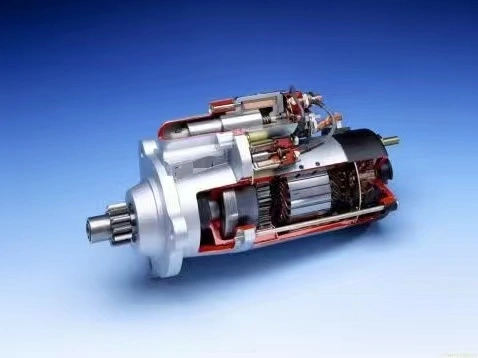
Understanding the Role and Function of a Vehicle Starter Commutator
What a Commutator Actually Does
A segmented rotary switch on the armature shaft is what a starter motor commutator is. Along with carbon brushes, it sends rapid direct current into the rotor windings at the right time. This order makes mechanical torque that can only go in one way. This torque spins the spinning ring gear and turns the engine over. If your commutator isn't working right, the electricity from your battery can't be turned into mechanical action.
How It Differs From the Armature
The armature is the whole moving part, including the core, the windings, and the shaft. The commutator is a separate, high-precision part that is pressed onto the armature shaft. The armature makes electric force, and the commutator controls when and which way the current flows. When you mix them up, you end up with wrong diagnoses during upkeep and the wrong parts being ordered, which costs time and money.
Common Failure Signs That Signal Replacement
QA managers and procurement engineers should notice these early warning signs:
- Visible burn marks or pitting on copper segment surfaces indicate repeated electrical arcing from poor brush contact.
- Brush sparking during operation often points to excessive surface runout or mica protrusion above the copper bars.
- Slow cranking or no-start conditions under normal battery voltage suggest high contact resistance caused by oxidation or segment wear.
If the battery voltage is normal and the engine cranks slowly or won't start, this could mean that the contacts are too resistant because of oxidation or segment wear.
Key Factors in Choosing a High-Performance Starter Commutator
Material Composition and Conductivity
Automobile starting motors operate under demanding conditions, including high current loads, frequent starting cycles, rapid acceleration, vibration, and temperature variations. Selecting the right Vehicle Starter Commutator for Automobile Starting Motor is therefore more than a basic dimensional decision; it can influence starting performance, commutation stability, component wear, and the service life of the starter motor. A properly manufactured Vehicle Starter Commutator for Automobile Starting Motor should have accurate dimensions, suitable conductive and mechanical properties, reliable insulation between segments, and a surface finish compatible with the starter motor's brush system.
When evaluating a Vehicle Starter Commutator for Automobile Starting Motor, procurement teams should consider the motor's current and speed requirements, commutator segment geometry, material grade, dimensional tolerances, insulation performance, surface quality, and resistance to mechanical and thermal stress. The commutator should also be properly matched with the carbon brushes, armature design, and overall electrical characteristics of the starter motor. Consistent manufacturing and inspection are particularly important because dimensional deviations, poor insulation, or surface defects can contribute to unstable commutation, excessive brush wear, arcing, or premature component failure.
Whether sourcing components for a new automotive starter motor or replacing an existing commutator, buyers should verify the manufacturer's production capabilities, quality-control procedures, material specifications, and relevant testing records. Choosing a Vehicle Starter Commutator for Automobile Starting Motor based on documented technical requirements and consistent manufacturing standards can help support reliable engine starting, stable electrical performance, and predictable component service life. For automotive component manufacturers and procurement teams, application-specific design and controlled production quality are key factors when selecting a starter commutator for long-term vehicle operation.
Dimensional Precision and Surface Finish
Tight geometric tolerances have a direct effect on the quality of brush contact. A surface roughness profile of 0.4 to 0.8 μm Ra lets the carbon brush create a steady patina layer, which is a thin film that lowers both friction and electrical resistance. Total Indicated Runout should stay within the limits set by the manufacturer. Even small amounts of out-of-roundness can cause the brush to bounce, which causes electromagnetic interference and speeds up carbon wear. Verification of segment parallelism by a coordinate measuring machine is an important quality step that can't be skipped.
Certifications and Compliance Standards
If you are a Tier 1 or Tier 2 automotive supplier, you have to be certified. Suppliers with "ISO 9000" and "IATF 16949" credentials should be given top priority because they prove process-level controls, tracking, and group consistency. The SGS approval adds a layer of independent third-party proof. By checking these papers before making large orders, you can keep your supply chain from being surprised by poor quality during production.
Comparing Starter Commutator Options: Materials, Brands, and Solutions
Copper, Graphite, and Hybrid Types
Every kind of material is used for something different. For smart sourcing choices, here is a straight comparison:
- Silver-bearing copper commutators deliver the highest electrical conductivity and thermal stability. They are the standard choice for automotive starter applications where high surge currents and temperature swings are routine. ANGU's Model Q-06 uses Tuy Silver Copper 03/08, rated for -40°C to +200°C and up to 30,000 RPM.
- Graphite-impregnated types are better suited for lower-current applications where self-lubrication matters more than conductivity — typically small industrial motors rather than vehicle starters.
- Hybrid composite types balance cost and performance for mid-duty cycles, though they often fall short of full automotive-grade thermal resistance.
These differences in materials have a direct effect on how long a commutator lasts in your application.
How Leading Brands Position Themselves
Bosch and Denso are both strong OEM brands with a history of high quality. However, many of their standard catalog products don't offer the flexibility in dimensions that many procurement teams need. Valeo is going after the European aftermarket with low prices. When a buyer needs full OEM/ODM manufacturing with custom segment numbers, diameters, and material grades, working directly with a specialized maker like ANGU gives them technical freedom that catalog brands can't offer.
Repair Versus Replacement: A Practical Call
If a Vehicle Starter Commutator for Automobile Starting Motor remains within the manufacturer's allowable dimensional limits and its segments are structurally sound, its contact surface may be carefully resurfaced to restore a suitable running surface and improve brush contact. After resurfacing, the mica insulation between the commutator segments should be checked and, where required by the original design specifications, undercut to maintain proper clearance from the brushes. The final commutator diameter, segment condition, surface finish, and insulation clearance should be verified against the starter motor manufacturer's service requirements before the component is returned to operation.
However, if resurfacing would reduce the commutator below its specified minimum diameter, or if the Vehicle Starter Commutator for Automobile Starting Motor has lifted, cracked, burned, excessively worn, or otherwise damaged segments, replacement is generally the safer maintenance option. For commercial vehicles and automotive applications with frequent starting cycles, timely replacement of a damaged commutator can help reduce the risk of poor starting performance, excessive brush wear, arcing, and unexpected starter motor failure. By monitoring commutator diameter, segment condition, surface wear, mica insulation, and brush contact, maintenance teams can determine whether a Vehicle Starter Commutator for Automobile Starting Motor is suitable for refurbishment or requires replacement. Following the manufacturer's service limits and inspection procedures helps make starter motor maintenance more predictable and supports reliable vehicle starting performance.
Best Practices for Maintenance and Longevity of Starter Commutators
Routine Diagnostic Checks
A precise digital multimeter can be used to check the resistance from bar to bar. Readings that are more than 10% different between segments next to each other show that there are internal shorts or insulation holes. After that, do a high-pot test to make sure there are no leaks between the steel core and the copper bars. These two checks don't take long and find most early problems before they hurt the motor.
Cleaning and Surface Care
Clean the segment surface with dry compressed air or a cloth that doesn't have any lint on it. Stay away from harsh chemicals that change the shape of the surface. If light oxidation shows up, the finish can be fixed with a fine commutator stone instead of sandpaper because it doesn't change the tolerances for size. Keep the stiffness of the brush spring within the range given by the maker. Worn springs lower the contact force and speed up the arcing process.
Environmental Protection for Demanding Applications
Exposure to water and salt speeds up oxidation between parts of marine or agricultural equipment. Adding a layer that doesn't absorb water to the insulating resin makes repair times much longer. Before installing your commutator, make sure that the resin system has been tested for low-temperature brittleness resistance on construction and mining equipment that works in temperatures below zero.
Procurement Strategies for Sourcing High-Quality Starter Commutators
Wholesale Versus Direct Manufacturer Sourcing
Wholesale distributors can provide convenient access to a Vehicle Starter Commutator for Automobile Starting Motor for small replacement orders, but they may offer less flexibility when buyers require application-specific specifications or engineering support. For larger-volume procurement, sourcing a Vehicle Starter Commutator for Automobile Starting Motor directly from the manufacturer can provide more direct communication with the engineering team and greater control over dimensions, materials, segment configuration, insulation requirements, and surface specifications. Direct manufacturer sourcing is particularly useful when the commutator needs to be matched to a specific starter motor armature and brush system.
ANGU offers OEM/ODM manufacturing support and a standard production lead time of 30 days for orders of up to 50,000 pieces, helping procurement teams plan recurring purchases of starter commutator components. Free samples are also available before a full-order commitment, allowing buyers to verify dimensions, fit, material specifications, and workmanship against their application requirements. For automotive component manufacturers and distributors seeking consistent quality and application-specific customization, working directly with a qualified commutator manufacturer can simplify communication between engineering, purchasing, and production teams while supporting more consistent supply for Vehicle Starter Commutator for Automobile Starting Motor requirements.
Evaluating Logistics and Delivery Terms
Global buyers should confirm that their starter commutator supplier supports multiple shipping modes. ANGU ships via sea freight for large-volume orders, air freight for time-sensitive deliveries, and international express through DHL, FedEx, or UPS. Flexible logistics options prevent production schedule disruptions regardless of order size or urgency.
Building Long-Term Supplier Relationships
A supplier with 20 years of manufacturing experience, a vertically integrated production chain, and a patent portfolio — including three invention patents and six utility model patents — offers something a catalog distributor cannot: genuine engineering partnership. Long-term OEM/ODM agreements reduce per-unit cost, lock in quality standards, and give your R&D team access to technical consultation for new product development.
Conclusion
Selecting the right Vehicle Starter Commutator for Automobile Starting Motor requires careful evaluation of material properties, dimensional accuracy, manufacturing quality, supplier qualifications, and supply reliability. A reliable starter commutator should use a conductive material and insulation system appropriate for the starter motor's electrical and mechanical requirements, while maintaining accurate segment dimensions and consistent insulation between segments. Material selection should be based on the specific starter motor design, current load, rotational speed, brush system, and operating conditions rather than assuming that one alloy is suitable for every application. Copper-based materials are commonly used for commutators, with the specific material grade determined by the required electrical conductivity, mechanical strength, thermal performance, and wear characteristics.
When sourcing a Vehicle Starter Commutator for Automobile Starting Motor, buyers should verify the manufacturer's dimensional tolerances, material specifications, insulation quality, production consistency, and documented quality-control procedures. Supplier qualifications such as IATF 16949 certification can also provide useful evidence of an established automotive quality-management system, although the certification applies to the manufacturer's management system rather than to the individual commutator itself. OEM customization capabilities are particularly important when the commutator must match a specific armature, shaft, brush system, or starter motor design.
ANGU's Model Q-06 is designed for applications including automobiles, industrial equipment, and heavy-duty machinery, providing an option for manufacturers requiring application-specific commutator specifications. ANGU also offers OEM customization, documented production and quality procedures, and a one-year warranty to support production and replacement requirements. By evaluating technical specifications, manufacturing capabilities, quality systems, and supply reliability together, procurement teams can make a more controlled sourcing decision for a Vehicle Starter Commutator for Automobile Starting Motor and reduce the risks associated with dimensional mismatch, inconsistent manufacturing quality, and supply interruptions.
FAQ
What is the difference between a flat-type and drum-type commutator?
A flat-type commutator has segments arranged on a disc face, with brushes contacting the flat surface axially. A drum-type has segments arranged around a cylinder, with brushes pressing radially inward. Flat types like ANGU's Q-06 are common in compact starter motors where axial space is limited.
Why does silver-bearing copper outperform standard copper in starter applications?
Silver content raises the recrystallization temperature, which means the copper bars resist softening during prolonged cranking. Standard ETP copper softens around 200°C; silver-bearing grades maintain structural integrity well beyond that threshold.
How do I know when a commutator needs replacement rather than resurfacing?
If the copper bar depth has reached the minimum wear indicator, or if bar lifting or segment cracking is visible, replacement is necessary. Resurfacing is only viable when the bar surface is worn but structurally sound.
What does IATF 16949 certification mean for a commutator supplier?
IATF 16949 is the automotive quality management standard. A certified supplier maintains documented process controls, defect traceability, and continuous improvement systems — requirements that directly protect OEM buyers from batch quality failures.
Can ANGU produce commutators to custom dimensions?
Yes. ANGU supports full OEM and ODM manufacturing based on customer drawings. Outer diameter, inner diameter, height, segment count, and material grade can all be adjusted to match your application.
Get Your Free Sample From ANGU — Trusted Vehicle Starter Commutator Manufacturer
ANGU has been making precision-engineered starter commutators that meet IATF 16949 and ISO 9000 standards for 20 years and has nine registered patents to back this up. As a direct provider of Vehicle Starter Commutator for Automobile Starting Motor, we offer full OEM/ODM customization, 30-day shipping on orders of up to 50,000 pieces, and a guarantee that lasts for one year. Get a free sample of Model Q-06 right now. To start your question, email us at chenrf@angu.com or go to angu-group.com.
References
1. Bosch Automotive Handbook — Robert Bosch GmbH, 2022
2. Electrical and Electronic Principles and Technology — John Bird, Routledge, 2017
3. SAE International Journal of Engines — SAE International, 2021
4. Automotive Electrical and Engine Performance — James D. Halderman, Pearson, 2020
5. IATF 16949:2016 — International Automotive Task Force, 2016
6. Electric Motor Handbook — H. Wayne Beaty & James L. Kirtley Jr., McGraw-Hill, 1998
YOU MAY LIKE