Choosing Reliable Commutators for Electric Linear Actuator Motors
Selecting the right commutator for an electric linear actuator motor is one of those decisions that quietly determines how long your equipment runs without interruption. A worn or poorly manufactured commutator leads to brush sparking, carbon tracking, and thermal overload — all of which shorten motor life and increase operating costs. Whether you're a procurement manager sourcing components in bulk or an R&D engineer evaluating a new actuator design, understanding motor commutator replacement fundamentals gives you a real edge in keeping your systems running at peak capacity.
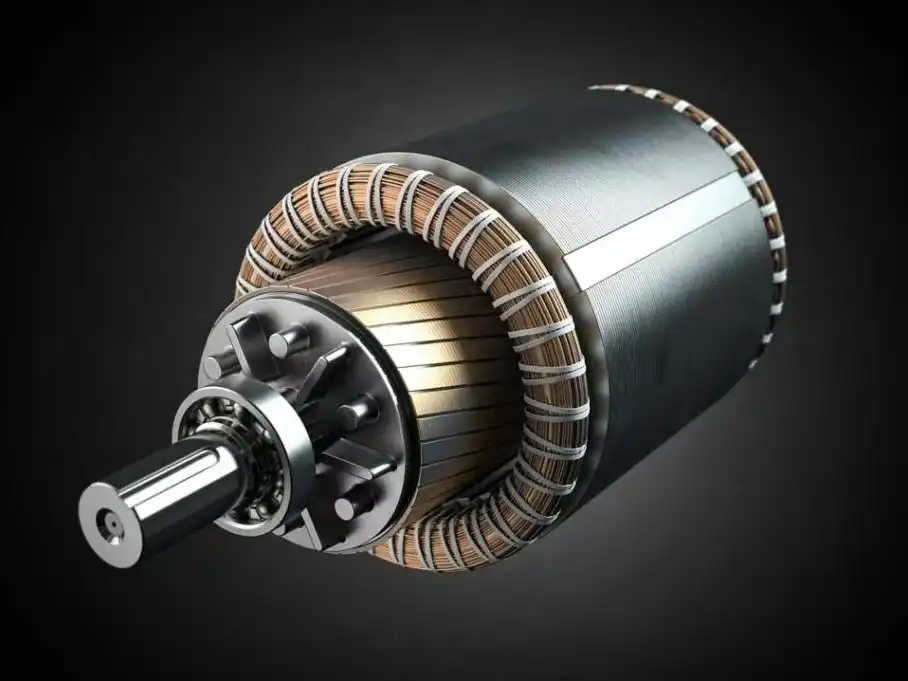
Understanding Motor Commutators and Their Role in Linear Actuator Motors
What a Motor Commutator Actually Does
A commutator is an electrical switch that turns and is built into the frame of a motor. At regular intervals, it changes the direction of the current flowing through the windings, which keeps the rotational torque going. In electric linear actuators, this torque is turned into controlled linear force. This means that the integrity of the commutator is directly linked to the consistency of the actuator output. The motor loses effectiveness, generates too much heat, and breaks down faster than planned if the current switching is not done correctly.
Common Signs of Commutator Wear
[H3] Early detection helps you save money. Keep an eye out for these signs:
- Excessive brush sparking during operation — often a sign of surface pitting or segment imbalance
- Audible roughness or grinding that wasn't present during initial commissioning
- Elevated motor temperature without a corresponding increase in load
- Uneven carbon deposits on segments, indicating irregular brush contact
– Higher motor temperature without a corresponding rise in load- Amounts of uneven carbon layers on segments, showing uneven brush contact
Preventive Maintenance Techniques
These signs and symptoms don't always show up at the same time. Before something breaks, wear patterns can be confirmed with a profilometer check and a bar-to-bar resistance test using a micro-ohmmeter.
Motor Commutator Replacement: When, Why, and How
Recognizing When Replacement Is Necessary
Resurfacing the surface works as long as the thickness of the copper segment stays above 50% of the original specification. Replacing the part is the only safe thing to do below that point or if you see a "thrown bar," deep carbonized burns, or inter-segment shorts that can be proven by hi-pot tests. If you try to repair a commutator that has damaged insulation, you will only delay failure and increase the chance of more serious damage to the armature.
Step-by-Step Replacement Overview
This is generally how a proper motor commutator replacement works:
- De-energize and lock out the motor; confirm zero voltage
- Remove the brush assembly and document brush positions
- Extract the armature and assess the full commutator assembly
- Install the new commutator — press fit or shrink ring, depending on design
- Perform mica undercutting and deburring of all slots
- Run a spin test at 1.2× rated RPM to verify mechanical integrity
- Conduct hi-pot dielectric testing (minimum 2000V) before reassembly
- Seat the brushes through a controlled bedding cycle to prevent initial arcing
The steps in this list were taken from the IEEE 432 rules for maintaining DC motors.
Repair vs. Replacement: A Cost Perspective
Precision turning is a cheaper way to fix a commutator, but it needs to be serviced less often. When you replace it with a high-quality unit made with oxygen-free high-conductivity (OFHC) copper segments and Class H mica insulation rated above 180°C, the service life is usually 40–60% longer than when you keep resurfacing it. When it comes to industrial actuators that are used a lot, it's cheaper to replace them completely after two or three resurfacing cycles.
Evaluating and Choosing Reliable Motor Commutators for Procurement
Key Selection Criteria for B2B Buyers
I look at more than just the unit price when I judge a commutator seller. Indicator Runout (TIR) tolerance below 0.005 mm, segment hardness (usually 80–105 HRB for copper alloys), and insulation dielectric strength above 2000V are the most important things. These aren't just marketing numbers; they directly affect how fast your actuator brushes wear out and how much electromagnetic interference there is.
New vs. Refurbished vs. Custom Commutators
Before you make an order, you should think about these main differences:
- New OEM commutators offer full traceability, certified material grades, and predictable service intervals — the safest choice for automotive-grade applications requiring IATF 16949 compliance
- Refurbished units carry lower upfront cost but introduce uncertainty around segment thickness and insulation history, raising quality risk in demanding environments
- Custom OEM/ODM commutators built to your drawings give you material control, dimensional precision, and the ability to optimize for specific load profiles or environmental conditions
Custom-made parts from a certified supplier are the best way for most industrial and automotive procurement teams to get a good balance between performance assurance and cost predictability. These choices have a direct effect on how long your actuator lasts after being used thousands of times.
Verifying Supplier Credentials
When evaluating suppliers for motor commutator replacement requirements, procurement teams should request proof of ISO 9001 or IATF 16949 certification. These certifications can indicate that the manufacturer operates a structured quality-management system with documented processes and material traceability. For motor commutator replacement applications involving precision motor parts, buyers should also ask specifically about the supplier's quality-control procedures, including inspection standards and batch-level testing. Bar-to-bar resistance testing, spin testing, and surface topography analysis can provide useful information when verifying the dimensional, electrical, and mechanical condition of a motor commutator replacement component. During the specification phase, manufacturers with documented experience in commutator design and relevant patents may also provide valuable technical support when selecting motor commutator replacement parts for specific motor configurations. By reviewing certifications, testing capabilities, traceability procedures, and engineering experience, procurement teams can better evaluate whether a supplier is equipped to provide consistent motor commutator replacement components and reliable technical assistance throughout the sourcing process.
Cost Analysis and Service Options for Motor Commutator Replacement
What Drives Total Replacement Cost
There is only one line item for parts cost. Labor, breaks for production, and transportation all play a role in the real number. In an automated assembly line, a broken commutator can cost a lot more in lost work than the price of the part itself. Your supply chain won't get slowed down if you choose a supplier with a stable 30-day production cycle and a choice of foreign shipping methods, such as sea freight, air freight, DHL, FedEx, or UPS.
DIY vs. Professional Service
Facilities with trained workers and the right testing tools can do the repair themselves. But without a hi-pot tester and the option to do dynamic balancing, the chance of failure before its time goes up a lot. Professional replacement comes with full electrical certification and dynamic balancing after installation. This is what is expected in aerospace, heavy industry, and Tier 1 automotive settings.
Warranties and After-Sales Assurance
Any reputable manufacturer should be able to offer a one-year warranty on replacement commutators. What's more important is how quickly the supplier fixes a quality problem. Check to see if they offer quick shipping of replacements and an easy way to send things back. These things are more important for operations than the guarantee time itself.
Optimizing Linear Actuator Performance Through Commutator Selection and Maintenance
Matching Commutator Materials to Operating Conditions
As operating temperatures rise, silver-bearing copper segments can provide improved resistance to thermal softening, making them suitable for high-duty-cycle actuator applications in construction equipment and automotive assembly lines. When selecting components for motor commutator replacement, manufacturers should consider the required thermal stability, electrical conductivity, mechanical strength, and operating cycle of the motor. Standard OFHC copper can be a practical option for medium-duty applications where material cost and conductivity are important considerations, while silver-bearing copper may be more suitable for demanding motor commutator replacement requirements involving repeated high-temperature operation. Insulation material should also be matched to the application environment. Phenolic resin can provide suitable electrical insulation in many dry operating conditions, whereas high-grade muscovite mica can offer greater thermal stability for industrial applications exposed to changing temperatures. For a motor commutator replacement, procurement teams should therefore evaluate both the conductive segment material and the insulation system rather than focusing on copper grade alone. By matching material selection to the motor's thermal load and operating environment, a properly specified motor commutator replacement component can support stable commutation, reliable electrical insulation, and consistent long-term motor performance.
Preventive Maintenance Schedule
A regular cleaning schedule significantly extends the life of the commutator:
- Monthly: Visual check for carbon buildup, brush wear indicators, and surface discoloration
- Quarterly: Bar-to-bar resistance measurement and mica slot depth verification
- Annually: Full commutator surface assessment using a profilometer; replace brushes if wear exceeds 50% of original length
These time frames are in line with what IEC 60034-1 says should happen with spinning electrical tools in industrial use.
Emerging Material Trends
In early tests, graphene-reinforced copper composites showed 20–30% better heat conductivity than regular copper alloys (Journal of Materials Processing Technology, 2023) and are now being tested in industry. Even though it's not common yet, procurement teams that are choosing actuators for next-generation platforms should keep an eye on this trend.
Conclusion
The commutator selected for an electric linear actuator motor can have a significant impact on operating performance, service frequency, and the total cost of ownership. For motor commutator replacement projects, procurement teams should evaluate material quality, approved manufacturing processes, dimensional accuracy, and supplier responsibility before making a purchasing decision. A properly specified motor commutator replacement component should match the motor's electrical load, rotational speed, brush system, thermal conditions, and mechanical configuration to support reliable operation. Supplier qualifications are equally important, as consistent production methods, documented quality controls, and reliable delivery can reduce the risks associated with an unsuitable motor commutator replacement part. Whether the requirement involves a first-time purchase or a review of an existing supply arrangement, buyers should assess the technical specifications and commercial capabilities of the supplier providing the motor commutator replacement. By combining material verification, manufacturing standards, quality assurance, delivery reliability, and after-sales support, procurement teams can establish a more dependable sourcing strategy for motor commutator replacement components and help control long-term maintenance and operating costs.
FAQ
How often should I replace a commutator in an electric linear actuator motor?
Replacement interval depends on duty cycle and operating environment. In moderate industrial use, a well-maintained commutator may last 3–5 years. High-duty-cycle applications — automotive manufacturing lines or heavy machinery — typically require inspection every 12–18 months and potential replacement within 2–3 years.
Are refurbished commutators reliable for production-grade applications?
Refurbished units can work in low-criticality scenarios, but they carry risk in applications requiring consistent torque output or compliance with IATF 16949 standards. For production-grade or automotive applications, new or custom-manufactured commutators with full certification documentation are the safer procurement decision.
What are early warning signs of commutator failure?
Watch for increased brush sparking, rising motor temperature without load change, audible roughness during rotation, and visible pitting or scoring on the copper surface. A bar-to-bar resistance imbalance detected during routine testing is often the earliest measurable signal before physical symptoms appear.
What does mica undercutting mean, and why does it matter?
Mica undercutting is the process of cutting the mica insulation between copper segments below the segment surface. If mica rises above the copper level, brushes bounce and wear rapidly. Proper undercutting depth (typically 0.5–1.5 mm) maintains smooth brush contact and extends both brush and commutator life.
Partner with Angu for Your Motor Commutator Replacement Needs
Every commutator that Angu makes comes with our 20 years of experience making precise parts, our ISO 9000 and IATF 16949 certifications, and nine patents. Our company is a reliable source for motor commutator replacements. We offer full OEM/ODM customization, 30-day shipping, a one-year guarantee, and fast replacement support. Visit angu-group.com or email our team at chenrf@angu.com to get a price and talk about your application needs right away.
References
1. IEEE Std 432-1992 — Guide for Insulation Maintenance for Rotating Electrical Machinery. IEEE, 1992.
2. IEC 60034-1 — Rotating Electrical Machines: Rating and Performance. International Electrotechnical Commission, 2022.
3. Hamdi, E. S. — Design of Small Electrical Machines. John Wiley & Sons, 1994.
4. Boldea, I. & Nasar, S. A. — The Induction Machine Handbook. CRC Press, 2002.
5. Lipo, T. A. — Introduction to AC Machine Design. Wiley-IEEE Press, 2017.
6. Journal of Materials Processing Technology — Graphene-Reinforced Copper Composites for Electrical Contact Applications. Elsevier, 2023.
YOU MAY LIKE