Silent Mini Commutator Realize Stable Smooth Power Window Lifting
If you've ever noticed a power window that hesitates, vibrates, or makes a grinding noise during operation, the root cause often traces back to a worn or poorly engineered commutator assembly. A high-quality small DC motor commutator acts as the electrical switching core inside the brushed DC motor that drives your window regulator. It reverses current direction through the rotor windings in precise sequence, producing smooth, consistent torque. When this component is manufactured with tight tolerances, low-vibration materials, and optimized segment geometry, the result is a power window that lifts quietly and reliably every single cycle.
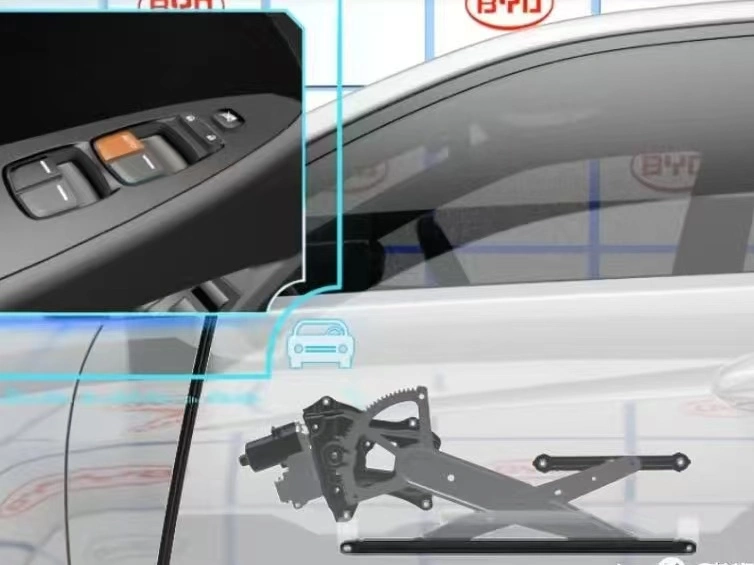
Understanding the Role of Small DC Motor Commutators in Power Window Lifting
How the Commutator Converts Electrical Energy to Motion
The commutator unit links the motor's outside circuit to its windings on the spinning armature. Each copper bar section contacts the carbon brushes in turn as the rotor spins, keeping the torque output in one direction. This process takes place hundreds of times every second in a window regulator motor. Any flaws in the segment spacing or surface finish cause torque ripple, which is the slight jerking motion that drivers sometimes feel when a window moves unevenly.
Materials That Define Silent Operation
For the bar pieces, the best tiny commutators use either silver-bearing copper (AgCu) or electrolytic tough pitch (ETP) copper. These materials have an electrical conductivity of more than 95% IACS and maintain reliable performance under thermal stress. A Miniature Silent DC Commutator can use these high-conductivity copper materials to support stable current transfer while keeping electrical losses low. Usually, high-grade phenolic molding compound (PMC) is used as an insulation filler between segments. In a Miniature Silent DC Commutator, the insulation material helps maintain separation between adjacent segments and supports consistent electrical performance during repeated operation. It also helps a Miniature Silent DC Commutator maintain dimensional stability, with Total Indicated Runout (TIR) controlled below 0.005 mm across temperature changes from -40°C to +125°C, a range relevant to many automotive door applications. For buyers sourcing a Miniature Silent DC Commutator, consistent copper quality, insulation performance, and precise dimensional control are therefore important factors in long-term motor reliability.
Common Failure Modes in Window Motor Commutators
Three types of failures happen most often in the field: bar lifting due to problems with the resin curing, brush sparking because the surface is rough (Ra > 0.8µm), and electromagnetic interference (EMI) spikes from segments that aren't spaced out properly. Each type of failure shortens the life of the motor and can cause ECU trouble codes in current cars. The best way to make sure that window motors will last for a long time is to fix these problems during the manufacturing process. This can be done by precision grinding, overspeed testing at 1.2–1.5× rated RPM, and automated bar-to-bar short-circuit inspection.
Comparing Small DC Motor Commutators to Alternative Solutions in Power Window Applications
Brushed DC vs. Brushless Motors: A Realistic Trade-Off
Since brushless motors don't have a commutator, brush wear isn't a factor in their failure. But brushless systems need their own electronic controller, which makes them more expensive and harder to use. For power window applications that only work sometimes and at low duty cycles, a precision-engineered small dc motor commutator in a brushed motor still offers a better balance of performance and build cost, especially for Tier 1 and Tier 2 automotive suppliers that handle high-volume production.
Slip Rings vs. Commutators in Rotating Electrical Contacts
Slip rings let current run continuously without switching, which makes them good for sending signals. They don't change the direction of torque that a DC motor needs. For power window motors, commutators are still the only useful contact mechanism that can make the directional force needed to move a rack-and-pinion or cable regulator up and down when the motor is loaded.
Real-World Performance in Commercial Vehicles
Commercial cars put more stress on window motor parts because they are used for longer periods of time and are exposed to more temperature changes. Field data from tests on automotive parts consistently shows that commutators with AgCu segments and Vickers hardness between 80 and 120 HV keep the brush contact resistance stable over millions of cycles, while standard ETP copper segments start to show surface wear at much lower cycle counts in the same conditions.
Optimizing Performance: Design Principles and Maintenance Tips for Silent Mini Commutators
Design Features That Reduce Noise and Vibration
Most of the time, noise from a window motor is caused by an imbalance of mechanical or electrical forces at the commutator surface. Arcing, which is the main source of high-frequency electrical noise, can be cut down by precisely slicing the mica between segments. Profilometer research during production confirmed that a surface finish of Ra ≤ 0.8μm keeps brush contact constant during each turn. This stops the tiny vibrations that drivers hear as window motor noise.
Cleaning and Inspection Practices for B2B Users
When OEM-matched components are required, a small DC motor commutator should maintain the segment count, outer diameter, conductor material, and other critical specifications defined by the original motor design. For a small DC motor commutator, matching these parameters helps ensure compatibility with the armature, brush system, electrical load, and available installation space. Aftermarket components may fit physically, but buyers should not assume that physical compatibility guarantees equivalent electrical, mechanical, or service performance. When sourcing a small DC motor commutator, procurement teams should verify the copper-alloy grade, dimensional tolerances, insulation system, surface finish, and applicable electrical and mechanical performance through documented testing. OEM-specification small DC motor commutator components supplied by qualified manufacturers can also provide better traceability when the supplier maintains appropriate production records and quality documentation. For automotive motor applications, selecting a small DC motor commutator from a supplier with an appropriate quality-management system and batch traceability can support supplier qualification and production-quality requirements. By confirming both engineering compatibility and manufacturing documentation, buyers can reduce sourcing risks when selecting a small DC motor commutator for compact DC motor applications.
Maintenance Scheduling to Extend Motor Lifespan
For OEM assembly plants that do batch production on a regular basis, a structured inspection schedule tied to the size of the production lot helps find quality changes from suppliers early on. A recorded quality gate is established by checking a sample of the bar-to-bar insulation resistance (minimum 100MΩ at 500V DC) and dielectric strength (1500–2000V AC) as soon as the goods are received. This practice is in line with the standards of IATF 16949 for process control, and it helps with tracking down problems that may happen later in the field.
Procurement Guide: How to Source the Best Silent Mini Commutators for Power Window Lifting
Evaluating Certified Manufacturers
Before signing a volume deal, procurement teams should make sure that any potential sellers are certified in both ISO 9000 and IATF 16949. IATF 16949 talks about automotive-grade process stability, failure prevention, and supply chain risk control. All of these things are directly related to the quality of commutators. Suppliers who also have invention patents for commutator design show a higher level of technical skill than just making basic products.
Before you place a bulk order, here are the most important criteria you should use to judge a supplier:
- Certification status: Confirm active ISO 9000 and IATF 16949 certificates with current audit dates.
- Technical documentation: Request material composition reports (spectrographic analysis) and surface finish inspection records for the specific part number.
- Patent portfolio: Suppliers with registered utility model or invention patents signal genuine engineering investment rather than simple copy production.
- Production lead time: A confirmed 30-day production cycle with flexible freight options (sea, air, or express courier) reduces supply chain risk.
- After-sales terms: A minimum 1-year warranty with clear replacement procedures for quality-related failures protects your procurement budget.
Reviewing these criteria before sending out a purchase order greatly lowers the chance of getting parts that don't meet these standards, which can lead to extra warranty costs later on.
OEM/ODM Customization for Specialized Applications
Many car programs need commutators to be made from drawings provided by the customer instead of stock measurements. Suppliers who do both OEM and ODM production can change the number of segments, the shape of the bars, the width of the shaft hole, and the insulation material to fit the needs of your motor design. This is very helpful for R&D engineers who are making new window motor systems and can't use normal catalog parts because they don't meet the noise or torque requirements.
Logistics and Global Distribution Considerations
Flexibility in freight costs has a direct effect on production schedules for buyers from other countries. When suppliers offer sea freight, air freight, and international express options such as DHL, FedEx, and UPS, buyers can choose the most suitable shipping method based on delivery time, order size, and production requirements. For a small DC motor commutator, express shipping allows buyers to receive samples quickly and verify dimensions, electrical performance, and compatibility before committing to larger-volume sea freight orders. This is especially useful when sourcing a small DC motor commutator, because early sample verification can help confirm that the commutator meets the required dimensional, electrical, and motor-performance specifications. For repeat orders of a small DC motor commutator, buyers can then select sea freight for more economical transportation, while air freight or express delivery can be reserved for urgent production requirements.
Future Trends and Innovation in Small DC Motor Commutators for Automotive Applications
Advanced Material Development
By studying nano-composite copper alloys and carbon-graphite hybrid brush systems, commutator surfaces are being made that are more resistant to wear and have lower contact resistance than the present AgCu norms. Several Tier 1 suppliers are starting to test these materials for production, and they will likely be used in all next-generation window motor designs.
Predictive Maintenance Integration
By putting acoustic emission monitors near the commutator in window motor units, the quality of the brush contacts can be checked in real time. Early problems, like brush bounce and changes in section step height, can set off predictive service alerts before a customer has a window failure. This technology is already being tested in high-end vehicles for the business world.
Energy Efficiency Standards Shaping Design
EV range goals are causing energy budgets for individual vehicles to get smaller. This is forcing window motor designers to lower the commutator contact resistance to the lowest levels possible. New automotive programs are requiring commutators with bar-to-bar resistance uniformity less than ±2%. This sets a clear quality threshold that separates capable suppliers from basic commodity producers.
Conclusion
For every brushed DC window motor, a quiet, compact commutator is a critical component of the motor's electrical and mechanical operation. It is not simply a passive part. The quality of its copper segments, surface finish, insulation materials, and dimensional accuracy can affect how smoothly and quietly the power window opens and closes throughout the vehicle's service life. For applications requiring stable current transfer and consistent electrical performance, a small DC motor commutator should provide reliable contact with the brushes while maintaining accurate dimensions and consistent segment quality. The performance of a small DC motor commutator also depends on reliable insulation, suitable material selection, and controlled manufacturing tolerances. To protect production schedules and product quality, buyers should source a small DC motor commutator from a qualified manufacturer with appropriate technical capabilities, quality controls, and reliable delivery processes. When sourcing a small DC motor commutator for mass production, buyers should also confirm dimensional consistency, electrical testing, material specifications, and supplier quality controls before placing large-volume orders.
FAQ
What causes a power window motor to make noise during operation?
Noise usually comes from commutator bars with rough surfaces or parts that don't have enough mica undercutting. Both of these situations make arcing worse at the brush contact point, which makes electrical noise and mechanical vibrations that can be heard.
What is TIR and why does it matter for window motors?
Total Indicated Runout (TIR) is a way to find out how far the commutator surface is from being perfectly centered while it is turning. If the TIR is higher than 0.005mm, the brush will bounce, which will make noise and increase wear.
Is silver-copper alloy necessary for all automotive commutators?
Standard ETP copper works well for uses with modest loads. Silver-bearing copper (AgCu) works better in places with high temperatures or lots of current. This is often the case with power window motors that are placed in doors that are in direct sunlight or cold areas.
How should commutators be stored before assembly?
Keep them in containers that won't get wet and are lined with VCI (Volatile Corrosion Inhibitor). The surface of the copper becomes oxidized, which raises the contact resistance and can lead to early brush wear after assembly.
What certifications should a commutator supplier hold?
ISO 9000 is a standard for managing quality in general. IATF 16949 is the standard for the car industry and is the more important certification for companies that make parts for window motors.
Partner with Angu for Precision Silent Mini Commutator Solutions
Angu brings 20 years of manufacturing experience, ISO 9000 and IATF 16949 certification, and 9 registered patents to every batch of small DC motor commutators we make. We can do OEM/ODM work with unique plans, and our 30-day production cycle lets us ship products all over the world by sea, air, or DHL, FedEx, or UPS. There is a 1-year warranty on every order. Request a sample or price quote from a reputable small DC motor commutator source by emailing our team at chenrf@angu.com or visiting angu-group.com.
References
1. IEEE Transactions on Industry Applications — "Brush and Commutator Wear in DC Machines: Mechanisms and Mitigation," 2019.
2. SAE International Journal of Passenger Cars — Mechanical Systems — "Noise and Vibration Analysis of Automotive Window Regulator Motors," 2020.
3. Journal of Materials Science and Engineering — "Thermal and Mechanical Properties of Silver-Copper Alloys for Electrical Contact Applications," 2018.
4. Automotive Engineering International (SAE Media) — "IATF 16949:2016 Implementation Guide for Automotive Component Suppliers," 2017.
5. IEC 60068-2 Environmental Testing Standard — "Test Methods for Automotive Electronic and Electromechanical Components Under Temperature Cycling," 2021.
6. Proceedings of the Institution of Mechanical Engineers, Part D: Journal of Automobile Engineering — "Reliability Assessment of Brushed DC Motors in Vehicle Comfort Systems," 2022.
YOU MAY LIKE