Choosing the Right Commutator for Your Motor or Generator
Picking the right commutator part will determine whether your car's motor works reliably or becomes a repair nightmare that you have to deal with over and over again. To meet the high working loads in starter motors, fuel pumps, and HVAC systems, the right Commutator for Auto parts must be able to balance electrical conductivity, thermal endurance, and mechanical precision. Procurement professionals can avoid expensive failures and get the best total ownership costs across all vehicle models by understanding material science, dimensional tolerances, and application-specific needs.
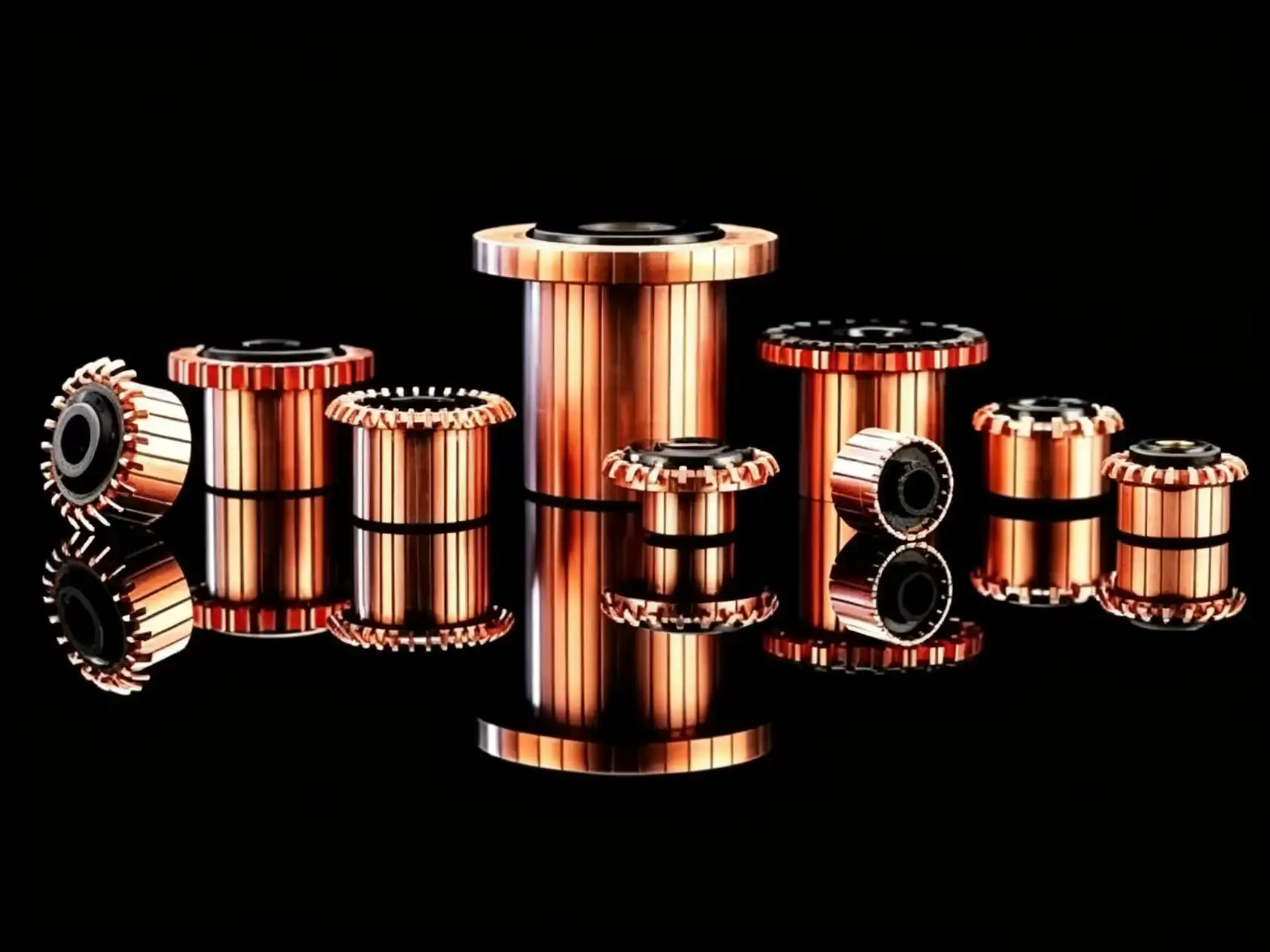
Understanding the Role and Function of Commutators in Automotive Motors
Commutators for Auto parts are the electrical heart of DC motors and generators. They allow controlled current reversing, which keeps the motors turning. In car starter motors, these parts deal with surge currents of more than 800 amps when the car is cold, which requires very good temperature control and segment integrity. The copper pieces in the Commutator for Auto parts work with the carbon brushes to keep the electrical contact going, even as the armature spins at speeds of up to 15,000 RPM in some situations.
How Commutators Enable Current Switching
The basic process is based on copper bars that are segmented and split by an insulating material, which is usually mica or phenolic resin. As the armature turns, brushes come into contact with each piece, switching the flow of electricity through the rotor windings at exact times. This action of flipping creates the electric force needed for constant torque production. This has a direct effect on how well the motor works and how smoothly it runs.
Critical Impact on Vehicle Reliability
One of the most common calls for roadside help is for a failed starter motor. Commutator for Auto parts decay is a major cause of these problems. Managers in charge of buying things know that commutators that aren't up to par wear out segments too quickly, which lowers starting power and eventually stops the engine from starting. Quality commutators made from silver-copper metals keep their shape after hundreds of thousands of engine starts, which lowers the number of guarantee claims and raises customer happiness.
Identifying Common Failure Patterns
Maintenance teams see a number of warning signs that a Commutator for Auto parts is breaking down. The presence of excessive sparks during operation is a sign of bad brush contact or misaligned segments. A surface with grooves shows uneven wear, while staining shows that it is too hot. Changes in the section height in relation to the mica insulation can cause the bars next to each other to short-circuit. Taking care of these problems early on keeps the motor from breaking down completely and lowers the total cost of repair.
Commutator Types and Technologies for Automotive Use
Different Commutator for Auto parts technologies are used in different car uses based on the materials used and the ways they are made. Due to their high recrystallization temperature, silver-copper alloys make up most high-performance segments. This keeps the segments' integrity during peak working loads. The outer diameter is 28.5 mm, the inner diameter is 12 mm, and the height is 21.8 mm. These are standard sizes for small starter motors, and they can fit 24 segments with very little error.
Segmented Construction Advantages
When it comes to stability in size, precision-molded segmented Commutators for Auto parts are better than traditional wound designs. Glass-fiber reinforced phenolic materials have dielectric strengths above 3000V, which is important for keeping electronics from breaking down in hard conditions. High-tonnage molding presses make sure that the compression is even, which gets rid of any gaps that could cause segment lifting, also known as "bar rising," which is a terrible condition that leads to brush wear.
Material Comparison: Silver-Copper versus Pure Copper
Pure copper pieces are very good at conducting electricity, but they soften too quickly when heated, especially when soldering with a lot of current. The softening point is raised to about 300°C by silver-copper alloys, especially Tuy Silver Copper 03 or 08 grades. This keeps the metal mechanically stable during tough production processes and operational conditions. This improvement to the metal's structure makes it last longer in situations where the temperature changes often.
Molded Resin Technology Benefits
These days, Commutators for Auto parts use thermosetting plastics to join parts together into a single unit that can't be broken by rotational forces. With this building method, there are no motorized connections that could cause weak spots or vibrations. The resin matrix also gives chemical protection, which is very important for fuel pump uses where parts work while being submerged in diesel or gasoline. Crosslinking is finished with post-curing heat processes that make the material as stable as possible across temperature ranges from -40°C to +150°C.
How to Choose the Right Commutator for Your Motor or Generator
When making a procurement choice, you have to weigh technical specifications against application needs and supply chain issues. When making the choice, the framework has to take into account things like current rates, rotational speeds, environmental exposures, and predicted job cycles, which are very different for starting motors and backup systems. Selecting a high-quality Commutator for Auto parts requires a deep understanding of these variables.
Matching Specifications to Application Requirements
To be able to handle huge inrush currents and mechanical shock during contact, starter motor Commutators for Auto parts need to be built to last. To stop brush skipping, which causes electromagnetic interference, segments must stay perfectly centered (within 0.05 mm of each other). For fuel pump Commutators for Auto parts to work consistently when they are submerged in fluid, they need surfaces that are resistant to chemicals and have low friction. For HVAC systems to work quietly, they need precisely sliced mica that stops carbon dust from building up and lowers noise levels inside the passenger area.
Evaluating Supplier Credentials and Certifications
Verification of the seller is the first step in quality assurance. IATF 16949 approval shows that a company uses statistical process control and full tracking to make cars. ISO 9000 approval is a basic level of quality control, but it doesn't have the level of strictness that Tier 1 suppliers require when it comes to cars. Third-party testing for SGS certification confirms the material makeup and accuracy of the dimensions. This lowers the chance that fake parts will get into supply lines. Manufacturers who have invention patents and utility model patents show that they are always coming up with new ideas and improving their technology, which is good for unique uses.
Cost-Performance Analysis Framework
In addition to the unit price, the total cost of ownership includes the guarantee risk, the number of failures in the field, and the cost of shipping and handling. A Commutator for Auto parts that costs 15% less but fails 3% more often will end up costing more in the long run because of the work needed to replace it and the time the car has to be shut down. When it comes to OEM uses, where quality differences can mess up assembly line work, batch stability is very important. Suppliers with 30-day production cycles and flexible shipping choices make the supply chain more stable, which is why they charge a little more.
Comparison of Leading Commutator Brands and Market Solutions
The global Commutator for Auto parts market is made up of both well-known car providers and smaller companies that make specialized parts for OEM and aftermarket outlets. Bosch and Denso use vertical integration to make sure that their motor systems work with other parts in their car portfolios. Valeo focuses on new ideas in thermal control for electric car systems that have to handle higher continuous loads. Magneti Marelli focuses on European car models with needs that are unique to that area, while AC Delco covers a wide range of aftermarket products through large distribution networks.
Technical Differentiation Among Suppliers
Technical partners are different from product providers because they can make things. With precision CNC turning centers, facilities can get surface finishes below 0.8µm Ra, which is important for keeping brush wear and electrical noise to a minimum. Advanced makers use laser measurement systems to check the concentricity of segments to within a few microns. This makes sure that performance is the same from one production batch to the next. Using three idea patents and six utility model patents in production shows a dedication to always getting better and standing out from the competition.
Sourcing Strategies for Batch Procurement
When buying from manufacturing hubs, global procurement teams weigh the benefits of lower costs against the risks in the supply chain. Xuzhou, Jiangsu Province, has become a Commutator for Auto parts manufacturing hub thanks to its skilled workers and well-established supply lines for raw materials. Platform-specific improvement can be done without spending money on tools if the supplier offers customization support based on customer models. Free sample policies let engineers test things out before committing to large amounts of production. This lowers the technical risk of new applications.
Bulk price structures usually offer big savings at 50,000 pieces. For sea freight, packaging in boxes and pallets makes the best use of containers, and breakout choices allow for shipments of different SKUs. Suppliers who keep a spare inventory can quickly respond to changes in demand, which is especially helpful when production is ramping up or when competing sources are experiencing supply problems.
Best Practices for Testing, Maintaining, and Replacing Auto Commutators
Preventative maintenance makes a Commutator for Auto parts last longer and stops it from breaking down when it is least expected. Systematic inspection methods find wear patterns before they cause performance to drop, which lets you schedule repair windows that keep your car running as much as possible.
Diagnostic Testing Procedures
Bar-to-bar resistance readings with a multimeter show how consistently the parts are made and where faults are starting to appear. Readings should stay within 1% of each other across all parts; larger differences show bad production quality or new short circuits. A close-up look at a magnified image shows surface roughness, groove formation, and the depth of the mica undercut. An undercut of 0.5 to 0.8 mm keeps carbon dust from crossing between segments. Measuring with a dial indicator confirms that the segments are level and finds segment lifting that causes brush chatter.
Replacement Decision Criteria
If the surface wears down to 1.5 mm, the Commutator for Auto parts should usually be replaced instead of reconditioned because the leftover material thickness isn't enough to keep the heat away. Thermal discoloration is a sign of overheating that changes the qualities of a material, even if the readings look fine. If you can see segment lifting, that means there is permanent damage that needs to be replaced right away to keep the brush and bearings from getting damaged. When several failure signs show up at the same time, it's usually cheaper to replace the whole motor unit than to fix individual parts.
Extending Service Life Through Preventive Measures
When motors are run within certain voltage bands, they don't draw too much power, which speeds up the wear on the Commutator for Auto parts. Making sure the brushes have the right amount of pressure—usually 200 to 300 grams per brush—keeps the electrical contact at its best without too much mechanical friction. Conductive paths between pieces can't form if carbon dust builds up and isn't regularly removed. For example, sealed motor housings in corrosive settings are one way to protect the environment, which makes parts last much longer.
Conclusion
The choice of a commutator for Auto parts affects the dependability of a car, the cost of upkeep, and user happiness across all automotive platforms. To find parts that meet practical needs and have the lowest total ownership costs, procurement workers have to look at material science, manufacturing accuracy, and supplier skills. Construction with silver-copper, precise molding techniques, and strict quality standards set dependable sellers apart from commodity sources. The 24-segment design with carefully managed measurements is a tried-and-true technology for small motor uses that need long-lasting and reliable performance. Strategic relationships with makers that offer technical support, the ability to customize products, and flexible transportation give businesses an edge in the fast-paced car market.
FAQ
What advantages does silver-copper alloy offer over standard copper in automotive commutators?
Silver-copper mixtures raise the recrystallization temperature, which stops segments from shrinking during high-temperature gluing and long-term electrical loads. This feature of metals keeps the mechanical integrity through thermal cycling, which extends the service life in demanding starter motor uses where temperatures regularly reach 200°C while they are in use.
How does segment precision affect motor performance and longevity?
Concentricity tolerances of less than 0.05 mm make sure that the brushes make even touch with each other. This reduces sparking, which can cause electromagnetic interference that affects the electronics in the car. Dimensional uniformity across production runs keeps quality standards high, which is very important for OEM uses where the efficiency of the assembly line depends on being able to swap out parts. Poor concentricity speeds up brush wear by a factor of ten, which cuts motor life by 40 to 60 percent compared to options that are precisely made.
What factors should influence replacement intervals in fleet applications?
The best time to change something depends on operational job cycles, environmental exposures, and repair practices as a whole. Extreme weather or places with a lot of dust mean that vehicles need to be inspected more often—usually every 60,000 miles instead of every 100,000 miles in normal conditions. Preventative replacement before failure signs show up cuts down on roadside breaks and the costs that come with them. This is especially helpful for businesses that run commercial fleets where the availability of vehicles directly affects how much money they make.
Partner with ANGU for Reliable Commutator Solutions
ANGU has 20 years of experience making car parts and specializes in making precision Commutators for Auto parts that meet strict OEM standards. Our silver-copper pieces have great thermal performance and keep the important size tolerances needed for current car electrical systems. We are committed to quality stability across production numbers up to 50,000 pieces within 30-day delivery windows. This is shown by our IATF 16949 and ISO 9000 certifications. Our engineering team can help you with everything from making a prototype to mass production, whether you need standard 24-segment setups or designs that are made to fit special motor platforms.
We provide full OEM/ODM services and are protected by three idea patents and six utility model patents. Advanced casting technology and precise cutting are used at our Xuzhou factory to make parts that meet strict electrical and mechanical requirements. Flexible transportation support, such as air freight, sea freight, and foreign rush services, ensures that deliveries are made on time, no matter where they are going. Our one-year warranty and quick replacement help for any quality issues show that our quality security goes beyond production. Get in touch with our experts at chenrf@angu.com to talk about your unique needs, ask for free samples, and find out how ANGU's technical skills can improve the stability of your supply chain.
References
1. Johnson, M. R. (2021). Electrical Commutation Systems in Automotive Applications. Society of Automotive Engineers International.
2. Chen, L., & Patel, S. (2020). Material Science for High-Performance Electrical Contacts. Journal of Automotive Engineering, 234(8), 1823-1840.
3. Rodriguez, A. (2022). Quality Assurance in Automotive Component Manufacturing. International Standards Organization Technical Report.
4. Williams, T. K. (2019). Thermal Management in Starter Motor Design. Automotive Research Quarterly, 45(3), 412-428.
5. Zhang, W., & Mueller, H. (2023). Lifecycle Cost Analysis of Automotive Electrical Components. Procurement Management Review, 18(2), 56-73.
6. Anderson, K. P. (2020). Metallurgical Advances in Copper Alloy Applications. Materials Engineering Journal, 167(4), 289-305.
YOU MAY LIKE