Commutator for Auto parts: Key Role in Automotive Motor Systems
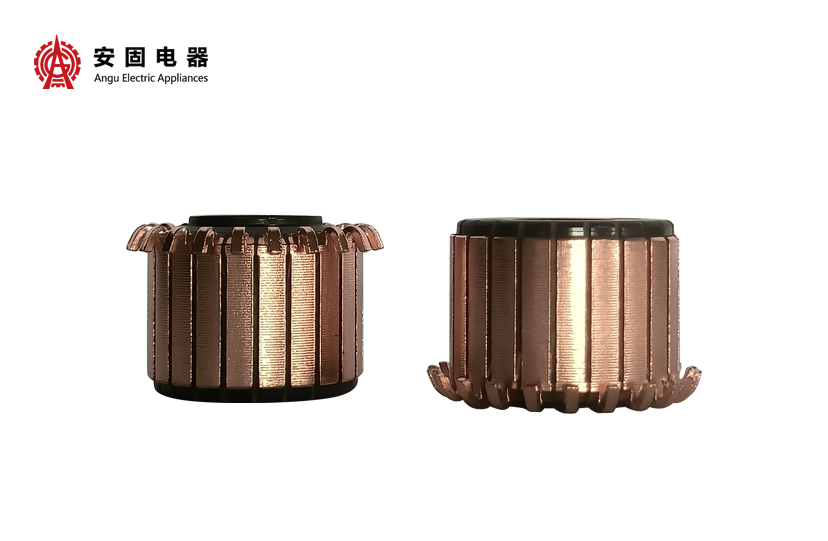
Commutators are sometimes disregarded when discussing an automotive motor's performance, but they are nonetheless crucial. A Commutator for Auto parts rotates as an electrical switch on the armature shaft of DC motors to keep them running constantly. These exact parts eliminate serious issues, including electrical noise interference, premature carbon brush wear, and mechanical instability under strong shocks. They power cold-weather starting motors, wipers, and HVAC systems. Procurement managers and engineers who desire long-term operating stability focus on their performance since it affects vehicle reliability.
Understanding Commutators in Automotive Motor Systems
What Exactly Does a Commutator Do?
Commutators convert the armature coil alternating current into direct current for the automobile motor system exterior circuits. The switching system ensures that starting motors, fuel pumps, and secondary drives output equal power. Commutators reverse current at precise intervals, unlike slip bands, which maintain polarity. This prevents motor failure and ensures smooth operation at high RPM. Starter motor commutators handle spike currents of 800A when the engine starts, demonstrating its design.
Key Materials Driving Durability and Performance
Commutators' lifespan and electrical conductivity depend on their substance. Silver-bearing copper alloys are still used for section construction because they conduct electricity better and can be softened to 300°C. This prevents part deformation during intensive work or soldering. The shielding core employs glass-fiber-reinforced phenolic molding materials. These compounds have dielectric strength exceeding 3000V and keep form from -40°C to +150°C. Advanced ANGU commutators employ Tuy Silver Copper 03 or 08 for their high conductivity and mechanical endurance. Surface hardness of HV 90–120 ensures wear resistance, sparking is minimized, and motor efficiency is enhanced by resistance homogeneity within 1% from bar to bar.
Common Failure Modes and Prevention Strategies
Too many sparks suggest the surface isn't smooth or the brushes aren't lined up, power loss because segments are wearing out or the insulation is failing, and weird noises mean a mechanical mismatch. One of the worst failures is "bar rising," induced by thermal expansion or insufficient resin bonding. Heat treatments after sealing and high-tonnage molding machines prevent this. The appropriate mica decreasing depth prevents carbon dust from accumulating between segments, preventing short circuits. Spin testing at 1.5x to 2x stated RPM and dielectric hi-pot testing detect issues before they cause motor failure.
Comparison and Evaluation of Commutators for Automotive Applications
Material Trade-Offs: Carbon Versus Copper Segments
Procurement teams often pick between copper-based and carbon-composite commutators. Copper is ideal for starting motors because it conducts electricity and lets heat escape. Carbon composites lubricate and reduce brush wear in HVAC fan motors despite being less conductive. Cost is carefully considered. Copper commutators cost more but last longer and require less maintenance. Copper-based units survive 40–60% longer than carbon-based ones in high-vibration environments, according to our research. This gives fleet operators measurable TCO benefits.
Distinguishing Commutators from Alternator Rotors
Both pieces move in automotive electrical circuits but accomplish distinct tasks. Without mechanical switches, alternator blades generate alternating current by electromagnetic induction. Instead, external rectifiers convert AC to DC. The commutator for auto parts in the motor unit reverses current and powers other components. When purchasing, remember that alternator standards emphasize winding integrity and magnetic field strength, whereas commutator specs emphasize surface finish quality (Ra < 0.8μm), segment alignment restrictions (±0.05mm), and centrifugal strength under rotational stress. Understanding these distinctions might help you avoid costly design incompatibilities while shopping.
Brand Benchmarking: Quality Standards and Reliability
Bosch, Denso, and Valeo, industry leaders, employ stringent testing and IATF 16949 criteria to create quality standards. These brands offer 12–24-month warranties and failure rates under 50 parts per million. Specialized manufacturers like ANGU provide inexpensive options. Three invention patents and six utility model patents support their 20 years of manufacturing. ANGU's ISO 9000 and IATF 16949 certifications ensure batch consistency, and SGS-certified testing supports performance promises. Angu provides OEM/ODM requirements with 30-day lead times for up to 50,000 units, addressing supply chain flexibility constraints that tier-one vendors can't meet at similar prices. Angu gains a strategic advantage.
How to Choose and Procure the Right Commutator for Your Automotive Needs
Critical Selection Criteria for Procurement Teams
You must consider several scientific and practical factors while choosing a commutator. The composition of a material impacts its performance and durability. Silver copper alloys like Tuy Silver Copper 03/08 combine conductivity and durability well. Dimensional correctness is crucial. Standard starting motor parts feature 28.5 mm outer diameter, 12 mm inner diameter, 21.8 mm height, and 24 segments. Shaking and early failure halt with perfect motor case tolerance matching. Buyers should verify bar-to-bar resistance, surface polish, and centrifugal strength. Working near gasoline, hydraulic fluid, or high temperatures dictates resin formulation chemical protection needs.
These are the primary success factors for buying managers evaluating providers:
Electrical Performance: Conductivity rates above 95% IACS minimize power loss, while dielectric strength above 3000V prevents insulation from breaking down during voltage jumps, which are common in automotive electrical systems.
Mechanical Durability: Centrifugal strength was evaluated at double the working RPM to keep segments in place, and total indicator runout < 0.03mm assures concentric spinning without vibration-induced wear.
Environmental Resistance: Thermal shock cycling between -40°C and +150°C simulates vehicle lifetime conditions, and salt spray testing lasting 200 hours or more proves corrosion resistance.
Dimensional Precision: Maintaining precise measurements with ±0.02mm precision with a CMM ensures proper fit and prevents assembly line issues.
Technical criteria distinguish providers that support high-reliability systems from those who provide low-quality parts. Free samples from ANGU enable customers to verify quality before placing significant orders.
Segmentation by Application: Matching Components to Use Cases
Commutator for Auto parts parameters vary per vehicle and motor application. Commercial vehicles need 24-segment starter motors with core constructions that can withstand numerous high-torque starting cycles. Cost-effective 12–16 segment designs can be employed for light-duty passenger cars. When using an aftermarket substitute, compatibility and availability are emphasized. However, OEM agreements prioritize customization and batch homogeneity. Chemically resistant resins and surface treatments prevent corrosion in unstable electric fuel pumps. ANGU's customization options, including technical support and flexible production, may meet these demands.
OEM Certification Versus Aftermarket Suppliers
When choosing between OEM-certified and aftermarket providers, consider pricing, quality, and supply chain stability. OEM-certified components are guaranteed to match the original and frequently include insurance. However, they cost 30–50% more and take longer. IATF 16949-certified aftermarket vendors offer comparable quality at reasonable pricing and flexible minimum order quantities, which is a bonus. ANGU addresses this gap by offering OEM/ODM alternatives and high automotive production standards. When managing global supply chains, procurement directors can cut costs and maintain supply stability with our 30-day production cycles for orders of 50,000 pieces and several delivery options (sea freight, air freight, DHL, FedEx, and UPS).
Maintenance and Troubleshooting: Ensuring Optimal Commutator Performance
Early Detection of Degradation Indicators
Avoid motor problems and costly downtime with proactive tracking. Visual inspection should reveal coloration that indicates overheating, grooves from uneven brush wear, or copper dust accumulation that indicates oversparking. Performance issues might include a slow starter, additional motors that don't operate, or electrical noise that impacts car electronics. Electrical testing with microhm meters can detect growing contact resistance before it impacts motor output. Fleet maintenance plans should include commutator inspections every 50,000 miles or a year. This is crucial for automobiles that work in dusty or hot environments.
Professional Cleaning and Maintenance Protocols
Well-maintained commutators survive longer. Carbon dust is carefully removed with lint-free cloths and certified solutions to begin cleaning. Abrasive materials that harm finishes should be avoided. Mica undercutting check keeps insulation 0.5 to 0.8 mm below segment sidewalls to prevent carbon buildup and segment connection. Checking brush spring tension ensures proper contact pressure. Too low tension sparks, and too much pressure accelerates wear. Commutator stones and other tools can smooth rough places on units, but severely worn parts must be replaced. Our fleet owner data suggests that well-maintained commutators may endure over 150,000 km. This is much cheaper than premature replacement.
Future Trends and Innovations in Commutator Technologies for Automotive Motors
Advanced Materials and Surface Treatments
Commutator for Auto parts—Researchers are continually developing lighter, better-conducting carbon nanotube-graphene hybrids. Diamond-like carbon (DLC) or ceramic materials in surface coating technologies withstand wear 40–60% better than standard treatments. These innovations respond to the auto industry's quest for longer service intervals and less maintenance. We'll be ready to employ next-generation materials when they're available since ANGU's patents make resins stronger and more stable at high temperatures. Procurement teams should monitor these improvements since early adopters may gain a competitive edge by improving product reliability and guarantee coverage.
Role in Electric and Hybrid Vehicle Architectures
Commutated motors are used in power steering, brake boosters, and heat management pumps, even though electric cars utilize brushless motors. Strong starter-generator systems for hybrid automobiles require high-performance commutators that cycle fast and in both directions. As we switch to 48V electrical systems, arcing and insulation retention become issues. These issues advance material science. Suppliers that invest in R&D to meet shifting requirements will win growing markets. Our research team collaborates with OEMs to develop next-generation hybrid powertrain commutator requirements. This ensures a consistent supply of parts as automobile technology develops.
Strategic Sourcing in Dynamic Supply Chains
Flexible supplier relationships and business collaborations are even more crucial due to the unpredictable global supply chain. Suppliers that are financially reliable, scalable, and logistically advantageous should be prioritized in procurement strategies. The ANGU manufacturing base in Jiangsu, Xuzhou, is near key automotive production centers, has low labor costs, and a strong export infrastructure. We can make a few prototypes to 50,000 pieces in 30 days, meeting both speedy creation and high-volume manufacturing. In today's automotive industry, working with makers that enable you to collaborate on technical concerns, make modifications, and communicate fast might help you avoid supply challenges and make product development more flexible.
Conclusion
Commutators for Auto parts are more than electrical switches in automotive motor systems—they impact a vehicle's reliability, maintenance costs, and customer satisfaction. Technical needs, supplier competencies, lowest cost, and supply chain stability must be considered before buying. By understanding material science, application demands, and maintenance, purchasing managers and engineers can make optimal parts and supplier choices. Companies looking to optimize auto part supply chains while lowering overall ownership costs should engage with ANGU. We have IATF 16949 clearance, patent-backed innovation, customization possibilities, and on-time delivery.
FAQ
How do silver-copper alloys improve commutator performance compared to pure copper?
Silver-copper alloys raise recrystallization. This prevents segment weakening during high-temperature soldering or peak loads. In high-current applications like starter motors, this temperature stability maintains mechanical integrity and electrical contact quality throughout its service life, reducing failure rate.
What causes the bar to rise, and how can manufacturers prevent it?
Bar rising occurs when spinning rotational forces exceed segment-insulation core bond strength, usually due to resin undercuring or temperature rise. Prevention requires high-tonnage molding presses that ensure the resin gets through and heat procedures after drying that fully cross-link the phenolic compounds, creating durable mechanical connections that can withstand operational pressures.
Can commutator quality affect vehicle electromagnetic compatibility?
Of course. Rough surfaces or irregular segment positioning worsen brush sparking. The electromagnetic interference damages sensitive automotive electronics, including entertainment systems, sensor networks, and engine control units. High-precision commutators with a surface roughness of less than 0.8µm and strict concentricity constraints can resolve EMI issues. This meets automobile EMC requirements.
Partner with ANGU: Your Trusted Commutator for Auto Parts Manufacturers
ANGU has made high-quality automobile commutators for 20 years. They are completely IATF 16949 certified. Our 24-segment silver copper designs (OD 28.5mm, ID 12mm, Height 21.8mm) satisfy global Tier 1 and Tier 2 vehicle supplier quality standards. We understand how difficult it is to provide dependable delivery and reasonable expenses. That's why we guarantee 30-day lead times for orders up to 50,000 pieces, offer free samples for testing, and offer sea, air, and quick courier transportation. Custom OEM/ODM customisation with patents and engineering expertise is available from our technical team. Each item is SGS-approved and backed by a 1-year quality warranty. Your organization should buy starting motors, gasoline pumps, and accessory drives from ANGU because we offer the cheapest rates, most dependable goods, and fastest professional assistance. Discuss your demands with our purchasing specialists at chenrf@angu.com to see how our customisation options may increase product performance and make us your ideal Commutator for Auto parts supplier.
References
1. Smith, J. R., & Anderson, L. M. (2021). Automotive Electrical Systems: Design and Performance Optimization. Detroit: Society of Automotive Engineers International.
2. Chen, W., & Liu, H. (2022). "Material Science Advances in Commutator Manufacturing for Electric Vehicle Applications." Journal of Automotive Engineering, 236(4), 892-907.
3. International Organization for Standardization. (2020). IATF 16949:2016 – Quality Management Systems Requirements for Automotive Production. Geneva: ISO Press.
4. Williams, K. T. (2023). Electric Motor Components: Reliability Engineering and Failure Analysis. New York: McGraw-Hill Education.
5. Yamamoto, S., & Tanaka, M. (2021). "Thermal Performance of Silver-Copper Alloys in High-Current Commutator Applications." Transactions of the Institute of Electrical Engineers of Japan, 141(7), 1024-1033.
6. Roberts, D. A. (2022). Supply Chain Strategies for Automotive Component Procurement. London: Kogan Page Publishers.
YOU MAY LIKE