Commutator Solutions for Electric Clothes Drying Rack Motors
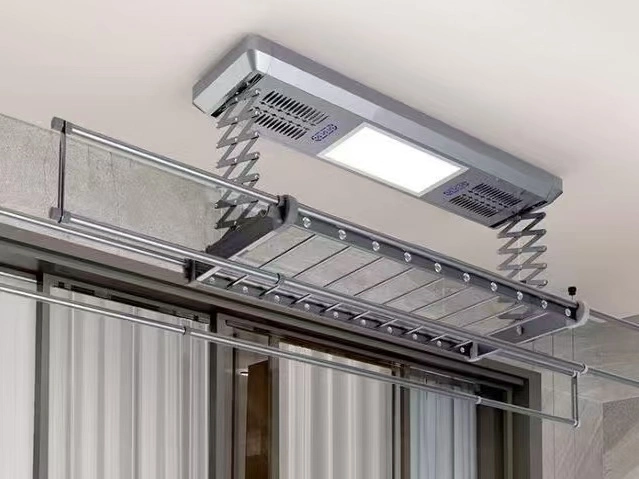
Electric clothes drying racks have become a standard fixture in modern homes across the United States, and the motors powering them depend on one often-overlooked component: the commutator. A well-engineered household appliance motor commutator controls current direction between the rotor and external circuit, directly affecting torque consistency, noise levels, and motor longevity. Choosing the right commutator solution means fewer product failures, lower warranty costs, and stronger brand reputation — factors that matter deeply to procurement teams and product engineers alike.
Understanding Motor Commutators in Household Appliances
What a Commutator Actually Does
There is a precise rotary electrical switch called a commutator that is built into both DC and universal motors. It is made up of several copper segments that are separated by mica or high-performance molding compounds. As the rotor turns, carbon brushes move across these segments, keeping the electrical path steady and switching the current around just at the right time to keep the spinning going. The motor stops working or runs in a strange way without this part.
Why Drying Rack Motors Have Specific Demands
The motors in clothes dryer racks work in damp, dusty places, which speeds up the oxidation of the copper segments' surfaces and makes the brushes wear out faster. These motors also run at modest speeds and start and stop often, which puts constant mechanical stress on the commutator bars. A part that works well in the motor of a vacuum cleaner might break down much more quickly in a drying rack.
Brushes vs. Commutators: Understanding the Difference
Brushes and commutators work together, but they are not the same thing. The commutator is the copper ring assembly on the rotor that turns, and the brushes are the carbon contacts that stay in place and press against it. When one part wears out, it affects the other. When purchasing teams check the quality of a motor, they should look at both at the same time. If the brush hardness or commutator surface finish isn't matched, the motor will break down early.
Common Issues and Troubleshooting of Motor Commutators in Clothes Drying Rack Motors
Recognizing the Warning Signs
A drying-rack motor may show several warning signs when its household appliance motor commutator begins to deteriorate. Common symptoms include audible sparking during operation, uneven motor speed, excessive heat around the motor housing, and visible carbon dust near the brush assembly. These symptoms can indicate unstable brush-to-commutator contact, surface wear, contamination, or dimensional irregularities affecting the household appliance motor commutator. In particular, excessive bar-to-bar height variation can make it difficult for the brushes to maintain smooth and consistent contact with the household appliance motor commutator, potentially increasing sparking and electrical noise. A dimensional difference greater than 0.01 mm may be significant in some precision motor designs, although the applicable tolerance should always be verified against the motor manufacturer's specifications and inspection standards. When diagnosing a household appliance motor commutator, maintenance teams should therefore check segment height, surface condition, brush wear, contact pressure, and carbon buildup. Early inspection of the household appliance motor commutator can help identify abnormal wear or contact problems before they develop into more serious motor performance issues.
Root Causes Specific to Drying Rack Applications
High humidity in the air speeds up galvanic corrosion between the steel shaft and the copper pieces. Lint and dust from drying cycles get into the motor case and make a film that conducts electricity across the insulating gaps. The chance of a short circuit between two adjacent commutator bars is higher because of this contamination. Small motors, which are popular in drying racks, don't let much heat escape, which makes the rusting problem worse over time.
Diagnostic and Preventive Techniques
To find problems quickly, procurement and repair teams can follow these useful steps:
- Bar-to-bar resistance testing detects insulation breakdown or micro-shorts between adjacent copper segments before they cause motor overheating.
- Visual roundness inspection using a laser micrometer checks concentricity within 0.005 mm tolerance, confirming mechanical integrity at operating speeds.
- Dielectric (Hi-Pot) testing verifies insulation strength, typically requiring the component to withstand over 2,500 V between bars and shaft.
Using these diagnostic steps during the entering quality check cuts down on field fails by a large amount. If you store them in a controlled setting, away from wetness and particulate contamination, they will last longer before they are put together.
Selecting the Right Motor Commutator for Electric Clothes Drying Rack Motors
Material Selection: Copper Grades and Alloys
Standard electrolytic copper can be suitable for many motor applications, but 0.03% silver-bearing copper or oxygen-free copper may provide additional performance benefits for drying-rack motors when the material is properly matched to the motor design. A household appliance motor commutator made with an appropriate copper alloy can offer improved thermal stability, helping the component maintain mechanical strength under repeated thermal loading and reducing the risk of segment deformation. For a household appliance motor commutator, material selection should be evaluated together with electrical conductivity, operating temperature, rotational speed, brush characteristics, and expected service life. The surface finish is also an important consideration because the commutating surface directly affects brush contact, friction, wear, and electrical stability. A household appliance motor commutator with a controlled surface roughness in the approximate Ra 0.2–0.8 µm range may support stable brush contact and the formation of a suitable contact film, provided that this range is consistent with the motor manufacturer's specifications. Maintaining an appropriate surface finish on the household appliance motor commutator can help reduce friction and support smoother operation as the brush and commutator surfaces wear in. When selecting a household appliance motor commutator, manufacturers should therefore consider copper grade, thermal stability, dimensional accuracy, surface roughness, and brush compatibility together to achieve reliable performance in drying-rack and other household appliance motors.
Traditional vs. Electronic Commutation
Because the speed and power needs are moderate, traditional brush-and-commutator designs are still a good value for drying rack motors. Electronic commutation, which is used in brushless DC motors, makes the motor last longer, but it costs more and makes the circuit more complicated. A traditional commutator that is well-made and paired with good carbon brushes gives the best performance and cost-effectiveness for mid-range appliances where price is important.
Brushless vs. Commutator Motors: A Practical Trade-off
Brushless motors don't have any mechanical contact at all, so they make less noise and should last longer. But the extra electronics for the driver make many mid-range appliance motor designs 30–50% more expensive per unit. The commutator motor is still the most cost-effective choice for OEM makers who make a lot of drying racks, as long as the commutator meets precision production standards, such as a spin test at 1.2× rated RPM to make sure there is no segment displacement.
Maintenance and Lifespan Optimization of Motor Commutators in Household Appliances
Routine Cleaning and Inspection Protocol
Carbon deposits that build up between brush contacts can be removed by wiping the commutator surface with a dry, lint-free cloth every so often. Instead of using calendar dates, inspection times should be based on how often something is used. For drying racks that are used every day, checking the brush assembly and commutator surface visually every three months is a good place to start with OEM service documentation.
Brush Replacement Timing
Brushes that are worn below the minimum length recommended cause more changes in the contact pressure, which speeds up the formation of commutator grooves. When you replace the brushes before they hit the wear limit, which is usually shown by a groove depth of more than 0.3 mm on the commutator surface, you keep the copper pieces from getting damaged in other ways. Taking this simple step lowers the total cost of replacing motors in the field.
Environmental Controls and Design Choices
How the motor case is made directly impacts how long the commutator lasts. Lint is less likely to get into drying rack environments with housings that are sealed or partially sealed and have filtered ventilation slots. When procurement managers choose a new commutator, they should make sure that the Vickers hardness rating of the part matches the grade of brush that will be used. When two surfaces aren't the same strength, the softer surface wears down faster. This shortens the service life of both parts.
Procurement Guide: Where and How to Buy Motor Commutators for Clothes Drying Racks
Evaluating Supplier Qualifications
For home appliance applications, reliable suppliers of a household appliance motor commutator should have established quality-management systems, with ISO 9000 certification providing evidence of documented production and quality-control processes. IATF 16949 compliance can provide additional assurance for buyers sourcing a household appliance motor commutator for automotive-related applications or high-volume appliance projects where consistent process control and traceability are important. These certification systems can help demonstrate that manufacturing processes, material tracking, inspection procedures, and defect-management practices are formally established and maintained. When evaluating a household appliance motor commutator supplier, procurement teams should not rely solely on certification documents but should also review relevant quality records and process-control procedures. Before placing an order, buyers can request written process capability indices, such as Cpk values, for critical variables affecting the household appliance motor commutator, including key dimensions, segment geometry, surface finish, and other application-specific characteristics. Reviewing these process capability records can help buyers determine whether the supplier can maintain consistent production tolerances for each household appliance motor commutator batch. By combining supplier certification, traceability, documented process controls, and measurable capability data, procurement teams can establish clearer quality requirements when sourcing a household appliance motor commutator for high-volume production.
OEM and ODM Customization Options
It's possible that standard stock commutators won't have the right shaft diameter, segment count, or insulation material for your motor design. If you have an OEM/ODM supplier, they can make parts right from your engineering drawings, even if the hook type, riser type, or molded-in insulation is different from what you want. This adaptability is especially helpful for engineers working on new products who need to be able to do both fast testing and large-scale production.
Logistics, Lead Time, and After-Sales Terms
When purchasing goods from other countries, purchasing managers should make sure that wait time promises are written down. If the manufacturer is reliable and has been making things for 20 years, they should be able to deliver standard orders within 30 days. Logistics options, like using sea freight for large orders that need to be cheap and air freight or DHL, FedEx, or UPS express for quick restocking, lower the risk of supply chain disruption. A one-year guarantee with clear replacement steps for quality problems guards against liability further down the line.
Conclusion
The commutator is a small but essential component of an electric clothes-drying-rack motor, and the quality of the household appliance motor commutator can directly affect motor reliability and operating consistency. Selecting the appropriate material grade, maintaining precise dimensions, and working with qualified suppliers are important when sourcing a household appliance motor commutator for household appliance applications. A properly specified household appliance motor commutator should match the motor's electrical load, rotational speed, brush system, thermal conditions, and mechanical configuration to support stable commutation and long-term operation. Incorrect material selection, dimensional deviations, or inconsistent manufacturing quality can increase the risk of premature wear, sparking, overheating, and costly warranty claims involving the household appliance motor commutator. For this reason, procurement teams and product engineers should establish clear technical requirements before selecting a supplier. These requirements should cover material grade, segment geometry, dimensional tolerances, surface finish, insulation performance, inspection procedures, and applicable quality standards for the household appliance motor commutator. By combining defined selection criteria with appropriate maintenance procedures and supplier-quality requirements, buyers can evaluate a household appliance motor commutator based on documented technical information rather than relying on assumptions, helping support more consistent product performance and reduce unnecessary warranty and replacement costs.
FAQ
How do I know if my drying rack commutator is worn out?
Look for grooves appearing on the copper surface, more sparks when the motor starts up, a burning smell, or carbon dust building up around the brush hub. Electrical stability is confirmed by a bar-to-bar resistance test in the 5–10 ohm range (based on the number of segments).
Why is copper preferred over other materials for appliance commutators?
Copper is the best metal for engineering because it conducts electricity the best and is also hard enough to work with. Silver-copper metals make things even more stable at high temperatures. Other materials, like brass, make the resistive heating at the brush contact point worse, which is not a good trade-off in small motor housings.
Can I replace a commutator motor with a brushless motor in an existing drying rack design?
Yes, but the motor case needs to be redesigned, and an electronic driver board needs to be added. The size of the mechanical mounting, the control interface, and the power supply circuitry all change. For production plans that are already in place, this change is usually only used for developing the next generation of products and not for replacing old ones in the field.
What certifications should I require from a commutator supplier?
ISO 9000 is a standard for managing quality in general. IATF 16949 is used when process precision at the vehicle level is needed. For programs that make home appliances, ask for measurement inspection reports, Hi-Pot test records, and spin test results for every batch that is made.
What is the typical lifespan of a quality commutator in a drying rack motor?
When paired with the right brushes and working within its thermal design limits, a precision-manufactured commutator is meant to last longer than the motor's mechanical bearings—usually between 3,000 and 5,000 hours of normal household use.
Partner with Angu for Your Household Appliance Motor Commutator Needs
Angu has been making things precisely for 20 years, is certified by ISO 9000 and IATF 16949, and has 9 patents that are registered. As a reputable company that makes Household Appliance Motor Commutators, we offer full OEM/ODM customization, 30-day delivery cycles, and a guarantee that covers replacements for one year. To get a price right away, email our tech team at chenrf@angu.com or go to angu-group.com.
References
1. Chapman, S. J. Electric Machinery Fundamentals. McGraw-Hill Education, 2021.
2. IEEE Transactions on Industry Applications. "Brush and Commutator Wear in Small DC Motors Under Cyclic Load Conditions." IEEE, 2019.
3. Mohan, N., Undeland, T. M., & Robbins, W. P. Power Electronics: Converters, Applications, and Design. Wiley, 2003.
4. International Organization for Standardization. ISO 9001:2015 Quality Management Systems — Requirements. ISO, 2015.
5. IATF. IATF 16949:2016 — Quality Management System Requirements for Automotive Production and Relevant Service Parts Organizations. IATF, 2016.
6. Juvinall, R. C., & Marshek, K. M. Fundamentals of Machine Component Design. Wiley, 2017.
YOU MAY LIKE