Electric Motor Spare Parts Commutator: Fit, Material, and Durability
The armature and the electric motor spare parts commutator should have the same diameter, segment count, and shaft fit. On top of that, it should be made of copper that can handle the job's heat and current. It should also be able to keep its shape even when it's moving quickly and shaking. These three points should be lined up so that the brushes sit evenly. This will keep the motor running longer without having to be fixed. Researchers, buyers, and maintenance teams in the US need a clear way to check fit, material, and durability before they place an order. That's why I made this guide. The next parts talk about getting, building, choosing, testing, and fixing things.
If a commutator isn't matched correctly, it can cause arcing, vibration, and too much heat. The damage often gets worse and spreads to the brushes and the frame. I'll explain how to stay away from those problems and buy with confidence below.
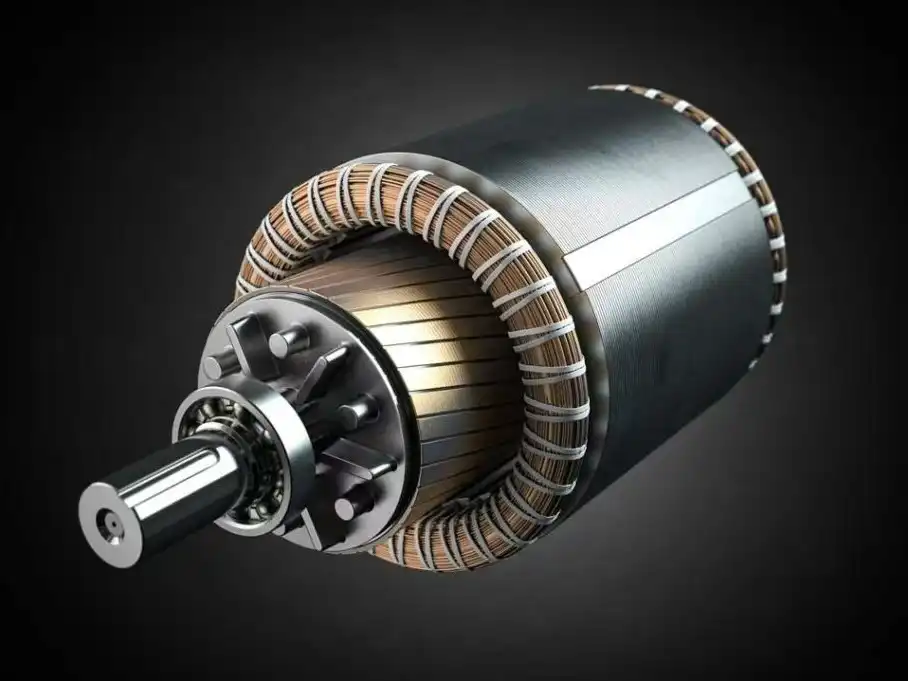
Electric Motor Commutator Parts, Working Principle, and Types
Before you compare parts, it helps to know how the commutator works and what it holds.
How the Commutator Switches Current
To connect to the armature shaft of a brushed DC or universal motor, a commutator is a switch that can turn. Copper segments are pressed up against carbon brushes that stay in place. Each part moves from one brush to the next as the armature turns. This change changes the direction of the current in the armature coils at the right time. This keeps the torque pushing in the same direction. A lot of information about this switching action can be found in standard sources, such as Electric Machinery Fundamentals. This is what a slip ring looks like, but it doesn't have any segments and can't change the way electricity flows. To make the quote process go faster and to make sure you don't order the wrong part, I want to bring this up.
Key Components and What Each One Does
An electric motor spare parts commutator consists of several components that determine its dimensional compatibility, electrical performance, and service life. Copper segments carry current, while insulating materials such as mica-based insulation or suitable molded compounds keep the segments electrically separated and withstand operating temperatures. Risers, hooks, or other connection features link the segments to the armature windings, while a hub, sleeve, or molded body supports the assembly and helps secure it to the shaft. Carbon brushes, springs, and brush holders form a separate contact system that works together with the commutator during motor operation. When selecting an electric motor spare parts commutator, manufacturers must ensure that the segment count, dimensions, alignment, and surface finish match the armature design and brush configuration. Each brush must maintain proper contact with the intended commutator surface throughout rotation to support consistent current transfer. Excessive sparking can indicate problems such as poor brush contact, incorrect alignment, damaged insulation, or unsuitable commutator dimensions. Choosing a compatible electric motor spare parts commutator helps reduce premature wear and improve motor reliability. Before ordering an electric motor spare parts commutator for replacement or mass production, buyers should confirm the technical drawings, insulation requirements, winding connections, and brush specifications with the supplier to ensure the complete assembly works as intended.
Common Types and Where They Are Used
Commutators come in a number of different types. For designs with a drum, the segments are on the outside of a cylinder. For designs with a flat face, they are on a disk. For motors in appliances that get a lot of use, molded commutators with phenolic bodies are common. For bigger industrial machines, heavier built-up designs are more common. You could also use mica undercutting, where the insulation is below the copper, and the brushes only touch the metal. The vacuum cleaner, washing machine, power tools, and small industrial motors are just a few of the things that use them. There is a lot of current and vibration in starter motors, and most car parts are made to work in temperatures between -40°C and +120°C. The motor in a vacuum moves very quickly. With these things in mind, it's easy to see whether a standard part or a custom design makes more sense.
Choosing the Right Electric Motor Spare Parts Commutator: Fit and Material
Next, you need to find the part that works with your motor and duty cycle.
Fit Checks Before You Order
It doesn't mean it will fit just because the outside diameters are the same. I think you should make a short list of the following: the motor type, the part number, the outside diameter, the bore or shaft fit, the overall length, the number of segments, the shape of the riser or hook, and the width of the brush track. After that, look at the concentricity and runout. If a brush is wobbling, it will bounce back. A total indicator reading (TIR) of less than 0.005 mm is often used as a precision goal, but your drawing sets the real limit. A sample or drawing in inches or millimeters is the best way to start if you don't know the part number. People in the US usually measure things in inches, so write the unit on every dimension. Pictures are helpful, but they can't be used instead of measuring.
Copper, Silver-Bearing Copper, and Trade-Offs
Segments are still usually made of copper because it is good at moving both heat and electricity. Electric tough pitch (ETP) copper is used in a lot of motors for cars, tools, and appliances. A small amount of silver in copper makes it soften at higher temperatures. This means that segments don't bend when they are heated or loaded. That costs more, but it works better when there is a lot of heat or current. It doesn't mean something works just because it has a name. How often, how fast, how hot, what kind of brush is used, and how consistently the supplier tests and machines the part will determine which one to pick. If you only need to power a few things, standard copper might be a better choice.
OEM, Aftermarket, and Custom Options
That's what I do: I look at three paths side by side. If you can get the original source, there is almost no chance that an OEM part will not fit. You could get an aftermarket part for less money and faster, but you should check that it is the same size and made of the same material as the original. You should have a custom part made from a drawing or sample when the first one is no longer useful, when the volume stays the same, or when the part needs to be made of a different material or in a different shape. You should think about price, lead time, expected volume, fit risk, and technical support. When the same order is placed more than once, a custom drawing with a revision number makes sure that each batch is the same. When you do things this way, changes between shipments won't catch you off guard.
Verifying Fit, Quality, and Durability
You need more than just a good choice to show that the part works.
Dimensional and Electrical Checks
Quality assurance for an electric motor spare parts commutator should include two essential stages: inspection before shipment and incoming inspection upon delivery. Dimensional checks typically cover overall length, segment spacing, riser position, roundness, and radial runout. A coordinate measuring machine (CMM) can provide detailed measurements of critical features, including slot depth and width. Electrical inspections may include continuity testing, bar-to-bar resistance measurements, and insulation resistance testing. A suitable high-potential (hi-pot) test can help verify the insulation integrity between conductive segments and the shaft or core, provided the test voltage and procedure are appropriate for the component design. Consistent bar-to-bar resistance readings can also help identify potential connection defects or manufacturing inconsistencies. When purchasing an electric motor spare parts commutator, buyers should request documented inspection results for each production batch rather than relying solely on a general quality statement. These records help confirm that the electric motor spare parts commutator meets the agreed dimensional and electrical specifications and support traceability if a problem occurs after delivery. By implementing clear inspection procedures before shipment and upon receipt, manufacturers and procurement teams can reduce the risk of defective components entering production. For every electric motor spare parts commutator order, maintaining batch-specific quality records is an effective way to support consistent product quality, simplify troubleshooting, and improve supplier accountability.
Spin, Surface, and Running Tests
Running tests and mechanical tests show how a commutator works when it is under a lot of stress. To see if the segments stay in place, the test is sometimes run at 1.2 to 1.5 times the rated speed. The eye is used to look for things like cracks, burrs, loose bars, and uneven mica undercutting. Also, it's important to know the surface roughness (Ra). Brushes can make a stable film on copper that is often called patina better if the finish is smooth. I think you should run a test with the planned armature and brushes to see if there are any problems with temperature, vibration, noise, sparking, or brush wear. It is in this step that problems are found that static measurements miss. You can compare the test results and the batch record at a later time.
Common Failure Symptoms and Root Causes
Sparks, grooving, pitting, discoloration, noise, and getting too hot are often the first signs of trouble. Each symptom is caused by the same thing. When the runout is high, the brushes bounce. If the brush is too hard or not the right grade, it wears down the surface. High mica turns off touch. Electrical stress happens when armature windings are shorted, riser connections are open, or the load is too high. Heat is caused by friction and not enough airflow. A shaft that slips, an imbalance, cracks, and loose segments are some mechanical causes. You should check out the brushes, armature, and bearings, as well as the commutator that looks broken, not just the commutator itself. If you add a new part to an armature that is already broken, it will break again. Write down the problem, the load, and the time it took to appear. This will help you figure out what caused it.
Maintenance, Cleaning, and Repair
Each choice about maintenance impacts both cost and uptime, since even a good commutator breaks down over time.
Cleaning and Routine Care
The commutator and brush will last longer if you take good care of them. Turn off the power first every time. First, look for dark bars, grooves, and carbon buildup. To get rid of the carbon dust, use a vacuum or low-pressure dry air. Keep your eyes safe. Oils and strong solvents can damage brushes and insulation, so don't use them. You can lightly polish the surface with a fine abrasive to make it smooth again, but it should only take off the very least. At the same time, check both the brush's length and the spring's push. Brushes on commutators that are worn out will break down quickly. That way, you can find small changes before they start to break and become big problems.
Resurfacing and Mica Undercutting
The wear might not be fixed by polishing if it is too deep. Resurfacing might help. A thin layer of copper is removed during precision turning to make the part round again. However, material is lost with each cut, so the part must stay bigger than its smallest diameter. The mica between the segments needs to be cut again so it sits below the copper after the segments are turned. What you need to do is do this, or the high mica will lift the brushes and stop the contact. Remove the burrs from the shape's edges after cutting it. Next, check the runout one more time to make sure the motor is running with the right brushes. Follow the steps in the original drawing for any repair that needs to keep the shape and level of insulation that they had before.
Repair or Replace?
Minor surface scratches or isolated connection defects on an electric motor spare parts commutator may be repairable, depending on the extent of the damage and the manufacturer's recommendations. However, replacement is generally the safer option if the commutator has severe burn marks, cracks, loose segments, damaged insulation, or insufficient copper remaining after machining. When deciding whether to repair or replace an electric motor spare parts commutator, buyers should compare the repair cost with the risks of repeated failure, production downtime, and reduced motor performance. For motors used in critical manufacturing processes, purchasing a new, inspected electric motor spare parts commutator may be more economical than facing another unexpected shutdown. Finding the original part number for an older motor can be difficult, but a replacement can often be custom-manufactured from an accurate technical drawing or physical sample to help maintain equipment operation. Before ordering a custom electric motor spare parts commutator, confirm the dimensions, segment configuration, connection details, and insulation requirements to ensure compatibility with the motor. Proper storage is also essential for preventing corrosion and preserving component quality. Keep each electric motor spare parts commutator in a clean, dry environment and use suitable protective packaging, such as vapor corrosion inhibitor (VCI) packaging, when appropriate. These precautions help protect the component during storage and reduce the risk of damage before installation.
Sourcing Commutators from a Dependable Supplier
The company you choose will tell you if the quality stays the same from one batch to the next once the technical fit is done.
What to Check in a Supplier
It's not enough for a seller to have a low price and an item in a catalog. What I look at is how much experience they have with making things, helping engineers, keeping track of materials, precise machining, inspection, keeping track of things, and exporting. You should look into the company's tolerances, how they test their products, their lead time, how they label and package their products, and how they handle quality claims. It is also important to have good systems. These certifications, like the ISO 9000 family and IATF 16949, show that a supplier follows written steps to make sure that everything is the same and can be tracked. People who buy Tier 1 and Tier 2 cars both respect IATF 16949 because it was made for making cars. You should ask to see certificates and sample inspection reports before you decide.
How angu Supports Commutator Programs
He has been making things for 20 years and has ISO 9000 and IATF 16949 certifications. The work that engineers do is protected by three invention patents and six utility model patents. We also do OEM/ODM manufacturing based on the plans and details you give us. People in the US can get their orders quickly or on time because we ship by sea freight, air freight, or international express through DHL, FedEx, and UPS. It takes 30 days to deliver. If there is a problem with the quality of our products, you can return them or get a new one. They also come with a 1-year warranty. These terms make it easy for procurement teams to figure out how risky something is before they place their first order.
A Five-Stage Procurement Process
Supply stays steady when the process is well-organized and technical risk is low. During the first step, the needs are made clear. Some of these are the motor model, drawing, sample, working conditions, yearly demand, certifications, and test criteria. The second step is to check out the suppliers. In the third step, samples are checked to see how big they are, how well they work electrically, and whether they can be used with brushes. In the fourth step, there is a lead order. After that, you make rules for accepting, packing, and keeping track of the goods. Stage five keeps quality in check over time with safety stock, supplier reviews, and change control. The full cost, not just the unit price, should be shown. This should include freight, the risk of rejection, and downtime. Long-term agreements should include peer review, approval of the first article, and monitoring of each batch. You can do both one-time repair orders and OEM programs that run over and over again on this path.
Conclusion
A good electric motor spare parts commutator has three things: it fits well, is made of good materials, and lasts a long time. When you fit an armature, you have to make sure that its diameter, segment count, shaft interface, and runout are all the same. Based on speed, current, and heat, material means choosing copper or copper that has silver in it. You can tell something is durable by testing its size, electricity, spin, and running. It stays durable by being cleaned, resurfaced, and replaced when parts wear out. Different sizes, brush problems, or armature faults are the main causes of most problems, such as sparking, grooving, and overheating. In other words, the whole motor needs to be checked out. It's less likely that batches will differ and that equipment will break down without warning if there is a staged procurement process, supplier certification, and inspection records that can be kept track of.
FAQ
What does a commutator do in a motor?
It moves the armature, which moves with electricity from the brushes that don't move. It also changes the direction of the current in the coils to keep the torque in one place.
When should I replace a commutator?
You should get a new one if it breaks, cracks, burns badly, stops insulating, or there isn't enough copper left for another cut. Most of the time, light surface wear can be fixed or polished.
Is silver-bearing copper always better than standard copper?
It doesn't get soft at higher temperatures, so it's good for hot duty with a lot of current. For motors that don't do a lot of work, standard copper is often a good choice because it is cheap and works well.
Should I replace the brushes with a new commutator?
Yes. Check them often and get new brushes when the old ones wear out. Old brushes can damage a new surface and shorten its life.
What should I send for a quotation?
The motor application, part number, key dimensions, material needs, annual quantity, testing expectations, delivery schedule, and country of destination must all be sent.
Request a Verified Electric Motor Spare Parts Commutator Solution from Angu
Send us your drawing, sample, motor model, or part number, and we'll check the fit, material, and brush compatibility. With ISO 9000 and IATF 16949 certifications, we have been a supplier of electric motor spare parts commutators for 20 years. We do OEM and ODM work and can deliver in 30 days. We also offer a warranty for one year. You can email chenrf@angu.com or visit angu-group.com to find out more.
References
1. Electric Machinery, McGraw-Hill, 2014
2. Electric Machinery Fundamentals, McGraw-Hill, 2011
3. NEMA MG 1 Motors and Generators, 2016
4. IEC 60034-1 Rotating Electrical Machines: Rating and Performance, 2017
5. IATF 16949 Quality Management System Requirements for Automotive Production, 2016
6. ISO 9001 Quality Management Systems: Requirements, 2015
YOU MAY LIKE