Precision Commutator Manufacturing: Tolerance Checks Before Bulk Orders
As you prepare to buy a lot, make sure you understand the tolerances that govern how a precision commutator fits, spins, and touches the brushes. Check the outside diameter, inside diameter, segment height, runout, insulation resistance, and surface finish on parts that are meant to be made, not just a sample that was chosen by hand. After that, run a pilot lot to check out the motor's parts. By following these steps, you can find out if a supplier can keep the same limits for thousands of items. This guide tells U.S. buyers which checks are important, what documents they should ask for, and how Angu can help them through the process.
What Is a Precision Commutator and Why Are Tolerances Critical?
Precision Commutator Working Principle in a DC Motor
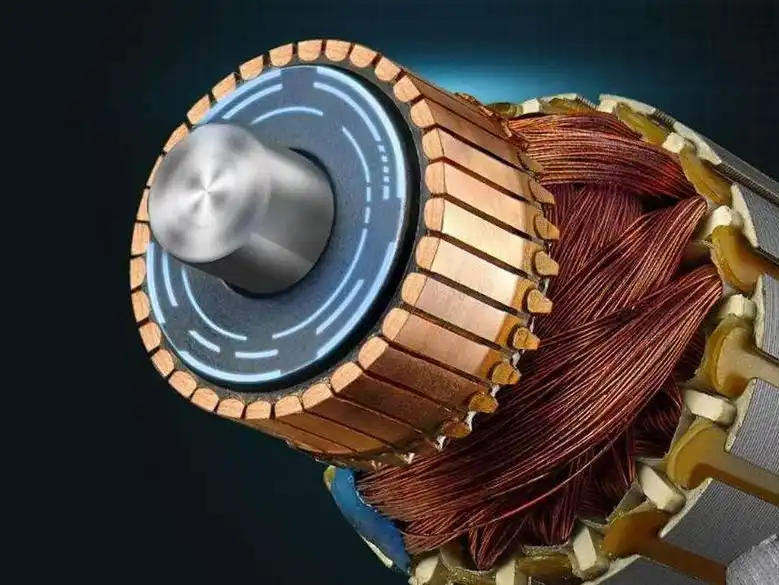
On the rotor shaft is a commutator that moves electricity from the stationary brushes to the armature windings. Each brush moves from one copper segment to the next as the rotor turns. At the right time, that switch flips the current in the coils, which keeps the torque going in one direction. The timing is based on how evenly the circles are filled and how steadily the brushes touch them. If the surface shakes or the space between the segments changes, contact breaks for a split second and sparks appear. This process of commutation for DC machines is explained in Fitzgerald and Kingsley's Electric Machinery.
Precision Commutator Structure and Components
There is insulation between the copper segments, a hub that holds everything together, and a hole in the center for the shaft. Some styles include risers or hooks for the wires that are being wound. The outside diameter of our 14-segment model is 24.2 mm, the inner diameter is 12 mm, and the height is 18.5 mm. It is made of silver, copper, and resin. Every part has an effect on the others. They stay in place with heat and spin because of resin bonding, and the part's fit on the shaft depends on the size of the hole it has. Because these features work together, I think you should check the whole assembly instead of just one dimension.
Why a Small Tolerance Error Can Become a Large Motor Problem
A precision commutator may look like a small component on an engineering drawing, but its surface is contacted by the brushes thousands of times per minute during motor operation. Even a minor high spot can cause brush bounce, leading to electrical arcing, excess heat, and accelerated carbon brush wear. Uneven segment spacing can also affect commutation timing and increase electrical noise, while an incorrectly sized bore may result in a poor shaft fit, vibration, or premature bearing wear. These issues can interact and gradually reduce motor reliability, turning a small manufacturing deviation into costly repairs or warranty claims months later. Choosing a high-quality precision commutator and verifying critical dimensions before mass production can help prevent these problems. For procurement teams, tolerance inspections are a cost-effective way to confirm that a precision commutator meets the required specifications before committing to a large order. Checking surface runout, bore dimensions, segment spacing, and other critical tolerances against approved engineering drawings helps identify potential defects early. By prioritizing dimensional accuracy and consistent manufacturing quality, buyers can reduce production risks and improve the long-term performance of a precision commutator in demanding motor applications.
The Most Important Precision Commutator Tolerances to Check
Outer Diameter, Inner Diameter, and Overall Length
That's how you know if the part fits your rotor and if the brushes touch the surface in the right spot. Use a calibrated micrometer or laser scan to measure the outside diameter. A plug gage or air gage can be used to check the bore. People who want to buy our 14-segment model compare the 24.2 mm outside diameter, 12 mm inside diameter, and 18.5 mm height to the drawing they have. Read it more than once along its length, since a taper can get away with a single check. It's important to keep track of the gage type and temperature when you're buying small parts, so ask the supplier to write them down.
Concentricity, Roundness, and Radial Runout
The runout value tells you how much the commutator surface shakes when the rotor turns around its shaft axis. It changes noise, wear, and brush bounce more than almost any other value. You can use a dial indicator or a non-contact sensor to measure it while the part is on a fixture that fits the real shaft. First, agree on the datum. If you measure from the wrong point of reference, the numbers from your lab and the factory will not match up. Both sides meet the requirements set out in ASME Y14.5 for how to show geometric controls on a drawing. Also, make sure the part is round. A part can look fine from one angle but have lobes when looked at from another.
Segment Spacing, Segment Height, and Surface Finish
Even commutation timing around the circle is kept by segments that are spaced out equally. Whether a brush rides smoothly or taps each edge depends on the difference in height between segments that are next to each other. There should be the right amount of insulation between the segments for your drawing, so the brush should only touch copper. Rough surfaces wear down brushes quickly, so decide how rough the surface can be and stick to it. Put a number limit on each of these parts of the drawing and ask the first article for measured values. Do not accept "to standard" without a number following it.
Precision Commutator Materials and Their Effect on Tolerance Stability
Copper and Copper-Alloy Selection
Most commutator segments are made of copper because it machines cleanly and conducts electricity well. When a segment gets hot, alloying changes how it acts. Plain copper softens at lower temperatures than silver-bearing copper, and a soft segment can change shape after hours of running, making the height and roundness less than what you agreed upon. J.R. ASM International's Davis's Copper and Copper Alloys handbook talks about how composition affects how soft and strong something is. For the most part, a grade chosen with heat in mind is what a high-load motor needs. Don't let anyone switch the drawing afterward; write the grade on it.
Silver Copper and Resin in the Angu 14-Segment Model
The 14-segment commutator we use is made of silver copper (type 03 or 08) that is bonded with resin. Copper that contains silver stays hard at higher temperatures than copper that does not contain silver. This helps the segments stay in shape during long runs. The resin keeps the segments in place and uses electricity to separate them. Before we start making it, we make sure that the type of copper meets your thermal and electrical needs. You can get free samples that are certified by SGS so that your lab can test the parts before making a bigger purchase. While you are in the OEM or ODM design stage, we can talk about what kind of material you need based on your needs.
Material Traceability and Batch Consistency
Even a high-quality alloy can cause problems if material specifications or manufacturing processes change without proper notification between production batches. When sourcing a precision commutator, buyers should request material certificates, shipment-specific lot numbers, and a written commitment from the supplier to notify them before making significant changes to materials, tooling, or production processes. Effective traceability allows quality teams to connect field complaints with specific production lots, investigate potential causes, and implement corrective actions more efficiently. For automotive suppliers, IATF 16949 includes requirements related to product identification and traceability, making these controls particularly important throughout the supply chain. Our factory follows ISO 9001-based quality management practices and IATF 16949 requirements, supporting consistent production and documented quality control for each precision commutator. Each package includes product identification information, a quality certificate, and handling instructions to help customers manage incoming inspections and inventory records. By maintaining clear material documentation and batch traceability, we help buyers monitor the quality of every precision commutator shipment and reduce the risk of unexpected production variations. Before placing repeat orders, customers can also confirm that the material grade, critical dimensions, and approved manufacturing specifications remain consistent, helping ensure that each precision commutator meets the agreed requirements.
A Pre-Bulk-Order Tolerance Inspection Checklist
Confirm the Specification and Approve a First Article
Tolerancing that is good starts before the metal is cut. Send a drawing with marked datums, material, finish, and important features to the supplier and ask their engineers to look it over. Tight limits on every feature make the motor more expensive without making it work better, so separate the features that affect performance from the others. You should also record targets for speed, current, temperature, and noise. Then ask for a first article that was made with production tools and materials, not a prototype that was finished by hand. Check that each dimension matches up with the drawing, and keep the report. You can test fit and performance in your own assembly with the help of free samples that we give you.
Verify Mechanical, Electrical, and Insulation Results
Once the sizes are okay, test the electrical side. If your application needs it, check the dielectric strength, the continuity of each segment, and the insulation resistance between segments and to the hub. Keep track of voltage, humidity, and temperature during tests so that results from different labs can be compared. Then look at the surface with a magnifying glass to find burrs, copper smudges in the slots, and resin holes. For best results, use both measurements and visual checks on the part. A conductive burr can connect two segments and cause them to fail, even if the measurements are good.
Control the Process, Test in the Motor, and Approve the Batch
It's too late to check only the finished order; ask for records of the work that is still being done. It is written in the AIAG Statistical Process Control Reference Manual how control charts can show drift before parts go beyond their limits. The AIAG Measurement Systems Analysis manual has studies on gauges that show the measuring tool doesn't add much error. After that, put the sample parts into real motors and watch the noise, vibration, sparks, temperature rise, and brush wear at normal and peak speeds. Then, get a pilot lot and check the sizes of parts from different runs. Put the bulk order on hold until the pilot stays stable, and include rules for controlling changes to materials and tools in the terms of your purchase.
How to Choose a Precision Commutator Manufacturer for Bulk Orders
Evaluate Capability, Experience, and Quality Systems
Price alone cannot determine whether a supplier can consistently deliver a reliable precision commutator that meets your technical and production requirements. Before choosing a manufacturer, buyers should evaluate the company's operating history, experience with different motor applications, available measuring equipment, quality management systems, and relevant certifications. ANGU has more than 20 years of commutator manufacturing experience, holds three invention patents and six utility model patents, and reports certifications to ISO 9000 and IATF 16949. Our factory in Xuzhou, Jiangsu, has a stated production capacity of 50,000 units of the 14-segment model within 30 days, helping support customers with substantial volume requirements. For buyers sourcing a precision commutator, these credentials provide useful background, but they should be considered alongside actual sample performance, dimensional inspection results, and production consistency. Patents can indicate investment in engineering development, while sample testing helps verify whether a precision commutator meets your application's requirements. We welcome customers to share their testing protocols and arrange factory audits, either online or in person, so they can review our manufacturing processes and quality controls directly. By evaluating both supplier capabilities and verified product results, buyers can make a more informed decision when selecting a precision commutator manufacturer for long-term cooperation.
Request the Right Technical Documents
Ask for a 2D drawing that has been approved and includes datums and tolerances, as well as material certificates, first article inspection reports, electrical test results, and instructions on how to package the item. Based on the market, you might also need RoHS or REACH compliance declarations. Clear lot labeling also helps U.S. receiving teams because it speeds up sorting and getting checks. The documents a supplier keeps show if they are in charge of their process or just respond to complaints. If a supplier can't show you records for a similar part, that should be a red flag before you commit to a large order.
Compare Quotations, Delivery, and After-Sales Terms
Tooling, samples, inspection, packaging, lead time, minimum order, and shipping terms are some of the things that you should compare quote by quote. A low unit price can hide the costs of things like returns, rework, or line stops. If you buy 500,000 pieces from us in three years, we'll give you back all of our new mold fees. We ship by sea, air, or express with DHL, FedEx, and UPS. Boxes and pallets can be used. A one-year warranty lets you return, exchange, or replace a bad product if it's not up to par. Buyers can plan recurring batch orders with a known total cost thanks to factory-direct pricing and OEM/ODM flexibility.
Conclusion
Before placing a large order, check the tolerances to protect both the motor's performance and your delivery schedule. A precision commutator can only work if all of its lots have the same diameters, runout, segment spacing, segment height, insulation, and surface finish. If you use silver copper with resin, for example, those limits will not hold up as well in hot weather. Traceability connects each shipment to its source. Drawing review, first article inspection, control charts, and gage studies can all tell you if a supplier can do a good job again. Then, electrical tests, in-motor trials, and a pilot lot are used to make sure that the pattern is repeatable before the full volume is committed. It is easy to know who is responsible for each risk when there are clear documents, quotes, and warranty terms.
FAQ
What is the most important tolerance to check in a precision commutator?
Runout and segment height are often the first things that are looked at because they directly affect brush contact. As soon as possible, check the bore fit and segment spacing.
How can I verify that a supplier is ready for bulk orders?
Read the report on the first article, the control charts, and the traceability records. After that, run a pilot lot in your own engines. An audit of the plant gives you even more confidence.
How do tolerances affect final motor cost?
When limits are too loose, it can lead to scrap, brush wear, noise complaints, and returns. Part prices go up when limits are tighter than what the motor needs. Set each limit based on its purpose.
Can I test the 14-segment model before ordering?
Yes. We offer free samples that are certified by SGS, and we can make changes based on your drawings and specifications.
Request a Precision Commutator Tolerance Review
Want to place a large order? You can email your drawing to chenrf@angu.com or go to angu-group.com to send it. We have been making precision commutators for 20 years and have ISO 9000 and IATF 16949 certifications, as well as 3 invention patents, 6 utility model patents, and support for OEM and ODM. We offer free samples, delivery within 30 days, and a 1-year warranty. Tell us how loud, fast, and current you are.
References
1. Fitzgerald and Kingsley's Electric Machinery, 2013
2. IATF 16949 Automotive Quality Management System Standard, 2016
3. ISO 9001 Quality Management Systems: Requirements, 2015
4. AIAG Statistical Process Control (SPC) Reference Manual, 2005
5. AIAG Measurement Systems Analysis (MSA) Reference Manual, 2010
6. ASME Y14.5 Dimensioning and Tolerancing, 2018
YOU MAY LIKE