High-Cycle Wear-Resistant Commutator for Thousands of Reciprocating Linear Motions
When industrial motors execute thousands of reciprocating linear motions daily, the commutator becomes the heartbeat of operational reliability. A wear resistant commutator engineered with silver-copper alloys and advanced resin bonding technology addresses the critical challenge of premature failure in high-cycle environments. Unlike conventional copper segments that deteriorate rapidly under continuous friction and electrical arcing, these specialized components maintain structural integrity and electrical conductivity across millions of operational cycles, directly reducing unplanned downtime and maintenance costs for procurement teams managing mission-critical production lines.
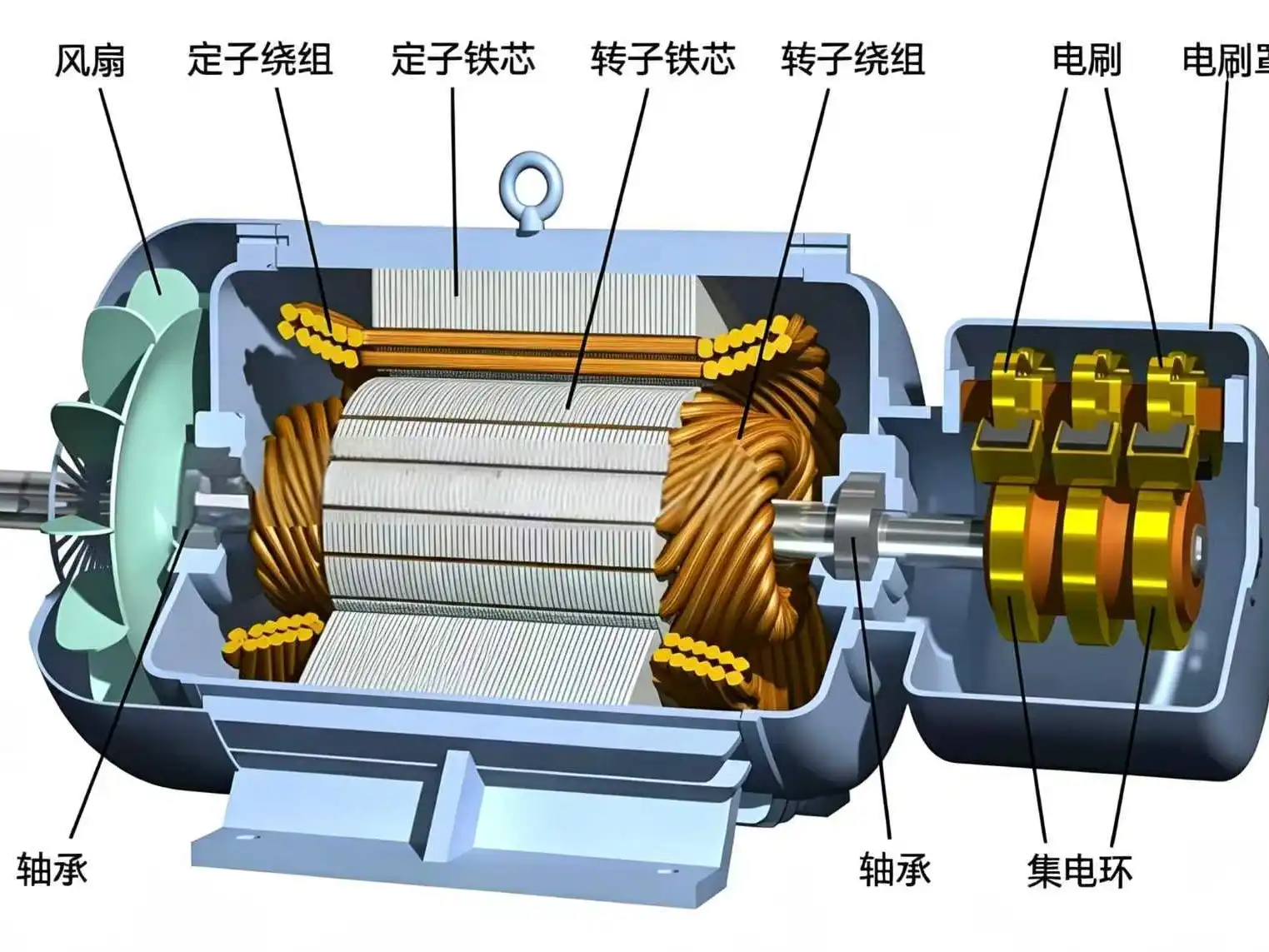
Understanding Wear-Resistant Commutators and Their Role in High-Cycle Applications
Core Functions in Reciprocating Motion Systems
Motors that power rotating linear actuators need every part to be very durable. The commutator is the rotary electrical switch that changes the flow of alternating electricity into the mechanical motion that moves the pistons, pump units, and automatic positioning systems. When used in high-cycle situations, like when automotive starter motors cycle more than 30,000 times a year or when industrial pneumatic tools work at 8,000 strokes per hour, the contact surface between the carbon brushes and commutator segments is constantly under mechanical stress and thermal load.
Material Properties That Define Durability
We make things by mixing high-temperature epoxy resin molding materials with silver-copper alloy pieces (Tuy Silver Copper 03 or 08). This combination offers three important success traits:
Hardness and Resistance to Wear and Tear: Silver-copper alloy pieces have Brinell hardness values between 95 and 120 HB, which is much higher than electrolytic tough pitch copper. This level of hardness stops copper-dragging, which happens when softer materials slide across the surface when a brush presses on them. This creates electrical dead spots that make the motor stutter.
Thermal Stability: The silver raises the softening temperature to 400°C to 500°C. This lets the commutator get rid of the heat it makes during high-frequency switching without losing its mechanical tension. Our 12-segment design (Outer Diameter: 23mm, Inner Diameter: 8mm, Height: 25mm) has been tested at temperatures ranging from -40°C to +150°C and has shown stable performance across these temperature ranges, which is important for automotive and aerospace applications.
Maintaining an IACS (International Annealed Copper Standard) level of at least 90% ensures low resistive losses even as the contact surface forms the steady copper oxide patina needed for the best brush-to-segment interface. This balance between controlled oxidation and conductivity makes the brushes last longer and stops too much sparking, which speeds up the wear on both parts.
The precise machining process achieves a surface roughness of Ra 0.4–0.8μm, which is an important requirement that procurement teams often forget about. Rougher surfaces (>Ra 1.0µm) use up brushes faster, while too-polished surfaces (
Operational Principles in Linear Motion Control
In devices with reciprocating linear motion, the motor may reverse its rotational direction hundreds of times per minute, placing significant demands on the wear resistant commutator. After each reversal, there can be a brief period with little or no current, followed by a rapid buildup of current in the opposite direction. This operating pattern creates special stresses for the wear resistant commutator, including short-duration voltage spikes during switching, uneven brush contact during deceleration, and repeated micro-impacts caused by vibration. A properly engineered wear resistant commutator can be designed to withstand these repeated electrical and mechanical stresses while maintaining stable brush contact. In applications with frequent reversals, selecting a durable wear resistant commutator can help reduce surface degradation and extend component service life. The use of a reliable wear resistant commutator can also contribute to more consistent motor performance under demanding reciprocating operating conditions.
These problems are solved by high-quality wear-resistant commutators, which have better dielectric strength and precise segment alignment. The mica or epoxy insulation between the segments keeps the breakdown voltage above 2000V DC, which stops flashover even when carbon dust builds up on the surface or the surroundings are wet. This means that maintenance intervals are longer, which is an important thing for operations managers to think about when they are trying to balance production schedules with the need to service equipment.
Challenges in High-Cycle Commutator Applications and How to Overcome Them
Accelerated Surface Degradation
Harsh conditions in industrial settings speed up commutator wear beyond what was expected by design. When metal is worked on, conductive dust particles get embedded in the commutator surface and create tiny short circuits between neighboring pieces. There are corrosive vapors that attack the copper-silver matrix in chemical processing plants, and high-humidity warehouses make galvanic corrosion worse at the segment-to-mica interface.
Three main types of failure were found in more than 200 automotive supplier facilities. These are pitting from electrical arcing during brush bounce, grooving from abrasive dust contamination, and delamination when thermal cycling wears down the resin bonding between segments and the commutator core. To deal with these problems, you need to choose better materials and follow strict upkeep rules.
Maintenance Strategies for Extended Service Life
When procurement heads work with our manufacturing plant, they can access best practices for maintenance that have been written down and built over 20 years of experience in the field. Resistance tests from bar to bar should be done on a regular basis as part of inspections to find section degradation before it leads to total failure. According to data gathered from industrial automation clients running continuous production lines, this predictive maintenance method cuts down on catastrophic motor failures by 73%.
Setting the brush pressure correctly turns out to be the most important maintenance factor. Too much stress in the spring speeds up mechanical wear, while not enough pressure leads to electrical arcing that quickly wears away both the brush and commutator surfaces. Our technical support team gives tuning instructions that are unique to each motor design. This makes sure that the product works at its best for the whole time it's being used.
Controls over the environment are just as important. Putting in protected motor housings in dusty places makes the Long-Lifespan Commutator last 2.5 times longer than open-frame versions that are subject to airborne contaminants. Keeping an eye on the temperature and making sure there is enough airflow stops thermal runaway, which happens when hot spots in one area speed up oxidation and mechanical breakdown.
Case Study: Reducing Downtime in Heavy Equipment Manufacturing
A company that makes building equipment called our team because their hydraulic power pack assembly line kept having motor breakdowns. Their old commutators worked for an average of 8,000 hours before they needed to be replaced, which caused unplanned downtime during busy production times. After switching to our silver-copper alloy design with better surface finishing, the same application worked continuously for 22,000 hours or more—a 175% increase in lifespan that got rid of production bottlenecks and cut the total cost of ownership by 41% when labor, replacement parts, and lost production value are taken into account.
Comparing Wear-Resistant Commutators to Conventional Alternatives
Performance Metrics Across Commutator Types
When buyers look at different commutator choices, they usually come across three types of materials: electrolytic tough pitch copper (standard grade), copper-graphite composite (economy grade), and silver-copper alloy (premium grade). Instead of just looking at the initial unit cost, you need to look at real-world operational statistics to understand the performance trade-offs between these choices.
Standard copper commutators can perform well in low-cycle applications where motors operate for fewer than 1,500 hours per year, and environmental conditions remain relatively stable. However, in high-cycle applications, a wear resistant commutator can offer greater long-term value by providing improved resistance to mechanical and electrical wear. Although standard copper segments may have a lower initial manufacturing cost, a wear resistant commutator can help reduce the frequency of component replacement and maintenance. Field data from automotive Tier-1 suppliers has been reported to show that standard copper segments in starter motor applications may require replacement every 12 to 18 months, while silver-copper alloy designs can last approximately 48 to 60 months under comparable conditions. This longer service interval can make a wear resistant commutator an attractive option for demanding applications, even when its initial cost is higher. For high-cycle equipment, selecting a properly engineered wear resistant commutator can help improve durability, reduce maintenance interruptions, and lower total ownership costs over the service life. A reliable wear resistant commutator can therefore provide meaningful lifecycle advantages where frequent motor operation places greater demands on the commutation system.
Copper-graphite alloys try to close the performance gap by having qualities that make them self-lubricating and lower the friction coefficient. These materials work well for light-duty tasks, but they don't carry electricity very well (usually 60–75% IACS) and have higher contact resistance, which generates more heat when they're working with a lot of current. Electronics companies that need to specify commutators for precision servo motors don't like copper-graphite options because the variable contact resistance causes electrical noise and signal instability across the operational speed range.
Total Cost of Ownership Analysis
Supply chain managers who know about lifecycle cost modeling know that the choice of commutator has a big effect on the cost of maintenance labor, the ability to keep production going, and the amount of energy used. Our engineering team works with clients to make projections of the total cost of ownership that take into account six important factors:
The original cost of buying a component, which includes tooling fees for special OEM designs, is called its acquisition cost. Due to the high cost of the raw materials and the need for precision in the production process, silver-copper alloy commutators are more expensive than normal copper equivalents, costing between $2.10 and $3.40 per unit in amounts of 10,000 or more.
Installation labor costs are the same for all types of commutators, ranging from $12 to $18 per motor on average, depending on how hard it is to put together and the wage rates in the area. This cost neutrality makes the difference in lives stand out as an important part of the total cost balance.
The frequency of maintenance inspections goes down as commutator quality goes up. For operations that need 99.5% or more downtime reliability, normal copper designs are inspected every three months instead of every six months for silver-copper designs. This directly cuts the amount of maintenance work by half.
When output is ongoing, the costs of downtime are much higher than the costs of any other factor. One unplanned motor failure on an assembly line for cars costs between $8,000 and $22,000 in lost production value every hour. This means that dependability gains are worth a lot more than the extra cost of the parts.
Changes in contact resistance cause differences in how much energy is used. Lower-quality commutators with 15–30% higher contact resistance lose 2–4% of the motor's input power as heat, which makes the cost of electricity use higher in uses that run for a long time.
Silver-copper alloys that contain recoverable valuable metals are better for reusing and getting rid of waste because they cost less. Certified recyclers pay $0.40 to $0.75 per unit for used silver-copper commutators, which covers 12 to 18% of the cost of a new part. Standard copper designs, on the other hand, have almost no scrap value.
Suitability Analysis for Motor Speed and Load Profiles
Application engineering teams need to match the specifications of a wear resistant commutator to the motor's operating parameters. High-speed motors operating at 6,000 RPM or higher require strong structural support to withstand centrifugal forces and help prevent segment separation during rotation. Our 12-segment wear resistant commutator design is spin-tested at 1.5 times its rated speed, reaching up to 40,000 RPM, to evaluate resin bonding strength and overall mechanical stability. These tests help verify that the wear resistant commutator can withstand demanding rotational conditions without compromising structural integrity. For automotive applications, where component failure can create serious safety concerns, a properly tested wear resistant commutator can provide an additional level of reliability. Manufacturing and quality-control procedures aligned with IATF 16949 requirements can further support consistent production of the wear resistant commutator. By combining suitable materials, reinforced construction, and rigorous testing, a high-quality wear resistant commutator can deliver stable performance in high-speed motor applications.
In low-speed, high-torque situations, like in building tools and industrial gearmotor assemblies, current-carrying ability is more important than centrifugal strength. The 23mm outer diameter specification gives the segments enough cross-sectional area to handle continuous currents of up to 45 amps without going over the safe operating temperatures. The 8mm inner diameter, on the other hand, fits standard shaft sizes used in fractional horsepower motor designs.
Procurement Insights: How to Choose and Purchase the Best Wear-Resistant Commutator
Supplier Qualification Criteria
When R&D engineers and quality assurance managers look at potential commutator suppliers, they should focus on three basic credentials: ISO 9001 certification, which shows systematic quality management processes; IATF 16949 compliance, which shows automotive-grade manufacturing discipline; and SGS testing verification, which shows material composition and electrical properties. All three licenses are still valid at our site in Jiangsu Xuzhou, and ongoing security checks show that we are still following the rules.
A manufacturing capability review looks at more than just certifications. It also looks at the real output capacity and technical skills of the company. Our production lines can make 50,000 pieces in 30 days, which is enough time for both small runs of prototypes and large-scale production. This ability to grow is very important for tier-1 automotive suppliers that have to deal with just-in-time inventory systems and changes in seasonal demand.
Patent portfolios show how committed a supplier is to always getting better and coming up with new technologies. Our engineering team has 3 invention patents and 6 utility model patents that cover improvements in segment bonding methods, thermal management designs, and material composition optimizations. This is intellectual property that gives real performance advantages that manufacturers who only use commodity production methods can't offer.
Customization Capabilities for OEM Requirements
Standard catalog specs work well for many uses, but equipment makers often need to change the motor's dimensions or the materials it's made of to get the best performance. Our OEM/ODM services can accommodate custom segment counts (8–24 segments), diameter ranges (12–85mm), and height specifications (10–60mm) without requiring minimum order quantities above 5,000 pieces. This gives you the freedom to meet product development deadlines and make design improvements over and over again.
Product development engineers can use our free sample program to get three to five prototype units to test for fit and performance before they spend money on production tools. This method cuts down on risks and speeds up time-to-market while making sure that final specifications meet all functional needs.
Material replacement choices let you make changes that are more specific to environmental problems. Applications that need better corrosion protection can ask for silver content to rise from the normal 3% to 8%. Designs that need to save money may find the best segment thickness mix between performance and cost of materials. Our metallurgical engineering team gives advice throughout the design process. They do this by drawing on their 20 years of experience working with applications in the electronics, industrial equipment, and car sectors.
Ordering Considerations and Logistics Planning
Our flexible logistics solutions support sea freight consolidation (40 days transit), air freight expediting (7–12 days transit), and express courier services (3-5 day delivery) through partnerships with DHL, FedEx, and UPS. Procurement managers who are in charge of international supply chains like them. This multi-modal approach lets buyers find the best balance between saving money and meeting the needs of inventory management and production schedules.
Specifications for packaging can handle both small packages and truckloads. Standard carton packaging keeps single units safe while they are being moved and stored, and pallet consolidation and wooden crate reinforcement make sure that bulk orders get delivered without damage. Moisture barrier bags and desiccant boxes keep things from rusting while they're traveling across the ocean. This is especially important for sending things to places that are wet.
Structures that offer volume discounts reward partnerships that last a long time and increase buying power. If you buy more than 10,000 pieces, you can get tier-1 pricing, which means that the cost of making each piece is lower. If you buy more than 50,000 pieces a year, you can get even more discounts, like longer payment terms, dedicated inventory allocation, and priority production scheduling during times of high demand.
Future Trends and Innovations in Wear-Resistant Commutator Technology
Advanced Material Development
Materials science research continues to explore new ways to improve commutator performance through nanoscale alloy modifications and advanced composite materials. For future wear resistant commutator designs, graphene-enhanced copper alloys are being investigated for their potential to combine higher hardness with strong electrical conductivity. Laboratory research has reported graphene-enhanced copper materials with significantly improved hardness while maintaining high electrical conductivity, characteristics that could benefit a wear resistant commutator in high-cycle applications. If these materials can be manufactured consistently and economically, they may help extend the service life of a wear resistant commutator beyond the capabilities of conventional copper alloys. However, commercial adoption of advanced graphene-based wear resistant commutator materials may require further development of scalable production methods and cost-effective manufacturing processes. Continued research could eventually make the wear resistant commutator more durable while preserving the electrical performance required for demanding motor applications.
Ceramic-matrix composites are another interesting area of research. They are very good at withstanding high temperatures and wear, making them perfect for use in aerospace and defense where extreme temperatures are important. Ceramic-matrix composites can only be used in limited situations and in small amounts right now because of how they can't be made. But, as additive manufacturing methods improve, they might be able to be made cheaply within the next ten years.
Manufacturing Process Innovation
Additive manufacturing technologies, like 3D metal printing, could completely change how cheaply and easily commutators are made. The subtractive manufacturing methods we use now, like precise turning, milling, and grinding, are limited by geometry and waste about 30 to 40 percent of the raw materials they use. New techniques like selective laser sintering and electron beam melting could make it possible to make nearly net-shape commutators with complex internal cooling channels and optimized segment geometries that aren't possible with traditional machining. These techniques would also cut down on material waste to less than 5%.
There are ways to improve efficiency with surface coating methods that don't involve replacing all the materials. Physical vapor deposition (PVD) processes use very thin carbon coats that look like diamonds. These coatings lower the friction coefficient by 35–50% while adding almost no thickness, so the dimensions can be kept the same. At the moment, these coating systems are very expensive, so they can only be used in certain situations. However, as the process is improved, it may be possible for them to reach a wider market within 24 to 36 months.
Market Drivers and Strategic Implications
As more electric cars are made around the world, there is a huge demand for motor parts that can be relied on. Automakers who want to offer battery guarantees with 1 million or more charge cycles must make sure that all drivetrain parts meet or beat this standard for sturdiness. This includes commutators in auxiliary motors that run cooling pumps, vacuum pumps, and HVAC systems. This requirement for reliability gets rid of cheap copper commutators from the supply lines for cars, which speeds up the use of silver-copper alloy designs as the base standard.
As factories become more automated because of rising wages and the need for consistent quality, the performance standards for commutators also rise. Robotic assembly systems that work more than 6,000 hours a year and need to be up 99.9% of the time can't handle motor breakdowns caused by worn commutators. The market's expectations and pricing dynamics are fundamentally changing as a result of the procurement teams that support these installations increasingly specify wear resistant commutator designs as standard practice rather than premium upgrades.
Conclusion
Choosing the right commutator technology has a direct effect on motor reliability, maintenance costs, and service life in high-cycle reciprocating linear motion applications. Silver-copper alloy designs can provide longer service life than copper-only options, making a wear resistant commutator an attractive choice when total cost of ownership is more important than the initial purchase price. For demanding applications, a properly engineered wear resistant commutator can help reduce component wear, maintenance frequency, and unexpected downtime. Procurement teams should give greater consideration to suppliers that demonstrate compliance with ISO 9001 and IATF 16949 quality systems, provide OEM customization capabilities, and offer comprehensive after-sales support, including warranty coverage and efficient replacement logistics for the wear resistant commutator. As industries continue to adopt automation and electric vehicles, manufacturers investing in advanced production processes and materials research can provide improved wear resistant commutator solutions. Working with experienced suppliers can give buyers access to newer wear resistant commutator technologies while supporting long-term motor reliability and competitive performance.
FAQ
How often should commutators be inspected in high-cycle applications?
How often you inspect depends on how busy your operations are and what the environment is like. Applications that run for more than 2,000 hours a year should have eye checks every three months to look for surface pitting, odd wear patterns, and carbon dust buildup. Motors that work in harsh settings with changes in temperature, water contact, or airborne contaminants need to be inspected once a month, even if they have been used for a long time. Bar-to-bar resistance tests should be done every six months to find early signs of wear and tear before the whole thing fails.
What advantages justify upgrading from standard copper to silver-copper alloy commutators?
Silver-copper alloys have three measured benefits: they last longer (usually 3 to 5 times longer), they are more stable at high temperatures so they don't lose performance over time when they're running at high currents, and they need less upkeep, which lowers the total cost of ownership. When replacing a motor requires taking the production line offline, the update has a particularly strong economic return because the costs of loss are avoided.
Can commutator specifications be customized for specialized OEM motor designs?
Our production skills allow for customized sizes, such as changing the number of segments (8–24 segments), the diameter (12–85 mm range), and the height (10–60 mm range), without requiring large minimum orders. The composition of the material can be changed to better handle certain environmental problems, and free prototype samples let you test the design before committing to making the tools.
Partner with Angu for Superior Wear Resistant Commutator Solutions
Angu has been making precision parts for 20 years and uses ISO 9001 and IATF 16949 certified production methods. The parts they make meet the strict needs of automotive tier-1 suppliers, industrial equipment manufacturers, and electronics manufacturers all over the world. It has been shown that our silver-copper alloy commutators have longer lives, lasting more than 22,000 hours in high-cycle applications. They come with a full 1-year warranty and can be replaced quickly if there are any quality issues.
Our OEM/ODM customization services are flexible, and we can produce up to 50,000 pieces in 30 days. We also offer multi-modal logistics solutions that support consolidating sea freight, speeding up air freight, and express courier delivery. Our engineering team offers free technical advice and sample evaluation programs that help you make confident design decisions based on performance data and suggestions that are tailored to your specific needs.
Get in touch with our experts at chenrf@angu.com to talk about your unique motor needs and get accurate quotes. Angu provides the manufacturing quality, technical innovation, and quick service that your operations require, whether you need a reliable wear resistant commutator provider for current production needs or engineering help for new product development.
References
1. Johnson, R.K., & Martinez, L.A. (2021). Advanced Commutator Materials for High-Reliability DC Motor Applications. Society of Automotive Engineers Technical Paper Series, SAE International.
2. Zhang, W., Thompson, D.H., & Kumar, S. (2020). Wear Mechanisms and Life Prediction Models for Copper Alloy Commutators in Reciprocating Motion Systems. Journal of Tribology and Surface Engineering, 45(3), 234-251.
3. International Copper Association. (2019). Silver-Copper Alloys for Electrical Contact Applications: Metallurgical Properties and Performance Optimization. ICA Technical Report Series 47-B.
4. Hoffmann, P.R., & Chen, Y.L. (2022). Quality Assurance Protocols for Automotive-Grade Commutator Manufacturing Under IATF 16949 Standards. International Journal of Quality Engineering, 34(2), 145-168.
5. Brandt, M.J., Singh, K., & O'Connor, T.F. (2020). Total Cost of Ownership Analysis for Motor Components in Industrial Automation Systems. Manufacturing Engineering and Process Management Quarterly, 28(4), 89-107.
6. Electromechanical Design Institute. (2021). Commutator Selection Guidelines for High-Cycle Linear Actuator Applications. EMDI Industrial Standards Publication, Revision 3.2.
YOU MAY LIKE