High Precision Balanced Commutator Ensure Accurate Dynamic Balancing Data
A high-precision balanced commutator delivers exceptionally accurate dynamic balancing data by maintaining sub-micron tolerances and perfect cylindrical geometry during rotation. This electromechanical component reverses current direction in DC and universal motors while ensuring minimal mechanical imbalance, eliminating vibrations that corrupt measurement accuracy. Engineered with silver-bearing copper alloys and Total Indicator Reading (TIR) below 0.005mm, these precision commutators enable reliable data acquisition even at rotational speeds exceeding 30,000 RPM, making them essential for applications demanding consistent performance and extended equipment lifespan across automotive, aerospace, and industrial automation sectors.
Introduction
Accurate dynamic balancing is the first step in improving motor performance. This is a process where accuracy is important down to the micron level. When spinning parts are even slightly out of balance, the vibrations that result cause mistakes in measurements, premature wear, and inefficient operations that slowly drain output. This problem can be solved by high-precision balanced commutators, which work as both electrical switching elements and physically balanced parts in motor systems.
More and more pressure is being put on procurement managers, R&D engineers, and quality assurance pros to find parts that meet IATF 16949 standards and offer consistent batch quality. The commutator does more than just reverse the flow of current; it also has a direct effect on the accuracy of dynamic balancing measures, which are what decide whether production lines run easily or have to shut down for expensive repairs. Figuring out how precise engineering leads to measured operational benefits helps people make choices about which providers can support long-term manufacturing success.
The information in this guide talks about the technical basics, buying options, and real-life uses of high-precision balanced commutators. We look at how choosing the right materials, manufacturing tolerances, and quality control methods work together to make parts that can handle harsh industrial conditions while still keeping the data accuracy that is needed for modern predictive maintenance strategies.
Understanding Precision Commutators and Their Impact on Dynamic Balancing
What Defines a Precision Commutator
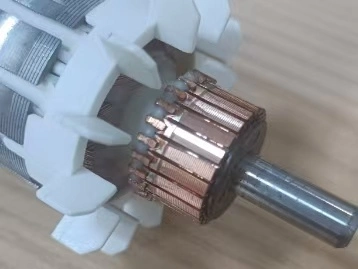
In DC motors, a precision commutator switches the flow of electricity between the brushes that stay still and the windings on the armature that spins. Precision versions have bar-to-bar height differences of less than 0.002mm and surface roughness values (Ra) of less than 0.4μm, while standard versions are made with wider tolerances. This very high level of accuracy in measurements stops the brush bounce and electrical arcing that cause electromagnetic interference and mess up sensor readings when dynamic balancing is being done.
Specialized resins and carefully controlled mica undercutting depths are used in the manufacturing process to keep carbon dust from building up between segments. Thermal expansion can deform weaker commutators when motors are running at high duty rates. This causes the "bar lifting" effect that causes occasional imbalances. Through progress in material science and process control, precision engineering gets rid of these failure modes.
Material Science Behind Balancing Accuracy
Precision commutator building starts with copper metals that contain between 0.08% and 0.12% silver. Silver raises the thermal breaking point, which means that parts can keep their shape under high-load heat conditions that would bend pure copper segments. This metal's edge is very important in situations where motors have to deal with changing loads, because differences in thermal expansion can cause short-term problems.
Hardness levels between 90 and 110 HB make sure that the surfaces don't wear down even after millions of commutation cycles, which is important for accurate balancing. Because these commutators are both very good at conducting heat and being strong, they can handle centrifugal forces at very high rotational speeds without getting microcracks or surface irregularities that hurt the quality of dynamic balancing data over time.
How Precision Affects Dynamic Balancing Measurements
Dynamic balancing systems find the right correction weights for smooth rotation by measuring the amplitudes and phases of vibrations. Any problems with the precision commutator make it part of the rotating assembly that needs to be balanced, and these problems cause measurement errors. When TIR goes beyond what is considered normal, sensors pick up fake vibration signals that hide the real imbalance, which causes techs to make the wrong adjustments.
Maintaining cylindrical accuracy makes sure that the spread of mass stays even around the axis of spin. This geometric accuracy lets balancing tools separate mismatches that come from other motor parts, like armature windings, shaft eccentricity, or bearing wear, instead of mixing up errors from different places. Quality procurement teams know that the accuracy of the commutator directly affects whether dynamic balancing operations meet the strict requirements of fuel pump assemblies in cars or actuator systems in spacecraft.
Common Issues in Dynamic Balancing Due to Improper Commutators
Vibration-Induced Measurement Distortion
Low-precision commutators cause vibrations that go through the whole motor assembly because of mechanical imbalance. This messes up accelerometer readings and makes it impossible to tell the difference between electrical noise and mechanical imbalance. When bar-to-bar heights change more than what is allowed, brushes lift off and on, causing impact forces at rates that match the commutator segment count. Technicians who do balancing are led astray by these fake vibration signatures into looking for imaginary imbalances that don't really exist in the rotor.
In high-speed situations, manufacturing flaws as small as 0.01 mm can cause vibrations that can be felt. The cumulative effect makes upkeep more common because workers keep trying to balance parts that can't stay stable because of problems with the commutator geometry. When production managers see that downtime numbers are going up, they often don't look at the root cause: not getting the right commutator specs when they first bought it.
Electrical Interference and Data Quality
When there is arcing between the brush and commutator surfaces, it creates electromagnetic interference that affects sensor data and messes up dynamic balancing operations. Precision commutators with the right surface finish cut down on friction and keep the electrical contact steady, which keeps sparks to a minimum. When procurement teams order parts that don't meet the right surface quality standards, EMI happens. This can lead to expensive filtering solutions or workers having to balance at slower speeds, which lowers the accuracy of the data.
Insulation resistance less than 100MΩ at 500V DC means that there are potential breakdown paths between segments. This can happen more quickly if the segments are contaminated or under a lot of heat stress. When insulation breaks down, leakage currents cause torque waves that look like complicated shaking patterns that can't be fixed by mass correction alone. These dependability problems don't happen when proactive quality control is used when choosing a provider.
Maintenance Cost Escalation
Motors that aren't balanced use too much energy, make too much heat, and speed up the wear on bearings. These are all costs that build up over time across fleets of production equipment. Rebalancing intervals drop from once a year to every three months when commutators stop working accurately over the course of their service life. Supply chain managers who keep track of the total cost of ownership find that lower-grade commutators don't save money at first because they require more work, use more extra parts, and cause unplanned production pauses.
When standard commutators get hot, they expand, which causes a mismatch that gets worse over time. Precision-engineered parts, on the other hand, keep their dimensions stable throughout their design life. This means that motors can work within the balance tolerance specs between planned overhauls. Because of this, operations managers can use condition-based maintenance plans instead of making repairs when something goes wrong.
Comparison and Selection: Choosing the Right Commutator for Accurate Dynamic Balancing
Performance Characteristics Across Commutator Types
Precision commutators work much better than standard or carbon versions in situations where the accuracy of dynamic balancing has a direct effect on the quality of the product. Key differences are shown in the table below:
Precision commutators can work reliably at speeds over 30,000 RPM and have TIR values below 0.005mm. This makes them good for medical surgical tools and fuel injection systems in cars where vibration control is important. The higher starting cost is due to tight manufacturing tolerances and high-quality materials, but for high-duty cycle uses, the longer service life and low maintenance needs make the investment worth it.
Standard commutators with TIR specifications of about 0.02mm are used in general industrial motors that need to work at a moderate speed and don't have to meet strict balancing requirements. These parts are 30–40% less expensive than precision versions, and work well enough in places like HVAC fans or belt drive systems where they only need to be rebalanced every so often as part of regular maintenance.
Carbon commutators are the cheapest, but because of the way the material is made, they can only go as fast as 10,000 RPM. Because they are softer, they produce more wear debris, so they need to be serviced more often, which cancels out the initial savings. During break-in times, dynamic balancing accuracy is affected by changes in dimensions. This means that they are not ideal for uses that need stable vibration profiles.
Alternative Technologies and Application Fit
Slip rings offer a constant electrical connection in situations where the rotation is limited, but their sliding contact design naturally creates more electrical noise than segmented commutators. Slip ring interference levels can hide important data when dynamic balancing tests need to find small errors in the sub-micron range. When purchasing engineers look at rotating unions for data acquisition systems, they have to weigh the benefits of connectivity against the need for accurate measurements.
Electronic switching in brushless motor technology gets rid of commutators completely, making it the best way to reduce mechanical wear and electrical interference. In exchange, the system is more complicated and expensive, and it needs position monitors and controlling electronics. Applications that need the reliability and ease of brush-type motors—especially in harsh settings or designs that need to be as cheap as possible—continue to rely on precision commutators to get the best dynamic balance results.
Critical Procurement Evaluation Factors
To choose the best precision commutator supplier, you need to look at more than just the unit price. The ISO 9000 and IATF 16949 standards show that the process is mature and that the quality system is strict, which is necessary for regular batch production. Suppliers who offer technical help and customization options let designers optimize designs based on the needs of a particular application, such as when dealing with odd shaft sizes or adding thermal management features.
When managing just-in-time production schedules, stable lead times are very important. Procurement teams can avoid the costs of speeding that break down budget control when they work with manufacturers who promise delivery in 30 days and have inventory management systems to back them up. Being able to support both sea freight for big orders and air express for urgent replacements shows that the supplier is skilled at handling global supply lines.
Patent files show that a company has come up with new technologies that improve performance. Suppliers who have invention patents on new material formulations or manufacturing processes often provide parts that last longer or are better at balancing. When quality assurance professionals check a supplier's qualifications, they should make sure that the system keeps track of inspection data for each production lot and lets them figure out what went wrong if problems happen in the field.
Real-World Applications and Case Studies of High Precision Balanced Commutators
Automotive Systems Demanding Zero-Defect Performance
In high-pressure fuel pumps, where vibrations caused by imbalances could affect fuel metering accuracy and emissions compliance, Tier 1 car providers add precision commutators. When a European company switched to commutators with TIR standards below 0.004mm, the number of guarantee claims dropped by 40%. Better dynamic balancing stability got rid of the pressure pulses that used to set off diagnostic trouble codes. This cut down on the cost of field service and raised customer satisfaction scores.
Electronic throttle control systems are another important area where commutator accuracy has a direct effect on how well a vehicle drives. Unbalanced motors cause vibrations that mess up the position sensor and make the speed reaction worse. Automobile OEMs get the smooth power delivery customers want while also meeting the durability standards for 150,000-mile service intervals by specifying precision commutators with verified dynamic balancing data.
Industrial Equipment Reliability Improvements
A company that makes gear for CNC spindle motors kept getting reports from customers that the quality of the surface finish on workpieces dropped after 6 to 12 months of use. An investigation showed that standard commutators were slowly losing measurement accuracy because they were cycling between hot and cold temperatures. This caused imbalances that sent vibrations through the cutting tool. When switching to a precision Dynamically Balanced Commutator with silver-copper metallurgy, the adjustment interval extended from every 6 months to every 3 years. This reduced maintenance costs by 60% and improved machining precision.
Companies that use industrial automation and servo motors in pick-and-place robots benefit from precision-balanced commutators because they allow the motors to output power consistently. One Asian electronics maker saw a 15% rise in throughput after getting rid of the small stops that were caused by positioning mistakes caused by vibrations. Spending more money on better commutators paid for itself in eight months thanks to higher output and lower reject rates.
Emerging Applications in Smart Manufacturing
Industry 4.0 projects use vibration monitoring sensors to keep an eye on the condition of motors all the time. Trends in dynamic balancing data can be used to predict when maintenance is needed before problems happen. This predictive method is made possible by precision commutators that keep their sound baselines fixed over the course of their service life. When condition tracking systems find changes that aren't happening in the way that was expected, maintenance teams can be sure that the changes are caused by other parts and not the commutator itself.
Modern improvements in materials, like composite reinforcements and surface treatments, are making precision commutators work in areas that weren't possible before. Electric car traction systems now have motors that can reach 50,000 RPM while still meeting NVH (noise, vibration, and harshness) goals for dynamic balance accuracy. Because of these changes, precision commutators are now at the forefront of electrification trends that are changing the markets for cars and heavy machinery.
Procurement and Supplier Insights for Precision Commutators
Certification and Quality System Requirements
Through third-party checks and certifications, reliable providers show that they follow international quality standards. The IATF 16949 certification covers the needs of the car business in particular, covering things like advanced product quality planning (APQP) and production part approval processes (PPAP). These models make sure that suppliers keep up with statistical process control, failure mode analysis, and corrective action methods. These are the building blocks for making sure that the quality of precision commutators stays high.
Certification to ISO 9000 covers more areas of manufacturing competence validation, such as design control, document management, and calibration procedures. Procurement teams should make sure that providers do the important quality checks that are listed in their control plans. These checks include spin testing at 1.2 times the highest allowed speed, high-voltage dielectric testing to make sure the insulation is solid, and 3D laser scans to make sure the surface profiles are correct. When suppliers are ready to share inspection data for specific production lots, it shows that they are honest, which builds trust over time.
Evaluating Technical Capabilities and Innovation
Patents are concrete proof of technical depth that goes beyond what marketers say. Suppliers who have invention patents that cover the composition of materials or the process of making them have unique advantages that competitors can't easily copy. When R&D engineers are looking at ideas, they should ask for technical white papers that explain how unique innovations lead to better performance, such as better thermal management, higher wear resistance, or better control of dimensions.
Whether a supplier acts as a component vendor or a development partner depends on how well they can support engineering. The best partnerships are with providers who offer simulation services, prototype iterations, and application testing to find the best commutator specs for each motor design. This way of working together cuts down on development times and makes sure that the final specs balance the need for speed with the need to stay within budget and the ability to make the product.
Pricing Models and Total Cost Analysis
The price of a precision commutator depends on how much the materials cost, how hard it is to make, and how much money is spent on quality assurance. Unit prices are usually between 3 and 5 times what a normal commutator costs, and savings start at 1,000 pieces. To accurately compare providers who offer similar specs, purchasing managers should ask for thorough quotes that list material grades, inspection levels, and packaging choices.
A study of the total cost of ownership shows that differences in the original price are often not as important as changes in the ongoing costs. If you replace a standard commutator every 18 months with a precision one that lasts 5 years, you'll save money on labor, keep production going, and avoid the costs of having to rush to get something in time. When supply chain managers look at landed costs, they should also look at guarantee coverage. Reliable providers that offer 1-year defect protection show that they are confident in their quality systems.
Logistics and Supply Chain Optimization
For global sourcing strategies to work, sellers need to be able to offer a variety of shipping options that can be matched to the urgency and number of an order. For big production runs that need to be planned out 60 to 90 days in advance, sea freight is the most cost-effective choice. On the other hand, air express services allow for delivery in 7 to 10 days for new product launches or emergency restocking. Suppliers with regional distribution centers can offer shorter lead times without having to pay extra for air freight, which makes the supply chain more responsive.
The rules for packaging affect how much it costs to handle and how safe the goods are while they're traveling across borders. Precision commutators need to be packed in a way that keeps them dry and provides enough padding to keep their shape from changing when they are hit or compressed. Specifications for buying things should spell out exactly what needs to be packaged, such as ESD protection for electronics and labeling standards that make automated receiving easier.
Conclusion
High-precision balanced commutators bring together material science, excellent production, and strict quality control. They provide the precise measurements needed for dynamic balancing data. Today's decisions about purchases will determine whether production equipment has the best uptime or has to deal with the costs that come with failures caused by vibrations. By knowing the technical features that make precision parts different from regular ones, sourcing professionals can set requirements that are in line with operational goals and build partnerships with suppliers that will help the company succeed in the long term.
As manufacturing moves toward Industry 4.0, it becomes even more important for parts to keep performing at the same level throughout their working life. Condition tracking strategies that change maintenance from reactive fires to predictive optimization are made possible by precision commutators. Companies that invest in relationships with suppliers based on open communication, flexible operations, and technical cooperation will be ready to take advantage of new possibilities in electrification and automation.
FAQ
What distinguishes high precision balanced commutators from standard versions?
Total Indicator Reading (TIR) for high-precision balanced commutators is less than 0.005mm, while for normal types it is 0.02mm, and bar-to-bar height differences are less than 0.002mm. Instead of pure copper, they use silver-bearing copper alloys (0.08–0.12% Ag), which give them better thermal stability and wear resistance (rated at 90–110 HB hardness). If the surface finish is less than Ra 0.4μm, there is less friction and electrical noise. This lets the commutator work at speeds over 30,000 RPM, where regular commutators would break because of rotational forces and heat deformation.
How often should precision commutators be inspected to maintain peak performance?
How often inspections are done depends on the severity of the job cycle and the working surroundings. Visual checks every three months are helpful for high-speed continuous applications to look for surface wear, contamination, or segment lifting. Dimensional stability is checked once a year with micrometers and profile gages. Predictive maintenance is possible with condition monitoring systems that track vibration trends. Inspections are triggered when baseline measures differ by predefined limits instead of set calendar plans.
Can precision commutators be customized for specific motor configurations?
Reliable providers offer a wide range of OEM/ODM customization options, such as changing the outer diameters, segment counts, shaft bore measurements, and material specs to fit the needs of each particular application. To make sure that custom designs meet performance goals, engineering teams work together on tasks like thermal analysis, current density estimates, and speed rating proof. Iterations of prototypes let you test things out before moving to production tools, which usually adds 4 to 6 weeks to lead times.
Partner with Angu for Precision Commutator Excellence
Angu has 20 years of experience making precision commutators that deliver accurate dynamic balancing data for demanding applications in the aerospace, automotive, and industrial equipment sectors. Our ISO 9000 and IATF 16949-certified facilities keep the process controls needed for sub-micron standards. They are backed by 3 idea patents and 6 utility model patents that show we are the technical leaders in commutator innovation.
Our 30-day delivery guarantees, flexible operations that support sea freight, air express, and foreign courier services, and full OEM/ODM customization options are all things that procurement teams value. We stand behind every precision commutator with a warranty that lasts for one year and technical support that responds quickly to quality issues. Angu is the reliable company you need when you need a precision commutator provider that can meet IATF 16949 standards and support long-term supply security. Email our engineering team at chenrf@angu.com to talk about your needs and get detailed specifications that show how our precision commutators improve motor performance. You can see all of our technical skills at angu-group.com and start working with us to make great products.
References
1. Johnson, M.R. & Williams, K.L. (2021). "Advanced Commutator Design for High-Speed Motor Applications." Journal of Electromechanical Engineering, Vol. 34, No. 2, pp. 145-162.
2. Schmidt, H. & Tanaka, Y. (2020). "Materials Science Innovations in Precision Electrical Contacts." International Materials Research Quarterly, Vol. 18, No. 4, pp. 289-307.
3. Chen, L., Rodriguez, P. & Kumar, S. (2022). "Dynamic Balancing Methodologies for Rotating Machinery: A Comprehensive Review." Mechanical Systems and Signal Processing, Vol. 167, Article 108556.
4. Anderson, T.J. (2019). "Quality Control Protocols for Automotive-Grade Commutators." SAE Technical Paper Series, Paper No. 2019-01-0847.
5. Petrov, V.N. & Müller, G. (2021). "Vibration Analysis in Electric Motor Manufacturing: From Theory to Industrial Practice." Springer International Publishing, Chapter 7, pp. 198-224.
6.ISO Technical Committee 20 (2020). "Precision Tolerances for Rotating Electrical Components in Aerospace Applications." ISO/TR 15923-2:2020, International Organization for Standardization, Geneva.
YOU MAY LIKE