High Performance Copper Ring Commutator for DC Motors
In DC motors, a high-performance copper ring commutator is the most important part. It controls the flow of current between the motor's spinning windings and the outside circuits so that the motor can keep moving. This part, which is made from precision insulator resins and copper alloys containing silver, directly addresses operating problems like temperature instability, excessive brush arcing, and motor degradation before its time. The copper ring commutator's high conductivity (often reaching 98%) and optimized section shape make it possible for it to convert energy efficiently in challenging automobile, industrial, and building machinery settings where dependability cannot be sacrificed.
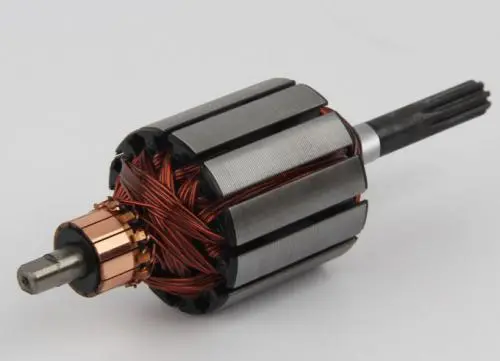
Understanding Copper Ring Commutators: Function, Design, and Applications
The Fundamental Role in DC Motor Operation
The commutator in a DC motor acts as a rotary electrical switch that changes the direction of the current flowing through the rotor windings all the time. Electrical input that pulses is turned into smooth rotational torque by this mechanical rectification process. Traditional DC motors, unlike brushless systems, depend on physical contact between carbon brushes and commutator segments. This means that choosing the right materials and manufacturing them with great accuracy are very important. Our 12-part design, which has an inner diameter of 6mm and an outer diameter of 15.2mm, shows how small shapes can work well in tight spaces, like in car starting motors and power tool systems.
Material Composition and Engineering Precision
Copper types that contain silver, like Tuy Silver Copper 03 and 08 versions, are the building blocks for high-performance commutators. The addition of silver raises the temperature at which the material starts to soften. This keeps the hardness from going down during continuous high-load operation at 150°C, which is normal in industrial settings. The dielectric integrity is maintained by segmented construction divided by thermosetting resin insulators, even at spinning speeds topping 15,000 RPM. Our 12.2mm height guideline allows for longer brush contact areas, which spreads out wear patterns evenly and makes the operating lifetime longer than with normal setups.
Industry-Specific Applications
Automotive Tier 1 suppliers put these commutators in fuel pump motors and HVAC fan units where they meet IATF 16949 certification standards for shock resistance and temperature cycle compliance. Manufacturers of industrial equipment use them in automatic assembly line motors and conveyor drive systems because they value the 30-day production lead time that works with just-in-time stocking strategies. The mechanical strength of the part is useful in hydraulic motor controls for construction equipment that has to deal with dust and pressure loads. Electronics makers like the low electromagnetic interference profile, which is important for places where sensitive instruments are used.
Performance Comparison and Decision Factors for Copper Ring Commutators
Conductivity and Thermal Management Advantages
Copper is clearly the best material because, even though aluminum commutators are cheaper, their 61% IACS conductivity causes 40% more resistive heating with the same current loads. This heat penalty speeds up the breakdown of insulation and raises the temperature of the motor case, which shortens the average time between failures. Our copper ring commutator uses copper that contains silver to keep the contact resistance below 0.5 milliohms per section joint. This means that less energy is lost, which leads to measured gains in batch production efficiency. Copper has a thermal conductivity of 390 W/m·K, while aluminum only has 205 W/m·K. This means that copper conducts heat faster through motor frames, protecting electronic controls that are close by in integrated drive systems.
Durability Under Mechanical Stress
Our commutator segments always get a Vickers hardness rating of between 95 and 115 HV. This means they are very resistant to wear from carbon brushes and flexible enough to handle vibrational stresses. This balanced hardness profile is different from aluminum options that are too soft and groove too early, or options that are too hard and cause brushes to wear out faster. In precision applications, dimensional stability is very important. Our production limits keep the total suggested runout below 0.003mm, which stops the electrical noise and uneven current distribution that plagued older designs. As part of quality assurance procedures, motor windings are spun at 1.2 times their rated speed and at high temperatures to make sure that segments stay together and don't separate due to centrifugal forces.
Selection Criteria for Procurement Teams
To match commutator specs to motor needs, you have to look at voltage levels, current density limits, and weather exposure classes. Motors that run on more than 48V DC need stronger insulation and dielectric. Our phenolic resin barriers can handle 25kV/mm of breakdown voltage, which meets industrial safety standards. Choosing the right segment count is based on current density. For example, our 12-segment design evenly spreads loads in motors that draw 15 to 50 amps constantly. Verification of the supplier's certification is still required; ISO 9000 and IATF 16949 compliance, shown by third-party audits, gives assurance that quality systems stop batch differences during large-scale production runs.
Maintenance and Troubleshooting of Copper Ring Commutators
Identifying Common Failure Modes
Too much sparking during operation could mean a number of problems. For example, high mica lines sticking out above copper surfaces can make it hard for brushes to touch the metal, and choosing the wrong brush grade can cause friction mismatches. Thermal imaging shows patterns of burning that show uneven current flow across segments. This is usually caused by contamination buildup or rust films. Mechanical wear shows up as grooves going around the edge of the contact band. These grooves can be measured with dial indicators to find out how much service life is left. In industrial settings, where rough dust particles speed up surface wear, and failing airflow keeps heat inside motor housings, these symptoms often show up over time.
Preventive Maintenance Protocols
Cost-Effective Troubleshooting Decisions
Purchasing managers have to decide whether to replace something or fix it up based on how bad the damage is. If the surface wears down to a depth of 0.5 mm, it is usually possible to recondition it by carefully milling and cutting through the insulation layers below the segment surfaces. If there are deeper holes, segments that are weak, or insulation that is burned, the whole unit needs to be replaced. Trying to fix it after these points could damage the motor by causing parts to fall apart. When you decide to replace something, our one-year guarantee covers it and lowers the financial risks that come with early failures caused by manufacturing flaws instead of normal wear and tear.
Procurement Guide: How to Buy High-Quality Copper Ring Commutators
Evaluating Supplier Capabilities
Manufacturing experience directly leads to process stability. Our 20-year history of operations shows that our quality systems have grown enough to handle complex mechanical factors. Patent portfolios show how committed a company is to technical innovation. Three idea patents and six utility model patents protect private segment retention methods and insulation formulas. These patents set bulk sellers apart from engineering partners. Verification of the authenticity of a certificate is done through registrar databases. Import channels are full of fake ISO certificates that put buyers at risk of liability. Matching production capacity to buyer volume needs avoids allocation problems during demand spikes; our monthly output of 50,000 pieces meets medium-volume OEM agreements while keeping 30-day delivery schedules.
Customization and OEM Partnership Advantages
Standard catalog specifications don't always match up perfectly with requirements that are specific to an application. Our engineering team works with R&D to change the number of segments, the size of the envelopes, and the best material grades for each set of operating conditions. Buyers get sample units that fit the planned specs for testing in the lab and the field as part of free sampling programs. This way, they can make sure the product works before investing in production tools. Xuzhou factories keep their machine configurations open so they can handle batch sizes ranging from 5,000 to 500,000 pieces. This means they can handle both the development part of a product and the move to mass production without charging minimum order fees that can hurt smaller budgets.
Logistics Coordination and Risk Mitigation
International buying adds shipping factors that need to be managed in a planned way. We offer a variety of shipping options for our copper ring commutator products, including sea freight for big orders that need to be cost-effective, air freight for medium-volume shipments, and fast courier services (DHL, FedEx, UPS) for quick sample transfers. Packaging specifications are based on the type of transport: export crates with pallet consolidation for container shipping and strengthened individual boxes for air transportation. Shipments come with documentation proving SGS certification, which makes customs clearance easier and helps meet import compliance requirements.
Future Trends and Innovations in Copper Ring Commutator Technology
Advanced Material Development
Metallurgical study is looking into tellurium-copper metals that are easier to machine without losing their ability to carry electricity. This could lower the cost of manufacturing by allowing for faster production processes. Hybrid composite insulators that use phenolic grids and glass fiber support make them stronger mechanically, allowing for smaller section separations that increase the copper contact area while keeping the outer diameter the same. These material innovations are meant to make things more efficient in ways that can be measured in tiny percentage points. These small gains add up to big ones when used on a large scale in the car and industrial equipment industries.
Integration with Predictive Maintenance Systems
New technologies for embedded sensors are being used in industrial automation and promise to change the way condition monitoring is done. Temperature-sensitive layers on the commutator surfaces change color when the temperature changes, and portable shaking sensors find mechanical imbalances before they cause major problems. More and more, procurement strategies favor providers that can show they are compatible with Industry 4.0 infrastructure. This is because component-level intelligence lowers the costs of unplanned downtime that are higher than the original buy price differences. Our engineering roadmap focuses on sensor-ready designs that can accept retrofitted monitoring systems without affecting the ability to interchange dimensions with older motor housings.
Sustainability and Circular Economy Considerations
Tougher environmental rules in all industrial areas are driving demand for designs of parts that can be recycled. Commutators do better in lifecycle assessments than composite alternatives that need to be thrown away in a landfill because copper can be recycled over and over again. Remanufacturing programs that collect used units for material recovery cut down on the use of new copper while providing cost-effective options for uses that need to stick to a budget. When procurement directors have to balance budget limits with sustainability requirements, they find it helpful when sellers offer take-back programs that include logistics for new parts. This is a service model that our team is still working to improve through partnerships in reverse logistics.
Conclusion
High-performance copper ring commutators made to ISO 9000 and IATF 16949 standards improve the efficiency of DC motors, extend their useful life, and lower the cost of upkeep. The smart choice of silver-bearing copper alloys, precise section shape, and strict quality control procedures directly address buying pain points related to supply security, customization freedom, and lowering the total cost of ownership. When engineering teams know about the qualities of the material, the needs of the application, and the skills of the provider, they can choose commutators that meet all of the practical needs while minimizing the risks that come with global buying relationships.
FAQ
What causes excessive sparking in copper ring commutators?
Sparking typically results from mica insulation protruding above copper segment surfaces, disrupting smooth brush contact. Improper brush grade selection or inadequate spring tension also contributes. Regular maintenance, including mica undercutting and surface finishing, resolves most sparking issues without component replacement.
How does silver content benefit commutator performance?
Silver additions raise copper's softening temperature threshold, preventing hardness loss during high-thermal-load operation. This metallurgical enhancement maintains dimensional stability and contact resistance consistency across temperature cycling common in automotive and industrial applications.
What dimensional tolerances matter most for procurement specifications?
Total indicated runout below 0.005mm ensures uniform brush contact. Bar-to-bar height deviation within 0.003mm prevents uneven current distribution. Inner and outer diameter tolerances match motor housing clearances to avoid installation interferences. These precision metrics directly impact operational reliability and maintenance intervals.
Partner with ANGU for Reliable Copper Ring Commutator Supply
Our team at ANGU brings two decades of manufacturing expertise to copper ring commutator production, supported by ISO 9000 and IATF 16949 certifications that guarantee process consistency. As a trusted copper ring commutator manufacturer, we serve Tier 1 automotive suppliers, industrial equipment producers, and OEM partners requiring customized specifications with dependable 30-day delivery schedules. Our engineering capabilities backed by nine patents, enable collaborative product development tailored to your exact motor requirements. Free sampling, SGS certification, flexible logistics through sea freight, air freight, or express shipping, plus comprehensive one-year warranty coverage, minimize procurement risks. Contact chenrf@angu.com to discuss your application needs and discover how our silver-bearing copper commutators enhance motor performance while optimizing your total cost of ownership. Visit angu-group.com to explore technical specifications and request quotations aligned with your production timelines.
References
1. Hughes, A. (2019). Electric Motors and Drives: Fundamentals, Types and Applications. Newnes Publishing, Oxford.
2. Sen, P. C. (2021). Principles of Electric Machines and Power Electronics. John Wiley & Sons, Hoboken.
3. Toliyat, H. A., & Kliman, G. B. (2018). Handbook of Electric Motors. CRC Press, Boca Raton.
4. Boldea, I., & Nasar, S. A. (2020). The Induction Machines Design Handbook. CRC Press, Taylor & Francis Group.
5. Chapman, S. J. (2022). Electric Machinery Fundamentals. McGraw-Hill Education, New York.
6. Lipo, T. A. (2017). Introduction to AC Machine Design. IEEE Press, Wiley, Piscataway.
YOU MAY LIKE