High Quality Car Motor Commutator for Stable Engine Performance
As someone who is in charge of finding precise parts for the car industry, you know that stable engine performance starts with electrical switching that works. A good Car Motor Commutator does just that. It's the important part of DC motors that connects the stationary brushes to the spinning armatures in things like cars, heavy machinery, and systems that start and stop. This cylinder-shaped assembly of copper pieces divided by insulation materials makes sure that current flow is steady, cuts down on electrical losses, and can handle high temperatures and high loads. To make sure your production lines keep up quality and meet tight delivery dates, you need to find the right Car Motor Commutator by combining material integrity, dimensional precision, and supplier trustworthiness.
Understanding Car Motor Commutators and Their Role in Engine Stability
What Is a Commutator and Why Does It Matter?
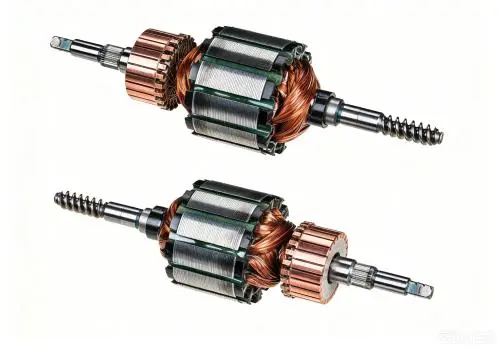
As the mechanical converter in DC motor systems, a Car Motor Commutator changes the alternating current in the rotor into direct current. This part affects the motor's efficiency, power stability, and operating lifetime directly. It is made up of copper or silver-bearing copper pieces insulated by mica or phenolic resins. In starter motors, the Car Motor Commutator has to be able to handle current spikes of more than 800 amps and speeds of up to 15,000 RPM. Because of this need for both electrical conductivity and industrial strength, it is essential to choose the right materials and make sure the products are made precisely.
Core Components and Their Functions
Each Car Motor Commutator is made up of several important parts that work together. The copper pieces make the path for the electricity to flow from the power source to the motor windings. Insulation materials, usually mica sheets or advanced phenolic compounds, keep these pieces apart and stop short circuits while working at temperatures above 200°C. The undercut mica, which is about 0.4mm to 0.8mm below the copper surface, keeps carbon dust from building up, which would otherwise cause electrical bridges between segments. The carbon brushes move along the Car Motor Commutator surface and stay in contact with it even as the armature spins very quickly. For this seemingly simple interaction to work, the surface must be very smooth, and the difference in height between bars must be less than 0.005mm to stop brush bounce and sparking.
Symptoms of Failure and Root Causes
Several signs show up when a Car Motor Commutator starts to break down. Too much sparking during operation means that there is bad contact or uneven section heights, which causes electrical arcing that carbonizes the copper surface. Loss of torque or uneven motor spinning are signs of mechanical imbalance, which is usually caused by not being concentrically aligned properly and having a total suggested runout of more than 0.03 mm. Strange noises during startup could be brush chatter from surface flaws or dirt. Most of the time, these failures are caused by heat stress that deforms segments, mechanical wear from abrasive particles getting into the motor case, or chemical corrosion in salt spray settings. When procurement teams look at possible sources, knowing these failure modes helps them set the right quality standards and testing methods.
Key Design Principles and Maintenance Tips for Long-Lasting Commutators
Material Selection and Structural Considerations
The choice of material has a huge effect on how well and how long a Car Motor Commutator works. Copper alloys with 0.03% silver raise the softening temperature by a large amount. This stops section deformation during long starting cycles in diesel trucks. This change makes it possible for the Car Motor Commutator to keep its shape at temperatures above 300°C. This is different from regular electrolytic copper, which melts at temperatures around 200°C. The hardness range of HB90 to HB120 is just right. If it's too soft, the Car Motor Commutator wears out too quickly, and if it's too hard, the brushes wear out faster. Insulation materials need to have a dielectric strength of more than 25kV/mm and be able to handle the temperature cycling that happens in car settings.
When designing a structure, things like section geometry, undercut depth, and mounting contact tolerances need to be thought about. The segment shape needs to be able to handle thermal growth without putting too much stress on certain areas, which could cause cracks. If you cut the mica at the right level, the harder insulation material won't touch the brushes. If it did, the brushes would wear out faster, and there would be less electrical contact area. The mounting contact needs to be carefully machined to make sure that the Car Motor Commutator fits perfectly on the armature shaft and stays centered within 0.01 mm so that problems due to shaking don't happen.
Practical Maintenance Protocols
Car Motor Commutator repair works best when it starts with regular checks. Any signs of surface darkening, pitting, or seam growth should be easy to see. Using precise tools to measure the height from bar to bar can find early signs of wear before they become operational failures. Cleaning methods that use allowed solutions get rid of carbon dust and oil contamination without hurting the surface or insulation of the copper. Verifying the brush tightness makes sure that the right amount of contact force is used. Not enough pressure leads to a bad electrical link, while too much force speeds up mechanical wear.
Preventive tactics greatly increase the time between services and lower the amount of unintended downtime. In harsh settings, installing dust seals and protective caps keeps dirt and other things from getting in. Keeping an eye on working temperatures can help find problems with thermal management before they do serious damage. Keeping the motor aligned correctly lowers the mechanical stress on the Car Motor Commutator unit. When wear goes beyond what is reasonable, turning the Car Motor Commutator can do some light cleaning to make the surface smooth again with little damage. The total cost of ownership goes down because of these maintenance practices, which is a key measure for operations managers looking at component specs. When the insulation structure stays the same, and the section material depth allows material to be removed without affecting electrical performance, refurbishment becomes a good business idea.
How to Choose the Right Car Motor Commutator for Your Application
Matching Commutator Types to Motor Applications
Different uses for motors need Car Motor Commutators with certain properties. Vehicles for passengers that have start-stop technology need Car Motor Commutators that can handle ten times the normal number of starts that regular vehicles go through. For this higher duty cycle, the surface must have a very high finish to keep contact and wear to a minimum. Heavy-duty diesel industrial trucks need parts that can handle huge current spikes and keep working effectively in temperatures below zero, which is when cranking resistance is highest. Off-road building equipment needs Car Motor Commutators that are built to withstand a lot of vibration and keep out dust, water, and other natural contaminants that are common at remote work sites.
Brushed Versus Brushless Considerations
Brushless motors are becoming more popular in some areas, but brushed DC motors with Car Motor Commutators are still the most popular choice for starting systems and other tasks because they are simple, cheap, and reliable. Car Motor Commutator types include glass-pressed designs that are more stable at high temperatures and plastic designs that are cheaper for moderate-duty uses. Glass-pressed Car Motor Commutators are good for hard car uses because they use a glass-mica composite insulation that has better dielectric qualities and heat protection. Molded Car Motor Commutators use phenolic resin insulation that is pressed around copper pieces to provide good performance at lower costs for less demanding uses.
Essential Purchasing Criteria
When assessing possible providers, there are a number of factors that should be taken into account. Electrical resistance is directly related to efficiency. Lower resistance lowers heat production and improves energy flow. Mechanical wear resistance and temperature stability under working conditions are both parts of durability. Not only the unit price needs to be looked at when figuring out cost efficiency, but also the total cost of ownership, which includes upkeep intervals and failure rates. Conditions of the warranty show that the maker is confident, and full coverage protects against early breakdowns. How quickly quality problems are fixed, and output stops, depends on how fast after-sales service is.
The ability to make custom goods is much better than buying standard stock items when your application needs specific sizes, mounting arrangements, or performance traits. Through OEM relationships, you can get technical help to make sure that the Car Motor Commutator design is best for your motor architecture. When you buy in bulk, you get economies of scale, which lowers the cost per unit and ensures that you always have what you need for production. All of these things work together to help make buying choices that balance technology needs with the needs of the supply chain and the available budget.
Procuring High-Quality Car Motor Commutators: Market Overview and Supplier Guidance
Sourcing Channels and Platform Selection
There are several ways for global B2B buyers to get Car Motor Commutators, and each has its own benefits. Specialized platforms for car parts put buyers in touch with qualified makers directly, giving buyers access to technical specs, proof of compliance, and clear price information. General industrial markets have more suppliers to choose from, but they need more thorough checks to make sure that the products are real and the quality is consistent. When you work directly with a manufacturer, you have the most control over specs, quality systems, and shipping times. This is especially helpful for large, regular orders.
There is a big difference between wholesale wholesalers and specific producers. Distributors make it easy to get a variety of names and send small amounts more quickly, but they usually don't offer engineering help for customizing orders. Specialized makers have more technical knowledge, can make unique tools, and are directly responsible for quality. This makes them better partners for OEM relationships and demanding uses.
Pricing Structures and Logistics Considerations
The price of Car Motor Commutators changes a lot depending on the number of orders, the level of customization needed, and the performance standards. Standard catalog items usually have a wide range of unit prices, from low prices for simple molded designs to high prices for precise glass-pressed versions with silver-copper segments. Because of economies of scale in manufacturing, when you place a lot of orders, the prices go down a lot. Engineering and tooling costs are higher for custom orders, but they provide the best efficiency for certain uses.
To find the best mix between cost and arrival speed, international logistics needs to be carefully coordinated. Sea freight is a cheap way to send big packages, but it takes longer to get from Asian factories to US ports—usually four to six weeks. The travel time for air freight is cut down by a lot, to about one week, but it costs a lot, so it's only good for urgent needs. Express companies like DHL, FedEx, and UPS offer door-to-door service that can be tracked, which is great for sample orders and repairs that need to be sent quickly.
Vetting Manufacturers and Ensuring Compliance
To choose qualified providers, you need to carefully check their qualifications and abilities. The ISO 9000 certification shows basic quality management systems, and the IATF 16949 certification talks about the needs of the car industry, such as process consistency, traceability, and ongoing growth. These approvals show that the production process can produce parts with the exact measurements and consistent materials needed for the Car Motor Commutator to work.
Third-party validation through product testing and factory checks gives people even more trust. Looking at a company's patent collection shows how good they are at technical innovation. Companies that have idea patents and utility model patents show they have engineering skills beyond basic manufacturing. An estimate of production capacity makes sure that providers can increase their output to meet your volume needs within the time frames you set for delivery. Following environmental rules like RoHS and REACH is becoming more important as global supply lines are scrutinized for the materials used and the way they are made. These steps reduce the risks of buying and lay the groundwork for long-term relationships with suppliers that provide uniform quality and reliable delivery performance.
Enhancing Engine Performance with High-Quality Commutators: Case Studies and Future Prospects
Real-World Performance Improvements
Tier-one providers to the automotive industry say that switching to precision-manufactured Car Motor Commutators has real benefits. One heavy equipment maker saw a 35% drop in warranty claims for starter motors after moving to suppliers with IATF 16949 approval and silver-copper segment construction. Because the segments were more thermally stable, they didn't deform during the long turning cycles that are typical in high-compression diesel engines. In a different case, a company that made farm equipment was having a lot of problems in the field because of Car Motor Commutator damage caused by pollution. Using sealed designs with better dust protection cut down on replacements by 60%, which cut down on upkeep costs and made equipment more available during important harvest and growing times.
Innovation Trends and Sustainable Design
Electric car auxiliary systems are a new area of use where the quality of the Car Motor Commutator directly affects the user experience. Power steering pumps, cooling fan motors, and other features that aren't directly related to driving need to work reliably for long periods of time. High-quality Car Motor Commutators with exact geometrical tolerances and a smooth surface finish reduce electrical noise and mechanical shaking, helping high-end cars run quietly. By lowering warranty costs, upkeep costs, and improving customer happiness, these cases show that investing in high-quality parts pays off in real ways.
New Car Motor Commutators are always being made because car technologies are always changing. The number of start-stop systems has increased cycle counts by a factor of ten, which means that wear protection and thermal control need to be improved. In response, manufacturers have come up with new ways to treat the surface, better copper alloys, and brush materials that work better with each other. Sustainable design practices focus on extending the lifetime of things by making them easier to keep and recycle. Copper is naturally recyclable, which supports the idea of a circular economy. Modular designs also make it easier to repair individual parts instead of throwing away the whole machine.
Long-Term Investment Value
The quality of the Car Motor Commutator has a direct effect on the total cost of ownership over the duration of the part. Premium units that are made with better materials and more accuracy cost more at first, but they last longer, need less upkeep, and break down less often. Over time, these benefits grow, especially in situations where replacing a motor takes a lot of work or machine downtime. Building ties with manufacturers who have been in business for a while makes supply lines more stable, even when material prices change, and capacity is limited. Product optimization, fixing help, and proactive quality changes that benefit both parties are all supported by suppliers with a lot of technical knowledge. By working together, this method matches the skills of suppliers with the needs of buyers, forming relationships that make businesses more competitive by improving operational efficiency and product dependability.
Conclusion
Choosing the right Car Motor Commutator has a direct effect on the quality of your production, the cost of your warranties, and the security of your supply chain in the long run. The technical details, like the type of material used, the accuracy of the geometry, and the resistance to heat, must match your specific motor uses, like those for cars, trucks, or specialized machinery. When choosing a partner, it's also important to look at their manufacturing qualifications, technical skills, shipping reliability, and assistance after the sale. When making purchasing choices, your company will be in a better position to stay ahead of the competition because it will have lower upkeep costs and better product performance.
FAQ
What Causes Excessive Sparking on Commutators?
Sparking usually happens when there isn't enough concentricity or when the height difference between bars is more than 0.005mm, which causes the brush to bounce and the electricity to arc. A weak electrical contact can also be caused by carbon dust or oil waste. These problems get worse when the brushes aren't tight enough or when the Car Motor Commutator surface isn't lined up correctly with the brushes. To stop sparking, you need to check the limits for dimensions, follow the right repair procedures, and make sure the brushes are installed correctly.
Why Choose Silver-Copper Alloy Over Pure Copper?
Adding silver raises the breaking temperature of copper, which stops segments from deforming during high-temperature operations that happen a lot in engine areas. In heavy-duty uses, this change keeps the dimensions stable during long cranking cycles. The small price increase is worth it because the better temperature performance means longer service life and fewer failures.
How Does Mica Undercut Depth Affect Performance?
The right mica notch depth, which is usually between 0.4 mm and 0.8 mm, stops carbon dust from building up, which would otherwise cause segments to become electrically connected. If the offset isn't deep enough, the harder insulation material can touch the brushes, which wears down the brushes faster and reduces the electrical contact area. Too much undercut depth makes the mechanical support for copper segments weaker, which could cause the segments to come away under the force of rotational forces.
Can Commutators Withstand Salt Spray Environments?
According to ISO 9227 standards, car salt spray tests must be done on Car Motor Commutators that are made with phenolic resins that don't corrode and are covered with the right varnishes. Proper sealing keeps water out and stops copper pieces from corroding, which is very important for cars that work near the coast or on roads that are salty in the winter.
Partner with Angu for Reliable Car Motor Commutator Supply
Angu has been making specialized products for 20 years and can meet your needs for fine car parts. As a maker of ISO 9000 and IATF 16949-approved car motor commutators, we give your production lines the quality and accuracy in size they need. Three idea patents and six utility model patents set us apart technically, and they allow us to offer custom OEM/ODM solutions that are made to fit your exact needs.
We know that buying managers need more than just parts; they also need to know that the supply chain will work. Your production plans will stay on track thanks to our set 30-day delivery cycles and flexible logistics choices, such as sea freight, air freight, and foreign express. Every Car Motor Commutator comes with a full one-year warranty and quick help for any quality issues. This keeps your processes running smoothly even when something goes wrong. Our team offers expert advice to help you get the best performance and value for your money, whether you need regular catalog items or solutions that are specially designed for your needs. Contact chenrf@angu.com right away to talk about your unique needs and find out how our track record of working with tier-one automotive providers can help you make your supply chain more resilient.
References
1. Anderson, M. (2021). Electrical Contacts in Automotive Applications: Materials and Design Principles. Detroit: Automotive Engineering Press.
2. Chen, L. & Roberts, K. (2020). "Thermal Management in DC Motor Commutators for Start-Stop Vehicle Systems." Journal of Automotive Engineering, 234(8), 1456-1468.
3. International Organization for Standardization. (2018). ISO 9227:2017 - Corrosion Tests in Artificial Atmospheres - Salt Spray Tests. Geneva: ISO Publications.
4. Miller, T.J. (2019). Brushed Permanent-Magnet and DC Motor Design. Oxford: Technical Publications Ltd.
5. Society of Automotive Engineers. (2020). SAE J1113 - Electromagnetic Compatibility Measurement Procedures and Limits for Vehicle Components. Warrendale: SAE International.
6. Zhang, Y., Thompson, R., & Kumar, S. (2022). "Lifecycle Analysis of Copper-Based Components in Electric Vehicle Systems." Materials Science and Sustainability, 15(3), 287-301.
YOU MAY LIKE