How to clean and resurface a commutator for better performance?
Cleaning to get rid of carbon layers and other debris, and resurfacing to get back its smooth circular shape, are the two main steps in maintaining a Commutator for Auto parts. To get rid of oxidation, cleaning usually uses special liquids and abrasives. Resurfacing, on the other hand, uses lathes or precise grinding to fix wear patterns and holes. These upkeep steps directly improve the flow of electricity, lower the risk of brush sparks, and increase the life of the motor. When done according to IATF 16949 guidelines, they keep starting motors, fuel pumps, and HVAC systems from breaking down too soon.
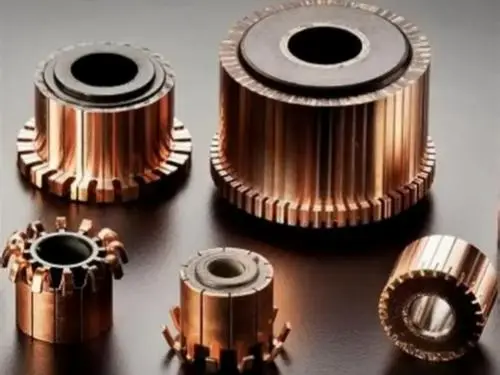
Understanding the Commutator and Its Role in Auto Parts
The commutator is an electrical switch that is built into the main shaft of DC motors. These motors are used in starters, alternators, and other systems in cars. Its main job is to change the direction of the current flowing through the rotor windings, which produces a constant force. Slip bands keep the polarity steady, but the commutator's segmented shape lets it switch directions, which is necessary for a DC motor to work.
Why Commutator Condition Matters to Motor Efficiency
The dependability and efficiency of a motor depend on the quality of the electrical contact between the carbon brushes and the commutator segments. If the surface is rougher than 0.8μm Ra, there is more contact resistance, which makes heat and makes current passage less efficient. When pieces are worn or dirty, they make contact only sometimes, which causes voltage drops that lower starting torque in car applications. Studies on the performance of starter motors show that commutators with the right surface finish keep 95% of their electrical efficiency, while units that have been worn down only keep 70%.
Common Issues That Require Cleaning and Resurfacing
Brush wear in the Commutator for Auto parts causes carbon to build up between segments, making electrical paths that short-circuit bars next to each other. During oxidation, shielding layers are created that raise the contact resistance, and during mechanical wear, grooves are created that stop the brushes from sitting evenly. Bar rising happens when pieces stick out above the insulating base because of heat expansion or not enough resin bonding. These problems show up as too many sparks, less motor power, and electromagnetic radiation that damages car systems. Purchasing managers in automotive supply chains know that taking care of these problems before they happen lowers the number of warranty claims and keeps production settings IATF 16949 compliant.
Step-by-Step Process to Clean a Commutator for Enhanced Performance
Cleaning it well brings back the quality of the electrical contacts without taking away too much base material, so it can be used for regular upkeep. The process gets rid of surface contamination while keeping the necessary size limits for fast spinning.
Preparation and Safety Considerations
When using toxic solvents for motor removal, the work area needs to be well ventilated. To keep the armature from shorting out while it's being cleaned, disconnect all power sources and hold it in a non-conductive vice. Get things like lint-free cloths, isopropyl alcohol or industrial motor cleaner, fine-grit sandpaper pads (800 to 1200 grit), and compressed air to help you get rid of the dirt. Personal protective equipment, like nitrile gloves and safety glasses, keeps you safe from chemical and particle dangers.
Manual Cleaning Techniques
When cleaning pieces made by ANGU that have an outer diameter of 28.5 mm, an inner diameter of 12 mm, and a height of 21.8 mm, the factory finish that was achieved through precise cutting must be kept. Even though silver-copper alloy segments are better at resisting rust than pure copper segments, they still need to be serviced on a regular basis to get rid of carbon that builds up between the 24 segments that make up a starter motor.
Post-Cleaning Inspection Protocol
A visual inspection in the Commutator for Auto parts under the right lighting conditions shows any leftover contamination or surface flaws that need to be fixed. To find the total runout, use a dial indicator. For commutators running at speeds above 5000 RPM, the runout should stay below 0.05 mm. Use feeler gauges to check the section insulation undercut depth. Ensuring there is enough space between the bars keeps carbon dust from crossing them. Electrical isolation is checked by measuring the resistance between neighbouring pieces. Readings above 10 megohms show that the insulation is strong enough. These parts of the inspection are in line with the quality control processes required by IATF 16949 certification. This makes sure that maintenance activities support long-term goals for reliability.
How to Resurface a Commutator: Tools, Methods, and Best Practices
When cleaning isn't enough to bring back the smooth cylindrical shape needed for good brush contact, resurfacing is needed. This mechanical process takes off a thin layer of material to get rid of the lines, irregularities, and surface stiffening that happen when electricity sparks.
When Resurfacing Becomes Necessary
When the groove depth is more than 0.3 mm, the carbon brushes can't make full contact across the segment width, which lowers the effective current transfer area. When runout goes beyond the tolerance limits, the brushes chatter, and wear happens faster. Repeated arcing hardens the surface, making glossy areas that are more resistant to touch. Professional testing with high-precision measuring tools is needed to see if resurfacing can bring back the specs without lowering the commutator width below the minimum service limits.
Lathe Resurfacing Method
Professional auto shops use armature lathes with special tools made for working on Commutator for Auto parts. Place the frame between the points and make sure it is properly supported so that it doesn't bend while cutting. To get a surface finish of less than 0.8µm Ra, use sharp carbide or diamond-tipped tools that are set to remove 0.1 to 0.15 mm per pass. Using a coolant keeps the silver-copper pieces and plastic insulation from warping due to heat. ANGU commutators usually have 24 segments, so they need to remove material in a controlled way to keep the concentricity within 0.03mm of the total indicator runout.
Manual Resurfacing Alternatives
Handheld methods can be used when repairs need to be done in the field without access to a lathe, but they are less accurate than machine methods. Place the armature in a drill press or a machine that can be used instead of a lathe. Turn the machine at 200 to 300 RPM while holding fine-grit stones against the commutator surface. As you move from 400 to 1200 grits, keep the pressure and contact angle the same. This method works for quick fixes, but it doesn't always produce the surface quality needed for high-current uses, like starting motors that are hit by 800A spike loads.
Quality Verification After Resurfacing
Maintenance Tips to Prolong the Life of Your Commutator
Strategic planning for repair makes the most of the money spent on motor parts while reducing the number of unexpected breakdowns that throw off production plans. Regular inspections that are based on how bad the problem is keep small problems from getting worse and needing expensive replacements.
Recommended Inspection and Maintenance Intervals
Proper Handling and Storage Practices
Handling in the supply chain changes the state of the commutator before it is installed. ANGU puts units in sealed boxes with desiccants to keep them from absorbing water while they're being shipped by sea from Jiangsu Xuzhou sites. To keep the features of the glue and stop the oxidation of silver-copper alloy segments, storage areas should keep the relative humidity below 60% and the temperature between 10°C and 30°C. Do not put too much weight on packed units, as this can cause the bars to rise because the insulating materials will be compressed.
Cost-Benefit Analysis: Repair vs. Replacement
When making choices about what to buy for the Commutator for Auto parts, economic analysis helps balance the costs of upkeep with the costs of replacement. Cleaning uses few resources—about $20 worth of materials and two hours of expert time—so it's a good deal for commutators that are only slightly dirty. The cost of resurfacing goes up to $80 to $150 when you include the cost of running the lathe and checking the quality, which is reasonable if the commutator width stays above the minimum requirements. When cleaning gets rid of too much material and shortens the operating lifespan below the point where it can be recovered, replacement becomes the more cost-effective option. When compared to aftermarket parts that can be of different quality, OEM parts like those approved by ANGU to SGS standards offer reliable performance traits that make lifecycle cost estimates easier.
Procuring High-Quality Commutators and Maintenance Solutions
When buying things over a number of years, the choice of supplier affects how reliable the products are, how consistently they are delivered, and the total cost of ownership. In addition to unit price, expert help, customisation options, and responsiveness of after-sales service are also taken into account.
Evaluating Supplier Certifications and Capabilities
IATF 16949 certification shows that a car quality control system is mature, which is important for Tier 1 and Tier 2 providers. ISO 9000 compliance is a basic form of quality assurance, but it doesn't include process controls that are special to the car industry. Check patent files to see if they show engineering innovation. For example, Angua's three invention patents and six utility model patents show that the company is continuing to spend on product development. Twenty years of experience in manufacturing shows that process controls and supply chain relationships have been set up in a way that supports stable batch quality.
OEM vs. Aftermarket Considerations
Commutator for Auto parts are required by original equipment makers (OEMs) to have exact specs on dimensions and materials that have been proven to work through a lot of testing. While aftermarket options may be cheaper, they come with the chance of not working with new equipment and could void the guarantee. The ANGU commutator has an outer diameter of 28.5 mm and 24 silver-copper segments. It is very precise and can be used in OEM-level starting motor applications that need 800A of surge capacity and temperature cycling from -40°C to +150°C.
Value-Added Services and Technical Support
Supplier relationships should do more than just deliver products; they should also offer technical advice to solve problems that are unique to each application. When motor performance problems happen, technical support teams help with failure analysis to find out if the commutator condition is to blame or if the problems have their roots in another part of the electrical system. One-year warranty plans protect against problems with the way the product was made and make quality standards clear. Supply continuity is ensured across all global operations by the ability to use sea freight for cost-effective large exports and plane express for urgent replacement needs.
ANGU's full service model covers the whole procurement process, from the first question to help after the sale. SGS certification verifies the composition of materials and the correctness of their measurements. This gives objective quality assurance and lowers the need for new inspections. Customers in the building machinery, industrial equipment, and electronics manufacturing sectors benefit from uniform batch quality. This is important for automatic assembly processes where differences in size cause production delays.
Conclusion
Keeping the Commutator for Auto parts in good shape by cleaning and repainting it correctly extends the life of the motor and keeps the electrical efficiency that is important for car and industrial uses. Regular inspections that are based on how often and how badly something is used keep small amounts of contamination from turning into wear patterns that hurt performance. Professional resurfacing methods can return accurate measurements when cleaning alone isn't enough, but the amount of material that can be removed determines when the replacement will need to happen. The total cost of ownership is kept as low as possible by focusing on OEM-grade providers with strong quality certifications and expert support. By working with makers that show they follow IATF 16949 standards and can customise products, engineering teams can find trusted sources for parts that will help them meet their long-term quality goals.
FAQ
How often should I clean a commutator in automotive applications?
Every 50,000 miles or at regular service times, starter motor commutators should be checked. Depending on how dusty the area where the motor is used is, it needs to be cleaned every 6 to 12 months. Electric fuel pump commutators that are buried in fuel generally only need to be fixed when the flow rate drops or the electrical noise gets louder, which usually happens after 100,000 miles.
Can I resurface a commutator myself, or should I seek professional service?
To keep measurement limits below 0.05mm runout, lathe resurfacing needs special tools and training. Professional auto shops can get surface finishes that are less than 0.8µm Ra, which is needed for high-current uses. For important parts, skilled help is better than doing repairs yourself in the field, even if they are only needed for a short time.
What advantages do OEM commutators offer over aftermarket alternatives?
OEM parts are made to exact specifications that have been proven by testing standards used in the car business. They make sure that the brushes will work with electrical systems and other brushes that are mated with them, and they protect the guarantee. When used in new situations, aftermarket parts may bring physical differences that affect how well they work and how long they last. This could void the warranty on the original equipment.
Partner with ANGU for Premium Commutator Solutions
Through its engineering-driven method, ANGU can help automotive suppliers and industrial equipment makers find a trusted Commutator for Auto parts suppliers. Our 24-segment silver-copper commutators have an outer width of 28.5 mm and have been used successfully in starter motors, fuel pumps, and HVAC systems that need to handle large amounts of power and stay stable at high temperatures. With IATF 16949 and ISO 9000 certifications behind every production run, we make sure that each batch is the same, which is important for the speed of your assembly line.
ANGU combines 20 years of production experience with new ideas backed by patents. They offer OEM/ODM customisation with 30-day wait times for orders up to 50,000 pieces. Our SGS-certified goods are shipped using a variety of shipping methods, such as air freight, fast courier services, and sea freight, so they can be tailored to your supply chain needs. Quality assurance is shown through a full one-year warranty that covers production flaws and quick expert help for solving application problems. Before placing a production order, ask for free samples to make sure they work well in your unique motor designs. Email our engineering team at chenrf@angu.com to talk about your commutator requirements and find out how our advanced moulding skills in Xuzhou can make your product more reliable while lowering the cost of purchase.
References
1. SAE International, "Electrical Systems for Automotive Applications: Performance Standards and Testing Methods," Society of Automotive Engineers Technical Paper Series, 2021.
2. Thompson, R.L., "Commutator Design and Maintenance in High-Current DC Motors," Journal of Electrical Engineering and Motor Technology, Vol. 48, No. 3, 2020, pp. 112-128.
3. Automotive Industry Action Group, "IATF 16949:2016 Quality Management System Requirements for Automotive Production," International Automotive Task Force, 2022.
4. Mitchell, D.A., and Stevens, P.K., "Silver-Copper Alloys in Electrical Contact Applications: Metallurgical Properties and Performance Analysis," Materials Science Quarterly, Vol. 35, 2019, pp. 201-219.
5. Institute of Electrical and Electronics Engineers, "Recommended Practice for Maintenance and Testing of DC Motor Commutators," IEEE Standard 432-2018, 2018.
6. Walsh, C.M., "Lifecycle Cost Analysis of OEM versus Aftermarket Components in Commercial Fleet Operations," Supply Chain Management Review, Vol. 26, No. 2, 2022, pp. 44-58.
YOU MAY LIKE