Selecting the Best Magnet for motor rotor for Motor Design
Picking the right Magnet for motor rotor uses has a direct effect on how well the motor works, how much force it produces, and how long it lasts. A powerful permanent magnet built into the rotor creates a steady magnetic field that reacts with the windings in the stator to create a spinning force. This design gets rid of the need for complicated rotor windings and lowers energy loss, which is why electric cars, industrial automation, and fast machinery can't work without it. For procurement managers and R&D engineers, knowing how magnetic qualities, material grades, and manufacturing precision match up with specific motor needs is the key to saving money and making sure the motor works reliably in tough situations.
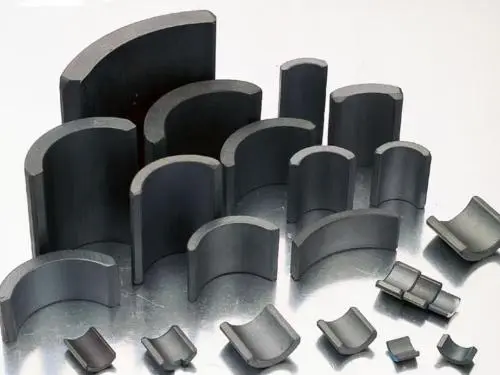
Understanding Motor Rotor Magnets and Their Key Properties
The Role of Permanent Magnets in Motor Rotors
Motors today, both brushless and synchronous, work with permanent magnets at their core. Permanent magnet motors use materials like neodymium iron boron (NdFeB) to make a set magnetic field. This is different from regular induction motors, which use electromagnetic coils in the rotor. This setup increases power density, lowers mechanical wear, and makes energy use more efficient. The general performance of a motor depends on how well the magnet can keep the flux output fixed under temperature stress and mechanical load. This is true for EV traction systems as well as industrial servo drives.
Critical Magnetic Properties You Need to Know
Knowing three basic magnetic qualities can help users decide if a magnet is right for them. Remanence (Br) is a way to measure the magnetic flux density that is still present after magnetization. In high-grade neodymium magnets, this flux density is usually between 1.1T and 1.48T. Maximum Energy Product (BHmax) shows how powerful the magnet is; the strongest types can reach up to 52 MGOe. Intrinsic Coercivity (Hcj) measures how resistant something is to losing its magnetism, which is very important in places with high temperatures. Motors used in cars or heavy machinery often need SH or UH-grade magnets with Hcj greater than 25kOe to keep the flux from dropping when the load is at its highest.
Temperature Tolerance and Environmental Durability
The operating temperature has a direct effect on how well the magnet works. Neodymium magnets of the N grade work consistently up to 80°C, while those of the SH and UH grades can handle temperatures up to 180°C. The quality of the coating is also important for protection. Multi-layer nickel-copper-nickel (Ni-Cu-Ni) or epoxy coats stop oxidation and corrosion in wet or chemically harsh conditions. Magnet suppliers who give magnets that have been tested for corrosion resistance and shown to be resistant for more than 500 hours of Neutral Salt Spray (NSS) exposure provide a measurable quality guarantee for long-term dependability.
Comparing Magnet Types for Motor Rotor Applications
Neodymium Versus Ferrite: Balancing Performance and Cost
Neodymium magnets are used in most high-performance motors because they are very strong and don't take up much space. They have a very high power density, which lets motor makers make the rotor smaller without losing output. Even though ferrite magnets aren't as strong magnetically, they work great in low-cost situations and are very stable at temperatures up to 250°C. Choosing the right Magnet for motor rotor for industrial pump motors and fan systems often involves leveraging ferrite magnets where room isn't as important and buying choices are based on the lowest cost.
Samarium Cobalt for Extreme Conditions
Samarium cobalt (SmCo) magnets are perfect for aircraft actuators and downhole drilling tools because they are very stable at high temperatures and don't rust. SmCo magnets work consistently at temperatures above 300°C, keeping the flux output constant in harsh conditions where neodymium would break down. Even though they are more expensive than NdFeB options, they last longer in tough environments, which means that mission-critical industrial systems have a lower total cost of ownership.
Real-World Case Studies: Magnet Selection Impact
In their EV motor rotors, a Tier 1 car provider recently switched from ferrite magnets to high-coercivity neodymium magnets. The change led to a 15% rise in power density and a 12% rise in energy efficiency, which met the strict IE4 standards. In a different example, an industrial automation business used segmented neodymium magnets in high-speed servo motors to cut down on cogging torque by 40% and make micro-positioning in robotic production lines smoother. These cases show how strategically choosing magnets has a direct effect on how competitive and well-run a motor is.
How to Choose the Right Magnet for Your Motor Rotor: Decision Support Framework
Aligning Magnet Properties with Motor Design Requirements
Setting motor specs is the first step in choosing the best Magnet for motor rotor. The required power output tells us what grade of magnetic strength we need, and the working temperature range tells us what grade to use. Size limits affect the shape and arrangement of the magnet's poles. Budget factors balance the prices of materials with the benefits of better performance. When looking for magnets for electric bike motors, a procurement manager might choose N-grade neodymium that is cheap and has standard tolerances. On the other hand, an engineer designing motors for construction equipment would ask for UH-grade magnets that have tight dimensional control to make sure they work the same way even when the loads are changing, and the temperature is high.
Evaluating Supplier Certifications and Quality Systems
Motor dependability and guarantee costs are directly affected by how consistent the magnet quality is. Suppliers with ISO 9000 and IATF 16949 certifications have systems in place that have been shown to work for process control and tracking. Coordinate Measuring Machine (CMM) inspections in factories make sure that dimensions are accurate to within ±0.05mm, which is important for keeping the rotor balanced at high speeds. Helmholtz coil testing confirms the uniformity of the magnetic flux, and batch differences of less than 2% stop performance drift between production runs. When suppliers offer third-party test results for RoHS compliance and SGS verification, they back up their quality claims with proof that their products meet the rules.
Supply Chain Stability and Lead Time Considerations
There is constant pressure on global buying teams to find a mix between supply security and just-in-time delivery. Manufacturers who have been in business for 20 years usually have well-developed production management systems and extra raw material on hand. For accurate production schedule, a trustworthy provider should provide clear wait times, which are usually 10 to 15 days for normal samples and 35 to 40 days for bulk orders. Global industrial operations have a variety of shipping needs that can be met by a variety of logistics choices, such as sea freight for cost savings, air freight for urgent orders, and foreign express (DHL, FedEx, UPS) for prototype shipments.
Purchasing and Procurement Guide for Motor Rotor Magnets
Sourcing Channels and Commercial Terms
There are three main ways for industrial users to get a Magnet for motor rotor. Direct makers have the best prices and the most options for customisation, which is especially helpful for OEM partnerships that need specific shapes. Authorised wholesalers make it easier to get standard specs faster and in smaller amounts, which is good for prototyping or pilot production. Specialised magnet suppliers use cutting-edge materials and their own coating methods to serve specific uses. Purchasing managers can better plan their supplies and negotiate better prices when they know that the minimum order quantity for custom specs is usually 1,000 pieces.
Custom Magnet Solutions and Technical Support
In custom motor designs, standard catalogue magnets rarely work as well as they should. Because each customer has different size and performance needs, custom magnet manufacturing can meet them using technical models or real samples. There is a motor rotor standard that says the outer arc radius must be R36 (+0.2/-0.1) mm, the inner arc radius must be R28.3 (+0.3/0) mm, the radial height must be 22 (+0.4) mm, the thickness must be 7.6 (+0.2) mm, the axial length must be 62 ±1 mm, the axial width must be 50 (+0/-1) mm, and the angle must be 90° ±2°. These very close limits make sure that the magnetic field is spread out correctly and that the motor unit fits together mechanically. Suppliers who offer post-processing services like customising the surface covering and providing application-specific magnetisation directions add a lot of value by making production simpler further down the line.
Logistics Coordination and Risk Mitigation
International purchasing adds factors that aren't in the product specs. Magnets are protected during shipping by packaging that doesn't let moisture or noise in. This keeps them from rusting or breaking. Correct customs paperwork keeps processing times from happening, especially when sending rare earth materials that are controlled for export. Warranty terms that cover quality-related returns or replacements and usually last for one year protect you financially against problems with the way the product was made. Setting up relationships with two or more suppliers or keeping strategic inventory gaps lowers the chance of market disruptions caused by global events or changes in the prices of raw materials that affect rare earth markets.
Common Challenges and Best Practices When Using Motor Rotor Magnets
Preventing Demagnetization and Performance Degradation
The most common way that a Magnet for motor rotor fails is through thermal demagnetization. When you run magnets above their highest service temperature, they lose flux permanently, which lowers the power and efficiency of the motor. This decline can be stopped by installing good cooling systems and choosing magnets with the right temperature levels. The Irreversible Flux Loss Test, in which magnets are heated to their highest working temperature and then cooled, checks their thermal resistance before they are put into a motor. By measuring magnetic flux with Helmholtz coils before and after thermal stress, we can figure out how much lasting performance loss there is.
Quality Assurance Testing and Inspection Protocols
Full testing methods find flaws in magnets before they are used in motor production. Highly Accelerated Stress Testing (HAST) subjects magnets to high temperatures and humidity, modelling years of field exposure in just a few days to find coating weaknesses. Pressure Cooker Testing (PCT) proves that something won't rust in harsh situations. Dynamic balance tests find geometrical flaws that cause vibrations and bearing wear at working speeds. Setting standards for these tests, like needing NSS performance to last more than 500 hours or flux variation to be less than 2%, provides quality gates that protect motor performance and brand image.
Maintenance Practices and Motor Upgrades
Keeping the surroundings safe and treating magnets properly during assembly are important ways to make them last longer. When magnets are supplied without being magnetized, they are safer to handle and easier to put together. Field magnetization is done after the rotor is installed. If you want to improve the efficiency and torque output of an old motor, switching from ferrite magnets to neodymium magnets is a cheap way to do it without having to rethink the stator shape. Protective measures, such as keeping storage areas dry and checking carefully for damage to the coating during repair periods, keep the motor's magnetic properties intact for as long as it lasts.
Conclusion
The best Magnet for motor rotor applications must strike a balance between magnetic performance, heat properties, manufacturing accuracy, and overall purchase costs. Neodymium magnets are used in high-performance uses that need the most power density, while ferrite magnets are used in designs that need to save money. Important things to look at when judging a product are the magnetic grade, the working temperature, the source certifications that make sure the quality is consistent, and the ability to customise the product to fit different motor shapes. When engineers and procurement managers know about the different ways to buy things, how long things take to arrive, and the different ways that quality is checked, they can find magnets that work well in electric vehicles, industrial equipment, and cars. Strategic relationships with suppliers that include technical support and flexible operations are the last piece needed for motor rotor magnet integration to go smoothly.
FAQ
Why do engineers prefer neodymium magnets for high-performance motor rotors?
Neodymium magnets are very strong for their size, which lets engineers make motors that are small but have a high power density. Their high remanence and energy product values directly lead to higher torque output per unit volume compared to ferrite options. Choosing a high-quality Magnet for motor rotor makes them essential for EV traction motors and industrial servo applications, where design choices are based on getting the best performance.
How do I determine the correct magnet size and strength for my motor design?
The size of the magnet relies on how much power the motor needs, how fast it needs to run, and the temperature. Engineers usually figure out the needed flux density based on the torque output they want and then choose magnet grades and shapes that meet those requirements while staying within the limits of the thermal rating. Talking to magnet makers during the design phase lets you make sure that the pole arrangements and size tolerances are the best they can be for motor performance goals and the manufacturing process.
Can suppliers provide custom magnets matching proprietary motor specifications?
Magnet makers with a good reputation offer full OEM/ODM services that can accommodate custom sizes, tolerances, and performance levels based on technical drawings or real samples. This customisation includes different surface coatings, magnetization directions, and geometric features like skewing or segmentation. This makes it possible for the motor to work seamlessly with different motor designs in electric cars, industrial automation, and specialised equipment applications.
Partner with a Trusted Magnet for Motor Rotor Manufacturer
Angu has been making motor rotor magnets for 20 years and has ISO 9000 and IATF 16949 approved quality systems, as well as its own technical advances, which are protected by three invention patents and six utility model patents. Our engineering team works with procurement managers, research and development engineers, and quality assurance professionals to create custom magnet solutions that work best for motors in electric vehicles, industrial equipment, e-bike systems, and generator rotors. Standard samples are sent out within 10 to 15 days, and large orders are filled within 35 to 40 days. We offer sea freight, air freight, and express shipping to meet the needs of the world supply chain. Our Magnet for motor rotor offerings includes carefully toleranced arc segments that can be made in any size. We also offer post-processing services with advanced coating choices and third-party test results that prove RoHS and SGS compliance. Our solutions strike the perfect balance between magnetic performance, thermal stability, and low cost of purchase. They come with a full one-year guarantee and quick customer service after the sale. Get in touch with our technical team at chenrf@angu.com to talk about your unique motor rotor magnet needs and get full technical specifications that are made to fit your needs.
References
1. Coey, J.M.D. (2012). "Permanent Magnet Applications." Journal of Magnetism and Magnetic Materials, Vol. 248, pp. 441-456.
2. Brown, D., Ma, B.M., and Chen, Z. (2002). "Developments in the Processing and Properties of NdFeB-type Permanent Magnets." Journal of Magnetism and Magnetic Materials, Vol. 248, pp. 432-440.
3. Gutfleisch, O., Willard, M.A., Brück, E., Chen, C.H., Sankar, S.G., and Liu, J.P. (2011). "Magnetic Materials and Devices for the 21st Century: Stronger, Lighter, and More Energy Efficient." Advanced Materials, Vol. 23, pp. 821-842.
4. Hendershot, J.R. and Miller, T.J.E. (2010). "Design of Brushless Permanent-Magnet Machines." Motor Design Books LLC, Venice, Florida.
5. Campbell, P. (1994). "Permanent Magnet Materials and their Application." Cambridge University Press, Cambridge, United Kingdom.
6. Sagawa, M., Fujimura, S., Togawa, N., Yamamoto, H., and Matsuura, Y. (1984). "New Material for Permanent Magnets on a Base of Nd and Fe." Journal of Applied Physics, Vol. 55, pp. 2083-2087.
YOU MAY LIKE