How Does Copper Commutator Improve Automotive Motor Performance?
Automotive DC motors use accurate current reversal to turn electrical energy into continuous mechanical traction using Automotive Copper Commutator components. An Automotive Copper Commutator maintains power flow by directing current between segmented copper bars on a spinning shaft and stationary carbon brushes. This design tackles industrial issues such as energy losses during high-speed operation, thermal stability in hostile engine conditions, and mechanical durability under continuous vibration. Due to copper's conductivity and thermal qualities, these components allow dependable starter motors, fuel pumps, and HVAC systems in many automobile applications.
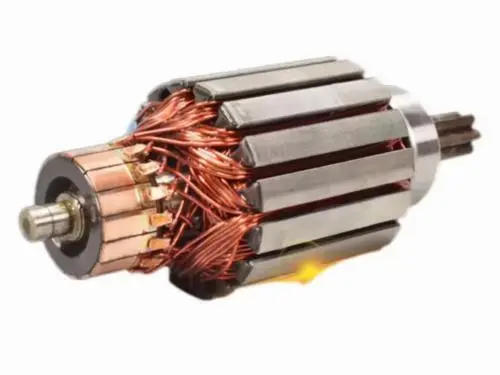
Understanding Automotive Copper Commutators
Structural Design and Functionality
Copper segments are insulated and put on a shaft assembly to form a copper commutator. As the armature rotates, these segments reverse current direction to maintain torque output. The precision-engineered design keeps each segment in perfect contact with motor brushes, reducing sparking and electrical losses that reduce motor performance. Modern commutators include 20 segments or more, depending on motor needs, and normal mid-sized automobile versions include 30.33mm outside diameter, 9.96mm inner diameter, and 18.5mm height.
Material Advantages in Automotive Environments
Copper's inherent characteristics make the Automotive Copper Commutator indispensable in automotive applications. Copper's electrical conductivity of ≥97% IACS (International Annealed Copper Standard) reduces resistive losses during current transmission. High thermal conductivity allows this material to quickly dissipate heat from high-current applications and avoid thermal damage. Mechanical strength of copper alloys, especially silver-bearing forms (CuAg0.1), enables structural integrity even under centrifugal forces above 20,000 RPM and temperature changes from -40°C to +150°C. These traits boost motor efficiency, energy efficiency, and vehicle component longevity.
Working Principles and Current Commutation
Commutation includes armature windings altering current direction synchronously with rotor position. Brushes glide over segment surfaces when the commutator spins, energizing certain winding sections. This switching motion must minimize arcing to avoid carbon accumulation and copper corrosion. Smooth brush contact and reduced electromagnetic interference and mechanical wear are achieved with precision diamond-turned surfaces with roughness values below 0.8μm Ra. Insulating resin between segments can sustain dielectric stresses of 100MΩ at 500V, eliminating motor failure from short circuits.
Key Benefits of Copper Commutators in Automotive Motors
Enhanced Electrical Efficiency and Power Transmission
Copper commutators minimize resistive losses by 30%, improving electric car fuel efficiency and battery life. Copper's low contact resistance helps starter motors crank quickly, even in cold-start circumstances when battery voltage declines. The material's capacity to withstand surge currents above 1000A assures ignition system reliability throughout the vehicle's life.
Copper's conductivity lets motor designers make smaller motors without compromising power. This space-saving feature is useful in current cars with tighter underhood packing. The Automotive Copper Commutator helps reduce electrical losses and heat production, making motors cooler and more consistent over long duty cycles while supporting efficient power transmission.
Durability and Wear Resistance
Premium commutators employ silver-bearing copper alloys with 80-120 HV (Vickers Hardness) for superior brush friction wear resistance. This material formulation raises the softening temperature, avoiding segment deformation during engine compartment heat cycles. Automotive OEM testing shows cooling fan motors and fuel pump assemblies have service lifetimes beyond 3,000 continuous operation hours.
Specialized copper formulations can operate in harsh conditions due to their chemical resistance. Automotive Copper Commutator components used in fuel pumps, made with oxygen-free copper alloys and chemical-resistant resin bonding methods, may endure E85 and biodiesel fuels for a long time. This compatibility maintains pump performance over fuel system service intervals, usually over 100,000 miles in passenger cars.
Material Comparison and Cost-Benefit Analysis
Copper outperforms aluminum and carbon commutator materials for procurement managers. Aluminum is cheaper but has greater contact resistance and thermal instability, necessitating bigger motor housings for heat dissipation. Carbon commutators have good durability but not enough current for high-power automotive applications.
Copper commutators cost 15-25% more than aluminum ones, but Automotive Copper Commutator solutions offer prolonged maintenance intervals and fewer warranty claims that can deliver long-term value. Quality assurance specialists know that copper's thermal stability reduces segment lifting and bar rise, which causes premature motor replacement. Copper is the economically reasonable option for Tier 1 automotive suppliers and OEM manufacturers when the total cost of ownership includes decreased downtime, energy usage, and service life.
Manufacturing Process and Quality Standards of Automotive Copper Commutators
Precision Manufacturing Techniques
Chemical analysis verifies the composition of high-purity electrolytic copper (C11000) or silver-bearing copper alloys before manufacturing. Copper bars were cut to precise tolerances, maintaining ±0.02mm segment thickness fluctuations for consistent electrical properties. Advanced CNC machining centers cut commutator profiles to create the cylindrical body and segments with TIR values < 0.015mm.
Quality Control and Certification Standards
Thorough inspections verify commutator functioning before shipping to automotive customers. Each device is centrifuged 1.5 times the rated RPM to assess structural integrity under harsh working conditions. Acceptance standards usually require resistance uniformity within 2% across all segments in bar-to-bar resistance testing to detect short circuits or excessive contact resistance.
To verify insulation between segments and the central shaft of the Automotive Copper Commutator, dielectric breakdown testing uses voltage potentials above operating maximums. This 1500V DC hi-pot testing process minimizes insulation degradation-related field failures in conventional automotive applications. Solderability testing verifies electrical connections between commutator terminals and armature windings using pull-force measurements above 15N per connection point.
IATF 16949 automotive quality requirements require manufacturers to record material lot numbers, dimensional data, and electrical test results for every manufacturing batch. This paperwork helps resolve quality concerns and proves compliance during customer audits. ISO 9000 accreditation ensures process control and continual improvement.
Customization Capabilities for OEM Applications
Automobile manufacturers need commutators that match motor designs and performance. Customization covers segment count, dimensions, material grades, and termination combinations. Before ordering production tooling, engineering teams provide CAD models and prototypes to customers to test fitting and electrical properties.
Flexible-machining manufacturing facilities can handle prototypes to 50,000-piece yearly orders. Standard configurations have 30-day lead times, with accelerated schedules for urgent needs. Bulk order management and quality consistency solve procurement managers' supply chain stability problems at large car manufacturers.
Sample programs let engineers validate Automotive Copper Commutator solutions before ordering production. Design incompatibilities are reduced by complementary sample commutators for bench testing, thermal cycling, and motor assembly integration verification. Technical support teams conduct test protocols and analyze performance data to ensure the chosen commutator satisfies application requirements.
Selecting the Right Automotive Copper Commutator for Your Application
Technical Evaluation Criteria
When choosing commutators for particular applications, procurement engineers should consider many key factors. Silver-bearing alloys are needed for high-amperage starting motors, but electrolytic copper is fine for lower-power applications. Operating temperature ranges and heat dissipation are important for motors in confined environments with restricted ventilation.
Mechanical criteria for an Automotive Copper Commutator include burst strength, centrifugal segment retention, and dimensional tolerances that affect brush contact quality. Higher segment counts reduce torque ripple but increase manufacturing complexity, influencing commutation smoothness. Hydrocarbon-resistant polymers are required for fuel pump insulation due to potential chemical exposure risks.
Supplier Assessment and Certification Verification
To find dependable commutator suppliers, evaluate production capabilities, quality certifications, and industry reputation. IATF 16949-certified suppliers follow automotive industry quality management standards, including APQP and PPAP. SGS accreditation provides product quality assurance by independently verifying material composition and performance.
Technical skill and process maturity are shown by manufacturing experience. Suppliers with 20 years of production experience have sophisticated manufacturing methods and strong quality control systems. Invention and utility model patents show firms' dedication to technical growth. Jiangsu Xuzhou, China-made ANGU combines expertise and innovation with extensive certifications and a track record of servicing global automotive customers.
Customer reviews and case studies reveal supplier responsiveness and performance for Automotive Copper Commutator solutions. Tier 1 automotive suppliers have strict vendor certification procedures; their references are valuable. Engineering help during design and production issues distinguishes premium vendors from commodity sources.
Logistics and Procurement Considerations
A global sourcing strategy must include shipment times, package quality, and customs paperwork. Flexible logistics options, including sea freight for big orders, air freight for time-sensitive shipments, and DHL/FedEx/UPS for prototype samples, offer responsive supply chain management. Individual wrapping, foam cushioning, and moisture barrier protection in boxes on export pallets safeguard sensitive commutator surfaces during shipment.
Quantity discounts are usually offered for purchases above 10,000 units. Procurement managers profit from long-term supplier agreements that lock in advantageous prices and allocate production capacity during peak demand. Negotiations over payment terms, minimum purchase quantities, and inventory consignment programs affect the total cost of ownership.
Troubleshooting and Maintenance for Automotive Copper Commutators
Common Performance Issues and Root Causes
The most common issue with an Automotive Copper Commutator is segment wear, which reduces motor efficiency and increases electrical noise. Uneven brush pressure, carbon dust, oil mist, and poor lubrication cause excessive wear. Circumferential grooves, segment edge rounding, and uneven material loss are commonly observed.
Copper segment discoloration, resin weakening, and brush holder damage indicate overheating. Thermal issues result from high current loads, insufficient ventilation, electrical connections, or bearing failures that increase mechanical friction. Temperature monitoring during operation detects overheating before catastrophic failure.
Erratic motor behavior is caused by high resistance connections, segment short circuits, or insulation degradation. Digital multimeters detect resistance abnormalities, whereas megohmmeters show insulation deterioration. Centrifugal force or heat expansion lifts bar segments above the commutator surface, interfering with brushes and accelerating wear.
Preventive Maintenance Best Practices
Regular inspections linked with vehicle maintenance schedules discover issues early. Visual inspection should reveal carbon accumulation on commutator surfaces, brush wear, and segment edge or insulation damage. Electroconductive material may cause electrical tracking or higher contact resistance. Lint-free cloths and certified solvents remove it.
Following manufacturer guidelines for brush replacement avoids wear on the Automotive Copper Commutator caused by worn brushes. Proper brush grade selection balances brush life and commutator wear with suitable hardness. Brush spring tension checks ensure proper contact pressure, typically ranging from 150-300 grams depending on motor type.
Sealed bearing assemblies need little care, but serviceable bearings need annual regreasing. By preventing grease migration, proper lubricant selection protects commutator surfaces. Environmental sealing integrity tests prevent moisture and pollutants from entering motor housings, especially in severe fuel pump and cooling fan applications.
Case Study: Reliability Improvement Through Quality Upgrades
Commutator deterioration in ethanol fuel applications caused field failure rates of over 2% for a major automotive Tier 1 supplier of electric fuel pumps. After testing with E85 gasoline mixes, their metal commutators showed accelerated corrosion and increased contact resistance. Using silver-bearing copper commutators with chemical-resistant resin bonding lowered failure rates to below 0.3% and extended mean time between failures from 2,800 to over 4,200 hours in accelerated life testing.
To improve segment shape and material parameters, the supplier's engineering team and commutator manufacturer worked together. Our custom tooling met the fuel pump motor's specific dimensions while keeping compatibility with current armature designs. Thermal cycling, chemical immersion testing, and high-temperature endurance tests verified performance improvements before full production launch. The update paid for itself in 18 months via fewer warranty claims and higher customer satisfaction.
Conclusion
Copper commutators improve automobile motor performance by improving electrical conductivity, thermal management, and mechanical durability to meet efficiency and reliability requirements. Although more expensive, the adoption of Automotive Copper Commutator solutions is justified by their demonstrated benefits in starting motors, fuel pumps, and HVAC systems, offering prolonged service life and lower maintenance costs. Suppliers with solid production processes, extensive quality certifications, and fast technical assistance are essential for procurement success. Copper commutators provide efficient power conversion in classic and future motor applications, aided by material and production innovations as vehicle electrification develops.
FAQ
How long do automobile copper commutators last?
Automotive cooling fans and fuel pumps use quality copper commutators for 3,000 to 5,000 hours. Starter motor commutators work intermittently and last over 50,000 starts before needing repair. Temperature extremes, contaminant exposure, and maintenance methods affect service life; preventative care may prolong functional life beyond minimal requirements.
How do copper and aluminum commutators compare?
Copper has 60% better electrical conductivity than aluminum, minimizing resistive losses and enhancing motor performance. This material has excellent thermal conductivity for heat dissipation and mechanical strength during high-speed spinning. Quality-focused automobile manufacturers benefit from copper's longer service life, lower energy use, and fewer failure rates, even if aluminum commutators cost 15-25% less initially.
Can electric car motor commutators be customized?
Customization services for EV motors include segment count optimization, high-current copper alloys, and motor design-matching dimensions. Electrical, thermal, and mechanical performance fulfill EV operating requirements via engineering cooperation throughout development. Production capabilities range from prototypes to yearly volumes of 50,000 pieces with constant quality.
Partner With a Trusted Automotive Copper Commutator Manufacturer
ANGU delivers precision-engineered copper commutators backed by 20 years of manufacturing excellence and comprehensive IATF 16949 certification. Our 20-segment design featuring silver, copper, and resin construction meets the demanding requirements of automotive suppliers worldwide, with proven performance in starter motors, fuel pumps, and HVAC systems. We offer complete OEM/ODM customization services supported by 3 invention patents and 6 utility model patents, ensuring your specific motor applications receive optimized solutions. Production capacity delivers 50,000 pieces within 30 days, with flexible logistics including sea freight, air transport, and express shipping to support your global supply chain. Contact our engineering team at chenrf@angu.com for complimentary samples, technical specifications, and detailed quotations that address your procurement requirements. Visit angu-group.com to explore our complete portfolio and discover how our SGS-certified commutators and 1-year warranty protection can enhance your motor performance and reliability.
References
1. Society of Automotive Engineers (SAE). "Standards for Electrical Commutators in Automotive DC Motors." SAE Technical Paper Series J2345, 2021.
2. Institute of Electrical and Electronics Engineers (IEEE). "Comparative Analysis of Copper Alloys in Rotary Electrical Switches for Vehicular Applications." IEEE Transactions on Vehicular Technology, Vol. 68, No. 4, 2019.
3. International Automotive Task Force. "IATF 16949:2016 Quality Management System Requirements for Automotive Production and Relevant Service Parts Organizations." IATF Publications, 2016.
4. Copper Development Association. "Copper in Automotive Electrical Systems: Performance Advantages and Application Guidelines." CDA Technical Report No. 157, 2020.
5. American Society for Testing and Materials (ASTM). "Standard Test Methods for Electrical Conductivity and Resistivity of Metallic Commutators." ASTM B193-20, 2020.
6. Journal of Materials Engineering and Performance. "Thermal and Mechanical Properties of Silver-Bearing Copper Alloys in High-Speed Rotational Applications." Volume 29, Issue 12, December 2020.
YOU MAY LIKE