Selecting the Right Commutator for Electric Fan Applications
Choosing the right commutator for an electric fan is not a decision to take lightly. The universal motor commutator sits at the heart of any brush-type fan motor, acting as the rotating electrical switch that keeps current flowing in the correct direction through the armature windings. Get the selection wrong, and you face premature brush wear, excessive arcing, motor overheating, and shortened product lifespan. Get it right, and your fans run quietly, efficiently, and reliably across thousands of operating hours. This guide walks you through everything you need to make a confident, informed purchasing decision.
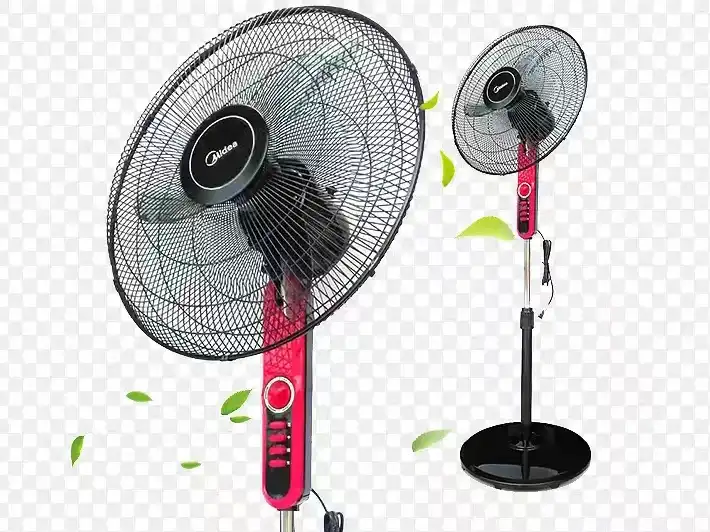
Understanding Universal Motor Commutators in Electric Fans
Before you call suppliers or compare products, it's helpful to know what this part does and why it's so important in fan applications.
What a Commutator Actually Does
The commutator is a cylinder-shaped group of copper segments that is attached to the motor shaft. Carbon brushes on a spring press against these segments as the armature turns. This moves current from the circuit that isn't moving into the windings that are. This constant switching action keeps the electric polarity correct, which creates a steady rotational force. The accuracy of this contact interface has a direct effect on the level of vibration, electrical noise, and motor temperature in fan motors, which usually spin at speeds between 10,000 and 25,000 RPM.
Key Components and Materials
Silver-Copper (AgCu) or Zirconium-Copper (ZrCu) alloy segments are often used in well-designed commutators for fans. These materials are good at conducting electricity and don't soften at temperatures up to 300°C. This is a very important trait for fan housings where heat builds up. Copper bars are separated by mica insulation, which provides bar-to-bar insulation resistance of more than 100MΩ at 500V DC and dielectric strength of 1,500V to 3,000V AC.
Recognizing Early Signs of Failure
QA and procurement teams should train maintenance personnel to identify early signs of wear and abnormal operation in a Universal motor commutator. Surface blackening can indicate an unsuitable brush grade, excessive arcing, or electrical irregularities between adjacent segments, so a Universal motor commutator should be inspected whenever abnormal discoloration appears. Unusual noise during operation may also indicate poor concentricity, dimensional irregularities, or mechanical imbalance. A precision-manufactured Universal motor commutator can maintain tight Total Indicator Runout (TIR) control, with values such as 0.003–0.015 mm applicable to certain high-precision motor designs. Excessive TIR on a Universal motor commutator can increase mechanical vibration and contribute to uneven brush contact, particularly at high rotational speeds. Sparking and reduced fan speed may also be associated with mica protruding above the copper segments, which can interfere with smooth brush movement and stable electrical contact. Proper mica undercutting during production helps maintain the required clearance between the insulation and copper surface of a Universal motor commutator. By monitoring surface condition, runout, mica height, brush contact, and operating noise, maintenance teams can identify potential problems with a Universal motor commutator before they develop into more serious motor-performance issues. Regular inspection and accurate manufacturing control can therefore help maintain reliable operation and extend the service life of a Universal motor commutator.
Key Design Principles and Maintenance for Optimal Performance
When something is manufactured, good design choices make it easier for the end user to keep it in good shape. Before you place an order, look for these things.
Material Selection and Structural Integrity
For fan motor commutators, a material hardness of 90 to 120 is just right for both brush compatibility and wear protection. High-speed designs with strengthened steel shrink rings or glass-fiber bands around the copper stack work better, because centrifugal forces at 20,000 RPM or higher can lift bars if the structure isn't strong enough. Before accepting a new part, procurement engineers should ask suppliers for reports on the material's makeup and its hardness.
Maintenance Schedules That Extend Service Life
The frequency of regular inspections depends on the surroundings and the number of hours the part is used. In general, you should check the wear on the carbon brush every 500 to 1,000 hours of use. Using a lint-free cloth and an approved contact cleaner to clean the commutator surface gets rid of carbon layers that make contact resistance higher. The mica undercutting depth should be checked every so often; this is usually between 0.4 mm and 0.8 mm below the copper surface. Keeping this distance between the brushes stops brush bounce and the electrical noise that comes with it, which hurts fan performance over time.
Troubleshooting Common Faults Systematically
When a fan motor doesn't work right, a structured approach to diagnosis saves time. To find shorted segments, start by measuring the resistance from bar to bar. After that, look at the surface to see if it is rough—contact surface Ra values less than 0.8 µm are normal for operations with low wear. Lastly, do an over-speed spin test at 1.2 to 1.5 times the stated RPM to make sure the structure is still solid. When suppliers follow these rules during production, parts that pass incoming review with far fewer rejects are sent back.
Comparative Analysis: Choosing the Best Commutator Solution for Your Electric Fans
Not every commutator technology suits every fan application. Understanding the trade-offs helps procurement teams avoid over-specifying or under-specifying components.
Universal Motor vs. Brushless Motor Technology
Universal motor commutators remain the dominant choice for cost-sensitive, high-torque fan applications. Brushless motors offer longer service intervals but carry a higher unit cost and require more complex electronic control systems. For OEM manufacturers producing fans at scale, the universal motor design typically delivers a better cost-per-performance ratio, particularly in mid-range industrial and household fan segments where brush replacement schedules are manageable.
Copper, Graphite, and Composite: Material Trade-Offs
Pure copper segments provide the highest electrical conductivity but wear faster under harsh conditions. Graphite-impregnated composites reduce friction against carbon brushes but show lower conductivity. The AgCu and ZrCu alloy segments common in industrial fan commutators represent an engineering compromise—conductivity remains high while thermal softening resistance and mechanical hardness are improved over pure copper. Matching the segment material to the brush grade in your motor design is essential; mismatched pairs accelerate wear on both contact surfaces.
Matching Specifications to Fan Operating Conditions
Here are the core specification parameters to align with your fan's requirements:
- Speed rating: Confirm the commutator is rated for your motor's maximum RPM, including any transient over-speed conditions during startup.
- Thermal class: Fan motors in enclosed housings require commutators rated for continuous temperatures above 130°C.
- Segment count: Higher segment counts reduce ripple current and improve torque smoothness, which matters in low-noise residential fan applications.
- Dimensional tolerances: Concentricity within 0.015mm is a reasonable baseline; tighter tolerances improve brush life and reduce acoustic emissions.
These parameters define whether a commutator will perform reliably across the full operational life of your fan product, not just during initial testing.
Procurement Essentials: How to Source Quality Universal Motor Commutators
When buying, managers choose suppliers they can trust to protect quality and keep costs down at the same time.
Evaluating Supplier Certifications and Capabilities
For suppliers serving automotive-grade or industrial fan applications, ISO 9001 and IATF 16949 certification can provide important evidence of established quality-management and process-control systems. When sourcing a Universal motor commutator, procurement teams should review these certifications together with detailed inspection records rather than relying on certificates alone. Useful documentation may include coordinate measuring machine (CMM) reports for critical dimensions, spectroscopic alloy analysis to verify material composition, and overspeed-test records to confirm mechanical integrity under specified conditions. A supplier with in-house tooling and OEM/ODM manufacturing capabilities can also produce a Universal motor commutator with customized segment geometry, shaft diameter, bore size, and overall dimensions based on customer drawings. This flexibility is particularly valuable when a Universal motor commutator must match a proprietary fan-motor design or confidential engineering specification. Before approving a supplier, buyers should verify that the manufacturer can consistently reproduce the required dimensions and material grade while maintaining appropriate quality-control procedures. For customized Universal motor commutator production, controlled tooling and documented inspection processes can help protect design requirements while reducing the risk of dimensional deviations between production batches. By combining supplier certification, material verification, dimensional inspection, overspeed testing, and OEM/ODM customization, procurement teams can establish clearer quality requirements for a Universal motor commutator and support more reliable fan-motor production.
Lead Times, Pricing, and Bulk Order Strategy
When made in small batches, precision commutators usually have wait times of 25 to 35 days from the time the order is confirmed. People who place regular orders benefit from blanket purchase agreements, which lock in prices and let buyers choose when to cancel their orders. Asking for samples before agreeing to full production runs is the norm, and any reputable provider will gladly support this step.
After-Sales Support and Warranty Terms
Problems with quality in the field cost a lot. Directors of procurement should make sure that suppliers offer a warranty that lasts at least one year and makes it clear how to return or replace parts that are proven to be defective. When there are field returns, root-cause analysis is faster and more accurate when suppliers provide traceable batch records.
Ensuring Long-Term Value Through Smart Selection and Support
Most of the time, the lowest unit price doesn't mean the lowest overall cost. Matching the commutator design to the fan application—whether it's a high-speed commercial extraction fan or a quiet ceiling unit for a home—lowers guarantee claims and makes the product last longer. When suppliers have manufacturing processes that are backed by patents, each batch of goods is more likely to be consistent, which lowers the number of rejections during incoming inspections over time. Having long-term supply deals with experienced makers also lowers the chance that specifications will change or materials will be swapped out without warning, which could affect the performance of the motor.
Conclusion
Choosing the right Universal motor commutator for an electric fan requires careful verification that the motor's rated speed, material requirements, dimensional tolerances, and electrical load are compatible with the intended operating conditions. A properly specified Universal motor commutator should match the motor's rotational speed, voltage, current, brush system, and mechanical configuration to support stable commutation and reliable operation. Procurement teams should give careful consideration to suppliers that maintain certified quality-management systems, provide clear warranty terms, and maintain traceable production and inspection records for each Universal motor commutator batch. Reviewing material composition, segment geometry, surface finish, dimensional accuracy, and quality-control documentation can help buyers confirm that the Universal motor commutator meets the requirements of the target fan motor. Selecting a suitable Universal motor commutator can help reduce the risk of premature wear, unexpected motor failures, maintenance downtime, and unnecessary replacement costs. These considerations are important for both high-volume production programs and the development of new fan platforms, where consistent component quality can support more predictable product performance. By matching the Universal motor commutator to actual motor operating conditions and working with a qualified supplier, manufacturers can establish more reliable procurement requirements and support longer-term motor service life.
FAQ
How often should commutator brushes be replaced in electric fan motors?
The amount of time between brush replacements depends on the speed, load, and grade of the brush. As a general rule, the brush should be inspected every 500 to 1,000 hours of use and should be replaced when it gets shorter than 30% of its original length.
What is the difference between a universal motor commutator and a DC motor commutator?
Both work on the same switching principle, but universal motor versions are made to handle the extra heat and stress that comes with AC operation and the higher RPM ranges that are common in fan and power tool uses.
Why does mica undercutting matter for fan applications?
Over time, the copper bars can wear down, letting the mica insulation stick out above the section surface. This makes the brush bounce, the arcing get worse, and the wear go faster. Keeping the undercutting at 0.4mm to 0.8mm stops this from happening and increases the time between brush replacements.
Can commutators be custom-manufactured to match existing motor designs?
Yes, OEM and ODM production let providers make commutators from customer drawings, matching specific shaft sizes, segment counts, and material requirements to fan motor designs that are unique to each customer.
What certifications should I require from a commutator supplier?
The bare requirement is ISO 9001. For automotive auxiliary fan uses, IATF 16949 compliance shows that the process is controlled and can be tracked, which is needed for Tier 1 and Tier 2 supplier qualification.
Get a Custom Quote from Angu — Your Trusted Universal Motor Commutator Supplier
Angu has been making things for 20 years, is certified by ISO 9000 and IATF 16949, and has 9 patents that are filed. We offer 30-day delivery and a range of logistics options, including sea freight, air freight, DHL, FedEx, and UPS. Our guarantee lasts for a year, and we have a team of people who work hard to help you after the sale. To get samples or a competitive quote right away, email our team at chenrf@angu.com or visit angu-group.com.
References
1. IEEE Transactions on Industry Applications — "Brush and Commutator Wear in Universal Motors Under Variable Load Conditions," IEEE, 2019.
2. Journal of Electrical Engineering & Technology — "Thermal Performance of Copper Alloy Commutators in High-Speed Motor Applications," Korean Institute of Electrical Engineers, 2020.
3. IATF 16949:2016 — Automotive Quality Management System Requirements, International Automotive Task Force, 2016.
4. Electric Motor Handbook, Gottlieb, I.M., McGraw-Hill, 1994.
5. IEC 60034-1: Rotating Electrical Machines — Rating and Performance, International Electrotechnical Commission, 2022.
6. Motors and Drives: A Practical Technology Guide, Wring, S., Newnes/Elsevier, 2003.
YOU MAY LIKE