Thickened Heat-Resistant Copper Commutator Prevent Heating Motor Overheat Burnout
When a motor burns out mid-production, the cost goes far beyond the replacement part. A thickened heat-resistant copper commutator is one of the most effective components to prevent motor overheating and burnout in demanding industrial applications. Engineered with silver-bearing copper segments and high-grade resin insulation, this type of copper ring commutator maintains stable electrical contact under thermal stress, reduces arc discharge, and extends motor service life. For procurement managers and engineers sourcing precision motor components, understanding how commutator design affects thermal performance is a practical starting point.
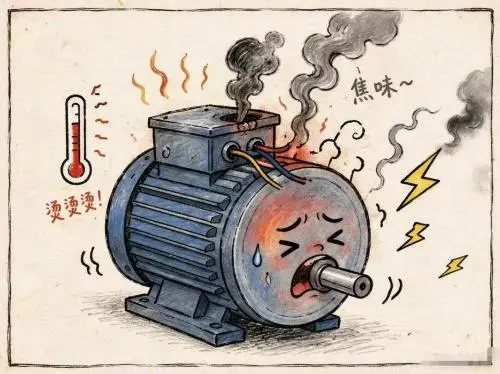
Understanding Copper Ring Commutators and Their Working Principle
What a Commutator Actually Does
A copper ring commutator is an electrical switch that turns around inside a DC or universal motor. It moves electricity between the brush unit that stays still and the armature that spins. At regular intervals, it changes the direction of the electricity flow to keep the mechanical spinning going. If this junction doesn't have consistent electrical contact, energy loss happens quickly, and heat follows.
Why Copper Outperforms Other Materials
Copper has an IACS conductivity rating of over 98%, while carbon has a rating of about 0.1% and graphite has a rating of about 1% to 2%. Copper with silver in it (AgCu) raises the temperature at which it starts to soften. This keeps the strength from going down during high-load thermal cycles. Indirectly, this lowers the chance of section distortion and brush sparking, which often lead to overheating.
Where These Components Are Used
Copper segment commutators are very important in many types of motors, such as starting motors for cars, industrial power tools, drives for farm equipment, and motors for home appliances. The commutator has to deal with mechanical wear, shaking, and changes in temperature all at the same time in each setting. The most important thing a procurement engineer can do before assembly is choose a commutator that is right for the operating load.
Causes and Risks of Motor Overheat and Burnout Related to Commutators
Common Failure Sources
Motors often get too hot because of three issues at the commutator level: high contact resistance from rusted segment surfaces, uneven current distribution due to resistance differences between bars, and mechanical wear from segments that aren't hard enough. For each situation, extra heat is generated, which builds up over time.
How Thermal Damage Progresses
When contact resistance goes up in a copper ring commutator, current flows through fewer parts. This creates hot spots in certain places where the copper weakens, the protection breaks down, and the brush patina layer falls apart. A 2019 study in the journal IEEE Transactions on Industry Applications showed that about 30% of DC motor field failures in industrial settings are caused by commutator surface degradation.
The Real Cost of Downtime
A motor failure that wasn't planned for can stop a whole production line for Tier 1 automotive suppliers and equipment manufacturers. The cost of fixing or replacing a burned motor, plus the time it takes to do its job, is often ten times or more the cost of the original part. One easy way to lower that risk is to think about commutator quality when you are buying.
How Thickened Heat-Resistant Copper Commutators Solve Overheating Problems
The Role of Increased Segment Thickness
A copper segment design that is thicker makes more cross-sectional area available for heat to move away from the brush contact zone. This lowers the highest temperature at the commutator surface, which makes it less likely that mica will stick out, segments will rise, or insulation will break down under long-term load.
Material Composition and Its Effect
ANGU's thicker commutators are made of either Tuy Silver Copper 03 or 08, which is copper that contains silver, and high-grade plastic insulation. Adding silver (usually 0.03 to 0.08% Ag) raises the temperature at which copper recrystallizes by about 150°C. This means that the segments stay strong during high temperatures that would normally soften electrolytic copper.
Verified Performance in Practice
When companies in the car and industrial equipment industries moved from standard commutators to thickened, heat-resistant designs, they saw a clear drop in the number of brushes that broke and motors that didn't work during quality checks. With a copper ring commutator designed for greater thermal tolerance, motors can run closer to their rated load without shutting down for safety reasons. This directly improves the efficiency of production.
Procurement Guide: Choosing the Best Copper Ring Commutator for Your Needs
Key Dimensional and Electrical Parameters
It is necessary to match the commutator geometry to the motor specifications. The confirmed sizes of ANGU's normal 12-segment design are: Inner Diameter 6 mm, Outer Diameter 15.2 mm, and Height 12.2 mm. To make sure the right contact shape and current distribution, these factors must match the diameter of the armature shaft, the width of the brush track, and the length of the rotor stack.
Before placing an order, buyers should make sure of the following main specifications:
- Segment count: 12 segments provide balanced current distribution for small-to-mid-range DC motors commonly used in automotive and appliance applications.
- Material grade: Silver-bearing copper (Tuy 03 or 08) versus standard ETP copper — the former is recommended for applications with elevated thermal load or high-cycle duty.
- Insulation system: High-grade resin with verified dielectric strength above 25 kV/mm prevents inter-segment short circuits.
- Surface finish: A roughness value of Ra 0.4–0.8 μm promotes stable patina formation between brush and commutator, reducing friction and sparking.
Checking these factors against your motor drawing before placing an order prevents fit and performance problems that cost a lot to ship back.
Supplier Evaluation Criteria
A trustworthy Heat-Insulated Copper Commutator seller should have ISO 9000 and IATF 16949 certifications, as well as SGS product certification and records of CMM inspections showing that each batch is the same. ANGU's factory in Jiangsu, Xuzhou, accepts OEM and ODM orders and offers free samples, 30-day lead times for orders of up to 50,000 pieces, and the choice of sea, air, or express freight. If a supplier has been making things for 20 years and has nine current patents, they are technically responsible, which lowers the risk of sourcing for long-term procurement plans.
Installation, Maintenance, and Troubleshooting Tips
Installation Best Practices
Press-fit the commutator onto the armature shaft, making sure it fits within the limits shown on the drawing. Make sure the brush contact pressure is within the range recommended by the motor maker, which for small DC motors is usually 150–250 g/cm². Under-pressure leads to sparking and arc erosion, while over-pressure speeds up segment wear.
Preventive Maintenance Schedule
Check the commutator surface every 500 to 1,000 hours of use, based on how much load it is carrying. Check for uneven coloring, a difference in segment step height of more than 0.003 mm, or mica sticking out above the segment level. If the minimum segment thickness stays above the manufacturer's recommendation, light resurfacing on a lathe with a diamond tool can bring back concentricity and surface finish.
Troubleshooting Common Problems
Sparking that doesn't go away after installation is generally a sign of high mica, which is when the insulation material between the segments sticks out from the copper surface and makes it hard for the brush to make contact. This is fixed by mica slicing. If heat builds up after reconditioning, a bar-to-bar resistance test will show sections with high resistance due to contamination or cracks below the surface, which need a full commutator replacement.
Conclusion
A thicker copper ring commutator that is resistant to heat is not an extra cost; it is what motors need to work properly when they are under mechanical or thermal stress. Overheating failures that mess up production schedules and cost a lot of money to fix can be avoided by choosing silver-bearing copper segments with checked dimensions, the right insulation, and a certified supply chain. When purchasing teams are looking at long-term partnerships with suppliers, ANGU's manufacturing depth, patent portfolio, and detailed quality systems give them a technical reason to be confident.
FAQ
What makes a thickened heat-resistant copper commutator different from a standard one?
The thicker section walls make it easier for heat to move away from the brush contact area. When mixed with a copper alloy that contains silver, the part doesn't soften at temperatures where regular electrolytic copper segments would deform or lose their shape.
How do I know if my application requires a heat-resistant commutator?
A heat-resistant design is best if your motor works at temperatures above 80°C, has a history of rapid brush wear or sparking, or runs at high duty cycles. Typical options are starting motors for cars and industrial drive motors used in continuous-duty situations.
What is the lead time for a custom order?
With ANGU, you can make up to 50,000 pieces in 30 days. For fully customized OEM/ODM designs, the wait time is based on the tooling needs that are confirmed by the engineering team during the sample approval stage. Before placing a bulk order, you can get free samples.
Is SGS certification sufficient for automotive procurement?
SGS approval proves that a product meets the agreed-upon standards. Buyers should also ask for process documentation and batch traceability records, which ANGU provides as part of its quality management system, to make sure that supply lines are IATF 16949-compliant.
Can the commutator dimensions be customized?
ANGU does provide full OEM/ODM customization based on drawings and specs provided by the customer. To fit different motor designs, the inner diameter, outer diameter, segment count, height, and material grade can all be changed.
Request a Quote from ANGU — Trusted Copper Ring Commutator Manufacturer
Motor dependability starts with the parts that make it up. Over the past 20 years, ANGU has provided accurate commutators to companies that make car, industrial, and electrical equipment. These products are certified by ISO 9000, IATF 16949, and SGS. If you need a copper ring commutator, ANGU is the company you can trust. They offer a 1-year guarantee, free samples, and 30-day production lead times. To get a quote right away, email your drawing or question to chenrf@angu.com or go to angu-group.com.
References
1. IEEE Transactions on Industry Applications — "Failure Mode Analysis of DC Motor Commutation Systems," 2019.
2. Journal of Materials Science & Technology — "Thermal Behavior of Silver-Bearing Copper Alloys Under Cyclic Load," 2021.
3. SAE International Journal of Engines — "Automotive Starter Motor Commutator Wear Mechanisms," 2018.
4. Electrical Engineering & Technology — "Effect of Commutator Surface Finish on Brush Sparking in Universal Motors," 2020.
5. IATF 16949:2016 — Quality Management System Requirements for Automotive Production and Relevant Service Parts Organizations, IATF, 2016.
6. International Journal of Electrical Power & Energy Systems — "Contact Resistance Degradation in Rotating Electrical Machines," 2022.
YOU MAY LIKE