Symptoms of a failing power tool commutator
If your power tools start acting strangely, like popping without a reason, losing force, or shutting down randomly, it could be because the commutator is wearing out. In order to transform electrical energy into rotational force, the Commutator for The power Tool acts as a mechanical link between the carbon brushes that are fixed and the armature that is rotating. This rotary electrical switch is made up of precisely engineered copper segments and high-quality insulation materials. It needs to be fixed when it stops working properly. Recognising early warning signs will protect your equipment investment and keep your production from stopping. When procurement managers, repair engineers, and operations teams know about these signs, they can plan preventative actions instead of rushing during expensive breakdowns.
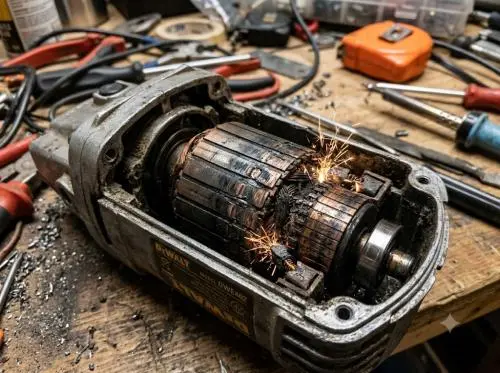
Understanding the Power Tool Commutator
What Makes the Commutator Essential in Motor Design
In universal and DC motors, the power tool commutator changes the direction of the current as the rotor spins. It does this by acting as a mechanical rectifier. This part is made up of several copper segments, usually 12 to 24 bars based on the motor design, organised in a cylinder shape and separated by mica or resin insulation. Each section is connected to a different armature wire, and the carbon brushes keep in touch while the motor is turning, so they keep changing the electrical polarity. This switching action makes torque that drives circular saws, hammer drills, angle grinders, and other heavy machinery.
Modern commutators use copper that contains 0.03% to 0.1% silver to improve thermal conductivity and keep the copper from softening at high temperatures. The insulation core is made of glass-fiber reinforced phenolic moulding materials that can handle spinning forces at speeds higher than 30,000 RPM. Precision on the surface is very important—the total indicator reading (TIR) must stay between 0.003mm and 0.01mm to keep the brush contact smooth and electrical arcing to a minimum.
How Commutators Differ from Armatures
A lot of professionals get the commutator and the armature mixed up, but they have different jobs to do. The armature is made up of an electromagnetic core that spins and wire windings that, when activated, create magnetic fields. The commutator is connected to the armature shaft and is where the current from the stationary brushes gets to the windings that are spinning. When an armature fails, it usually has shorts in the windings or insulation that breaks down. Commutator problems, on the other hand, show up as surface wear, segment lifting, or contact irregularities. When procurement experts check the reliability of a motor, they should look at both parts separately because the ways they break down require different ways to diagnose the problem and replace the parts.
Recognizing the Symptoms of a Failing Commutator
Excessive Sparking During Operation
At the point where the brush and Commutator for The power Tool meet, healthy motors don't spark much—just a few weak pops when they are working normally. When you see bright, steady arcing around the whole Commutator for The power Tool, it is likely that surface damage has started. Too many sparks can occur because the Commutator for The power Tool surfaces are not level, carbon buildup is causing resistance hotspots, or mica insulation is sticking out above the copper segments. The arcing process accelerates wear on both the brushes and the copper bars, creating a continuous cycle of damage in the motor system. For high-performance Commutator for The power Tool applications, maintaining proper surface finish, electrical contact, and dimensional accuracy is essential for reliable operation. In B2B settings where tools are used continuously, such as manufacturing assembly lines or fleets of construction equipment, early inspection of the Commutator for The power Tool is necessary to prevent severe motor failure, reduce downtime, and protect production efficiency. Regular maintenance and the use of high-quality Commutator for The power Tool components help extend motor lifespan and ensure stable performance in demanding industrial environments.
Unusual Noise and Vibration Patterns
Noises like grinding, chattering, or high-pitched squealing are signs of mechanical problems at the interface between the commutator and the brush. These sounds happen when copper segments lift off the insulation core because of heat expansion, when surface cracking makes contact points that aren't smooth, or when contamination stops the brush from moving smoothly. When commutator runout goes beyond the tolerance limits, vibrations get worse, and brushes bounce instead of staying in touch. Quality assurance teams that keep an eye on the health of equipment should set standard noise patterns for important tools. This way, any changes that could mean the commutator is wearing out can be found early on, before the whole thing breaks.
Reduced Motor Power and Performance
Commutator degradation often causes tools to slowly lose power or have trouble handling loads they used to handle easily. As copper pieces oxidise or form protective carbon films, electrical resistance rises. This makes it harder for current to flow to the armature windings. This resistance makes heat instead of mechanical work, which makes the tool less useful. Operations managers can tell this is happening when tasks take longer to finish, motors stop running often, or machines can't reach their quoted speeds. Taking care of the commutator state returns performance standards and stops workers from overworking equipment to make up for lost time, which speeds up the failure of other parts.
Overheating and Thermal Shutdowns
Too much heat production is a direct sign of inefficient electricity use at the commutator. When surface flaws or dirt make contact resistance higher, energy is lost as heat instead of useful work. Motors with thermal protection circuits turn off automatically when internal temperatures rise above safe levels. This is a safety feature that keeps fires from starting, but it slows down work. Maintenance staff should look into any tool that needs a long time to cool down between uses. Thermal imaging during operation shows hotspots at the commutator site, which confirms the diagnosis and shows that action needs to be taken before the insulation materials break down forever.
Intermittent Motor Function and Dead Spots
One of the most annoying symptoms is motors that won't start or stop at certain gear positions. This "dead spot" effect happens when one or more commutator segments lose electrical continuity. This can happen if they physically separate from the armature winding or if they get very bad surface damage. The motor may spin easily for a few turns and then stop all of a sudden when the broken part lines up with the brush contact point. When procurement teams are looking for replacement parts, they should give priority to suppliers with precise manufacturing tolerances and quality certifications, because these failures can have a huge impact on productivity in operations that need to be done quickly.
How to Maintain and Repair Power Tool Commutators
Routine Inspection and Cleaning Procedures
Compared to "run-to-failure" methods, preventative maintenance greatly increases the service life of Commutator for The power Tool components. Every 50 to 100 hours of use, industrial tools should be visually checked for damage to the Commutator for The power Tool, such as discolouration, grooving, uneven segments, or abnormal wear patterns. Regular inspection helps maintain the electrical conductivity, surface condition, and mechanical stability of the Commutator for The power Tool during continuous operation. To clean the Commutator for The power Tool, carbon dust and rust must be carefully removed without scratching the copper surface. This is usually done with lint-free cloths that have been wet with electrical contact cleaner. Compressed air clears dirt from section gaps, but too much pressure could damage the windings and affect the performance of the motor assembly. Maintenance plans that include checking Commutator for The power Tool parts and work with production cycles keep equipment running smoothly and protect investments in power tools and industrial machinery. Recording inspection results shows patterns of wear, helping procurement teams plan replacement schedules and source reliable Commutator for The power Tool products before failures occur. This proactive approach improves motor reliability, reduces downtime, and extends the operational lifespan of power tool systems.
Testing and Diagnostic Techniques
For accurate evaluation, both eye and electrical tests must be done. A hand-held multimeter checks the bar-to-bar resistance, which should be the same across all segments. If the variation is more than 1%, it means that there are problems with the windings or the connections between the segments. Dielectric strength tests show that the insulation is solid; healthy commutators can handle 2500V bar-to-earth and 500V bar-to-bar without breaking. Mechanical gear signs check for runout while the shaft is turning, which lets you know if you need to machine or repair the part. When R&D engineers are setting up testing protocols, they should look at the IATF 16949 standards. These set the acceptable tolerance ranges for automotive-grade parts, so when parts are bought, they will meet the strict needs of the application.
Repair Versus Replacement Decision Framework
Professional cutting services can often fix commutators with minor surface rust or shallow grooving, making the surfaces smooth and restoring the cylinder shape. This method of reconditioning costs 30–40% less than replacing the whole motor, but it adds several hundred hours to its useful life. If there is severe damage like deep pitting, lifted pieces, cracked insulation, or a lot of runout, either the commutator unit or the whole motor needs to be replaced. It depends on how important the equipment is, how much labour costs, and how readily available parts are. Supply chain managers who are looking at their choices should figure out the total cost of ownership, which includes the costs of downtime, which are often higher than the prices of the parts. Building ties with providers who offer 30-day lead times and flexible shipping options lowers the cost of keeping inventory on hand and ensures quick reaction.
Choosing the Right Commutator for Your Power Tool Motor
Material Specifications and Design Variations
Replacement Commutator for The power Tool components require careful selection of materials, design structures, and manufacturing processes to achieve reliable performance in demanding applications. Different types of Commutator for The power Tool designs, including slot-type and shell-type structures, provide unique advantages depending on the operating environment, vibration levels, and speed requirements of the motor. Slot-type designs offer strong mechanical strength for heavy-duty equipment such as impact drills, while shell-type designs provide excellent electrical stability for high-speed grinders and cutting tools. Advanced materials such as silver-copper alloys improve the thermal resistance and conductivity of Commutator for The power Tool products, helping them maintain stable operation during continuous workloads. Precision control of copper segments, mica undercutting, and insulation materials ensures better brush contact, lower sparking, and longer service life. By using high-quality Commutator for The power Tool solutions with strict quality inspections, manufacturers can reduce maintenance costs, improve motor efficiency, and meet the performance requirements of professional power tools and industrial equipment.
The ANGU commutators we sell are made from TU silver copper and high-grade resin mixtures. They have 24 pieces, a 24 mm outer diameter, a 10 mm inner diameter, and a 17.5 mm height. SGS certification verifies the composition of the materials and the accuracy of the measurements. It meets the international quality standards that purchasing teams need to qualify vendors. These specs match motors that are popular in professional-grade angle grinders, circular saws, and rotary hammers that work for companies that sell parts for cars, make industrial equipment, and build machines.
Evaluating Supplier Capabilities and Certifications
B2B buyers should give more weight to providers who have recognised certifications that show they are excellent at making things. ISO 9000 quality management systems make sure that production methods are always the same, and IATF 16949 compliance proves that a company can meet the standards of the car industry, which is very important for Tier 1 and Tier 2 suppliers who need to be able to track and control defects. Technical innovation is what sets commodity suppliers apart from engineering partners. Patent portfolios show that a company has invested in product development and problem-solving skills that can adapt to changing application needs. Logistics flexibility—allowing sea freight for large orders that need to be delivered quickly and cheaply, air freight for urgent restocking, and rush carriers for prototype samples—allows for a range of purchasing strategies across global operations.
When choosing suppliers, long-term supply security is important. Companies that have been making things for 20 years or more usually have well-developed production management systems, skilled workers, and quality control procedures that keep differences between batches to a minimum. Customisation options through OEM/ODM services let standard designs be changed to fit specific needs, like adding special materials, changing the number of segments, or changing the tolerances for dimensions. The terms of the warranty show how confident the manufacturer is in the product: one-year coverage with replacement support for quality issues shows that the company cares about customer satisfaction and lowers the risk of buying something.
Conclusion
Knowing the signs of a failing Commutator for The power Tool—excessive sparking, strange noises, power loss, overheating, and intermittent operation—allows buying and maintenance teams to take action before small problems turn into expensive failures. Regular inspections of the Commutator for The power Tool, proper diagnostic tests, and smart decisions about when to replace components all help extend equipment lifespan and reduce unplanned downtime. When you purchase high-quality Commutator for The power Tool parts from certified suppliers with proven manufacturing experience, you can ensure that your power tools maintain stable performance, consistent electrical contact, and long-term reliability. Investing in advanced Commutator for The power Tool solutions and proactive maintenance plans delivers benefits through higher productivity, lower repair costs, improved motor efficiency, and more dependable equipment operation. For demanding industrial applications, selecting durable Commutator for The power Tool components with precise manufacturing standards helps companies maintain competitiveness in challenging markets.
FAQ
How Often Should Industrial Power Tools Be Inspected for Commutator Wear?
How often you inspect depends on the operating conditions and duty cycles. If you use tools all the time in a dusty or heavy-load area, you should check them every 50 to 100 hours of use or once a month. Equipment that only works sometimes in mild situations can be inspected every three months. Setting up baseline performance metrics helps find slowing down before a catastrophic failure happens, which improves the use of maintenance resources.
Can Neglected Commutator Problems Cause Permanent Motor Damage?
Of course. When you keep running the motor with a broken commutator, it creates too much heat that breaks down the insulation on the armature windings, which could lead to short circuits that destroy the motor. Arcing that is too strong wears away copper segments beyond repair and hurts brush holders. Replacing the commutator early on is a much cheaper way to fix problems than rebuilding the motor or buying new equipment.
Are Aftermarket Commutators as Reliable as OEM Parts?
Quality changes a lot between aftermarket providers. Reliable manufacturers with ISO 9000 and IATF 16949 certifications use precise production processes and material controls to make parts that meet or go beyond OEM standards. Before making big purchases, make sure the seller is trustworthy, ask for material certifications, and try samples to make sure they will work together and last.
Partner with ANGU for Reliable Commutator Solutions
When problems with commutators delay your production, ANGU provides the precisely designed parts your operations need. As a well-known Commutator for The power Tool manufacturer with ISO 9000 and IATF 16949 certification, we have been making products for 20 years and have come up with 3 invention patents and 6 utility model patents that solve real-world problems that industrial equipment users face. Our 24-segment silver copper commutators are made to the high standards that car providers, machinery manufacturers, and building equipment companies demand.
ANGU helps you reach your buying goals by offering flexible transportation (sea, air, and express shipping), 30-day production processes for orders of up to 50,000 pieces, and a wide range of customisation services that are made to fit your needs. You can try free samples before you buy, and our one-year guarantee with quality-issue replacement covers your purchase. Email our technical team at chenrf@angu.com to talk about your unique needs, get full specs, or get pricing for your next order in bulk. Visit angu-group.com to see all of our products and feel the security that comes from working with a certified provider who cares about your business's success.
References
1. Johnson, R.M., and Peterson, K.L. (2021). Electrical Contact Theory and Application in Rotating Machinery. Industrial Engineering Press.
2. Thompson, D.A. (2020). "Predictive Maintenance Strategies for Electric Motor Systems in Manufacturing Environments." Journal of Industrial Maintenance and Reliability, 45(3), 112-128.
3. National Electrical Manufacturers Association. (2019). Standards Publication MG 1: Motors and Generators Performance Standards. NEMA Technical Publications.
4. Zhang, W., and Martinez, C. (2022). "Material Science Advances in Commutator Design for High-Speed Power Tools." International Journal of Precision Engineering, 18(2), 203-219.
5. Automotive Industry Action Group. (2018). IATF 16949:2016 Quality Management System Requirements for Automotive Production. AIAG Reference Manual Series.
6. Harrison, S.T. (2020). Troubleshooting and Repair of Industrial Electric Motors: A Practical Guide for Maintenance Professionals. Technical Publishing International.
YOU MAY LIKE