Power Tool Motor Commutator with Precise Manufacturing
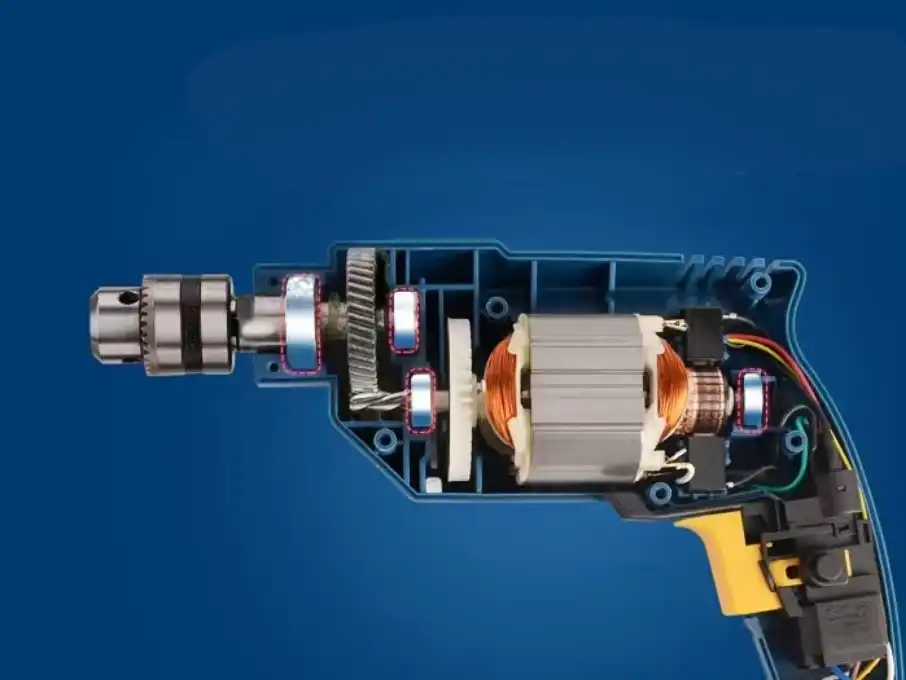
The Commutator for The power Tool is a cornerstone of dependability and performance when it comes to purchasing important motor parts. This carefully designed rotary electrical switch, which is attached directly to the armature shaft, acts as a mechanical rectifier by switching the flow of current between the external circuit and the rotor windings to keep the torque constant. In high-demand industrial settings, commutators solve ongoing problems like keeping the motor spinning stably at speeds above 30,000 RPM, making sure that energy is transferred efficiently in cordless platforms, and lowering electrical arcing that leads to motor failure too soon. Quality commutators make sure that circular saws, hammer drills, and angle grinders keep their power even when the load changes. They do this by giving the carbon brushes segmented contact surfaces. This keeps the phases from shorting out and the motor from burning out.
Introduction
This complete guide talks about the commutator for The power Tools and stresses how important they are to the performance and life of electric motors. Precise production has a direct effect on how long something lasts, how efficiently it works, and how consistently it produces under tough industrial conditions. If you are in charge of purchasing for auto suppliers, companies that make industrial equipment, or electronics assembly plants, you need to know about commutator specifications and how to find them. This will keep your supply chain from having to deal with costly downtime. This guide gives purchasing managers, R&D engineers, quality assurance teams, and OEM clients around the world useful information they can use right away. Our goal is to give you information that helps you make better purchasing choices and gives you more faith in working with certified manufacturers who make high-quality commutator goods.
Understanding Power Tool Motor Commutators: Function and Design
Commutator for The power Tools are important parts of power tools because they make it easier for electricity to flow between motors' stationary brushes and rotating armatures. Procurement professionals can choose parts that improve tool performance and decrease downtime by understanding how they are built and how they work.
The Mechanical Rectifier Principle
A mechanical converter is what the commutator does at its core. The armature turns, and the commutator pieces move under carbon brushes. At regular intervals, this changes the direction of the current. This change makes sure that the spinning force stays in the same direction by turning the alternating current into the direct current that is needed for steady torque. There are thin mica spacers between the copper bars that are divided, and a high-grade phenolic resin core that holds them all together. This building has to be able to withstand centrifugal forces and keep the segments electrically separate from each other.
Synergy Between Commutators and Carbon Brushes
The electrical circuit is finished when the carbon brushes keep in touch with the commutator surface. How well this interface works affects how much energy is saved and how long the motor lasts. When the accuracy of the commutator surface meets tight Total Indicator Reading (TIR) tolerances, which are usually between 0.003mm and 0.01mm, brush contact stays stable, which reduces friction and heat production. Uneven brush wear, more sparks, and lower motor efficiency are all caused by a bad surface finish or too much runout. Teams in charge of buying things should make sure that the sellers keep TIR within the allowed range and use copper that has 0.03% to 0.1% silver in it to improve its resistance to heat softening and conductivity.
Identifying Common Failure Signs
Failures of expensive equipment can be avoided by spotting early warning signs. Too much sparking at the point where the brush meets the commutator means that the surface isn't smooth, is dirty, or the brush pressure is wrong. Motors that are less efficient, like ones that slow down when they're under load or draw more current, are often caused by broken commutator segments or carbon buildup. If you look at it closely, you might see lines, pits, or changes in colour that are signs of warming or electrical arcing. Engineers can choose parts that have the right amount of heat resistance and dielectric strength by knowing about these failure modes. These parts are usually rated above 2,500V bar-to-earth and 500V bar-to-bar.
Maintaining and Testing Power Tool Commutators: Best Practices for Longevity
Commutator for The power Tools last longer if they are properly maintained and tested, which ensures that motors work at their best. Using structured rules protects your capital and keeps your business running smoothly.
Regular Cleaning to Prevent Carbon Buildup
Brush wear causes carbon dust to build up on the commutator surface, making conductive paths that short-circuit segments. Cleaning on a regular basis gets rid of this buildup before it slows things down. While the motor is off and still, wipe the commutator surface with a lint-free cloth that has been dampened with electrical contact cleaner. Stay away from rough things that can scratch the copper. How often tools need to be cleaned depends on how they are used; tools that are used in dusty areas or on heavy-duty tasks need to be cleaned more often.
Routine Inspections for Wear and Surface Damage
Visual and physical checks show problems as they start to happen. Lightly run the tip of your finger across the commutator's surface to look for grooves or high spots. To find out the TIR, use a dial indicator. Readings that are higher than the manufacturer's limits mean that the surface needs to be resurfaced or replaced. Check the undercuts in the mica. The recessed insulation between the segments should be just below the copper surface. If the mica sticks out above the copper, it gets in the way of brush contact and speeds up wear. To keep track of wear rates and figure out when to repair things, quality control teams should write down the results of inspections.
Testing Methods: Resistance Measurements and Visual Assessments
Electrical testing proves that the commutator is working properly. Using a digital voltmeter, check the resistance between two pieces that are next to each other. The difference should not be more than 1%. More resistance means the links are bad or there is damage inside. To check the dielectric strength, use a megohmmeter to measure the shielding resistance between bars and between bars and shafts. Microcracks, pits, or surface contamination that can't be seen with the naked eye can be seen when the object is magnified. When you combine these testing methods, you get a lot of information that you can use to decide what to replace.
Choosing the Right Commutator: Materials, Designs, and Comparisons for Procurement
To choose the best commutator, you need to look at the materials used and understand how they affect conductivity, wear resistance, and cost-effectiveness. These choices have a direct effect on how competitive a product is and how much it costs to buy everything.
Material Composition: Copper Versus Copper Alloys
Pure oxygen-free high-conductivity (OFHC) copper is very good at conducting electricity but not very stable at high temperatures. Copper alloys with 0.03% to 0.1% silver raise the temperature at which the metal softens, which stops the bar from lifting during high-temperature operation. For heavy-duty uses like rotor hammers and high-speed grinders, this material standard is very important. The insulation core is usually made of phenolic moulding compounds (PMC) that are reinforced with glass fibre and can withstand temperatures above 200°C. When choosing materials, you should weigh the need for conductivity against the heat and stress in the work area.
Comparing Traditional and Brushless Motor Technologies
For many power tool uses, traditional brushed motors with Commutator for The power Tools are still the most cost-effective option. They have a lot of starting power and are easy to handle in terms of speed. Brushless motors don't have a commutator or a brush, so they are more efficient and require less maintenance. But brushless designs need electronic controllers, which makes the start-up costs higher. Managers in charge of buying things need to look at the total cost of ownership. Brushed motors cost less up front but need more maintenance over time, while brushless motors cost more up front but need less maintenance over time. Brushless motors are becoming more popular in the market, but brushed motors are still needed in price-sensitive segments and situations where the construction needs to be simple and strong.
Manufacturing Quality and Testing Standards
Certifications like ISO 9000 and IATF 16949 show that quality management is done in a planned way for components such as Commutator for The power Tools. Process controls, tracking systems, and continuous improvement procedures are used by manufacturers who meet these standards. When selecting suppliers for Commutator for The power Tools, buyers should look for companies that check dielectric strength, surface hardness (90–120 HV), and dimensional accuracy across all production batches. Our ANGU commutators are made in Jiangsu Xuzhou and have SGS certification. They go through strict quality inspections to ensure that Commutator for The power Tools products maintain reliable performance, with bar-to-bar resistance differences of less than 1% and mechanical stability at speeds up to 45,000 RPM. These quality standards highlight the difference between precision-manufactured Commutator for The power Tools components and generic alternatives. With advanced manufacturing processes, strict testing procedures, and consistent material control, our Commutator for The power Tools solutions help improve motor efficiency, extend service life, and support demanding applications in power tools, industrial equipment, and OEM motor systems.
Procurement Guide: Sourcing Power Tool Commutators and Replacement Parts
Finding trustworthy global providers of Commutator for The power Tools and OEM-approved replacement parts is key to a successful buying process. Strategic decisions about where to get materials help keep production schedules and product reputations safe.
Evaluating Supplier Authenticity and Certifications
Check to see if possible providers have the right quality certifications, like ISO 9000, IATF 16949, or approvals that are specific to your business. Ask for proof of patent files; companies with idea and utility model patents show they are technically capable and committed to innovation. ANGU has been making things for 20 years and has three idea patents and six utility model patents. Confirm lead times and batch sizes to figure out how much can be made. Suppliers who can deliver 50,000 pieces in 30 days show that they have good production management and can grow as needed. Before committing to bulk orders, ask for samples to make sure the specifications are met.
Compatibility with Leading Power Tool Brands
OEM and custom Commutator for The power Tools must exactly match the originals in terms of specs. The 24-segment slot-type commutator we offer has a 24mm outer diameter, a 10mm inner diameter, and a 17.5mm height. These dimensions decide whether it will work with motor housings and armature shafts. The performance traits are affected by the specs of the materials used. Our building uses silver-copper and resin with Tuy Silver Copper 03 or 08 to ensure thermal stability and conductivity that meets the needs of Makita, Bosch, DeWalt, and Milwaukee platforms. Purchasing departments should keep thorough lists of specifications that match OEM part numbers with what suppliers have to offer.
Balancing Cost with Quality
Even though it's important to be competitive on price, the cheapest source of goods or services often leads to problems with quality, delivery delays, and warranty claims that raise the total cost of procurement. Assess suppliers based on their overall value, including how well they make things, whether they follow certification rules, how reliably they deliver, and how well they help customers after the sale. Our quality-issue refund policy and one-year guarantee lower the risk of buying from us. Different needs for speed and cost can be met with different logistics options, such as sea freight, air freight, and international express (DHL, FedEx, UPS). Customisation options through OEM/ODM services let you change specifications without having to place a minimum order, which helps with strategies for product differentiation.
Future Trends and Innovations in Power Tool Commutator Manufacturing
Precision manufacturing technologies like CNC machining and robotic assembly are making the business better by improving the quality and regularity of Commutator for The power Tools. These new ideas change the way businesses compete and how they decide what to buy.
Precision Manufacturing Technologies
With computer numerical control (CNC) cutting, standards that were not possible with traditional methods can be reached. Automated production lines cut down on mistakes made by people, so the measurements are always correct across big batches. Robotic assembly systems use controlled pressure to hold copper bars in place in resin cores. This stops structural flaws that could cause the bar to lift under rotational stress. Laser measurement devices check each commutator and reject any that don't meet the standards before they are packed. These technologies lead to fewer defects and more stable product performance, which makes quality audits easier for procurement teams.
Material Innovations Extending Product Lifespans
More research is being done on improved copper alloys and hybrid insulation materials. New formulations improve conductivity while raising the temperature limits. This lets motors be smaller while still producing the same amount of power. Nano-coatings lower surface friction, which makes brushes last longer and requires less maintenance. These improvements in materials let power tool makers offer longer guarantees and make users happier. Buyers should keep an eye on a supplier's research and development (R&D) skills and desire to use tried-and-true ideas that improve performance in a measurable way.
Adapting to Brushless Motor Market Growth
Even though more people are using brushless motors, brushed motors are still used for a lot of things. To prepare for this change, procurement strategies should expand their ties with suppliers across both platforms. Companies that invest in making brushless components show that they can think ahead, while companies that keep up the high standards of making traditional Commutator for The power Tools keep existing product lines going. Partnering with suppliers that support both technologies and can help with engineering during platform transitions protects against market disruptions and makes it easy to switch technologies as product strategies change.
Conclusion
Precision-made Commutator for The power Tools are the building blocks of motor efficiency that can be relied on in the automobile, industrial equipment, electronics, and heavy machinery industries. Purchasing managers and engineers can keep their companies' products competitive and avoid costly downtime by understanding how commutators work, following the right maintenance procedures, and using strategic procurement criteria. Total cost of ownership is directly affected by the choice of materials, the accuracy of the measurements, and the certifications of the suppliers. Working with experienced, certified suppliers who offer customisation options, strong warranties, and flexible logistics is the best way to make sure that your supply chain stays strong and your products are the best they can be in global markets that are always changing.
FAQ
How often should power tool commutators be inspected?
How often you inspect depends on the operating conditions and duty cycles. For high-intensity tasks like industrial grinding or settings with constant production, eye checks should be done once a month and thorough checks every three months. Tools that aren't used very often or at all may need to be checked every six months. Watch for performance indicators like more sparking, slower speed, or too much heat that mean an inspection needs to be done right away, no matter what the schedule says.
Can I replace a commutator without specialized tools?
To change the commutator, you have to take the motor apart and remove the armature unit. Even though the process is simple mechanically, it needs to be perfectly aligned, and the brushes need to be properly seated. Procurement teams should decide if their own technical staff has the right skills or if it would be cheaper to buy armatures that are already put together and have commutators already fitted. You can try out our free samples to see if they work with your needs before you commit to big sales or replacement plans.
What factors most influence commutator lifespan?
Material quality, manufacturing efficiency, and the setting in which something is used all affect how long it lasts. Copper with silver in it doesn't break down when heated, tight TIR tolerances keep brush wear to a minimum, and correct mica undercutting stops short circuits. Some external factors are the quality of the brushes, how the motor is loaded, the temperature of the area, and the amount of contamination. To get the most out of your investment and service life, make sure that the commutators you choose have the right heat values and dielectric strengths for your needs.
Partner with ANGU: Your Trusted Commutator for The Power Tool Supplier
ANGU's 20-year manufacturing history offers unmatched value to procurement professionals looking for a dependable Commutator for The power Tool manufacturer. Our ISO 9000 and IATF 16949 licenses, along with SGS-verified quality systems, make sure that every 24-segment slot commutator—with a 24mm outer diameter, a 10mm inner diameter, and a 17.5mm height—meets strict requirements. We can ship 50,000 pieces within 30 days, and we offer various choices for sea freight, plane freight, and express shipping. Our OEM/ODM customisation services can meet specific design needs, and our one-year guarantee and flexible replacement policy lower the risk of buying from us. Email our team at chenrf@angu.com to get free samples, talk about bulk pricing, or find out how our silver-copper and resin commutators can improve the performance and reliability of your product line. You can find all of our technical specifications and engineering support materials at angu-group.com.
References
1. Smith, J. A. (2021). Electric Motor Commutation: Principles and Modern Manufacturing Techniques. Industrial Press Publishing.
2. Chen, L., & Wang, H. (2020). "Material Selection and Thermal Performance of High-Speed Commutators," Journal of Electrical Engineering and Technology, 15(4), 1823-1836.
3. Industrial Motor Components Association. (2022). Quality Standards for Power Tool Commutators: A Procurement Guide. IMCA Technical Publication Series.
4. Roberts, M. D. (2019). Precision Manufacturing in Electromechanical Systems. McGraw-Hill Education.
5. Zhang, Y., Liu, X., & Kumar, S. (2023). "Reliability Analysis of Brush-Commutator Interfaces in High-Duty Power Tools," International Journal of Mechanical Engineering, 47(2), 412-429.
6. European Power Tool Manufacturers Association. (2021). Component Specifications and Testing Protocols for Universal Motors. EPTMA Standards Document EP-2021-07.
YOU MAY LIKE