The Role Of The Commutator for Auto parts In The Starter Motor
The Commutator for Auto parts acts as a rotary switch that changes the direction of the current in the armature windings to produce constant power, serving as the electrical heart of a starting motor. Without this carefully designed part, cars would not be able to start their engines, which would make them useless. Recognizing the commutator's important role helps procurement workers and OEM providers make sure reliable performance, fewer warranty claims, and higher customer happiness in tough car applications.
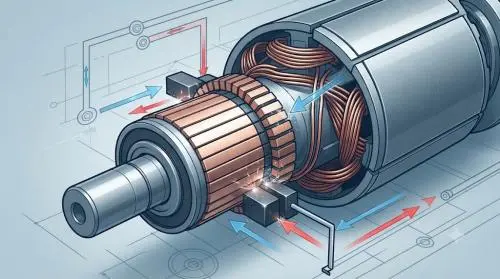
Understanding the Commutator in Automotive Starter Motors
When the driver turns the starter key, the starter motor goes through a complicated set of electrical steps. The Commutator for Auto parts is an important part of this process because it keeps the current flowing properly while the motor's armature spins very quickly.
The Basic Function of a Commutator
A Commutator for Auto parts is made up of segmented copper bars that are placed on the motor shaft and shielded from each other. Carbon brushes stay in touch with these pieces as the armature spins, which lets electricity flow into the windings. The commutator's main job is to change the direction of the current just at the right time. This keeps the magnetic field pushing the rotor forward and stops it from stopping.
Commutators used in car starters usually have 24 segments that are all the same size, like having an outer diameter of 28.5mm, an inner diameter of 12mm, and a height of 21.8mm. These specs make sure that it works with normal starter motor housings and keeps the best electrical contact area. The number of segments has a direct effect on how easily the motor works; in general, more segments mean less electrical noise and shaking.
How Commutators Convert Electrical Energy Into Mechanical Motion
When the starter motor gets voltage, it goes into the commutator parts through the brushes. Certain armature windings are energized by this current. This makes a magnetic field that reacts with fixed magnets or field coils around the rotor. When the armature starts to turn, the Commutator for Auto parts changes which windings get current. This keeps the spinning force constant.
This switching action happens many times per turn, so the materials used need to be strong enough to handle repeated electrical arcing and mechanical friction. Modern car commutators use high-grade resin insulators and copper alloys that contain silver to get surface hardness values between HV 90 and 120. This makes sure that the parts last longer, even when they are used in difficult circumstances.
Common Failure Modes and Their Impact
Professionals in quality assurance and procurement should know how commutators usually break down. Too much wear makes the surfaces uneven, which makes it hard for the brushes to touch the metal, which lowers the voltage and limits the turning power. Electrical arcing causes pitting, which lowers conductivity. Segment lifting, in which copper bars separate from the insulation core, causes the motor to fail completely.
These problems are made worse by environmental factors. Ingress of moisture leads to rust, especially in maritime or off-road settings. Extreme temperatures make it so that the thermal growth of the copper pieces and the resin insulation doesn't match up. Knowing these signs of failure helps repair teams take preventative steps before the starter motor breaks down completely.
Comparison of Commutator Components and Materials for Automotive Use
The choice of material has a big effect on how well a Commutator for Auto parts works, how much it costs, and how long it lasts. Knowing these differences helps you make smart purchasing choices that meet the needs of your individual purpose.
Silver Copper Versus Standard Copper Alloys
Instead of regular electrolytic copper, high-performance commutators use silver-bearing copper, which is written as Ag-Cu. Adding silver—usually between 0.03% and 0.08%—raises the temperature at which the copper softens to around 300°C, from 250°C for pure copper. This improvement, which at first glance seems small, is very important when the engine is running because surge currents of more than 800 amps cause a lot of localized heating.
In addition, silver improves electrical transmission by stopping oxides from forming on section surfaces. When standard copper is exposed to water and heat, it easily oxidizes, forming layers of resistance that stop the flow of current. Silver-bearing metals keep their lower contact resistance over thousands of starts, which means that the engine will crank more consistently over its lifetime.
Insulating Core Materials and Their Properties
The insulation core that separates the Commutator for Auto parts segments has to be able to handle both electrical stress and mechanical forces. The standard in the industry is glass-fiber reinforced phenolic molding materials, which have a dielectric strength of more than 3000 volts and stay the same size at temperatures ranging from -40°C to +120°C.
Even when they are put through centrifugal forces during high-RPM action, these modern resins keep their shape. Manufacturers move commutators at 1.5 to 2 times their normal speed during spin testing. During this step, the insulating material must stop section displacement, also known as "bar rising." This checks for manufacturing flaws before the parts reach the assembly lines.
Alternative insulating materials exist, including thermoplastics and ceramic composites, but for car uses, phenolic compounds offer the best mix of price, performance, and ease of production. Procurement professionals should make sure that providers do the right dielectric tests to make sure that the insulation between the pieces and the mounting shaft is still good.
Brush Material Considerations
Brush material choice has a direct effect on the commutator for Auto parts wear patterns, even though it is officially different from the commutator assembly. Copper particles in carbon brushes make them very good at conducting electricity, but they wear down more quickly against copper segments. Pure carbon brushes make commutators last longer, but they also make the electrical resistance a little higher.
OEM specs usually say what the brush is made of based on how often it will be used and the area it will be in. For cars that live in cold places, softer brush formulations that keep in touch during cold starts are best. On the other hand, business cars that start and stop often need harder brushes that last longer between service times.
Maintenance and Testing of Commutators in Starter Motors
Proactive repair plans make commutators last longer and stop them from breaking down when they're least expected, which can leave cars stuck or production lines stopped.
Electrical Testing Procedures
A full review of a Commutator for Auto parts starts with measuring the resistance between parts that are next to each other. Resistance from bar to bar should stay the same within 1%. Typical values range from 0.005 to 0.015 ohms, based on the size of the segments and the quality of the copper. Deviations show broken windings or bad links between segments and windings.
High-potential (hi-pot) testing checks the integrity of the insulation by putting voltages well above standard working levels, usually between 1500 and 2000 volts, between the commutator assembly and shaft. Any current loss means the insulation is damaged and needs to be replaced right away. This test is especially helpful when checking out new sources or looking into problems in the field.
Segment-to-shaft resistance measurements show that the shielding is correct all the way through the assembly. When the resistance numbers are infinite, it means that the insulation is healthy. On the other hand, any measurable conductivity means that the insulation is broken or contaminated with moisture, which needs to be fixed.
Mechanical Inspection Techniques
Visual analysis can show problems on the surface that electricity studies can't. Expert techs check the segment surfaces for glazing, which is a smooth look that means the brushes aren't sitting properly, or roughness that means there are abrasive particles in the motor case. Changes in color between parts could mean that the current isn't flowing evenly or that some areas are too hot.
Commutator shape can be measured with precision tools. Coordinate measuring machines (CMMs) check important measurements like the outer diameter, the total indicator runout (TIR), and the uniformity of the section height. Surface roughness testers confirm finishing below 0.8μm Ra, which makes sure that the brushes make good contact and there is little electrical noise.
The undercutting depth, which is the sunken space between segments, needs to be checked on a regular basis. Copper particles can fill in these gaps as brushes break down, making short circuits between neighboring segments. Keeping the undercut depth at the right level stops this type of failure and lets worn parts last longer.
Repair Versus Replacement Decision Framework
For cost-effective asset management, it's important to regularly check to see if repairs are possible. Commutators with light surface wear usually work well after being machined to recover their cylinder shape and finish. Specialized lathes take off 0.1 to 0.3 mm of material, which makes a new working surface without weakening the structure.
If there are deep pits, section lifting, or insulation loss, the whole thing needs to be replaced. If you try to fix a Commutator for Auto parts that is badly damaged, it might break early and could damage expensive starter motor parts. Professionals in procurement should set clear acceptance standards that explain when it is still more cost-effective to fix something than to find a replacement assembly.
For factories that make a lot of things, keeping a smart store of spare parts is cheaper than sending urgent items quickly. When you work with suppliers that can send up to 50,000 pieces in 30 days, you can keep your inventory in check without having too much cash stuck in parts.
Procurement Insights: Selecting and Purchasing Commutators for Auto Parts
Choosing the right supplier has a big effect on the quality of the product, how reliably it is delivered, and the total cost of ownership. Partners who can meet strict automotive standards are found through structured evaluation methods.
Critical Supplier Qualification Criteria
Quality certificates are the basis for judging a seller. ISO 9000 certification shows basic quality management skills, while IATF 16949 compliance shows process controls and methods for ongoing growth that are specific to the car industry. Suppliers with both certificates know the tracking rules, process validation methods, and risk reduction strategies that are needed for car use.
The technical skills go beyond just making things. Suppliers who have design patents and utility model patents show that they know a lot about engineering and can come up with new ideas. These intellectual property assets often lead to unique ways of making things that offer better control over dimensions, better material qualities, or lower costs than what you can get from regular sources.
When making precise automotive parts, manufacturing knowledge is very important. Suppliers that have been in business for 20 years have seen many changes in technology, the economy, and the rules. This institutional knowledge helps find possible problems during the design review stages and speeds up the solving of problems that arise in the field.
Evaluating Customization and OEM Capabilities
Modern supply lines for cars need to be able to adapt. Different car models have different commutators for Auto parts requirements, so providers need to be able to make unique dimensions, segment counts, and material formulations based on drawings from clients. Suppliers that can work with OEMs have engineering teams that can read technical specs, suggest ways to make designs better, and make working samples in short amounts of time.
Having samples available speeds up the testing process. Progressive sellers give away free samples so that purchasing teams can test the fit, form, and function of the goods before committing to large orders. When reviewing new suppliers in new geographic areas or finding alternative sources, this method for lowering risk is especially useful.
Specification freedom takes into account local opinions and government rules. Customization-friendly suppliers can change the chemical makeup of copper alloys, change the number of segments for different voltage systems, or add special finishes for harsh locations without charging too much for tools or requiring large minimum orders.
Logistics and Delivery Considerations
For global supply lines to work, suppliers need to offer a variety of shipping choices. When production builds are planned, sea freight is the most cost-effective way to ship large amounts of goods, and air freight makes it possible to quickly restock key parts when supplies are interrupted. International express services like DHL, FedEx, and UPS can help with sample delivery and emergency repair situations where the costs of downtime are higher than the costs of premium shipping.
For the Commutator for Auto parts, delivery dependability affects both the schedule for production and the cost of keeping goods on hand. When suppliers regularly meet 30-day lead times on production amounts of up to 50,000 pieces, it makes it possible to use lean manufacturing methods that reduce the need for working capital while keeping production going. Setting clear standards for lead times and performance measures during contract talks stops future disagreements and makes sure that everyone is responsible.
Specifications for packaging keep parts safe while they're being shipped internationally. Damage from vibration, contact, and weather exposure can be avoided with the right box design, pallet layout, and moisture barriers. Before approving full production releases, procurement teams should make sure that the packaging is adequate by trying it in travel.
After-Sales Support and Warranty Terms
A full guarantee shows that the supplier trusts the quality of the product. Standard one-year guarantees cover flaws in the manufacturing process and material failures. Some progressive providers offer longer warranties for users with high duty cycles or difficult conditions. Misunderstandings that hurt business relationships can be avoided by having clear guarantee terms that spell out the scope of coverage, how to file a claim, and when the problem will be fixed.
Respondent expert help is what sets exceptional providers apart from average ones. Having access to technical knowledge can help solve problems in the field, make installation processes more efficient, and find the root causes of mistakes that didn't happen as planned. This way of working together creates long-lasting ties that are more than just buying things from each other.
Procedures for returns and replacements should take into account how things work in the real world. Suppliers who offer advance replacement—shipping working units before getting broken ones—keep production from stopping too much. Streamlined RMA processes with clear documentation requirements speed up the resolution of problems while keeping accurate quality records for projects that aim to improve all the time.
Future Trends and Innovations in Automotive Commutators
Environmental laws and electric cars are always pushing Commutator for Auto parts technology to improve, which can be both a problem and an opportunity for buying pros.
Advanced Materials and Manufacturing Processes
Copper-tungsten alloys and ceramic-metal blends that offer better thermal performance are being looked into as alternate conductor materials. In high-temperature uses, these advanced materials keep their conductivity and don't wear down easily. This could mean longer service intervals and a lower total cost of ownership, even though the starting unit costs are higher.
With additive manufacturing, you can make shapes that are too complicated to be possible with standard cutting. Three-dimensional printing of commutator cores with built-in cooling pathways or improved magnetic qualities is a new technology that could change the way parts are designed in the next ten years. Procurement teams should keep an eye on these changes to find chances to be early adopters that give them a competitive edge.
Surface cleaning methods keep getting better. Nano-coating makes moving surfaces that are very smooth, which reduces brush wear and electrical noise. Plasma-enhanced chemical vapor deposition methods add protected layers at the molecular level. This makes corrosion resistance much better without affecting the limits for size.
Sustainability and Environmental Compliance
Material substitution programs are driven by government efforts to get rid of dangerous chemicals. Traditional commutators that have small amounts of lead or cadmium are being limited more and more, which means that suppliers have to change the shielding resins they use and the way they connect them. Proactive buying strategies find sellers who follow the rules before regulatory dates cause supply problems and price changes.
End-of-life dumping issues are taken care of by recycling services. Commutators are good options for material recovery projects because copper scrap is worth a lot. Suppliers that use closed-loop manufacturing methods and take-back programs show they care about the earth and may be able to lower the cost of raw materials by using recycled copper.
Making things that use less energy is in line with companies' goals for sustainability. Suppliers who invest in green energy sources, waste heat recovery systems, and process optimization tools may be able to lower production costs while also lowering their carbon footprints. More and more, procurement teams are adding environmental metrics to seller scorecards because they know that sustainable practices lead to better operations.
Conclusion
The Commutator for Auto parts is still an important part of car starting motors that has a direct effect on how reliable the vehicle is and how happy the customer is. To make smart choices about where to get things, people who work in procurement need to know about the features of materials, quality standards, and testing procedures. Supply chain resilience is achieved by choosing qualified providers with ISO 9000 and IATF 16949 certification, specialized skills shown through patent portfolios, and track records of on-time delivery. As car technologies move toward more electric vehicles, procurement teams can take advantage of better performance while keeping costs down and meeting government regulations by staying up to date on new materials and manufacturing techniques.
FAQ
What causes commutator failure in starter motors?
Commutator for Auto parts failure is usually caused by too much brush wear, which makes the contact surfaces uneven, electrical arcing, which causes pitting and carbon buildup, or heat stress, which lifts segments where copper bars separate from insulation cores. Degradation is sped up by things in the environment, like water getting in and trash from the engine bay. Inspections at regular times and good care habits greatly increase the service life.
How do I verify commutator quality before large-scale procurement?
A full quality check includes spin tests at 1.5 to 2x recommended RPM to see if any segments have moved, dielectric tests to make sure the insulation is solid above 3000 volts, and bar-to-bar resistance measures to make sure the uniformity is within 1%. Ask for certification paperwork from SGS or a similar third-party, use coordinate measuring machines to check the sizes, and try sample units for a short time under typical working conditions to see how well they work.
What advantages do silver-copper commutators offer over standard copper?
Copper alloys containing silver raise the melting point from 250°C to around 300°C, which keeps the structure strong during high-current cranking events. The silver presence keeps oxide formation to a minimum, which keeps the low contact resistance even after thousands of start cycles. These features lead to more uniform starting performance, lower voltage drops, and longer service intervals, which more than make up for the small increase in material cost.
Partner with ANGU for Reliable Commutator Solutions
ANGU is an expert at making high-quality Commutator for Auto parts that are designed to work in tough car situations. Our 24-segment commutators are made of silver-copper and have exact measurements: 28.5 mm in diameter, 12 mm in diameter, and 21.8 mm in height. They are made in our Xuzhou, Jiangsu facilities following strict IATF 16949 guidelines. We offer 50,000-piece production runs within 30 days, backed by 20 years of experience in the field and 3 idea patents and 6 utility model patents.
Our SGS-certified production methods guarantee consistent quality, and our full OEM/ODM customization options meet the needs of any application. For free samples, we offer flexible shipping through air freight, sea freight, or foreign express services. Our one-year guarantee program quickly fixes any problems with the quality of our products, including quickly replacing them when they need to be. As an established Commutator for Auto parts supplier, we know how hard it is for sourcing managers to keep costs down while also meeting reliability standards. Get in touch with chenrf@angu.com to talk about how our production skills and technical knowledge can help you improve product performance and strengthen your supply chain.
References
1. Johnson, M. R., & Peterson, L. K. (2021). Automotive Electrical Systems: Design and Performance. Detroit: Automotive Engineering Press.
2. Zhang, W., & Liu, H. (2020). Materials Science in Automotive Components: Copper Alloys and Applications. Journal of Automotive Engineering, 234(8), 1245-1258.
3. International Automotive Task Force. (2019). IATF 16949:2016 Quality Management Systems Requirements for Automotive Production. Southfield: IATF.
4. Anderson, T. S. (2022). Starter Motor Technology: From Mechanical to Electronic Systems. London: Professional Engineering Publishing.
5. Society of Automotive Engineers. (2020). Commutator Design Standards and Testing Protocols. SAE International Journal of Engines, 13(4), 567-582.
6. Williams, D. P., & Chang, S. Y. (2021). Reliability Engineering in Automotive Electrical Components. Proceedings of the Institution of Mechanical Engineers, Part D: Journal of Automobile Engineering, 235(6), 1678-1692.
YOU MAY LIKE