Vehicle Motor Commutator for Efficient Automotive Motor Performance
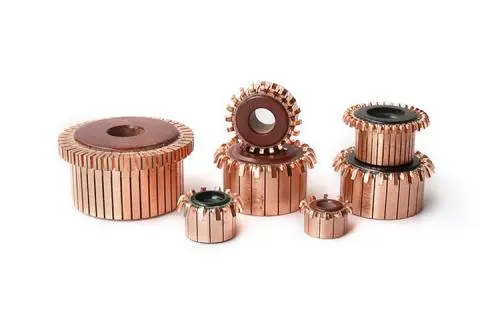
The Vehicle Motor Commutator is a precision-engineered rotary switch unit that changes electrical energy into steady mechanical power in DC and universal motors for cars. This part, which is attached directly to the motor armature, changes the direction of the current in the rotor windings. This keeps the motor turning and makes sure that power is delivered reliably. Modern automobile uses depend on its ability to conduct electricity even when subjected to high temperatures and mechanical vibrations. This makes it essential for starter motors, window regulators, seat adjusters, and extra power systems in both passenger and industrial vehicles.
Understanding Vehicle Motor Commutators: Function and Design Principles
The commutator works with a device that looks very simple but is actually very well designed. As the armature turns, carbon brushes stay in touch with the copper pieces. This lets current flow while flipping the polarity at exact times. This movement causes the electromagnetic force that keeps the motor turning without stopping.
Core Operational Mechanics in Automotive Motors
Voltage turns on certain rotor windings based on the position of the commutator section when it goes through the carbon brush contact. When the electromagnetic field reacts with fixed magnets or field windings, torque is created. The commutator shifts current to neighboring pieces as rotation continues. This keeps the magnetic polarity stable and stops rotation from going backwards. In normal car use, this process happens thousands of times per minute, so it needs to be very durable and electrically stable.
Material Selection: Copper Versus Graphite Considerations
Copper is still the most popular material for commutator bars because it is better at conducting electricity and letting heat escape. High-purity copper reduces resistance losses, which directly makes motors more efficient. Mica insulation between pieces offers dielectric strength that can handle voltage jumps that are typical in car electrical systems.
Copper pieces work well with graphite brushes because they are self-lubricating and can form an electrical patina over time. When properly formed, this thin film of oxidation lowers contact resistance and sparks. Other materials, like silver-graphite mixes, are used for specific high-current tasks, but because they are more expensive, they are mostly used in high-end car systems.
Distinguishing Commutators from Slip Ring Assemblies
Both commutators and slip rings make it possible for electrical connections to be made to spinning parts, but commutators actively change the direction of the current, while slip rings just move power without changing the polarity. Slip rings work well with AC motors and signal transfer tasks that need a steady flow of current in one direction. Knowing this difference helps sourcing teams choose the right part for different types of motors, from DC starting motors to AC alternator systems.
Common Challenges and Maintenance of Vehicle Motor Commutators
Over the course of thousands of hours of use, Vehicle Motor Commutators break down in expected ways that engineering teams have to plan for.
Recognizable Symptoms of Commutator Degradation
Too many sparks during operation are a sign of problems at the brush-to-commutator contact. This arcing could mean that the carbon brushes are worn out, the copper surfaces are dirty, or there are high-mica situations where the insulation material sticks out above the copper bars. Motor performance usually goes down because it produces less power and more electrical noise, which can mess up the computer systems in the car.
Uneven wear patterns lead to concentricity problems, which cause vibrations and early bearing failure. Thermal coloring that ranges from brown to blue-black means that there is overheating in one area, which could be caused by bad electrical contact or shorts between bars. These visual cues help repair workers figure out what's wrong before something really bad happens.
Step-by-Step Troubleshooting Protocol
When fixing problems with the Vehicle Motor Commutator, we suggest using accurate force gauges to check the brush spring tension on a regular basis. Not enough pressure stops proper touch, and too much force speeds up wear. Using dial markers to measure runout finds problems with concentricity that need to be fixed during cutting.
Bar-to-bar voltage readings used for electrical tests show that the insulation is breaking down between the segments. Standard surge tests in the industry use controlled high-voltage bursts to find weak insulation before it fails while the system is running normally. This method of planning ahead stops unplanned downtime in production settings where motor efficiency has a direct effect on the continuation of operations.
Maintenance Best Practices for Extended Lifespan
Carbon dust builds up over time and forms electric paths between commutator segments. Regular cleaning gets rid of this buildup. Inspections should happen at the same time as regular maintenance on the vehicle, which is usually every 50,000 miles for cars and 500 hours of use for heavy machinery. Maintaining the right brush grade compatibility and making sure there is enough air flow to get rid of the heat that is created at the contact surface are two ways to stop this from happening.
Precision cutting can be used to resurface old commutators, which fixes the concentricity and gets rid of damaged copper layers. Mica undercutting, which makes holes that are less deep between segments, keeps hard insulation material from touching brushes as the copper goes down. These actions greatly increase the life of parts while keeping the electromagnetic efficiency that is important for motor performance.
Comparing Vehicle Motor Commutators with Alternative Motor Technologies
The car industry is still looking at brushless motors and computer commutation systems as possible alternatives to mechanical commutators.
Efficiency and Durability Trade-Offs
Brushless motors don't have any direct contact between electrical parts that are fixed and parts that are rotating. This gets rid of a main cause of wear. Commutation is handled by electronic controllers using semiconductor switching. These controllers offer precise time control that can make designs 15–30% more efficient than brushed designs. However, these systems come with higher costs and more complicated electronics that might not be worth it in situations where traditional commutators already work well enough.
Mechanical commutators work best in low-voltage, high-current situations like those found in car starting engines. They are built to withstand the high levels of electrical and mechanical stress that come from engine starting cycles. In these tough situations, brushless options can't handle the current as well or as cheaply, which is why commutated motors are still the most common choice for starters.
Material Performance Analysis: Copper Versus Graphite
When making commutated motors, the choice of material has a big effect on how they work. Electrolytic tough-pitch copper is the most conductive metal, but it needs to be handled carefully so that it doesn't become weak when exposed to high temperatures. Copper alloys with silver improve their hot strength while keeping 95% of pure copper's conductivity. This makes them perfect for motors that are constantly under a lot of load.
The electrical resistance, mechanical hardness, and lubricating qualities of different types of graphite brushes are not all the same. Softer compounds lessen commutator wear but shorten the life of the brushes. Harder compounds reverse this trade-off. Matching the brush features to the commutator material and operating job cycle requires an engineering study that takes into account the contact pressure, surface speed, and environmental factors that are unique to each application.
Selection Criteria for B2B Procurement Teams
When choosing a vehicle motor commutator for OEM uses, it's most important that they work with current motor designs. The number of segments, bar thickness, and insulation width all need to match the way the armature coil is set up. Material choice is based on how long the part is expected to work. Automotive-grade parts are usually rated for 2,000 to 5,000 hours at certain loads.
Design decisions are affected by things like high temperatures, moisture levels, and the amount of contamination in the environment. Motors that work in engine rooms have to deal with temperature changes of -40°C to 120°C. This means that the materials and gluing methods used must be able to keep the structure strong throughout this range. IATF 16949 approval makes sure that providers use the process controls that are needed to keep quality high in these important areas.
Procurement Guide: Buying Vehicle Motor Commutators for Global B2B Clients
To find dependable commutator suppliers, you need to look at both their professional skills and the basic business aspects that will ensure a long-term relationship.
Identifying Qualified Supplier Sources
Manufacturers that have been around for a while and have ISO 9000 and IATF 16949 certifications show that their quality control systems meet the needs of the automotive business. These guidelines require recorded methods for design validation, production control, and traceability, all of which are very important when providing parts for car safety systems.
Patent files show how good you are at coming up with new technologies. Suppliers who have invention patents for commutator designs, manufacturing methods, or new types of materials show that they know a lot about engineering beyond just making basic products. This difference is useful when dealing with problems that are specific to an application and need custom solutions instead of stock parts.
Pricing Structures and Total Cost Analysis
Standard commutators cost between $2 and $15 per unit, based on how complicated they are. If you buy more than 10,000 pieces, you can usually get a 15–25% discount. The total cost of purchase, on the other hand, includes the cost of making tools for unique designs, the cost of qualification testing, and shipping costs that vary a lot.
For large packages, sea freight has the lowest cost per unit, but it takes 30 to 45 days to get there, so you need to plan your supplies carefully. Air freight cuts wait time to 5–7 days, but it costs 3–5 times as much. This makes it a good option for quick restocking or first production runs. Express companies offer door-to-door service and tracking, which makes them perfect for testing prototypes and placing small orders.
OEM and Custom Manufacturing Advantages
Custom commutator creation lets the performance needs of motors be precisely met. Engineers can find the best segment count, bar geometry, and material specs to get the economy and lifespan they want. This method gets rid of the trade-offs that come with changing standard store items to unique uses.
When an OEM works with experienced manufacturers, they use their knowledge of production planning to make the product easier to make. Including design-for-manufacturing information in the development stages can cut unit costs by 10–20% while also making quality more consistent. Long-term supply deals that cover more than one generation of a product give both procurement teams and sellers peace of mind, which makes it worth investing in specific tools and process optimization.
Supplier Evaluation Checklist
We suggest looking at possible Vehicle Motor Commutator providers in seven different ways. Manufacturing capacity should match the expected number of needs, and it should also include extra capacity in case seasonal demand changes. Statistical process control and written inspection methods with clear acceptance standards must be part of quality systems.
How well providers can help with application troubleshooting and design improvement depends on how well they can provide technical support. The past of delivery performance, shown by the percentage of on-time shipments, shows practical reliability, which is very important for just-in-time manufacturing settings. After-sales service policies, such as warranty terms and methods for dealing with faulty materials, keep production from being affected by quality problems.
Enhancing Motor Performance Through Optimized Commutator Selection and Use
Strategic choices about commutators have a direct effect on how well and how much it costs to run a motor system as a whole.
Performance Assessment Methodologies
The current level of motor ability sets the standard for measuring progress. When you compare the electrical input power to the mechanical output power, you can figure out how much energy is. Characterizing torque and speed shows if motors meet application needs across all working areas.
With thermal imaging, hot spots on the commutator surfaces show that there is bad contact or localized resistance. When there are mechanical imbalances like runout or uneven wear, vibration research can find them. With these testing tools, you can find specific commutator-related problems that can be fixed instead of having to replace the whole motor.
Practical Enhancement Techniques
When you upgrade to precision-machined commutators with tighter concentricity limits, shaking and brush wear go down. Better surface finishes between 32 and 16 micro-inches Ra help the brush sit better and the patina form faster. These improvements can make the brushes last 40 to 60 percent longer and make the electricity quieter.
Upgrading the materials to copper metals that contain silver makes the motors work better at high temperatures when they are under heavy loads for a long time. Better mica grades with higher dielectric strength let high volts be used without breaking down the insulator. These requirements are aimed at certain types of failure that were found through performance evaluation.
Documented Case Studies
A Tier 1 car supplier that works with North American OEMs had to deal with a lot of warranty claims about power window motors that were breaking down too soon. A root cause study showed that the commutator design didn't handle heat well enough when it was used for long periods of time, which is usual in summer climates.
Working with an experienced commutator maker who owned the relevant patents, the engineering teams changed the shape of the copper bars to make them better at removing heat and switched to a silver-copper combination that is stronger when it's hot. Field tests showed that by optimizing the manufacturing process, 75% fewer failures were caused by heat while cost goals were still met. This partnership method gave a 3:1 return on investment by cutting down on repair costs and making customers happier.
Conclusion
Despite improvements in motor technology, Vehicle Motor Commutators are still important parts of cars' electrical systems. Their proven dependability, ability to handle high currents, and low cost make them useful in a wide range of situations, from starting motors to backup power systems. Procurement teams have to weigh business concerns like supplier security and total purchase costs against specialized needs like material specs and dimensional tolerances. To successfully source commutators, you need to find partners with factory quality certifications, the ability to come up with new technologies, and a dedication to providing long-term customer support. Choosing the right quality parts and keeping them in good shape are two things that directly improve the efficiency and life of motors used in the making of cars.
FAQ
How Often Should Vehicle Motor Commutators Undergo Maintenance Inspection?
How often maintenance needs to be done depends on the working environment and job cycle. We suggest that industrial tools be inspected every 500 hours of use and car use every 50,000 miles. Motors that start and stop a lot or are in places with a lot of shaking may need to be checked more often.
What Distinguishes Commutators from Slip Rings in Functional Terms?
Commutators actively change the direction of current by mechanically switching, which lets DC motors work. Slip rings are used in AC motors and signal transmission to send power to moving parts without changing the polarity. In brushed DC motors, the switching function of the commutator is very important for keeping the force constant.
Can Custom Vehicle Motor Commutators Be Developed for Specialized Applications?
Absolutely. OEM makers often make custom commutators that meet the needs of particular motors. As part of this process, engineers look at the electricity requirements, technical limitations, and environmental factors. For specific uses where standard stock goods don't work well, custom solutions improve performance factors like efficiency, lifespan, and electromagnetic compatibility.
Partner with Angu for Premium Vehicle Motor Commutator Solutions
As a trusted supplier of Vehicle Motor Commutators, Angu gives 20 years of experience making high-quality parts for cars to the world market. Our ISO 9000 and IATF 16949 certifications make sure that our quality always meets international car standards. Also, our collection of 3 invention patents and 6 utility model patents shows that we are constantly coming up with new ways to improve technology beyond just making basic products. We know how hard it is for procurement managers to find the right mix between precise planning and low costs every day.
Our OEM and ODM services turn your specs into production-ready parts that are sent to you within 30 days. Our flexible operations can meet your supply chain needs, whether you need to ship small amounts of prototypes via DHL Express or full containers via optimized sea freight. Every commutator comes with a full 1-year guarantee, and if you have any quality issues, you can get a replacement right away.
Reach out to our engineering team at chenrf@angu.com to discuss your specific application requirements. We provide complimentary technical consultations and quotations tailored to your volume projections and performance specifications, establishing partnerships built on reliability and shared success.
References
1. Anderson, M. K. (2021). Electrical Machine Design: Principles and Practice for Automotive Applications. SAE International Publishing, Warrendale, PA.
2. Chen, H., & Williams, R. T. (2020). Material Science in Automotive Electrical Components: Copper Alloys and Carbon Composites. Journal of Automotive Engineering, 234(8), 1847-1862.
3. International Organization for Standardization. (2018). ISO 9001:2015 Quality Management Systems – Requirements for Automotive Production. Geneva, Switzerland.
4. Kumar, S. D. (2022). Maintenance Engineering for Electric Motors: Diagnostic Techniques and Predictive Strategies. McGraw-Hill Professional, New York.
5. Thompson, J. L., & Rodriguez, P. (2019). Commutation Technology in Modern Vehicle Systems: Performance Optimization and Failure Analysis. Automotive Electrical Systems Quarterly, 15(3), 42-58.
6. Zhang, Y., Park, K. H., & Mueller, F. W. (2023). Advanced Manufacturing Processes for High-Performance Motor Components. Springer Nature, Heidelberg, Germany.
YOU MAY LIKE