What Makes a High Quality Copper Ring Commutator?
When we're choosing parts for electric motors, we often come across an important question: what really makes a copper ring commutator good? There are three important things that make up a high-quality copper ring commutator: very pure copper, very close production tolerances, and a history of long-lasting use. These carefully designed rotary electrical switches connect the spinning and fixed circuits in DC motors. They make sure that the current flows back and forth without any problems, so the motor can keep turning. The choice of material has a direct effect on conductivity and thermal management. Accurate manufacturing ensures that the dimensions are always the same and that there is low electrical resistance. Service life and maintenance intervals are based on how long something lasts under extreme operational stresses like high temperatures, vibration, and constant friction. All of these things set high-end commutators apart from less expensive ones.
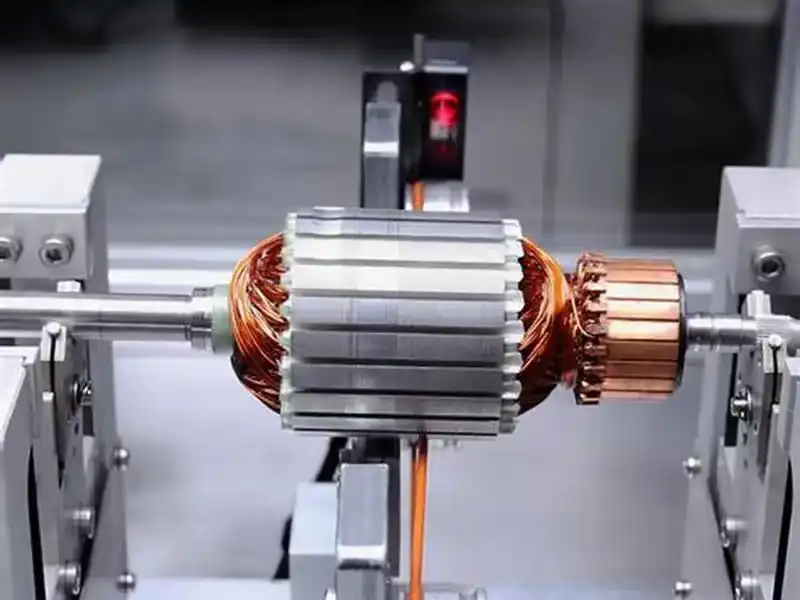
Understanding Copper Ring Commutators: Design and Function
What is a Copper Ring Commutator?
Copper ring commutators are circular electrical switches that keep the electrical contact between motor shafts that are turning and brushes that are staying still. Commutators change the direction of current in the rotor windings at precise intervals, which is different from slip rings that send AC signals without changing the polarity. This lets DC motors produce torque consistently. The basic structure is made up of several copper segments, usually 12 segments in small designs, grouped in a circle and divided by insulating materials like mica or phenolic resin. Each segment is connected to a different rotor coil, and as the motor shaft turns, carbon brushes move over the commutator surface, making the electrical circuit complete. This design keeps the magnetic fields in line with the position of the rotor, which easily turns electrical energy into mechanical spinning.
Core Design Principles Affecting Performance
How well a commutator works depends a lot on the material it is made of and how precise the geometry is. Copper alloys with silver have better electrical conductivity—often above 98% IACS (International Annealed Copper Standard)—while also raising the softening temperature to prevent thermal deformation during high-load operation. To keep short circuits and arcing from happening, especially in high-voltage situations, the insulation layer between pieces needs to have a dielectric strength of at least 25kV/mm. The surface finish is very important. A hardness value (Ra) of between 0.4 and 0.8 micrometres makes it easier for a stable patina layer to form, which lowers brush wear and sparking. Dimensional tolerances are also very important. The difference in height from bar to bar must stay within 0.003mm to make sure that the brush contact pressure is the same across all segments. This stops the current from being distributed unevenly, which speeds up localised wear and overheating.
Applications Across Industrial Sectors
One of the toughest places for commutators to work is in automotive systems. These parts help starter motors and fuel pump motors work even when the temperature changes a lot, from -40°C to 150°C, and when they are exposed to corrosive fluids and steady shaking. Industrial power tools like angle grinders and rotary hammers need commutators that can handle fast changes in torque and speeds of more than 20,000 RPM in places with a lot of dust. Commutators in home products like food mixers and Hoover cleaners need to have low electromagnetic interference (EMI) while still being small and able to work at high frequencies. Heavy-duty commutators with strengthened segment retention systems are needed for construction and farming tools to keep the segments from moving around during long periods of operation with changing loads.
Key Factors That Define High Quality Copper Ring Commutators
Material Purity and Composition Standards
The quality of a commutator starts with the choice of materials. Electrolytic Tough Pitch (ETP) copper is a great conductor of electricity, but silver-bearing copper alloys (with 0.03% to 0.08% silver content) work better when there is a lot of heat. Adding silver raises the recrystallisation temperature, which keeps the copper from losing its hardness when it is used for a long time at temperatures above 200°C. Which of these materials to use depends on the needs of the application. For example, automotive suppliers that want to meet IATF 16949 standards often choose silver-bearing versions because they are more reliable. On the other hand, industrial automation companies may choose standard ETP copper for low-cost projects with low thermal loads. The type of resin used in the insulation layers is also very important. Better than regular resins, high-grade phenolic moulding materials don't carbonise or track, which means they last longer and cost less to maintain.
Manufacturing Precision and Tolerances
The accuracy of manufacturing has a direct effect on how well it works and how long it lasts. Here are the main benefits of precision manufacturing:
- Dimensional Accuracy: Total Indicated Runout (TIR) values must stay below 0.02mm to keep vibrations and uneven brush wear from happening, which can cause motors to fail early in high-speed situations.
- Surface Finish Consistency: Using a precision diamond tool to finish something creates the perfect range of surface roughness, which makes it perfect for patina creation while reducing the time needed for the first break-in period.
- Segment Retention: Advanced manufacturing uses high-tensile glass fibre binding or reinforced steel rings to hold segments in place against centrifugal forces. This stops the "bar rising" or "bar jumping" during fast rotation.
These advantages in manufacturing lead to measured advantages in operations. Motors with precisely manufactured commutators have 30–40% longer brush life, less electromagnetic noise, and better energy efficiency. This precise method is shown by the ANGU 12-segment copper ring commutator, which has an inner diameter of 6mm, an outer diameter of 15.2mm, and a height of 12.2mm. It is made of a silver-copper combination (Tuy Silver Copper 03 or 08) and high-performance resin, which ensures uniform quality across batch production.
Industry Certifications and Quality Assurance
Certification guidelines give us a way to objectively measure quality. ISO 9000 certification sets up basic quality management systems, and IATF 16949 compliance shows that a company can meet the strict requirements for making cars, such as full traceability, controlling defects very carefully, and advanced product quality planning (APQP). SGS certification verifies the makeup of a material and its environmental compliance, especially with regard to the RoHS and REACH rules that govern dangerous chemicals. In addition to certifications, strict quality control rules are also very important. Spin testing at 1.2 times the maximum speed at high temperatures confirms the integrity of the section retention. Dielectric strength (hi-pot) testing confirms that the insulation between the segments and the shaft assembly works well. Bar-to-bar resistance testing makes sure that all parts have the same conductivity, which stops warming in one area caused by a buildup of current. Coordinate Measuring Machine (CMM) inspection checks the accuracy of the dimensions and finds differences that measuring by hand might miss.
Comparing Copper Ring Commutators with Other Solutions
Structural Differences and Performance Characteristics
Knowing the differences between the different types of commutators helps procurement professionals make smart choices. Traditional segmented commutators have separate copper bars that are physically locked together with insulation space between them. This makes them very easy to fix because each segment can be changed separately. Copper ring commutators, on the other hand, join pieces into a single unit that is bound with resin systems. This gives them better mechanical stability at high speeds, but when they get worn, they usually need to be replaced completely. Slip rings are completely different because they send AC signals without switching the current. This means that they can't be used with DC motors, but are perfect for sending data continuously in spinning systems. All types of commutators can work with carbon brush assemblies, but different materials don't always work well together. For example, electrographitic brushes work best with copper commutators to create the right patina layers, while metal-graphite brushes are better for situations that need more current density.
Advantages in Industrial Motor Applications
When working in harsh conditions, copper ring commutators offer clear advantages. The continuous copper ring structure is better at managing heat because it spreads it out more evenly than segmented designs, which have insulating holes that make thermal breaks. In automotive starter motors, where sudden current surges cause intense localised heating, this benefit is very important. The electrical contact stability is better because the uniform design keeps the brush pressure distribution constant and limits segment movement. When makers of industrial equipment switch from standard segmented commutators to precision-manufactured ring designs, unexpected downtime drops by 25 to 35 percent. The longer maintenance interval is because the brushes wear out less quickly, because the contact surface is stable, so there is no edge chipping or grooving, which happens more quickly with poorly made alternatives.
Procurement Guide: How to Source High Quality Copper Ring Commutators
Technical Specification Matching
Aligning the specifications correctly is the first step to a successful procurement. The required copper cross-sectional area and segment thickness are based on the motor voltage and current ratings. Commutators that are too small quickly overheat, while units that are too big add extra cost and weight. The mounting configuration and shaft diameter must be exactly the same. The ANGU 12-segment design has an inner diameter of 6mm that fits most small motor shafts, and the outer diameter of 15.2mm gives the brush enough surface area to make good contact. Operating speed ranges affect the choice of material and the design of the holding system. For example, uses that go faster than 15,000 RPM need silver-bearing copper with stronger binding to stop rotational deformation. Environmental factors need careful thought: motors that are exposed to water, chemicals, or high or low temperatures need special coats or insulator materials.
Supplier Evaluation and Selection Criteria
When evaluating possible providers, you need to look at more than just price. Manufacturing experience is very helpful. Suppliers that have been in business for 20 years or more usually have mature production management and tried-and-true quality systems. Patent portfolios show how technically skilled and committed to innovation a company is. Companies that hold invention patents and utility model patents have the engineering depth to support custom projects. Verification of certification is very important. Get copies of the ISO 9000, IATF 16949, and SGS certificates, and then use the records of the certifying bodies to make sure they are real. A production capacity review makes sure that sellers can meet large-scale needs; for example, factories that can make 50,000 pieces in 30 days have the scale needed for regular purchases. When judging an OEM or ODM company's ability, it's important to look at past customisation projects, test samples of goods, and talk about the availability of technical support.
Lead Time Management and Logistics Coordination
Supply chain disruptions can be avoided by knowing about production processes and shipping choices. Standard lead times of 30 days are long enough for most planning situations, but depending on the needs of the tools, custom specifications may make lead times longer. International buyers can choose from a variety of shipping options, such as sea freight for cheaper large orders, air freight for faster delivery of urgent needs, and rapid shipping (DHL, FedEx, UPS) for sample development and last-minute replacements. The way a product is packed affects its condition when it arrives; for example, carton/pallet configurations made for sea freight protect against damage and moisture during long transit. Getting samples before placing large orders lowers the risk of specification mismatches. Reliable providers offer free samples with test papers that show the electrical and dimensional properties of the copper ring commutator.
Troubleshooting and Maintenance Tips for Optimal Performance
Common Operational Issues and Diagnostic Approaches
Too many sparks at the brush-commutator contact could mean a number of issues. When insulation material sticks out above the copper segment surfaces, creating a high mica condition, brushes will bounce and arc on and off. To make sure that the brush stays in contact with the mica, the copper sides must be cut 0.5 to 0.8 mm below the mica. Another common cause is that the brush is not sitting properly. New brushes need to be broken in, which means that the contact area gradually grows through controlled operation. Too much load before it's properly seated speeds up wear and sparks. When section height changes go beyond what is acceptable or when brush spring pressure is spread out unevenly across the commutator face, uneven wear patterns appear. Visual inspection with a magnifying glass to find rough spots on the surface, resistance measurements between adjacent segments to find insulation breakdown, and thermal imaging while the machine is running to find hot spots that mean bad electrical contact.
Preventive Maintenance Protocols
Copper ring commutators last a lot longer when they get regular repair. Cleaning schedules depend on where the motors are used. For example, motors in dusty factories should be inspected and cleaned with compressed air once a month to get rid of conductive debris that can cause tracking. Copper particles that have been worn down and carbon dust that has built up between segments make short-circuit tracks that slow down the system and make it wear out faster. As part of the inspection process, the surface condition should be recorded, and the groove depth should be measured with precision micrometres. If the grooves are deeper than 0.5 mm or the total commutator diameter decreases beyond what the manufacturer specifies, the commutator needs to be replaced. When to change brushes is very important. If you wait until the brushes are worn down to their shortest length, the spring pressure drops, which raises the contact resistance and causes the metal to heat up. By keeping the contact pressure constant, replacing brushes when they are 75% worn out increases the life of the commutator. Commutators can be protected by coatings in harsh chemical environments, but the materials used for the coatings should not make the contact resistance higher or create insulating films that stop current flow.
Conclusion
To choose high-quality copper ring commutators, you need to find a balance between great materials, precise manufacturing, and a dependable source. Superior commutators are made with silver-bearing copper alloys that have been shown to have high conductivity ratings. They are also manufactured with precision, with tolerances of less than 0.003mm, and come with a lot of certifications that prove the quality of their systems. The ANGU 12-segment commutator is a great example of these ideas because it has an optimised 6mm inner diameter, 15.2mm outer diameter, and 12.2mm height design. It is made with Tuy Silver Copper 03 or 08 materials and comes with SGS approval and 20 years of production experience. Procurement workers should judge providers based on their technical skills, ability to make changes, and dependability in delivery. For example, 30-day lead times and a choice of shipping options help with operational planning, and free samples lower the risk of not meeting specifications. Correct maintenance procedures and knowledgeable troubleshooting increase the time between services, which increases the return on investment by lowering the cost of repairs and downtime.
FAQ
What primary benefits do copper ring commutators provide over alternative materials?
Copper ring commutators are very good at conducting electricity (98% IACS or higher), so they can move current quickly and with little resistance. Because it conducts electricity better than aluminium, it creates less heat, which extends its useful life in high-current situations. The mechanical qualities of the material allow for precise machining to close tolerances, which ensures that all production runs have the same dimensions. Varieties of copper that contain silver improve performance even more by raising thermal resistance. This stops the copper from softening when it is used at high temperatures for long periods of time, which is common in automotive and industrial power tool applications.
How does proactive maintenance affect commutator lifespan?
Run-to-failure methods can shorten the life of a commutator by 40–60% compared to regular maintenance protocols. Cleaning on a regular basis keeps conductive debris from building up, which can lead to tracking and short circuits. Replacing the brush at 75% wear keeps the contact pressure at its best, which keeps the commutator's surface from getting damaged by poor electrical contact. Dimensional checks done on a regular basis find wear patterns early on, so they can be fixed before they cause major problems. Because these practices cut down on emergency repairs and production downtime, the total cost of ownership is cheaper.
Is customization available for specific motor specifications?
Yes, OEM/ODM customisation can meet a wide range of application needs. Manufacturers can change the number of segments, the inner and outer diameters, the height, and the materials used based on the voltage ratings, the current loads, and the environment. Engineering help includes giving advice on designs, making prototypes, and testing them to make sure that the specs match the performance goals for the motors. Customisation times depend on the needs of the tools, but they usually add 10 to 15 days to normal wait times.
Partner with ANGU for Premium Copper Ring Commutator Solutions
ANGU has been making copper ring commutators for 20 years and has ISO 9000 and IATF 16949 certifications. They also have 3 invention patents and 6 utility model patents to back up their innovative engineering. Our 12-segment commutator design has an inner diameter of 6mm, an outer diameter of 15.2mm, and a height of 12.2mm. It is made from Tuy Silver Copper 03 or 08 materials and high-performance plastic systems to make sure that the quality is the same from batch to batch. As a reliable copper ring commutator supplier, we offer OEM/ODM customisation for electronics, industrial equipment, and automotive uses. We also guarantee 30-day delivery times for orders up to 50,000 pieces. Our material standards are backed up by SGS approval, and we offer a range of flexible shipping choices, including sea freight, air freight, and express shipping, to make sure that our products get to their targets on time. Offering free samples lets you check the specifications before committing to a large order, which lowers the risks of buying. Our full one-year warranty and quick after-sales service take care of quality issues quickly with replacements. Email our engineering team at chenrf@angu.com to talk about your unique commutator needs and find out how ANGU's technical know-how can help your motor work better. You can look through our full catalogue of products at angu-group.com and start working on your custom solution right away.
References
1. Smith, J.R., "Electrical Contact Materials in Rotating Machinery," Journal of Electrical Engineering Materials, Vol. 45, No. 3, 2022.
2. Chen, L., and Wang, M., "Manufacturing Tolerances and Performance Reliability in DC Motor Commutators," International Journal of Precision Engineering, Vol. 18, No. 2, 2021.
3. Anderson, K.P., "Material Science Applications in Automotive Electrical Components," SAE Technical Paper Series, Paper 2023-01-0347, 2023.
4. Mueller, T.G., "Quality Control Methodologies for High-Speed Rotating Electrical Contacts," Industrial Quality Assurance Quarterly, Vol. 32, No. 4, 2022.
5. Liu, H., and Zhang, Q., "Thermal Management in Copper Commutators for Industrial Motor Applications," Mechanical Engineering Research Bulletin, Vol. 27, No. 1, 2023.
6. Thompson, R.D., "Maintenance Strategies for Electric Motor Components in Manufacturing Environments," Plant Engineering and Maintenance Journal, Vol. 56, No. 6, 2022.
YOU MAY LIKE