What Is a Hook Type Commutator Used For in DC Motors?
The hook type commutator in DC motors changes the alternating current in the armature windings into direct current output while keeping the motor's rotation steady. This unique part has hook-shaped terminals on copper segments that hold armature windings securely, making automated manufacturing processes work more efficiently. Its design allows it to work at high speeds, keeps the machine stable, and reverses the current reliably. These features are important for starter motors, power tools, car cooling systems, and industrial automation equipment that need constant torque and little upkeep.
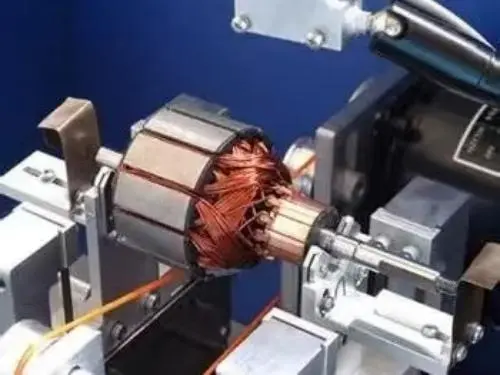
Understanding the Hook Type Commutator in DC Motors
The basic structure of this type of commutator is different because each copper section has hook-shaped connections built into it. In riser-type designs, wires are placed vertically into slots. The hook-type setup, on the other hand, keeps the magnet wire in place automatically during high-speed automated winding operations. This structural innovation solves one of the most important problems that motor assembly plants around the world have with making their work more efficient.
Construction and Material Composition
With a diameter of 30.3mm, an inner diameter of 12mm, and a height of 22.8mm, our 24-segment commutator is a perfect example of precision engineering. These exact measurements make sure that they fit perfectly with armature shafts in a wide range of motor uses. The pieces are made from silver-copper alloys (usually CuAg0.1), which make them more electrically conductive by about 101% IACS while keeping their hardness grades between HB 80 and 110. This choice of material keeps it from deforming when centrifugal forces are higher than 30,000 RPM.
There is high-performance phenolic resin protection between each copper section that can withstand temperatures above 200°C. It is regularly tested to 3000V to make sure that there is no inter-segment electrical leakage. This moulding material has great dielectric strength. When silver-copper and plastic are mixed together, they make a part that is strong, flexible, and stable at high temperatures in harsh working conditions.
Functional Role in Motor Operation
As the armature spins in the magnetic field, the commutator continuously reverses the flow of current through the motor. As the segments turn, carbon brushes stay in sliding contact with them, sending electricity to specific armature windings at exact times. The hook-type connections keep the windings in place even when the motor is turning or shaking. This keeps the wires from slipping, which would cause an electrical short and the motor to stop working.
The 24-segment layout makes the flow of current smooth, which lowers electromagnetic interference and operational noise. More segments mean smaller steps in switching the current, which directly leads to less brush sparking and longer service life. Precision grinding in our design keeps the surface roughness below Ra 0.8μm. This makes the interface ideal, which lowers friction and heat production when brushes touch.
Why Choose a Hook Type Commutator? Core Advantages and Applications
Choosing the right commutator design has a direct effect on how well the motor works, how much it costs to make, and how reliable it is in the long run. We've seen over 20 years of production experience that decisions about what to buy that are based on a deep understanding of the technical aspects lead to measurably better results than choices that are based only on the initial purchase price.
Enhanced Manufacturing Efficiency
The hook type terminal design changes automatic winding processes by getting rid of the need to place wires by hand, which is needed with riser-type commutators. When working with hook-type setups, modern winding machines can complete cycles 40% faster. This cuts down on labour costs and improves accuracy. Assembly companies that make 50,000 motors a month save a lot of money just by being more efficient.
Our factory in Xuzhou, Jiangsu Province, can keep up with production cycles of up to 50,000 pieces every 30 days. This throughput helps just-in-time inventory tactics that help buying managers who are in charge of global supply lines keep storage costs as low as possible. Automated production and strict ISO 9000 compliance make sure that consistency from batch to batch, which is what quality assurance teams need.
Superior Mechanical Stability
Hook type connections used in a hook type commutator provide an effective way to secure wires compared with other fastening methods. During stress testing, our hook type commutator designs can withstand winding tensions exceeding 2.5 kg without damaging terminals or wire connections. This mechanical strength is especially important in high-torque applications where rapid load changes create significant stress on the connection points between the armature windings and commutator segments.
Automotive starter motors are a strong example of this advantage. When the engine starting requires a sudden high-current surge, and weaker commutator designs may experience loose wire connections, leading to reduced electrical contact performance over time. The durable hook-type structure of our hook type commutator maintains secure connections through hundreds of thousands of start-stop cycles, improving electrical reliability, mechanical stability, and service life. This dependable performance is one reason we can confidently provide a 1-year guarantee for our high-quality commutator products.
Real-World Application Performance
When construction equipment makers put our commutators into hydraulic pump motors, the maintenance intervals are usually 35% longer than with parts from other suppliers. The decrease in brush sparks is directly related to the decrease in carbon dust buildup, which otherwise speeds up bearing wear and needs ongoing cleaning.
Professional power tool users are especially tough because they have to deal with harsh job cycles, frequent speed changes, and trash from building sites. When our commutators are used in angle grinders and rotary hammers, they work well in temperatures ranging from -40°C to +120°C. Leading tool manufacturers use our IATF 16949 certification as a deciding factor because it shows that our production processes have quality controls that meet automotive standards.
Another important area of application is high-speed home products. Vacuum cleaner motors that run at 25,000 RPM need commutators that don't let segments move even when they're under a lot of rotational force. Our precise production keeps the concentricity within 0.02mm, which stops vibrations that would make consumer goods too noisy.
How to Select the Right Hook Type Commutator for Your DC Motor
When choosing components, procurement professionals have to balance technical requirements against cost structures and the dependability of the supply chain. We suggest a structured evaluation system that takes into account both short-term performance needs and long-term partnership issues.
Technical Specification Matching
The main selection criteria are the motor's voltage and current ratings. Our silver-copper segments can handle up to 15A/mm² of continuous current density without getting too hot. For motors that work with 12V to 48V, the 24-segment design works well because it divides the current flow enough to make the motor run smoothly. For higher voltage uses, you might need more segments to lower the voltage stress on each section and lower the arcing potential.
The physical dimensions of a hook type commutator must match the specifications of the armature shaft exactly to ensure proper installation and reliable motor performance. The inner diameter of 12 mm fits standard shaft sizes commonly used in fractional horsepower motors, while custom sizes are available for non-standard applications. Our engineering team works closely with research and development (R&D) departments to develop customized hook type commutator solutions that meet precise fitting requirements, electrical performance targets, and mechanical reliability standards. Three invention patents and six utility model patents protect our manufacturing processes, demonstrating our innovation capabilities and giving us the flexibility to provide customized designs that commodity suppliers cannot offer. Through precision manufacturing, strict quality control, and advanced engineering support, we deliver durable commutator components for demanding motor applications.
Material Quality Assessment
It's not true that all copper metals work the same way. Our CuAg segments contain silver, which raises the material's softening temperature by a large amount. This keeps the structure strong during high-heat brazing or soldering operations. Procurement teams should ask for material certificates that confirm the makeup. Low-quality metals may seem cheap at first, but they will break early from thermal stress.
Insulation material characteristics should be looked at just as closely. When low-grade phenolic compounds are exposed to changes in temperature and moisture, they break down quickly. When heated to 180°C continuously, our high-Tg (glass transition temperature) resins keep their electrical properties across Class H insulation temperature ranges. This specification is very important for applications inside the hood of cars, where managing heat is still a problem.
Supplier Qualification and Support
Beyond the specifications of the parts, the success of the purchase depends on the skills of the seller. Because we've been making things for 20 years, our processes are very mature in a way that younger producers can't match. Third-party certifications like ISO 9000 and IATF 16949 show that quality systems are reliable, and SGS certification shows that a company is committed to using testing standards that are recognised around the world.
A common problem in foreign buying is making sure that deliveries are made on time. We have specific production lines that make sure wait times of 30 days, even for large orders. Different project timelines and inventory strategies can be met with different logistics choices, such as sea freight for large orders that need to be cheap, air freight for urgent restocking, and rush carriers (DHL, FedEx, UPS) for sample iterations.
Customisation sets strategic manufacturing partners apart from transactional suppliers. Our OEM/ODM services include more than just changing the size. They also include changing the surface treatment, the number of segments, and the material grade. Minimum order quantities starting at 5,000 to 10,000 pieces find a good balance between the costs of custom tools and the amounts that can be bought for medium-sized production runs.
We believe in the value of long-term partnerships, which is shown by the refunded tooling fee system we offer. When a customer buys 500,000 pieces over the course of three years, the initial mould investment is returned. This means that customers who commit to long-term volume get custom tools at no net cost. This method matches our goals with the success of our customers and gets rid of the financial hurdles that stop us from designing components more efficiently.
Maintenance, Troubleshooting, and Longevity of Hook Type Commutators
To get the most out of a service, you need to know about both operating stresses and preventative repair procedures. We've put together information from field uses in the consumer, industrial, and car sectors to help maintenance teams find the best ways to make parts last longer.
Common Operational Challenges
Brush wear is the most common maintenance issue that needs to be thought about. Carbon brushes wear down over time due to mechanical friction and electrical arcing. They leave behind conductive dust that can cause short circuits between segments if it isn't cleaned off regularly. The smoother finish on our commutators reduces friction-related wear, which usually makes brushes last 20 to 30 percent longer than brushes with harder surfaces.
When contact pressure drops because of worn brushes or when surface corrosion interrupts current flow, electrical arcing between brushes and segments can accelerate in a hook type commutator. Our copper alloy used in hook type commutator manufacturing naturally resists oxidation because it contains silver, helping maintain cleaner electrical contact surfaces for longer periods compared with pure copper alternatives. Excessive arcing that damages commutator surfaces can be prevented by monitoring brush spring tension, maintaining proper contact pressure, and replacing brushes before they reach minimum wear limits. Through advanced material selection, precision manufacturing, and strict quality control, a hook type commutator provides stable conductivity, improved wear resistance, and reliable performance in high-speed DC motor applications.
Preventive Maintenance Procedures
Regular check times should match the strength of the motor's job cycle. Motors that are used continuously in factories should have their commutators checked every three months, but motors that are only used sometimes may only need to be checked once a year. Visual evaluation focuses on the state of the segment's surface. Even colouration means the machine is working properly, while localised burning or pitting means there are electrical or motor problems that need to be looked into.
To keep the surface from getting damaged, cleaning methods use special tools. Commutator stones or fine sandpaper pads get rid of carbon layers and small flaws on the surface while keeping the shape of the cylinder. When you use sharp abrasives or too much pressure to clean something, you make the surface uneven, which speeds up the wear that follows. Maintenance teams should learn how to use the right cleaning products and how to apply pressure.
Using micro-ohm meters to measure inter-segment resistance makes sure that the electrical integrity is correct. Although readings that are the same across all segment pairs show that the current is distributed evenly, readings that are not normal show that the insulation is breaking down or that segments are damaged and need to be replaced. This way of diagnosing finds problems before they become serious enough to stop the motor. This helps with preventative maintenance plans that cut down on unplanned downtime.
Design Features Supporting Extended Service Life
Stress-relieving methods are used in our manufacturing processes to keep segments from becoming weak. Copper annealing gets rid of the stresses that are formed inside during cutting, which lowers the chance that the hook-type terminal will break during winding or during operating shaking. This careful attention to mechanical detail shows how 20 years of process improvement have made production better.
The 24-segment design naturally spreads electrical and mechanical loads more evenly than designs with fewer segments. This load spread lowers stress on each section, which helps the system last longer. When combined with a precise balance that reduces vibration-induced fatigue, our commutators often have service lives that are longer than the design standards set during the initial motor qualification.
Conclusion
When you understand what a hook type commutator does in DC motors, you can see its importance in improving motor efficiency, electrical conductivity, and operational reliability across a wide range of industrial applications. The unique terminal design of a hook type commutator simplifies manufacturing processes while providing the mechanical strength required for high-torque and high-speed operating environments. Selecting appropriate materials, such as silver-copper segments and high-temperature resin insulation, ensures that the electrical performance, thermal stability, wear resistance, and durability of the hook type commutator meet demanding automotive and industrial standards.
Procurement professionals with strong technical knowledge and clear supplier evaluation criteria can make sourcing decisions that optimize both short-term performance and long-term total cost of ownership. Partnering with experienced manufacturers of hook type commutator products provides advantages beyond component quality, including customization capabilities, reliable supply chains, strict quality control, engineering support, and responsive technical assistance that contribute to successful project outcomes.
FAQ
What distinguishes hook type from riser-type commutators?
The main difference is how the armature windings connect to the segments. Terminals on hook-type designs automatically clasp wires during automated wrapping. This makes production cycles faster and improves wire retention. Riser-type designs need wires to be put into vertical holes by hand, which adds to the cost of labour and could lead to connection problems. When efficiency and repeatability are important in high-volume manufacturing settings, hook-type configurations are especially helpful.
Can customization accommodate non-standard motor designs?
Yes, our engineering team works together on unique specs that include segment counts between 12 and 48, diameters between 15 mm and 80 mm, and special material choices. Before investing in production tools, prototype pieces are put through a lot of tests to make sure they work properly. Our patent collection and the ability to create moulds in-house give us the freedom to offer solutions that perfectly fit the needs of each application without sacrificing quality or delivery times.
What lead times should procurement teams expect for bulk orders?
Orders with standard specs of 50,000 pieces are shipped 30 days after the purchase order is confirmed. Custom designs need more time for making the tools, usually 45 to 60 days for the first order, which includes making the mould and inspecting the first piece. When custom specifications are ordered again, the standard 30-day cycles start up again. We keep clear lines of communication open throughout production, giving reports on progress that help with accurate planning of supplies and coordinating project timelines.
Partner with ANGU for Reliable Hook Type Commutator Solutions
Jiangsu ANGU Electric Appliances Co., Ltd. can meet your needs for motor parts by providing you with precisely designed commutators and 20 years of experience making high-quality products. We're not just committed to selling parts; we're also committed to building relationships based on technical cooperation and supply chain stability. No matter if you need standard 24-segment setups or designs that are completely unique to your application, our team brings years of experience to every job.
Our method combines flexible OEM/ODM services with quality systems that are ISO 9000 and IATF 16949 approved, which is good for procurement managers and supply chain leaders. The 30-day production cycle for orders of 50,000 pieces or more keeps your project deadlines on track, and the wide range of logistics options, including sea freight, air transport, and international express carriers, allows for quick restocking needs or cost-effective bulk shipments.
Our strict inspection protocols make sure that every production batch meets our high standards for mechanical integrity, electrical performance, and accuracy in measurements. This gives our quality assurance teams confidence. Free samples let you test compatibility thoroughly before placing large orders, which eliminates the risk of procurement. Our one-year guarantee and quick replacement help for quality problems show that we are responsible, which builds trusting relationships with long-term suppliers.
Get in touch with our technical sales team at chenrf@angu.com to talk to hook-type commutator experts about your specific needs. We give you detailed product catalogues, technical data sheets, and application engineering support to help you make smart choices. ANGU is a well-known company that makes hook-type commutators for the automotive, industrial equipment, and consumer appliance markets around the world. They can give your business the quality, consistency, and supply reliability it needs.
References
1. Sen, P.C. (1997). Principles of Electric Machines and Power Electronics. John Wiley & Sons, New York.
2. Hughes, A. & Drury, B. (2013). Electric Motors and Drives: Fundamentals, Types and Applications. Elsevier Science, Oxford.
3. Fitzgerald, A.E., Kingsley, C. & Umans, S.D. (2003). Electric Machinery (6th Edition). McGraw-Hill Education, New York.
4. Boldea, I. & Nasar, S.A. (2010). The Induction Machines Design Handbook (2nd Edition). CRC Press, Boca Raton.
5. Larminie, J. & Lowry, J. (2012). Electric Vehicle Technology Explained (2nd Edition). John Wiley & Sons, Chichester.
6. Hamzaoui, M.L. & Bouchnaif, J. (2015). Analysis of Commutation Process in DC Motors: Effect of Brush Material and Commutator Design. International Journal of Engineering Research and Applications, Vol. 5, Issue 4, pp. 78-87.
YOU MAY LIKE