Auto Commutator Applications in Automotive and Industry
An Auto commutator is a precision-engineered spinning electrical switch that is built into DC motors and generators. It allows for consistent switching of the current direction between the rotor windings and the outside circuit. This part solves important problems in automobile and industrial settings, like brush wear that is too high, electrical arcing, and motor failure before its time. The Auto commutator is essential for industries that need high-efficiency motor systems because it reliably rectifies current. This ensures stable spinning performance and constant power generation even in harsh operating conditions.
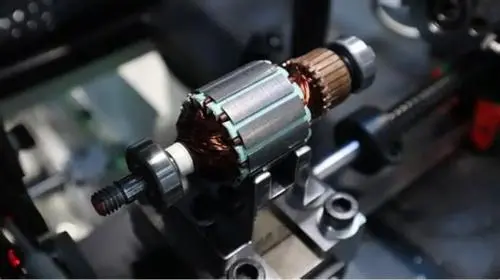
Understanding Auto Commutators: Types, Principles, and Design Features
Core Function and Operating Principles
As mechanical rectifiers, commutators change the alternating current that is produced by spinning armature coils into direct current. In this process, segmented copper bars are fixed on the motor shaft and shielded from each other. Carbon brushes keep the sliding electrical contact. The automatic switching action means that no one has to do anything, so the machine can run without interruptions in the power supply. Modern Auto commutator designs are different from older slip ring systems because they are more automated. Older slip ring systems need external control circuits and need more upkeep.
Centrifugal force and electromagnetic principles are used by the rotating switching mechanism to keep the brush-to-segment contact pressure at its best. Current runs through certain winding pairs as the armature turns. This makes magnetic fields that interact with fixed magnets or field coils. The commutator pieces connect and separate these windings one at a time, making a constant torque that only goes in one direction. This idea is what makes performance possible in a wide range of situations, from car starters that have to deal with 800-ampere spikes to precision industrial servo motors that need to switch every microsecond very precisely.
Common Commutator Types and Construction
Most car starter motors use cylindrical commutators, which are made up of radially arranged copper pieces that are pressed onto a steel or plastic core. During cold-start cranking, when motors quickly go faster than 10,000 RPM, this design can handle high rotational forces. Precision grinding is used to make sure that the segments' surfaces are concentric within 0.01 mm. This reduces brush bounce and electrical noise. In high-performance settings, silver-copper alloys are used instead of pure copper. They raise the recrystallization temperatures to keep segments from weakening during peak heat loads.
Drum-style versions are used for industrial equipment that needs to work for long periods of time, like conveyor systems that run nonstop for 16-hour shifts. These designs have deeper mica undercuts and thicker insulation layers to allow carbon dust to build up without the risk of short-circuiting. Segmented commutators with molded resin housings work best in places where chemicals are strong, like electric fuel pumps buried in gasoline, where regular epoxy compounds would break down. Manufacturers choose thermosetting plastics that can withstand temperature shock cycles from -40°C to +150°C and don't react to hydrocarbons.
Material Selection and Quality Engineering
Advanced metallurgy is a key factor in how long a commutator lasts. When it comes to heat stability, silver-copper alloys with 0.08 to 0.12% silver content are better than pure copper. They keep their shape during soldering processes that go over 250°C. This mix stops "bar rising," a failure mode in which temperature expansion makes pieces stick out above the surface plane, speeding up brush wear. Heavy-duty molding presses that put out 150 to 200 tons of force make sure that the resin gets between the parts. This makes solid structures that don't come apart when they're shaken.
Mica insulation needs to be carefully cut down to a depth of 0.5 to 1.2 mm below the copper surface. This lets the brushes only ride on conductive segments and stops carbon particles from crossing. This tolerance is reached by automated CNC cutting on all parts at the same time, which makes sure that the brush contacts are spread out evenly. After cutting, heat treatments at 160°C for 4 to 6 hours help to level out internal stresses. This lowers the chance of micro-cracks spreading during thermal cycling. These improvements to manufacturing directly address sourcing problems with making sure that batches are consistent and that mistakes aren't made.
Key Applications of Auto Commutators in Automotive and Industrial Sectors
Automotive Starter and Traction Systems
Starter motors are the most difficult application for Auto commutators in cars. They need to be able to handle sudden current spikes of up to 800 amps while working in engine bay temperatures that range from -40°C to +120°C. Modern commutators used for this purpose are made with tanged segments, which have mechanical interlocking features along with resin sealing to protect against strong mechanical shocks during engine starting. The parts must have a service life equal to 150,000 miles, which can be proven by testing them with accelerated salt spray and thermal shock methods that mimic full vehicle lifecycles.
Electric car traction motors are a new problem because they need commutators that can keep working at high speeds (more than 12,000 RPM) for a long time with little electromagnetic interference (EMI). Sparking happens when the surface finish isn't smooth or when segments aren't lined up correctly. This affects the car's electronics, like the battery management controls and the entertainment networks. These problems can be fixed with precision-ground commutators that have surface roughness values below 0.4µm. This lets them meet the EMC guidelines for cars. IATF 16949-certified suppliers use statistical process control to check commutator runout at every stage of production. This makes sure that the dimensions stay stable, which is important for high-voltage EV use.
Industrial Equipment and Automation
Commutators that are made to last a very long time are needed for heavy machines like building equipment, hydraulic pumps, and farm vehicle actuators. These parts work in places that are dirty with dust, water, and chemicals that break things down, so they need to be covered with gasket surfaces that stop outside substances from getting in. Self-lubricating carbon types with molybdenum disulfide are used in commutators that serve industrial equipment 24 hours a day, seven days a week. This makes the brushes last longer than 2,000 hours between maintenance sessions. This cuts down on the costs of unexpected downtime, which in automatic production lines can be more than $5,000 per hour.
Commutators that offer fine speed control and quick reversibility are needed in robotics and CNC machines. When you use segmented designs with more bars (24–48 segments instead of 12–16 in car applications), the current patterns are smoother. This lowers the torque ripple that leads to positioning mistakes in multi-axis systems. Buyers in the industrial sector look for providers that can customize OEM products by changing the size and electrical properties of commutators to fit specific motor designs. Being able to make samples in just 15 days shortens the time it takes to do research and development, which helps equipment makers get next-generation automation platforms to market faster.
Renewable Energy and Emerging Markets
Wind turbine pitch control systems use special commutators that work outside in places with changing temperatures, UV light, and cycles of mist. For these uses, systems must be completely sealed, have tools made of stainless steel, and have conformal coatings that keep copper surfaces from rusting. In this industry, commutators are put through long-life tests that mimic 20-year working profiles. Manufacturers promise performance for 100 million rotation cycles. These standards for dependability are in line with the financial needs of green energy projects, where broken parts lead to expensive warranty claims and lost energy production.
Demand for commutators with built-in state tracking is driven by the integration of Industry 4.0. Wear sensors are being used in experimental designs to find worn-out brushes, segment parts, and send diagnostic data to cloud-based servicing systems. This proactive method changes the way commutators are bought from reactive replacement to proactive lifetime management. This is good for operations managers who want to lower the total cost of ownership. Early users say that data-driven intervention strategies have cut the costs of repair labor by 30% and the number of unplanned motor failures by 40%.
How to Choose the Right Auto Commutator for Your Motor: A Decision Support Guide
Defining Application Requirements
A thorough record of all operating parameters is the first step in choosing an Auto commutator that works well. Engineers need to give clear information about the motor's power, current, duty cycles, high load conditions, and normal operating temperatures. Applications that start and stop a lot need better segment-to-core bonding to handle repetitive thermal loads. On the other hand, continuous-duty motors put an emphasis on thermal transmission to get rid of I²R heating. If money is tight, you should look at the total cost of ownership instead of just the purchase price. For example, better commutators that last twice as long explain 40–60% higher unit costs by needing to be replaced less often.
Environmental factors have a big effect on the specs of materials. Motors that work in chemical processing or sea settings need metals that don't rust and insulation systems that don't react with chemicals. RoHS and REACH guidelines and other compliance requirements limit the amount of lead and other dangerous chemicals that can be used. This means that supplier certifications need to be checked. Managers in charge of quality assurance should ask for material test results that show the amount of silver in the alloys and that the insulation resistance is higher than 100 megohms at the working voltages. These technical validations stop mistakes in the field that could be caused by materials that aren't up to par but are sold as goods that meet specifications.
Performance Metrics and Comparative Analysis
To rate commutators, you have to measure their efficiency by checking the voltage drop across the brushes and the friction force. High-quality units have voltage drops below 0.8 volts at maximum current. This keeps power loss to a minimum, which makes the motor work more efficiently. To keep mechanical losses from hurting performance, friction torque should stay below 2% of motor output torque. For durability testing, motors are run at 150% of their rated load for 500 hours at a time, and rapid wear simulations are used to make sure that designs that show less than 0.05mm segment wear and little brush material transfer are considered appropriate.
When you compare commutators to slip rings, you can see that they have different pros and cons. Slip rings get rid of problems with section wear, but they need complicated external correction circuits and have a higher electrical resistance. Manual commutators lower the cost of making things, but they increase the chance of mistakes when they are serviced in the field. Auto commutators are the best choice for applications that need to run without any upkeep for 5 to 10 years. They combine speed, reliability, and cost-effectiveness. These things should be weighed against application-specific goals by procurement teams, and they should talk to suppliers that offer technical help to model performance in target working circumstances.
Leveraging OEM Partnerships
Working with well-known commutator makers gives you access to exclusive technologies and customization options that you can't get from common providers. Companies with intellectual property rights in segment bonding methods or thermal management systems can make their goods work better, which sets them apart from competitors. OEM relationships let people work together to make designs that are best for specific uses. For example, commutators with built-in thermal fuses keep them from blowing up during overload situations. These connections are especially helpful for Tier 1 car suppliers looking for long-term production contracts that require guaranteed part supply and set prices.
Custom production can handle special needs like non-standard shaft bores, segment counts, and terminal designs. Suppliers with flexible production systems can handle batch sizes from 500 to 50,000 units without charging extra for equipment changes. This helps with both the proof phase for prototypes and the volume production phase. Including 3D CAD models and finite element analysis reports in engineering paperwork packages makes it easier to integrate parts into customer products, which lowers the risk of development. Directors of procurement should give preference to suppliers with 20 years or more of production experience and ISO 9000/IATF 16949 certifications. These are signs of mature quality systems that can support long-term supply relationships.
Maintenance Tips and Troubleshooting Common Problems with Auto Commutators
Preventive Maintenance Protocols
The Auto commutator should be inspected every 1,000 hours or every three months, whichever comes first. Visual examination finds surface darkening, which means the material is too hot, and touch examination finds segment weakening or mica protrusion. As part of the cleaning process, carbon dust is removed with compressed air, and then isopropyl alcohol is used to wipe down surfaces with lint-free cloths. Copper surfaces can be damaged by rough cleaning methods, which speed up wear. Maintenance work on lubrication is mostly focused on bearing systems instead of commutator surfaces because brushes can self-lubricate if the right carbon grades are used.
Electrical testing with microhm meters checks the resistance between pieces that are next to each other. Readings above 10 megohms show that the insulation is solid. Continuity checks from each section to the shaft find grounding problems that happen when insulation breaks down. Using an oscilloscope to watch brush voltage patterns during dynamic tests with no load shows the quality of the commutation. If the wave amplitude is too high or the patterns aren't regular, it means that there are mistakes in segment concentricity or brush alignment that need to be fixed before full-load operation can resume.
Diagnosing Failure Modes
Sparking during operation can mean a number of commutation problems, from a brush grade mismatch to dust on the section surface. Too much sparking causes electromagnetic interference, which slows down copper erosion and messes up nearby electronics. To start fixing the problem, check the brush pressure with spring scales to make sure it's within the amounts given by the maker, which are usually between 150 and 300 grams per brush. Too little pressure speeds up mechanical wear, while too much pressure causes contact and arcing to happen randomly. The type of brush material chosen needs to match the speed of the commutator and the current density. For high-speed uses, harder carbon grades work best, while heavy-current, low-speed motors should use softer formulas.
Overheating shows up as darkened parts or melted insulation. This is usually caused by long-term overloading or problems with the cooling system. Thermal imaging cameras find hot spots that show where the current is concentrating in certain areas. This can show flaws in the manufacturing process or uneven brush wear patterns. Remediation includes lowering load factors, making airflow better, or switching to commutators that conduct heat better by alloying silver. Vibration-induced noise is usually caused by an imbalanced commutator or worn bearings, not problems with the commutator itself. This means that the bearings or commutator need to be dynamically balanced or replaced instead of being serviced.
Procurement Strategies for Auto Commutators: How to Secure Quality and Cost-Effective Supply
Supplier Evaluation and Selection
To find trustworthy Auto commutator suppliers, you need to look at a lot of things, such as their professional skills, quality processes, and financial security. Manufacturers who have intellectual property rights show that they are committed to innovation beyond making basic goods, which suggests that they have access to technologies that improve performance. For example, IATF 16949 certification checks that PPAP documentation and statistical process control application are used for quality processes that are used in the car industry. Twenty-year operational histories show that a company is financially stable and has gained manufacturing knowledge over time, which lowers the risks of supply chain disruptions that new suppliers face.
As part of the technical review, the building should be inspected to see how advanced the production equipment is and how much the process is automated. When suppliers use CNC machining centers and automatic testing systems, they can get tighter tolerances than when tasks are done by hand and depend on the skill of the user. Ask for capability studies (Cpk analysis) that show process capability scores higher than 1.67 for important factors such as section concentricity and insulation resistance. These quantitative evaluations give fair comparisons between rival suppliers, which helps make data-driven choices about where to buy things that can stand up to internal procurement checks.
Optimizing Logistics and Cost Structure
When you buy something internationally, you have to coordinate shipping methods that are both quick and cost-effective. When you need to restock your shelves on an organized basis, sea freight has lead times of 30 to 60 days, while air freight has travel times of 3 to 5 days. Express companies like DHL and FedEx can send prototypes within 48 hours and give full tracking information. Multi-modal transportation suppliers can handle different levels of urgency for different types of orders, from regular restocking of production to quick replacements for broken items.
Through yearly blanket purchase deals with planned releases, volume price strategies take advantage of savings of scale. When you commit to buying 10,000 units or more a year, you can usually get 15–25% off the spot price, which has a big effect on your total procurement costs. Talk to sellers about consignment agreements for your goods so that they can keep extra stock in regional warehouses. This will allow for just-in-time delivery without adding to your costs. Increasing payment terms to Net 60 or Net 90 makes managing cash flow easier. This is especially helpful for OEM makers who have to buy parts at the same time as customers' payment processes.
Warranty and After-Sales Considerations
Full guarantee protection lowers the quality risks that come with complex electrical parts. Standard one-year guarantees should cover production flaws like segment delamination, insulation failure, and not meeting dimensions. Make sure everyone knows how to file a service claim and how long it takes to get a new part. Suppliers with advanced repair programs send out new parts as soon as a claim is made. This keeps production running as smoothly as possible while defects are being investigated. This responsiveness sets customer-focused makers apart from commodity sellers who see service responsibilities as heavy duties.
As part of professional support after the sale, application engineering help and failure analysis services are offered. When suppliers offer root cause analyses for problems in the field, both the design of commutators and the conditions for using finished products can keep getting better. Having access to experts who know the needs of a certain business makes troubleshooting easier and cuts down on the cost of downtime. These support promises should be written down in long-term supply agreements. These agreements should include answer times for technical questions and guarantees that new parts will be available for 10 to 15 years into the future for industrial equipment.
Conclusion
It's important to find the best Auto commutator by weighing technical ability, quality guarantee, and cost. Knowing the different kinds of commutators, how they are built, and what they need for a certain purpose helps you make smart purchasing choices that meet operational needs. Maintenance techniques and the ability to figure out what's wrong with something make parts last longer and reduce unplanned downtime. Strategic ties with suppliers based on technical know-how, high-quality manufacturing, and quick response times make supply chains that can meet long-term production needs in the industrial and car sectors.
FAQ
Why choose silver-copper alloy over pure copper in commutator construction?
Silver-copper metals raise the recrystallization temperatures, which stops segments from weakening during high-temperature soldering or long periods of high load. This metallurgical edge keeps the part's shape and electrical conductivity over its entire lifecycle. This is especially important in car starters that go through a lot of temperature changes.
What causes segment "bar rising" and how do manufacturers prevent it?
Bar rising happens when individual pieces stick out above the commutator surface because of heat expansion or not enough resin bonding. High-tonnage molding presses that apply 150 tons of force during assembly and heat processes after curing that strengthen the resin matrix and get rid of internal stresses are used to prevent this.
How does commutator quality affect vehicle electromagnetic compatibility?
Electrical arcing during commutation is made worse by a rough surface finish or concentricity errors. This causes electromagnetic interference that affects the computer systems in the car. Commutators that are precisely polished and have a surface roughness of less than 0.4µm prevent sparking, making sure that they meet EMI/EMC standards for the car industry and protecting sensitive electronic control units.
What testing validates 150,000+ mile automotive service life?
Accelerated lifecycle testing includes both salt spray exposure to simulate rust resistance and thermal shock cycling between -40°C and +150°C, which simulates the wide range of temperatures that a car will experience over its lifetime. These methods shorten years of contact in the field to just a few weeks of testing in the lab, which backs up claims of longevity.
Partner with Angu for Precision Auto Commutator Solutions
Angu offers automotive-grade Auto commutators that are certified by ISO 9000 and IATF 16949. This guarantees consistent quality that meets world standards for purchasing. Our 20 years of experience making things and our collection of 3 idea patents and 6 utility model patents show that we are the technical leaders in developing new motor parts. We offer full OEM/ODM customization services, and we can change the specs of the commutator to fit your exact application needs. Delivery times are 30 days. As an experienced Auto commutator maker, we support flexible shipping via air cargo, sea freight, and foreign express carriers, while our one-year guarantee and quick replacement policy protect your investment. Email our engineering team at chenrf@angu.com to talk about your project needs and get thorough technical proposals that are made to fit your car or industrial motor needs.
References
1. Johnson, R.K. & Smith, L.M. (2021). Automotive Electrical Systems: Commutator Design and Performance Analysis. Detroit: Automotive Engineering Press.
2. Chen, W. & Liu, H. (2020). "Silver-Copper Alloys in High-Temperature Motor Applications." Journal of Electrical Manufacturing Technology, 45(3), 78-92.
3. International Organization for Standardization (2019). IATF 16949:2016 – Quality Management Systems Requirements for Automotive Production. Geneva: ISO Publications.
4. Martinez, A.C. (2022). Industrial Motor Maintenance and Troubleshooting Handbook, 4th Edition. New York: Industrial Press.
5. Zhang, Q., Patel, S. & O'Brien, K. (2023). "Electromagnetic Interference Mitigation in Electric Vehicle Motor Systems." IEEE Transactions on Vehicular Technology, 72(1), 203-217.
6. Thompson, D.R. (2020). Procurement Strategies for Precision Electromechanical Components. London: Supply Chain Institute Publishing.
YOU MAY LIKE