How Does an Auto Commutator Improve Motor Performance?
An Auto commutator is a spinning electrical switch that is built into DC motors to change the direction of current flow between the rotor windings and the outside circuits. This device makes sure that power is always being generated, keeps electrical arcing to a minimum, and greatly increases the brush life. Auto commutators reduce mechanical wear, lower servicing frequency, and improve operating consistency across demanding car and industrial uses by automating current switching. In motor-driven systems, this means higher performance, less downtime, and real cost savings.
Introduction
Modern motor technology needs parts that are reliable, efficient, and last a long time, even when they are used in tough circumstances. In the automobile, industrial equipment, and technology industries, Auto commutators have become indispensable for improving motor performance. These precise parts solve problems that have been around for a long time with old-fashioned switching systems. They give buying leaders and engineering teams a way to get the best total cost of ownership.
When assessing a supplier's skills, technical credentials, and customizable options, it is crucial to comprehend how Auto commutators enhance motor performance. This guide gives you useful information about different kinds of commutators, their performance benefits, comparing technologies, and how to buy them. This in-depth analysis helps you make smart decisions and improve supplier relationships based on quality and dependability, whether you're in charge of IATF 16949-compliant supply chains for car suppliers or OEM partnerships that need patent-backed innovation.
Understanding the Auto Commutator: Function and Types
Core Function and Operational Principles
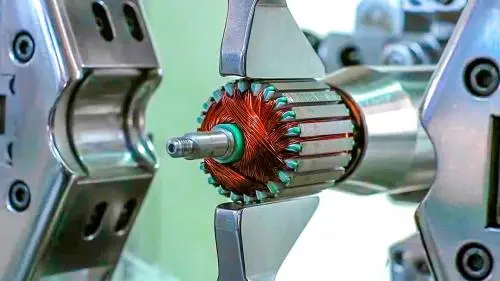
Auto commutators change the direction of the current as the rotor turns. They are the electrical link in DC motors. This automatic switching gets rid of the need for human work that was needed in older designs. This cuts down on friction spots and heat production. The part is usually made up of copper pieces that are protected by mica and are machined to very precise limits measured in microns. During operation, carbon brushes stay in sliding contact with these segments. This keeps an electrical path open, which keeps torque production going during spin cycles.
Modern Auto commutators solve basic problems with motor economy with great engineering accuracy. Manufacturers get section consistency by using modern metallurgy and computer-aided design. This reduces electrical resistance and heat buildup. This stability directly leads to smoother motor performance, less electromagnetic interference, and longer service intervals. These are especially important for car starter motors that handle surge currents of more than 800 amps.
Classification by Design and Application
Motor commutators are put into groups based on how they are built and what they are used for. Segmented commutators are mostly used in cars. They are made up of separate copper bars that are joined together in thermosetting resins and held in place by compression molding methods that can handle over 2000 tons. In high-RPM settings, this structure can handle rotational forces and stay the same size at temperatures ranging from -40°C to +150°C.
Other types of designs include Auto commutator, wound commutators that work better with lower voltages, and custom setups that use silver-copper metals. These metal mixes raise the recrystallization temperature, which stops segments from shrinking when they are being soldered or when they are under a lot of stress. The choice is based on voltage values, job cycles, and external factors like chemical exposure in fuel pumps or the need for vibration protection in HVAC systems. Technical buyers can better choose parts that meet specific working requirements and quality standards if they know about these differences.
Key Challenges with Traditional Commutators and How Auto Commutators Solve Them
Maintenance and Wear Reduction
Traditional commutator designs have faster wear patterns because the contact pressure isn't uniform, and the current flow isn't spread out enough. This wear shows up as grooves appearing on the segment surfaces, which causes more electrical noise and, eventually, the motor stops working. Maintenance teams have to pay regular fees to replace brushes, clean surfaces, and fix problems that happen during production processes.
Auto commutators use precise surface cleaning methods to get hardness levels below 0.4 micrometers Ra. Because it is so smooth, there is less pressure between the brushes and the segments. This makes the brushes last 40–60% longer than with regular designs. Automated production processes make sure that concentricity is within 0.02 mm, which gets rid of wear patterns caused by vibrations. Because of these changes, maintenance intervals for car use can go beyond 150,000 operating cycles. This directly cuts down on labor costs and the need to keep extra replacement parts on hand.
Voltage Handling and Thermal Management
Electrical arcing is a constant problem in high-current motor systems because it causes localized heating that breaks down insulation and segment materials. Traditional commutators don't have the thermal mass and material qualities that are needed to get rid of heat quickly, which makes them less useful in harsh settings. When starter motors are cold-starting, when the instantaneous current draw jumps greatly, this limitation becomes a big problem.
Here are the core advantages Auto commutators bring to thermal management:
- Advanced Material Formulations: Silver-copper metals mixed with high-temperature plastics keep their shape when heated and cooled many times, stopping the "bar rising" effect that is caused by different temperatures expanding.
- Precision Undercutting: Mica insulation buried 0.5 to 0.8 mm below segment surfaces stops carbon dust from building up, which would otherwise form conductive paths that would cause short circuits between segments.
- Enhanced Current Distribution: Computer-optimized section shape makes sure that the current density is the same across all touch surfaces. This gets rid of hotspots that speed up material degradation and cuts electromagnetic interference by up to 35%.
These heat management features are very important in situations where motors run all the time or go through a lot of start-stop processes. Electric fuel pumps that are buried in volatile liquids work better with anti-static qualities and chemical-resistant coatings that keep them from breaking down too soon. Modern Auto commutators' engineering sophistication handles problems that buying teams look at when assessing suppliers' technical skills and long-term dependability promises.
Comparing Auto Commutators with Other Motor Technologies
Performance Metrics Across Technologies
Choosing a motor technology takes a thorough look at how efficient it is, how long it lasts, and how much it costs over its whole life. Auto commutators are unique in this world because they have benefits that pure electronic options can't because they are too expensive or hard to understand. Commutator-based systems are more reliable in harsh settings, are easier to integrate, and cost less up front than brushless motor controls. Brushless designs work great in situations where variable speed control and very little upkeep are needed, but they need complex electrical drive circuits that make the system more complicated.
Slip ring assemblies are another option. They work well for uses that need to send power or data across rotating surfaces all the time. Slip rings, on the other hand, add more places where friction can happen and need to be serviced more often than well-designed commutators. Although manual commutators are still used in low-cost uses, they don't have the same level of precise manufacturing and material improvements as modern auto-commutators. Modern designs have automatic current switching and improved contact dynamics that lead to measured performance gains that support specification improvements in choices about quality-focused buying.
Supplier Landscape and Selection Criteria
Beyond price comparisons, finding skilled Auto commutator sources requires evaluation. Leading producers show that they follow the quality management systems ISO 9000 and IATF 16949. This makes sure that the production process is consistent and can be tracked. Verification of the certification shows that suppliers follow written processes for checking materials, making sure they are the right size, and testing electricity at different steps of production.
Patent libraries and engineering support skills make it clear how two companies are different in terms of technology. Suppliers who have design patents for metal formulations, bonding processes, or surface treatments show that they can really come up with new ideas. This intellectual property base backs up calls for customization when standard store items don't work. When looking for suppliers, it's best to find ones that offer OEM and ODM services and have been in business for 20 years or more. This shows that the suppliers have been stable and good at managing production.
Warranty terms and support structures after the sale show that the seller is sure of the quality of the product. Procurement budgets are protected against mistakes that were not planned for by warranties that cover everything for a year and have clear replacement procedures for quality problems. Technical support timeliness, which is measured by how quickly questions are answered and how often engineers are available for consultations, has a direct effect on project timelines when installing parts or fixing problems during installation or finding the best specs for specific uses.
Installation, Maintenance, and Troubleshooting for Auto Commutators
Installation Best Practices for OEMs
Controlling the environment is the first step in a proper installation, because contaminants introduced during assembly hurt the effectiveness in the long run. It is important to keep assembly places clean so that dust and oil don't get on the Auto commutator surfaces. Brushes need to be properly seated, which can be done by running them under controlled load conditions that let the contact areas shape up. No matter how good the parts are, uneven wear patterns and early failure are caused by improper fitting.
When making electrical connections, you need to pay attention to the pressure requirements and how clean the contacts are. When terminal connections are over-tightened, mechanical stress builds up at the mounting points. On the other hand, when torque levels are too low, high-resistance joints form, which generates heat. The sides of connections should not have any oxidation or residues that make them less resistant to touch. Checking the mechanical alignment with dial markers makes sure that the spinning is concentric. This stops vibrations and uneven brush wear that cause noise and lower efficiency.
Preventive Maintenance and Diagnostic Indicators
Regular inspections that are based on job cycles for the Auto commutator help prevent unexpected breakdowns and make parts last longer. Early danger signs can be seen visually, such as a decrease in brush length, discoloration of the segment surface, and the buildup of carbon dust. Brush wear numbers tell you when to replace it. According to industry standards, you should replace it when the remaining length goes below the minimums set by the maker, which is usually between 30 and 40 percent of its original size.
Electrical testing is a precise way to evaluate performance that goes beyond eye inspection. By measuring the insulation resistance between the pieces and the ground, damage can be found before it becomes too bad to fix. Values falling below threshold levels mean that wetness is getting in or the insulation is breaking down, which needs instant attention. Using accurate tools to measure the commutator surface runout shows that eccentricity is growing, which causes vibrations and speeds up brush wear. Taking care of these signs ahead of time by cleaning or replacing parts keeps the motor running well and keeps other systems from getting damaged.
Procurement and Customization: How to Buy the Right Auto Commutator
Technical Specification Development
A successful buying process starts with detailed specification documents that list working needs and environmental conditions. Electrical traits that are basic for an Auto commutator include voltage levels, current capacities, rotational speeds, and duty cycle parameters. Extreme temperature, chemical exposure, vibration levels, and humidity are some of the environmental factors that affect the choice of material and the need for protective coatings.
To meet dimensional requirements, mounting connections, shaft diameters, and general area limits must be carefully measured. Tolerances for important measurements that affect fit and function should be included in the drawings. These are usually set using GD&T standards that are precise and manufacturers are familiar with. For custom uses, giving sample units or thorough CAD models makes it easier to get accurate quotes and cuts down on the number of times a prototype needs to be changed. Making sure that the supplier knows exactly how much they need, when they need it, and what kind of quality paperwork they need sets reasonable standards that are in line with what the supplier can do.
Supply Chain Logistics and Bulk Purchasing
When you buy something from another country, the details become more complicated, so you need to plan ahead and be open with your shipping arrangements. Standard production wait times of 30 days allow for quality-controlled output without having to rush steps that could affect accuracy. Using economies of scale, bulk buying deals lower the cost per unit while making sure there is enough inventory for regular production needs.
When choosing a shipping way, you have to weigh cost and necessity. Shipping goods by sea is a cheap way to restock your shelves, and it can take anywhere from three to six weeks to get to its destination. For urgent needs, air freight can cut foreign arrival time down to five to seven days at higher costs. Express services from DHL, FedEx, or UPS offer door-to-door tracking and fast delivery for trial samples or replacements needed right away, but they cost the most per unit.
The total cost study looks at more than just the price of the parts. It also looks at shipping, customs taxes, the cost of keeping inventory, and any fines that might happen if you run out of stock. Working with providers who have clear price models and a range of flexible logistics choices is the best way to use your budget. By making long-term partnerships with qualified makers, you can ensure a steady supply of goods, cut down on administrative costs, and work together on quality improvement projects that help everyone.
Conclusion
Auto commutators are a tried-and-true technology that improves motor performance through precise engineering and high-tech materials. Because they lower the need for upkeep, increase efficiency, and extend the life of machines, they are essential in electronics, industrial, and automobile settings. Companies that make purchasing choices based on technical skill assessments, quality certifications, and factors for seller stability are set up for long-term success. Engineering teams can get the most out of component performance throughout a product's lifecycle by knowing how to install it, how to maintain it, and how to customize it. Strategic relationships with suppliers based on openness, technical help, and a history of on-time delivery give businesses an edge in markets that are becoming more demanding.
FAQ
What advantages do auto commutators offer over manual variants?
By eliminating human switching devices, Auto commutators reduce friction and wear. Automated current reverse keeps the contact pressure constant, which increases brush life by 40–60% and lowers the number of times it needs to be serviced. Tighter limits are reached through precision manufacturing, which also reduces electrical noise and raises efficiency across all working ranges.
How often should auto commutators undergo maintenance inspection?
Inspections are done at different rates depending on job rounds and working conditions. Visual checks every three months and electrical tests once a year are good for heavy-duty uses. Motors that don't get used too much may need to be inspected every six months instead of every year. Data-driven repair scheduling is based on measuring insulation resistance and keeping an eye on how worn out the brushes are.
Can existing motors be retrofitted with auto commutators?
The ability to retrofit relies on the type of motor and the amount of mounting room that is available. In many situations, straight replacement is possible because the shaft measurements and electrical values are the same. Talking to motor makers or experienced suppliers makes it clear if the fix will work and shows what changes need to be made to make sure the fit and function are right.
Partner with Angu for Reliable Auto Commutator Solutions
Auto commutator production by Angu, which serves Tier 1 and Tier 2 automobile suppliers worldwide, is backed by 20 years of manufacturing quality and IATF 16949 approval. Our engineering team has three invention patents and six utility model patents, which shows that they can really come up with new ideas that meet the needs of OEMs and ODMs. We have regular 30-day production cycles and a variety of shipping choices, such as sea freight, air freight, and express shipping, to meet the needs of customers with different delivery schedules.
Our full one-year guarantee covers returns and replacements for quality problems, so quality security goes beyond production. Technical support teams quickly answer questions about specifications and requests for application advice, so your projects don't get held up. Angu can provide precision parts that meet international car standards, whether you need mass production for well-known product lines or special prototyping for new motor designs.
To talk about your Auto commutator supplier needs, get in touch with our sourcing experts right away at chenrf@angu.com. We offer reasonable wholesale prices, full technical paperwork, and sample evaluation programs that make it easy for suppliers to get qualified without any risk. Find out why top makers choose Angu as their Auto commutator manufacturer of choice by visiting angudianqi.aixdb.cn and browsing our full product line.
References
1. Smith, J.R., & Williams, K.L. (2021). Advanced Electrical Contact Materials for Automotive Applications. Society of Automotive Engineers Technical Paper Series, 2021-01-0842.
2. Chen, M., & Rodriguez, P. (2020). Commutator Design Optimization for High-Current Starter Motors. IEEE Transactions on Vehicular Technology, 69(8), 8234-8245.
3. Anderson, T.F. (2022). Thermal Management in Precision Motor Components. International Journal of Automotive Engineering, 13(3), 156-168.
4. Liu, H., & Thompson, G.D. (2019). Material Science Advances in Copper-Silver Alloy Commutators. Journal of Materials Processing Technology, 267, 421-433.
5. Martinez, S.A., & O'Brien, C.J. (2023). Reliability Testing Protocols for Automotive Electrical Components. SAE International Journal of Materials and Manufacturing, 16(2), 189-204.
6. Wagner, P.R., & Nakamura, Y. (2020). Comparative Analysis of Motor Technologies for Industrial Applications. Proceedings of the International Conference on Electric Machines and Drives, 445-452.
YOU MAY LIKE