Cost-Effective Commutator Supply for Power Tool Brands
Setting up a reliable and cost-effective Commutator for the power Tool supply chain is important for getting quality parts for making power tools. It has a direct effect on how well your products work, how long they last, and your total profits. It's always hard for global procurement managers, R&D engineers, and supply chain leaders to find the right balance between technical requirements, quality certifications, and cutting costs. If you choose the right commutator, the current will flow back and forth smoothly in brushed motors. This prevents electrical arcing and increases the motor's lifespan in tough tools like cordless drills, angle grinders, and demolition hammers. This guide gives you useful information to help you choose a supplier, meet technical needs, and create a supply chain strategy that supports long-term partnerships with OEMs and consistent batch quality.
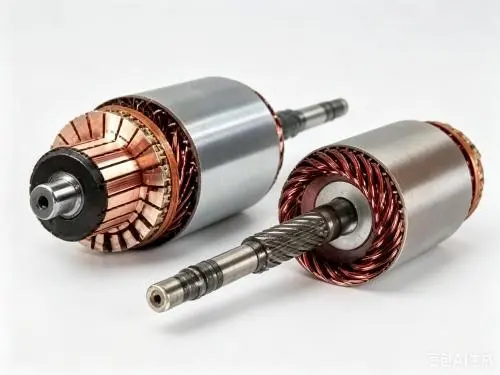
Understanding the Role of Commutators in Power Tools
Commutators in electric motors work like mechanical rectifiers, switching the direction of the current between the outside circuit and the rotor windings to keep the force constant. This part works with carbon brushes in high-performance power tools to make sure there is smooth electrical contact during fast rotation, which can go over 30,000 RPM. The carefully planned segmented structure makes it easy for energy to flow, which is especially important for cordless tools whose runtime depends on how well the batteries work and how much power they hold.
How Commutators Interact with Brushes
The Commutator for the power Tool maintains a sliding contact surface with carbon brushes, which transfer electrical current to the armature windings. The brush-commutator contact needs to remain stable when the motor operates at high speeds to prevent sparks and excessive heat buildup. When the commutator segments are machined to tight tolerances—typically controlling the Total Indicator Reading (TIR) within 0.003mm to 0.01mm—the brushes achieve more uniform contact pressure. This reduces vibration and extends the service life of both the commutator and carbon brushes.
Common Causes of Commutator Wear and Failure
Several operational factors can cause commutators to break down too quickly. When brushes lose constant contact, they cause electrical arcing, which causes localised warmth that wears away the copper segments. When surface contamination or incorrect brush pressure raises contact resistance, mechanical friction speeds up wear. The insulating resin between the segments breaks down when it comes in contact with water or rough dust. This causes electrical shorts. Checking the surface roughness, segment height uniformity, and insulation resistance on a regular basis can help find early signs of failure before they cause the motor to burn out or cause unplanned downtime.
Comparing Commutator Types and Materials for Power Tools
Different commutator designs and material combinations have big effects on how well they work and how much they cost. By knowing about these differences, buying teams can choose parts that work with certain tool uses, production numbers, and the needs of the target market.
Mechanical Commutators vs. Electronic Commutation
Traditional mechanical Commutator for the power Tool designs are widely used in most brushed motor systems because they offer reliable performance and cost efficiency. They are made up of copper segments protected by high-temperature resin and mounted on a steel hub. In brushless motors, electronic commutation uses sensors and controllers to digitally switch the current, eliminating physical contact between components. While brushless systems provide higher efficiency and longer service life, they require more complex electronics and a higher initial investment. For cost-sensitive power tool applications, mechanical Commutator for the power Tool solutions remain a practical and economical choice.
Key Materials: Copper, Graphite, and Composites
Copper is still the most common material for commutator pieces because it is easy to work with and conducts electricity well. Adding 0.03% to 0.1% silver to copper alloys makes them more thermally stable and less likely to soften at high temperatures. Usually, high-quality phenolic moulding compounds (PMC) are used in the insulating resin. These compounds can withstand temperatures above 200°C without changing shape. Graphite-copper composites are used in some specialised applications to make brushes work better and lower electrical noise, but they make production more difficult and raise the cost per unit.
Brushes, Commutators, and the Emergence of Brushless Motors
In brushed motor designs, brushes and the commutator for the power Tool work together. The brushes provide power, and the commutator automatically switches the polarity to allow the motor to keep turning. Brushless motors don't have this mechanical interface because they use electronic controllers to switch between phases. Brushed motors, on the other hand, are still widely used in mid-range power tools because they feature simpler designs and are easier to repair. Buyers need to consider the advantages and disadvantages of both brushless motors and brushed motor solutions, including the established supply chains, service infrastructure, and cost benefits associated with the commutator for the power Tool.
How to Choose Cost-Effective Commutators for Power Tool Brands
To choose the correct commutator, you need to make sure that the technical specs match the performance needs of the tool, the amount of output, and the target market. To make sure that parts meet quality standards and prices stay competitive, procurement managers have to look at a lot of different factors.
Aligning Product Specifications with Tool Applications
Cordless drills need commutators that are designed to work well with a lot of start-stop cycles and changing loads. They also need strong section glueing to handle the stress of high-torque operation. Heavy-duty angle grinders keep going at very high speeds, so they need commutators that can handle high temperatures well and have little runout to keep them from vibrating. Commutators that are finely balanced and have tight physical tolerances help precision tools like rotary tools keep running smoothly at very high RPMs. By matching these application-specific needs with what the supplier can do, you can be sure that the parts will work reliably during the warranty period.
OEM vs. Aftermarket Sourcing Strategies
Key Evaluation Metrics: Durability, Efficiency, Cost, and Certifications
To check the mechanical strength of the bond, centrifugal force tests at 1.2 to 1.5 times the standard speed are used for durability rating. Dielectric strength testing makes sure that the insulation is still good at high voltages, usually more than 2500V bar-to-earth and 500V bar-to-bar. Efficiency is related to the quality of the surface finish and the accuracy of the measurements. It has a direct effect on the resistance of the brush contact and the energy loss. For automotive-grade quality standards, supplier certificates prove that the manufacturing process is controlled and that materials can be tracked. The best supplier for each application group is found by comparing these measures to the provided cost.
Securing a Reliable and Affordable Commutator Supply Chain
Choosing smart suppliers, negotiating well, and managing relationships in a way that encourages collaboration are all necessary to make supply chains that last. Procurement teams need to find partners that can help with long-term growth while still being able to adapt to changes in style and volume.
Mapping Global Commutator Suppliers
China has a lot of commutator manufacturers, most of them in Jiangsu Province. These manufacturers offer competitive prices and production capacity that can be expanded. Our factory in Xuzhou is ISO 9000 and SGS certified, and it makes precision slot-type commutators with 24 segments, a 10mm inner diameter, a 17.5mm height, and an outer diameter of 24mm. These machines use high-temperature glue and silver-bearing copper (Type 03 or 08), and they can make batches of more than 50,000 pieces with a 30-day lead time. European suppliers offer high-quality parts with advanced engineering support, but they cost more. These parts are good for specific uses that need custom geometries. For just-in-time supply plans, North American distributors are great because they offer fast shipping and expert support that is specific to the area.
Strategic Negotiation for Bulk Pricing and Logistics
By taking advantage of economies of scale when buying materials and planning production, volume commitments make it possible for unit costs to drop by a large amount. Annual blanket orders with quarterly releases let sellers see how much demand there is, which helps them handle their supplies and plan their production more efficiently. Having a variety of logistics choices, such as sea freight for normal restocking, air freight for urgent orders, and fast courier for test samples, helps keep supplies going while keeping transportation costs low. Including warranty terms for after-sales service in supply deals lowers quality risks. For example, faulty batches can be replaced or credited, which keeps production going.
Customization and OEM Solutions for Specialized Applications
Commutators with non-standard sizes, segment numbers, or material requirements are needed for a lot of Commutator for the power Tool applications. If a supplier offers OEM/ODM services, they can customize copper alloy compositions, modify segment designs, or apply special finishes to meet specific performance requirements. Collaborative engineering support during the design phase helps ensure that the commutator specifications are optimized for cost efficiency and manufacturability. Patent-protected innovations, including our three invention patents and six utility model patents, provide our products with technical advantages that support claims of superior performance and strengthen our position as a market leader. Validation testing can be conducted through free sample programs before investing in production tooling, reducing the technical risks associated with new product development.
Maintenance and Troubleshooting Tips for Extending Commutator Life
By following proactive maintenance procedures, you can extend the life of your commutators and reduce the number of unexpected failures that cause production delays or warranty claims. To get the best total cost of ownership, the procurement and engineering teams should set clear rules for checking, cleaning, and replacing things.
Routine Inspection and Cleaning Protocols
Visual checks should be done on a regular basis to see if the surface has any cutting, pitting, or discolouration that could mean too much arcing or heat stress. Using accurate gauges to measure section height regularity shows uneven wear patterns that lead to brush bouncing and more electrical noise. Cleaning the commutator surface and brush handles of carbon dust and other debris that has built up keeps the electrical contact good and stops shorts caused by contamination. By setting inspection times based on operating hours or production cycles, wear patterns can be found early on, before they affect the motor's performance.
Timely Replacement Strategies
Preventive Measures Against Common Failure Causes
The right contact pressure and electrical properties are guaranteed by choosing the right brushes and installing them according to the manufacturer's instructions. When you use tools within their stated load and duty cycle limits, they don't get too hot, which speeds up wear. Keeping motors away from water, dust, and chemicals by using the right sealing and housing design can make parts last longer in harsh environments. Teaching service staff the right way to disassemble, check, and reassemble keeps parts in good shape during repair, which is important for keeping the precise tolerances needed for peak performance.
Conclusion
Technical specifications, supplier capabilities, and total ownership costs must all be carefully considered when establishing a Commutator for the power Tool supply chain. Procurement workers can make choices that balance quality, cost, and delivery reliability by knowing how commutators work, what materials are used for, and what the application needs. Power tool companies can stay ahead of the competition while controlling supply chain risks by forming strategic relationships with suppliers that offer customisation options, quality certifications, and quick customer service after the sale. Using good maintenance procedures increases the worth of a component over its entire life, which lowers the cost of warranties and raises customer happiness across all market groups.
FAQ
How do I identify when a power tool commutator needs replacement?
If you see a lot of sparking while the motor is running, hear strange noises or vibrations, see scoring or pitting on the surface, or measure segment height changes greater than 0.5mm, the commutator needs to be replaced. Performance problems can show up as a slower motor speed when it's under a lot of load, excessive heat during normal operation, or power that comes on and off randomly. These problems can be found before they completely destroy the motor by inspecting it regularly during planned repair intervals.
What distinguishes aftermarket commutators from OEM components in terms of reliability?
OEM commutators are made to the exact original specifications, with quality processes and controlled material sourcing that make sure the dimensions are correct and the materials are consistent. The quality of aftermarket options depends on how the manufacturer controls the process and the materials they use. Aftermarket providers with a good reputation, ISO approvals, and thorough testing methods can match the performance of OEM parts at lower prices. Validation testing that checks the electrical qualities, mechanical strength, and accuracy of dimensions helps buying teams find secondary sources they can trust.
What factors drive cost variations in commutator procurement?
The way a material is made has a big effect on its price. For example, copper metals that contain silver cost more than regular copper. Precision in manufacturing, such as needing tight specs and a smooth finish, makes grinding take longer and costs more for tools. Unit prices are affected by the number of orders because of economies of scale in buying materials and paying off the cost of setting up the production line. Engineering and tooling costs go up when non-standard sizes or specs need to be customised. The total cost is also affected by the need for certification and good paperwork. Logistics choices like sea freight, air freight, and express delivery affect landed costs, especially for orders that need to be sent quickly or in small amounts.
Partner with ANGU for Reliable Commutator Supply
ANGU has been making products for 20 years and can help power tool brands that need a reliable Commutator for the power Tool solutions. Our factory in Xuzhou makes precision slot-type commutators (24mm OD × 10mm ID × 17.5mm height, 24 segments) with high-temperature plastic and copper that bears silver. These are approved by SGS and meet ISO 9000 standards. It takes us 30 days to send orders of 50,000 pieces by sea, plane, or express shipping through DHL, FedEx, or UPS. We can do OEM/ODM work to meet specific needs, and we have three idea patents and six utility model patents to show that we are technologically advanced. We offer free samples for qualification testing and a one-year warranty with replacement support for quality issues. This will keep your supply chain running smoothly. Get in touch with our purchasing team at chenrf@angu.com to talk about your needs with an experienced commutator manufacturer that is dedicated to providing you with competitive prices, consistent quality, and quick service that helps your power tool products do well in the market.
References
1. Anderson, M. & Roberts, P. (2021). Electric Motor Commutation Systems: Design and Performance Optimization. Industrial Press.
2. Chen, L., Wang, X., & Liu, Y. (2020). Material Selection and Quality Control in Precision Commutator Manufacturing. Journal of Manufacturing Engineering, 15(3), 234-251.
3. European Power Tool Association. (2022). Quality Standards and Procurement Guidelines for Motor Components. EPTA Technical Report Series.
4. Harrison, D. (2019). Supply Chain Management for OEM Component Sourcing. McGraw-Hill Professional.
5. International Copper Association. (2023). Copper Alloys in Electrical Applications: Properties and Performance Standards. ICA Technical Bulletin.
6. Miller, T.J.E. (2021). Brushed Permanent-Magnet and Reluctance Motor Drives. Oxford University Press.
YOU MAY LIKE