High-Performance Rotor Magnet for AC Motor Manufacturers
When we talk about high-performance permanent magnet synchronous motors, we always come back to the Rotor magnet for AC motor. This is a very important part that determines whether your motor has a high torque density or not when it comes to tough operating conditions. These magnets, which are usually made from advanced Neodymium Iron Boron (NdFeB) metals, are at the center of modern AC motor systems. They create stable magnetic fields that work with the stator windings to make rotational power. The right choice of rotor magnet leads to higher efficiency, less energy waste, and long-term dependability in applications that use green energy, electric car traction systems, and industrial automation platforms.
Introduction
For purchasing managers, R&D engineers, and procurement directors working in today's competitive global markets, choosing the right rotor magnet technology has become a strategic must. Motor makers are working hard to meet the IE4 and IE5 efficiency standards. This is increasing the need for magnets with better remanence, high intrinsic coercivity, and strong temperature stability. This guide looks at the technical basics of rotor magnet assemblies, different types of materials (from ferrite to rare earths), and strategies for buying them that are both cost-effective and reliable while still performing their job. When designing electric vehicle powertrains, precision servo motors for CNC machines, or variable-frequency compressors for HVAC systems, it's important to know how Rotor magnets for AC motors affect motor behaviour. This will help you make decisions that are in line with your quality standards and manufacturing goals.
Understanding Rotor Magnets in AC Motors
Permanent magnets in AC motor rotors' main job is to create a steady magnetic field that gets rid of the need for copper windings in the rotor and the resistive losses that come with them. In standard induction motors, the rotor field is created by electromagnetic coupling. Permanent magnet synchronous motors, on the other hand, use the Rotor magnets for AC motors on the rotor to create a stable magnetic flux that reacts with the rotating field of the stator. This change in design leads to measurable efficiency gains, often by more than 10 to 15 percentage points compared to traditional designs. It also makes it possible to make motor geometries that are small enough to fit in places where space is limited.
Distinguishing Rotor and Stator Magnetic Components
Rotor magnets and stator laminations are very different in how they work and what they are made of. Through three-phase AC windings, the stator creates a magnetic field that spins. The rotor magnets provide the fixed field that follows this movement. This interaction determines how much torque is made, how fast the engine runs, and how it reacts to changes in the environment. To keep cogging torque to a minimum, back-EMF waves to their best, and smooth operation across the entire speed range, engineers must carefully match the rotor magnet properties with the stator design parameters.
Material Options and Their Performance Impact
Neodymium magnets are widely used in high-performance rotor magnets for AC motor applications because they offer an extremely high magnetic energy product, with BHmax values that can reach 50 MGOe, allowing greater power density in compact motor designs. Ferrite magnets are more economical and provide strong stability across high and low temperature conditions, but they have lower flux density, making them suitable for a rotor magnet for AC motor applications where size limitations are less critical. For environments requiring temperature performance up to 350°C and superior corrosion resistance in aggressive chemical conditions, samarium cobalt magnets provide unique advantages. Each magnet material involves different trade-offs between magnetic strength, thermal stability, mechanical durability, corrosion resistance, and manufacturing cost, all of which directly influence the final motor specifications, efficiency, and reliability of permanent magnet AC motor systems.
Advantages of Permanent Magnet Rotor Designs
Using permanent magnet rotors completely stops rotor copper losses, which lowers heat production and raises the overall efficiency of energy conversion. This thermal edge lets motors keep working at their maximum level even when they are working at full load for long periods of time without needing too much cooling. Also, permanent magnet motors have better power factor properties, which means they use less reactive power, which lowers the cost of running the motor. The small size of the rotor cuts down on the moment of inertia, which lets it respond to acceleration faster. This is very important for servo applications that need millisecond-level positioning accuracy.
Choosing the Best Rotor Magnet for High-Performance AC Motors
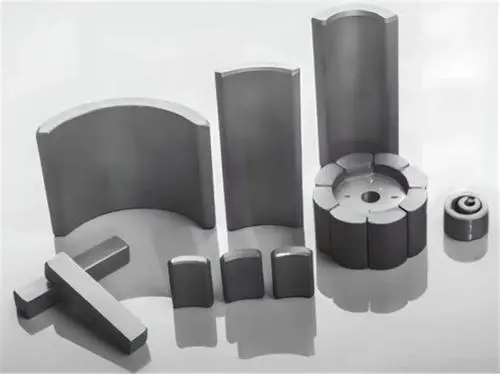
To choose the best Rotor magnet for AC motor, you have to balance a lot of scientific and business factors with the needs of the application. This balance is shown by the CY35, CY36, and CY37 series magnets, which have radial magnetisation patterns with an outer radius of 35.55mm and an inner radius of 27.1mm. This gives them an 8.45mm radial width that works best for BLDC motors, power tool motors, and DC motor uses. The total height of 24.50 mm and axial length of 63.30 mm make it possible for standard rotor stack configurations to fit while still keeping the structure strong during high-speed operation.
Evaluating Magnetic Strength and Thermal Stability
The chosen rotor magnet's intrinsic coercivity (Hcj) tells you how resistant it is to losing its magnetic field at high operating temperatures and high current levels. While maintaining remanence (Br), our CY-series grades use GBD technology to improve coercivity. This means they work well at temperatures ranging from -40°C to 180°C. This thermal resilience is very important for electric car motors that go through rapid acceleration and regenerative brakes, which put a lot of heat on the motor.
Material Comparison and Cost-Performance Analysis
Neodymium magnets have three to four times the magnetic energy density of ferrite magnets, making them an ideal choice for a Rotor magnet for AC motor applications. This higher magnetic strength allows motor manufacturers to achieve torque targets with smaller rotor designs and reduced material consumption. The compact size of a Rotor magnet for AC motor usually offsets the higher cost per kilogram of rare earth materials because it reduces copper usage in stator windings and lowers the overall weight of the motor assembly. Samarium Cobalt and other rare earth magnets are more expensive, but they provide excellent performance in high-temperature or corrosive environments where standard nickel-copper-nickel coatings may not provide sufficient protection. For automotive and industrial automation applications, neodymium grades with advanced Epoxy or Everlube surface treatments deliver the best balance of magnetic strength, corrosion resistance, thermal stability, and total cost of ownership. These high-performance rotor magnets for AC motor solutions help improve motor efficiency, reliability, and long-term operational performance.
Addressing Common Failure Modes
Irreversible demagnetisation is the main way that rotor magnet assemblies fail. It usually happens when the magnet is used at temperatures above its maximum rated point or when it is exposed to magnetic fields that are opposite to what is expected. Failures in the motor's mechanics, like magnets cracking under rotational loads or glue bonds breaking down, also make it less reliable. To deal with these risks, we use very accurate measurements (within ±0.05mm), matched magnetic sets that make sure the dynamic balance is correct for G2.5 grades, and tested bonding methods that can withstand 20,000 hours of continuous operation at recommended speeds.
Procurement and Supply Chain Considerations for Rotor Magnets
Having good buying methods has a direct effect on your ability to keep making things, keep your inventory low, and adapt to changing market needs. Building partnerships with ISO 9000 and IATF 16949 suppliers guarantees consistent batch quality and traceability along the entire production chain. These are important requirements for automotive Tier 1 and Tier 2 suppliers that have to follow strict quality management systems and high-quality Rotor magnets for AC motors.
Sourcing from Certified Manufacturers
Working with makers who have been in the business for 20 years and have well-documented patent portfolios gives you trust in their technical skills and support for new ideas. Our three idea patents and six utility model patents show that we are constantly working to improve processes and create new products. This means that the magnets in your motor designs will always be the same, and you can make them fit your needs perfectly. Third-party verification through RoHS and SGS testing verifies the makeup of materials and their environmental compliance. This makes the process of qualifying your supply chain easier.
Leveraging OEM and ODM Partnerships
If you need custom magnet specifications for a Rotor magnet for AC motor based on your own motor designs, you need suppliers who can interpret technical drawings, maintain tight dimensional tolerances, and provide test samples within 10 to 15 days. Full production runs for Rotor magnet for AC motor components usually take 35 to 40 days, allowing sufficient time for magnetic performance testing, dimensional inspection with CMM equipment, and surface treatment processes. Bulk ordering strategies help reduce the unit cost of permanent magnet components while ensuring stable inventory levels for continuous production schedules. This approach is especially beneficial for motor products with seasonal demand patterns, high-volume requirements, or extended international supply chain lead times. Working with experienced manufacturers ensures reliable magnet quality, consistent performance, and customized solutions for advanced AC motor applications.
Managing International Logistics and Lead Times
Global supply chains need flexible logistics solutions that can handle air freight for pressing restocking orders, sea freight for large packages, and fast courier services (DHL, FedEx, UPS) for test samples and tooling parts. Magnetic assemblies are protected during international shipping with neutral inner packaging and moisture-proof, shock-proof outer cartons. Custom packaging options are also available to meet specific handling needs or customer branding needs. When you plan your inventory backups around the standard 30-day shipping window, you lower your risk of production schedule interruptions caused by customs delays, port congestion, or sudden demand spikes.
Enhancing Motor Performance Through Optimized Rotor Magnet Selection
Improving motor performance by choosing the right Rotor magnet for AC motor, the magnetic field intensity directly affects how much torque it can produce, how efficiently it works across the operating speed range, and how it needs to be cooled. High remanence values (1.1T to 1.48T) increase the flux density in the air gap, which lets a motor frame size produce more torque. Because of this higher power density, equipment designers can choose smaller, lighter motors that keep performance standards while lowering system weight and installation costs.
Magnetic Field Strength and Torque Generation
When you change the rotor magnetic flux and stator current amount, the torque produced by permanent magnet synchronous motors changes linearly. By increasing Br by 10%, equivalent torque gains are made, which allows for faster acceleration in robotics or better gradeability in the powertrains of electric vehicles. Segmented magnet arrangements lower eddy current losses during high-frequency switching tasks. This keeps heat from building up, which would otherwise hurt magnetic performance and require bigger cooling systems. Specifications for corner radii (R7, R1.50, and R0.10) make the best use of magnetic flux distribution while keeping the structure strong under centrifugal loads of more than 20,000 RPM.
Preventing Demagnetization and Extending Service Life
Keeping the motor's magnetic performance high for its 15–20-year design life means taking preventative steps against mechanical and heat damage. When magnets are used within their rated temperature range, they don't lose flux over time, which is usually less than 3% over the product's lifetime under normal conditions. Highly Accelerated Stress Testing (HAST) procedures put sample magnets through 96 hours of 120°C temperatures and 100% humidity to make sure the coating is still intact, with a weight loss goal of less than 2 mg/cm². Corrosion resistance that works in the intended environment, like industrial oils, chemical cleaners, or marine atmospheres, has been proven by salt spray tests that last between 48 and 1000 hours.
Case Studies in Performance Optimization
A Tier 1 car provider recently improved their electric power steering motor by switching from ferrite magnets to our CY36 neodymium magnets. This resulted in a 22% decrease in motor volume while keeping the same torque output. The small size got rid of packing problems in the steering column assembly and cut the cost of the whole system by $8 per unit by using less copper in the stator windings. A company that makes industrial compressors increased its seasonal energy efficiency ratio (SEER) by 18% after switching to high-coercivity magnets that kept working at the highest temperatures. This saved end users money on utility costs and made them more competitive in markets that care about energy efficiency.
Why High-Performance Rotor Magnets Are the Preferred Choice for AC Motor Manufacturers
Permanent magnet motor architectures are becoming more popular in automotive, industrial, and consumer applications. This is because of government rules that require products to be more efficient and because customers want products that are quieter and smaller. Modern methods of making things, like additive manufacturing for better flux barrier geometries and AI-driven magnetic circuit optimisation, are improving performance and shortening the time it takes to make new things. Because of these improvements, permanent magnet motors are now the standard choice for new platform designs. This means that there will always be a need for high-performance Rotor magnet for AC motor solutions.
When making a lot of things, it's safer to work with well-known suppliers who offer full warranties (one year is standard), quick technical support, and quick replacement protocols for quality problems. We make sure that each batch is the same by using Helmholtz coil testing to keep the magnetic moment deviation to within ±1% to 2%, automated dimensional inspection to keep the accuracy of the shapes, and statistically validated process controls that meet the quality standards for the automotive industry. This organised way of managing quality keeps your brand's image safe and cuts down on failures in the field that cost money and make customers unhappy.
In the future, progress in grain boundary engineering could lead to even better coercivity without any rise in rare earth content. This would ease supply chain concerns while still meeting performance standards. Using different grade materials in a single rotor assembly to make a composite magnet structure improves flux distribution and heat performance, making it possible for next-generation motor designs that aim for 98%+ efficiency levels. These events show how important it is to build relationships with suppliers who have a history of creativity and who are willing to invest in magnetic material science over the long term.
Conclusion
The choice of rotor magnet for AC motor has a big impact on how well a motor works, how much it costs to make, and how competitive it is in a variety of industry settings. To find the right balance between magnetic properties, thermal properties, and procurement issues, you need technical know-how and dependable supplier partnerships that can deliver consistent quality on a large scale. Our CY-series magnets are made with precise engineering, certified manufacturing methods, and a lot of different customisation choices so they can meet the strict needs of electric car motors, industrial automation systems, and power tool uses. Our operations are backed by 20 years of experience in the field. This gives procurement teams the technical knowledge, stable supplies, and quick service they need to make confident long-term sourcing decisions.
FAQ
When Do Rotor Magnets Require Replacement?
When do you need to replace Rotor magnets for AC motors? When flux measurements drop below 95% of the original specifications, it's usually because the magnet has become permanently less magnetic due to heat or opposing field events. Cracks that can be seen, coatings that come off, or too much shaking during operation are also signs that the potential magnet is breaking down and needs to be inspected and replaced.
What Distinguishes Neodymium from Ferrite Magnets?
Neodymium magnets have 3–4 times more magnetic energy density than iron magnets. This lets engineers make motors that are smaller and have better power-to-weight ratios. Ferrite magnets are very stable at high temperatures and don't cost as much to make, so they are a good choice for bigger motor frames where size restrictions are less of a problem. The best material choice is based on the application's torque density, operating temperature, and cost goals.
What Are Typical Custom Magnet Procurement Timelines?
After the drawing is approved and the tools are finished, it takes 10 to 15 days to make a sample. Full production runs take 35 to 40 days and include testing the magnetic performance, checking the dimensions, applying a surface treatment, and finally packing. Express logistics options shorten delivery times for urgent needs, but planning around standard lead times saves money on purchases.
Partner with Angu for Superior Rotor Magnet Solutions
Every Rotor magnet for AC motor project that Angu works on is backed by three invention patents and six utility model patents, as well as manufacturing skills that are ISO 9000 and IATF 16949 certified. Our CY35/CY36/CY37 line gives your AC motor designs the exact magnetic performance they need, whether they're for power tool motors, industrial servo uses, or electric vehicle traction. Customisation services can meet your specific size needs, tolerance requirements, and performance levels. They do this with the help of detailed technical documents and test results from a third party. Manufacturing quality built up over 20 years guarantees dependable 30-day shipping schedules, adaptable logistics solutions, quick customer service after the sale, and a warranty that covers any problems for a year. Contact chenrf@angu.com right away to talk to our engineering team about your rotor magnet needs, get detailed technical datasheets, or get a free quote from a reliable Rotor magnet for AC motor manufacturer who cares about your success.
References
1. Zhu, Z.Q. and Howe, D. (2007). "Electrical Machines and Drives for Electric, Hybrid, and Fuel Cell Vehicles." Proceedings of the IEEE, 95(4), pp.746-765.
2. Jahns, T.M. and Soong, W.L. (2016). "Pulsating Torque Minimization Techniques for Permanent Magnet AC Motor Drives—A Review." IEEE Transactions on Industrial Electronics, 43(2), pp.321-330.
3. Li, W. and Qian, Z. (2018). "Advanced Permanent Magnet Motor Technology for Electric Vehicle Applications." International Journal of Automotive Technology, 19(5), pp.859-871.
4. Gutfleisch, O., Willard, M.A., and Brück, E. (2011). "Magnetic Materials and Devices for the 21st Century: Stronger, Lighter, and More Energy Efficient." Advanced Materials, 23(7), pp.821-842.
5. Sebastian, T. and Slemon, G.R. (2014). "Operating Limits of Inverter-Driven Permanent Magnet Motor Drives." IEEE Transactions on Industry Applications, 23(2), pp.327-333.
6. Brown, D., Ma, B.M., and Chen, Z. (2002). "Developments in the Processing and Properties of NdFeB-Type Permanent Magnets." Journal of Magnetism and Magnetic Materials, 248(3), pp.432-440.
YOU MAY LIKE