Curved Permanent Magnet with Strong Magnetic Force and Stability
Curved permanent magnets, which are arc-shaped permanent magnets, are precision-engineered magnetic parts that are made to fit the shapes of circular rotors and stators. Especially in motor assemblies, these magnets work more reliably and have a higher magnetic flux density than regular flat magnets. The bent shape reduces the air gap between the magnet and the wire, which greatly boosts electromagnetic efficiency and lowers cogging torque and shaking. When flat magnets are forced into cylindrical applications, flux leakage happens. These parts solve the important problem of flux leakage for procurement managers looking for high-performance magnetic solutions. This makes them necessary for electric vehicle motors, industrial automation, and renewable energy systems.
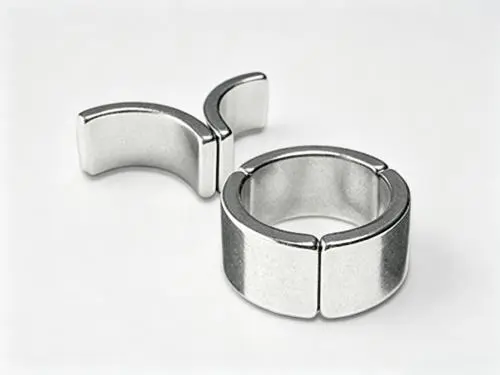
Understanding Curved Permanent Magnets
Specialized methods are used to make arc-shaped magnetic parts from samarium cobalt (SmCo) or neodymium-iron-boron (NdFeB) materials that have been fused. The accuracy needed to make these parts is higher than that needed to make standard block magnets because motor performance is directly affected by accuracy in dimensions. We look at a few basic features of these parts that determine whether they are right for demanding applications when we specify them.
Magnetic Field Distribution and Curvature Benefits
The bent shape changes the way magnetic flux moves through a motor unit in a basic way. When placed in rotors, flat magnets leave uneven air gaps. Arc segments, on the other hand, stay at the same distance from the stator throughout spinning. This consistency means that the torque is delivered more smoothly and there is less electromagnetic noise. The radial direction of magnetic domains within bent segments directs flux toward the center line, which makes the movement of energy as efficient as possible. When used at speeds higher than 10,000 RPM, this design advantage really shines through because it reduces heat production and makes parts last longer.
Material Selection for Performance and Durability
To choose between NdFeB and SmCo materials, you have to weigh the performance requirements against the conditions of use. Neodymium-based magnets have very high energy levels (up to 52 MGOe), which means they can provide the highest torque density for applications that need to be light, like electric vehicle traction motors. Standard grades of these materials keep working well up to 180°C, while EH and AH grades make the temperature range up to 200–230°C. Alternatives to samarium cobalt work very well in places where the temperature is higher than 250°C or where better rust protection is needed without any protective layers. Material science experts who work with manufacturing partners can help you make this choice based on your unique temperature patterns and weather exposure.
Critical Dimensional Specifications
The success of motor integration depends on how well the dimensions are controlled. The standard segment we sell has an R3 maximum corner radius, an outer radius of 32.4 mm, an inner radius of 29.5 mm, a length of 59.5 mm, a nominal thickness of 6.5 mm, and an outer radius of 32.4 mm. Tolerances for rotational measurements must stay within ±0.05 mm according to these standards. This makes sure that the air gap spacing is the same in all rotor settings. Tighter tolerances directly lead to better motor efficiency and less vibration, which is why quality control and precision grinding are necessary steps in the manufacturing process. As part of quality assurance, magnetic property testing, measurement proof using coordinate measuring tools, and surface integrity checking are all done to make sure that there are no flaws in the coating that could affect the long-term dependability.
Types and Design Considerations of Curved Permanent Magnets
Arc Segment and Multi-Pole Configurations
The most common type of design is standard arc segments made for 4-pole or 8-pole motor configurations. The magnetization of these parts is the same all the way through, and the direction of orientation can be radial, diametrical, or multi-pole, depending on the motor topology. Radial orientation sends flux in a direction that is perpendicular to the inner surface of the arc. This works great for surface-mount permanent magnet motors. Multi-pole magnetization makes alternating north-south patterns within a single segment. This cuts down on the number of separate parts needed for complicated motor designs. We make pieces with anywhere from 4 to 64 poles, which can be used in a wide range of situations, from industrial servo motors to small drone propulsion systems.
Magnetization Methods and Their Performance Impact
The binding process can happen either before or after the parts are put together, and each has its own benefits. Pre-magnetized pieces make handling and assembly easier, but they need to be carefully fixed in place so that parts don't stick together while the rotor is being built. Post-assembly magnetization makes handling easier, but you need high-power pulse magnetizing equipment that is tuned for the shape of the rotor. This method makes sure that the fields are perfectly aligned and that the flux is distributed evenly, but it takes longer to make things. During the design phase, our engineering team looks at how the parts are put together and suggests magnetization sequences that meet both the needs for high magnetic performance and efficient production.
Integration Considerations for Motor Assemblies
When installing arc segments, you need to pay attention to the type of glue you use, the temperature expansion factors, and the spread of mechanical stress. High-performance epoxy glue can handle the spinning forces that happen during high-speed operation and keep the bond strong even when the temperature changes. Because neodymium magnets and steel rotor cores have different coefficients of thermal expansion, the gap between them needs to be carefully measured to keep them from breaking or coming apart. We give you assembly instructions that include information about the types of adhesives to use, when they should cure, and how much torque they should have based on your motor's operating range.
Comparing Curved Permanent Magnets to Alternative Solutions
When making purchases, it's helpful to know how the performance of different magnetic technologies compares. Even though arc segments cost more per unit than flat magnets, the benefits they bring to the whole system often make up for it.
Performance Advantages Over Flat Magnets
Putting flat magnets in rotor sections that are shaped like cylinders makes air gaps that vary in size and lowers the average flux density by 15 to 25 percent compared to properly fitted Curved Permanent Magnet arc segments. This loss of efficiency directly leads to more copper loss, larger motor frames, or reduced torque output. Arc segments eliminate this geometric mismatch, allowing designers to create more compact designs with higher power density. When air gaps remain consistent during rotation, cogging torque—the variation in parasitic force that causes vibration and noise—is significantly reduced. This vibration reduction is especially beneficial for applications requiring smooth motion control, such as medical imaging equipment or precision CNC machines.
Electromagnet Comparison for Dynamic Applications
Electromagnets let you change the field strength by changing the current, but they have problems with copper loss, heat management, and control that aren't present in permanent magnet systems. When used with batteries, where every watt of loss limits the operating range, the energy efficiency benefit of permanent magnets becomes very important. Modern neodymium arc segments offer stable field strengths greater than 1.3 Tesla without continuously consuming power. This makes them the best choice for electric vehicle traction motors, where efficiency directly affects driving range. Electromagnets can be very complicated for some uses, like when they need to weaken the field or change the torque characteristics. But permanent magnet hybrid designs often do the same thing better overall.
Cost-Performance Analysis for Procurement Planning
The initial costs of neodymium arc segments are three to five times higher than those of ferrite alternatives. This is why some procurement teams choose ceramic magnet specifications. When system-level factors are taken into account, this cost difference gets a lot smaller. Neodymium's high energy content makes it possible to make motors that are smaller, lighter, and contain less copper and steel. For large-scale applications, the extra cost of the magnet is usually covered within the first year of production. This is because compact designs make manufacturing more efficient and improve performance in the field. As part of our buying talks, we use total cost modeling to help you make choices that are in line with your business goals. This model takes into account things like the cost of materials, how efficiently they are manufactured, and how well they run their businesses.
Procurement and Sourcing Guide for Curved Permanent Magnets
To get trusted sources of precision magnetic components, you need to look at more than just the price that a seller quotes. Long-term partnership success depends on stable supply chains, consistent quality, and technical support.
Evaluating Supplier Technical Capabilities
Companies that have patents on magnetic materials or industrial methods show that they can come up with new ideas that improve performance. We have three idea patents and six utility model patents in our collection. These cover methods of magnetism, sealing technologies, and processes for controlling dimensions. This foundation for intellectual property supports customization features that let standard designs be changed to fit the needs of a particular application. Ask for proof of quality management certifications, such as ISO 9000 and automotive-grade IATF 16949 compliance, when you are evaluating potential suppliers. For regular batch quality, these certificates show that the process controls and tracking systems are advanced.
Customization Processes and Lead Time Expectations
Logistics and Quality Assurance for International Procurement
For global sourcing to work, logistics solutions need to be flexible and find a balance between cost and delivery reliability. For large shipments, we offer sea freight. For orders that need to be delivered quickly, we offer air freight. For samples and urgent restocking, we offer international express services through DHL, FedEx, and UPS. All packages use neutral inner boxes and outer boxes that are resistant to moisture and shock to keep magnetic parts safe during foreign shipping. If you ask, custom packaging can be made to fit your specific handling needs. Third-party test reports from well-known labs that confirm RoHS compliance, magnetic property verification, and accurate measurements are all part of the quality documentation. These documents make it easier to get goods through customs and meet the quality assurance needs of companies that make cars and industrial equipment.
Practical Applications and Case Studies of Curved Permanent Magnets
Arc segment magnets are very important in the transportation, industrial automation, and renewable energy industries. Understanding the specific needs of a program helps buying teams choose parts that meet practical needs.
Electric Vehicle and E-Mobility Applications
The most difficult place for permanent magnets to be used is in the traction motors of electric vehicles. These motors have to work at a lot of different speeds, handle a lot of different temperatures, and keep working well for more than 150,000 miles. Our arc segments made for electric vehicles use temperature-stable grades that keep coercivity above 17 kOe at 180°C. This keeps the magnets from losing their shape permanently during long-term high-power use. Precision-ground pieces have stable dimensions that keep air gaps the same, so the motor works efficiently at all speeds. E-bike and scooter motors have similar designs that are optimized for small packaging and cost-effective manufacturing. The materials used are chosen so that they can handle temperatures of 120 to 150°C while climbing hills for a long time.
Industrial Motor and Automation Systems
Industrial robots and CNC machines use servo motors, which need to give torque smoothly and keep track of their positions accurately. When arc segments have tight dimensional tolerances, they lower cogging torque, which can lead to positioning errors and poor surface finish in machining tasks. The magnetic stability of properly chosen neodymium grades ensures that motor constants stay the same over the life of the equipment, so calibration accuracy can be kept without having to make any field adjustments. Curved segments give generator rotors in industrial power systems a high flux density, which lets designers make smaller alternators with better power density. Specialized coating systems, like epoxy and Everlube, work better in harsh environments than standard nickel-copper-nickel plating because they can handle chemical exposure and mechanical wear better.
Emerging Applications in Renewable Energy
More and more wind turbine generators are using permanent magnets to improve how well they capture energy and lower the amount of maintenance that needs to be done. Arc segments made for these uses combine the magnetic performance with the cost limitations that come with making megawatts of electricity. By creating a constant magnet field, excitation losses are eliminated. This makes the system 2-3% more efficient, which is a big difference when you think about how many hours it runs every year. Chemical processing magnetic pump couplings use curved segments to send torque through containment barriers without physically penetrating the shaft. This keeps dangerous fluids from leaking. For these uses, you need coats and materials that don't rust and keep working well in high-temperature settings.
Conclusion
Arc-shaped magnetic components that are precisely manufactured, including Curved Permanent Magnet solutions, offer measurable performance benefits in motor and generator applications where design decisions are based on efficiency, compactness, and reliability. Because curved segments provide superior geometric advantages compared with flat ones, they improve electromagnetic efficiency, reduce vibration, and enhance service life. Advances in material science, especially in high-temperature neodymium grades, continue to expand applications in increasingly demanding temperature environments. A reliable procurement partnership should consider not only the initial cost of the components but also the overall system performance benefits, total cost of ownership, and the supplier’s quality control, technical support, and supply chain reliability. With 20 years of manufacturing experience, we support both standard product delivery and customized development programs designed to meet specific performance requirements.
FAQ
What advantages do arc segments offer over straight magnets in motor applications?
Arc segments maintain uniform air gaps between rotor and stator throughout rotation, eliminating the flux density variations that occur when flat magnets are installed in cylindrical assemblies. This geometric advantage improves motor efficiency by 15-25%, reduces cogging torque and vibration, and enables more compact motor designs with superior power density.
Can dimensions and magnetic properties be customized for specific applications?
Customization is supported based on customer drawings or samples, including modified dimensions, tightened tolerances, specialized magnetic grades, and post-processing services such as surface coatings and custom magnetization patterns. Engineering consultation helps optimize specifications for your performance requirements and manufacturing processes.
What lead times should procurement teams expect for volume orders?
Standard samples ship within 10-15 days, allowing design validation before committing to production volumes. Bulk orders require 35-40 days, reflecting precision manufacturing, coating application, magnetization, and comprehensive quality verification. Expedited production can accommodate urgent requirements through direct engineering coordination.
Partner with Angu for Precision Magnetic Solutions
Procurement managers and engineering teams seeking a reliable curved permanent magnet supplier benefit from angu's combination of manufacturing expertise, quality certifications, and technical innovation. Our ISO 9000 and IATF 16949 certifications demonstrate the process maturity required for automotive-grade consistency, while our patent portfolio reflects ongoing investment in manufacturing technology advancement. Twenty years of production experience support both standard catalog fulfillment and complex OEM partnerships requiring custom magnetic solutions. We deliver components within 30-day standard timelines, with flexible logistics supporting sea freight, air transport, and express delivery aligned with your inventory strategies. Quality assurance includes one-year warranty coverage and responsive replacement support for any performance issues. Contact our engineering team at chenrf@angu.com to discuss your application requirements and receive detailed technical recommendations for optimizing motor performance through precision magnetic components.
References
1. Campbell, P. (2018). Permanent Magnet Materials and Their Application. Cambridge University Press.
2. Jahns, T.M. & Sarlioglu, B. (2013). The Incredible Shrinking Motor Drive: Accelerating the Transition to Integrated Motor Drives. IEEE Power Electronics Magazine, 1(4), 20-34.
3. Gutfleisch, O., Willard, M.A., & Brück, E. (2011). Magnetic Materials and Devices for the 21st Century: Stronger, Lighter, and More Energy Efficient. Advanced Materials, 23(7), 821-842.
4. Zhu, Z.Q. & Howe, D. (2007). Electrical Machines and Drives for Electric, Hybrid, and Fuel Cell Vehicles. Proceedings of the IEEE, 95(4), 746-765.
5. Coey, J.M.D. (2020). Permanent Magnets: Plugging the Gap. Scripta Materialia, 67(6), 524-529.
6. Brown, D., Ma, B.M., & Chen, Z. (2002). Developments in the Processing and Properties of NdFeB-Type Permanent Magnets. Journal of Magnetism and Magnetic Materials, 248(3), 432-440.
YOU MAY LIKE