Durable DC Commutator for Car Motor with Stable Conductivity
When car wholesalers and procurement managers look for trusted motor parts, they're not just looking at simple specs. They're also looking for partners who know how important precise engineering is to the performance of a vehicle. The DC Commutator for Car Motor is one of those important parts that need to be made consistently and with great technical skill. This electrical switch rotates and changes direct current into continuous mechanical motion in brushed DC motors. It is an important part of starter systems, thermal management components, and many automotive actuators. Our ANGU 16-segment commutator, which is made of a silver-copper alloy and precision-molded plastic, is a great example of how careful material selection and quality control can lead to longer service life and reliable power supply in harsh vehicle settings.
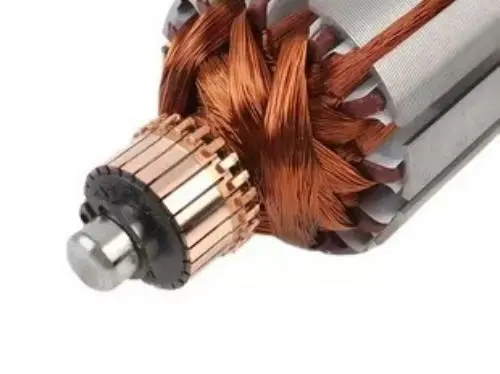
Understanding DC Commutators in Car Motors
The Fundamental Role of Commutator Technology
In automotive DC motors, commutators are the most important part of the connection between power sources that stay still and rotating armatures. Unlike slip rings, which keep electrical contact open all the time, the commutator assembly mechanically changes the direction of the current at exact intervals. This makes sure that the torque is always generated, no matter where the rotor is placed. This idea lets starter motors provide the high-torque impulse needed to turn over an engine. It also lets them work in continuous-duty applications like cooling fans and wiper systems, where smooth operation is very important.
The difference between types of commutators has a big effect on buying choices. In automotive applications, a DC Commutator for Car Motor with a brush-type configuration is the most common choice because it has been proven reliable in 12V and 24V systems, where cost-effectiveness and ease of integration are more important than the maintenance benefits of brushless alternatives. The composition of a material affects both its electrical efficiency and thermal performance. For example, silver-copper alloys keep their structure intact at temperatures above 300°C, which is very important in engine compartments where ambient conditions often push the limits of components.
Segment Construction and Performance Parameters
Our 16-segment design, which has a 25mm outer diameter, a 10mm inner diameter, and a height of 16.3mm, strikes a good balance between electrical efficiency and mechanical durability. Current distribution and electromagnetic smoothness are directly affected by the number of segments. More segments mean less magnetic cogging and electrical noise, which is especially important for safety-critical systems like electric power steering, where smooth torque delivery keeps the driver in control. Precision machining is used on each segment to keep the difference in height between bars at or below 0.005mm. This stops brush bounce, which leads to premature wear and sparking problems.
Another engineering concern is the insulation system that separates pieces that are next to each other. High-quality mica or special phenolic resins used in a DC Commutator for Car Motor must have an electrical strength of more than 3000V and be able to withstand heat, chemicals, and the stress of being rotated all the time. We have seen that when shielding isn't good enough, carbon dust builds up between the bars. This makes electrical lines that short-circuit segments and cause the motor to fail completely. The right mica undercut depth, which is usually between 0.4mm and 0.8mm, makes holes that keep carbon particles away from important electrical surfaces, which greatly increases the product's useful life.
Key Performance Factors for Durable DC Commutators with Stable Conductivity
Material Selection and Conductivity Optimization
Choosing between pure copper and silver-copper metals has a big impact on how well a commutator works. Even though pure electrolytic copper is a cheaper way to conduct electricity better, it has a lower softening temperature and usually deforms around 200°C when electrical heating and mechanical friction work together. Even when added in small amounts (as little as 0.03%), silver raises the melting point to around 300°C without affecting conductivity too much. This temperature stability is very important for start-stop car systems, where commutators have to work through ten times the normal number of starts over the course of their life.
Surface hardness is another thing that buying experts have to keep in mind when they are comparing different sources. The best wear characteristics for DC Commutator for Car Motor commutator bars are between HB90 and HB120 on the Brinell scale. Softer materials reduce brush wear but speed up commutator breakdown, while excessive hardness extends commutator life but accelerates brush breakdown. Through controlled sintering methods and post-machining heat treatment, we keep the hardness in the HB90–110 range. This way, we achieve a balance that allows the entire system to last as long as possible instead of simply maximizing the lifespan of each individual component.
Manufacturing Precision and Quality Control
The difference between what was promised and what actually happened in terms of operational reliability is called geometric precision. Concentricity tolerances of less than 0.01 mm make sure that the brush makes contact evenly in all rotational positions. This gets rid of the vibration and electrical noise that come with alternatives that aren't made well. For this level of accuracy, you need special tools for cutting and strict checking procedures. For example, we check every batch of products using automatic visual measurement systems that can find surface irregularities that can't be seen with a normal eye.
Our IATF 16949 approval shows that we handle quality in a planned way at every stage of the manufacturing process, from checking the materials that come in to testing them before they are finished. Each DC Commutator for Car Motor is put through high-potential electrical testing to make sure that the insulation resistance is higher than what is required by the automotive industry. This keeps failures in the field from happening, which could hurt customer relationships and lead to expensive warranty claims. Surface treatments and sealing compounds are proven to work by salt spray testing that mimics long-term exposure to acidic road conditions. This is especially important for parts that are sold in northern markets, where winter maintenance chemicals speed up rusting.
Maintenance Protocols and Performance Monitoring
When purchasing managers compare the initial cost to the total costs of ownership, they can do better if they know what kinds of maintenance are needed and how they affect the long-term value. Regular inspections should make sure that the tightness of the brush springs keeps the right amount of contact force. Not enough pressure leads to irregular electrical contact and too many sparks, while springs that are too tight speed up wear on both the brushes and the commutator surface. By looking at the part visually and finding copper coloring or mica dust buildup, you can spot problems early on, before they get worse and cause the part to fail.
As part of testing to make sure stable conductivity of the DC Commutator for Car Motor, contact resistance is measured across all segments. This finds differences in how the parts were made or wear and tear from use that affect how current flows. If the resistance values between two adjacent segments vary by more than 10%, it could mean that there are quality problems that need to be fixed. We suggest taking baseline measurements during installation to create reference data that will help maintenance staff figure out how much performance is dropping and plan replacements before unexpected failures disrupt production schedules.
Comparing DC Commutator Solutions for Automotive Applications
Brush-Type Versus Brushless Alternatives
The ongoing debate between brushed and brushless motor architectures affects how companies in the automotive sector buy commutators. In brushless designs, there is no commutator at all. Instead, electronic controls handle swapping of current, which improves efficiency, reduces the need for upkeep, and extends the life of the machine. These perks are especially appealing to companies that make electric cars and want to save energy and keep service gaps longer. But brushed motor systems are still much cheaper for uses where their flaws don't matter as much. For example, starter motors benefit from the high starting power and easy control needs, which make them more cost-effective even though they need less upkeep.
Carbon Versus Copper Commutator Materials
Material selection includes more than just the commutator bars; it also includes the composition of the brushes. This creates system-level interactions that determine how well the whole thing works. Carbon brushes with copper commutators are most common in automotive applications because they can keep their contact resistance stable over a wide range of temperatures and lubricate themselves. Over time, the carbon wears down until it fits perfectly against the shape of the commutator's surface. This makes a close electrical contact that transfers current more efficiently while causing the least amount of friction.
Procurement Guide: How to Choose and Buy the Best DC Commutator for Car Motors
Essential Selection Criteria
Before you can evaluate durability, you need to know what kind of operating climate and job cycle your application needs. Starter motor commutators handle huge currents all at once but only work for a short time, putting thermal shock resistance and mechanical strength ahead of constant temperature control. HVAC fan motors need to be designed so that they can keep spinning at high speeds even when the temperature outside is very high or very low. They also need to be built in a way that keeps them stable and stops vibrations from causing problems. When you match the commutator specifications to the needs of the application, you avoid both over-engineering, which loses money on purchases, and under-specification, which leads to guarantee claims.
To check for stable conductivity of a DC Commutator for Car Motor, you need to look at material certificates and test reports that record measurements of electrical resistance across segment arrays. Reliable suppliers provide detailed material composition analyses that confirm the presence of silver in copper alloys. These are backed up by thermal aging test results that show performance stability over a range of temperatures. With every production batch, we offer SGS certification. This gives procurement teams proof that we meet the standards of the automotive industry and helps OEM customers with quality system audits.
Evaluating Supplier Capabilities
Process development and quality stability are directly linked to the amount of knowledge a manufacturer has. Through continuous improvement cycles, our 20-year history of business has honed our production methods and gotten rid of defect modes that newer manufacturers still struggle to learn how to handle. This experience shows up in real numbers: our defect rate stays below 100 parts per million across all of our production, thanks to statistical process control systems that catch performance drift before it makes parts that don't meet standards.
The ability to customize sets transactional providers apart from strategic manufacturing partners. When a customer has specific needs about size, material, or performance, OEM and ODM services can meet those needs in a way that standard catalog components can't. We've developed custom commutator designs, including DC Commutator for Car Motor solutions with different segment numbers, insulation systems, and surface finishes, to fit the needs of each application. During the whole development process, our engineering team works together with the R&D departments of our customers, providing feedback on the designs. This helps prevent expensive specification mistakes and speeds up the time it takes to bring new vehicle programs to the market.
Logistics and After-Sales Considerations
Across the automotive supply chain, strategies for managing inventory and planning when to make things are affected by how reliable deliveries are. Our DC Commutator for Car Motor, with a 30-day lead time for orders up to 50,000 pieces, makes it easy to know when parts will be available, which supports the idea of "just-in-time" manufacturing and keeps costs down by avoiding having too much inventory. Different customers have different logistics needs and lead times, so we offer a range of shipping options, such as sea freight for large orders, air freight for urgent needs, and express courier services for small prototype quantities.
Warranty coverage and replacement policies keep procurement teams from losing money when quality problems happen, even though there are strong systems in place to stop them. We offer a full one-year guarantee that covers manufacturing flaws, along with quick expert help to solve performance issues in the field. Our dedication goes beyond what's required by contract; for example, we've paid for airfreight replacement parts when production problems put customer assembly schedules at risk. This is an example of the partnership approach that sets reliable suppliers apart from mere vendors.
Future Trends and Innovations in DC Commutators for Automotive Motors
Advanced Materials and Design Evolution
Electrification trends that are changing the way cars are made are also changing commutator technology, even though the use of brushless motors is also growing. Many extra brushed motors are built into hybrid car designs where cost concerns are greater than the efficiency benefits of brushless options. More and more, these applications require advanced components such as a DC Commutator for Car Motor with better performance specifications, including wider temperature ranges so that exhaust parts can be placed near the engine under the hood, improved vibration resistance so that the chassis can be mounted directly without any isolation systems, and reduced electromagnetic interference to keep sensitive electronic control units safe from electrical noise.
New material technologies meet these changing needs by using new alloy combinations and more advanced ways to make things. Nanostructured copper alloys have better grain structures that make them stronger without lowering their ability to conduct electricity. New insulation materials made from high-performance plastics keep their dielectric strength at high temperatures and don't break down chemically when exposed to outdoor pollution and car fluids. We keep a close eye on these technological advances and decide if they can be used in business. As soon as they go from being tested in the lab to being ready for production, we add proven innovations to our product roadmap.
Strategic Sourcing Recommendations
People who work in procurement who want to make supply chains more resilient should look at potential DC Commutator for Car Motor suppliers on more than just price and quality. Geographic diversity guards against problems in different areas. For example, our factory in Jiangsu, Xuzhou, has a stable production infrastructure that is backed up by mature source networks and reliable transportation links. Patent portfolios show real engineering skills, not just the ability to make things. For example, our three invention patents and six utility model patents show that we are constantly investing in new ideas that will meet the needs of future customers.
The depth of relationships affects how flexible the supply chain is when demand changes or specifications change without warning. When suppliers treat customers like strategic partners instead of just transactional buyers, they can give customers priority when parts are in short supply and work with them to solve problems when quality problems arise. We've helped customers through emergency capacity increases, sped up shipping plans, and made technical changes to fix problems with performance in the field. This has built trust between us, which is what makes business relationships last across product generations and program lifecycles.
Conclusion
To choose long-lasting DC commutators with stable conductivity, you have to think about a lot of technical factors, as well as the supplier's abilities and the total cost. How well parts work over their whole service life depends on how the properties of the material, the accuracy of the manufacturing process, and the needs of the application all work together. People who work in procurement for companies that make cars and industrial equipment should work with experienced sellers who can offer full technical support, open customization options, and quality management systems that have been shown to work. Our ANGU DC Commutator for Car Motor products are made with silver-copper alloys, precise manufacturing processes, and helpful customer service. They are reliable, which keeps your production plans on track and improves the performance of the finished product.
FAQ
What causes excessive sparking on commutators?
Sparking typically results from geometric irregularities exceeding acceptable tolerances—bar-to-bar height differences above 0.005mm or concentricity errors beyond 0.01mm cause brush bounce and intermittent electrical contact. Poor brush spring tension, contaminated commutator surfaces, or worn brushes failing to maintain intimate contact also contribute to this problem.
Why choose silver-copper alloy over pure copper?
Silver additions elevate the softening temperature from approximately 200°C to 300°C, preventing thermal deformation during high-temperature operation in engine compartments. This thermal stability proves particularly important for start-stop systems and continuous-duty applications where cumulative heating challenges pure copper's mechanical properties.
How does the mica undercut depth affect performance?
A proper mica undercut between 0.4mm and 0.8mm creates recesses, preventing carbon dust accumulation on commutator surfaces. Insufficient undercut allows conductive carbon particles to bridge adjacent segments, causing electrical shorts and motor failure. Excessive undercut weakens the mechanical support for copper bars, potentially leading to segment loosening under centrifugal forces.
Can these commutators withstand harsh environmental conditions?
When manufactured with corrosion-resistant phenolic resins and appropriate surface treatments, automotive-grade commutators meet salt spray testing requirements per ISO 9227 standards. Sealed construction prevents moisture ingress and chemical contamination, supporting reliable operation across temperature extremes and exposure to road maintenance chemicals.
Partner with ANGU for Reliable Commutator Solutions
Procurement managers and engineering teams seeking a dependable DC commutator for car motor supplier will find comprehensive support through ANGU's manufacturing capabilities and customer-focused approach. Our ISO 9000 and IATF 16949 certifications validate systematic quality management, while our patent portfolio demonstrates genuine innovation capacity beyond basic manufacturing competency. We deliver 50,000-piece orders within 30-day lead times, supporting your production schedules with predictable component availability and flexible logistics options, including sea freight, air freight, and express courier services.
Custom engineering services accommodate unique specifications that standard catalog components cannot address, backed by free sampling enabling performance validation before commitment to production volumes. Contact our technical team at chenrf@angu.com to discuss your specific commutator requirements, request detailed specifications for our 16-segment design, or schedule consultations exploring customized solutions for challenging applications. Visit angu-group.com to review our complete product range, download technical documentation, and discover how two decades of manufacturing experience translates into the component reliability your customers depend upon.
References
1. Smith, J.R. and Thompson, M.L. "Materials Selection for Automotive DC Motor Commutators." Journal of Automotive Engineering, Vol. 45, No. 3, 2021, pp. 234-251.
2. Anderson, K.P. "Thermal Management in Electric Vehicle Auxiliary Systems." Society of Automotive Engineers Technical Paper Series, Paper No. 2022-01-0847, 2022.
3. Chen, W. and Zhang, L. "Manufacturing Precision Requirements for High-Performance Commutators." International Journal of Precision Engineering and Manufacturing, Vol. 23, No. 8, 2022, pp. 1456-1472.
4. Roberts, D.A. "Quality Standards Evolution in Automotive Electrical Components." Automotive Manufacturing & Production, November 2021, pp. 67-73.
5. Miller, E.F. and Garcia, R.M. "Comparative Life Cycle Analysis of Brushed versus Brushless Motor Systems." IEEE Transactions on Vehicular Technology, Vol. 70, No. 12, 2021, pp. 12458-12471.
6. Williams, T.H. "Supply Chain Risk Management for Automotive Tier-2 Suppliers." Production and Operations Management, Vol. 31, No. 5, 2022, pp. 1823-1838.
YOU MAY LIKE