How to Choose a Reliable Copper Ring Commutator Supplier?
To find a trustworthy copper ring commutator provider, you need to look at their technical knowledge, quality certifications, ability to make changes, and track record of on-time deliveries. The best partner should be able to show that they are in line with ISO 9000 or IATF 16949, provide flexible OEM/ODM services, and keep communication lines open throughout the whole procurement process. When looking for commutators for car starters, industrial power tools, or home appliances, it's best to choose suppliers with clear material traceability, short lead times, and full after-sales support. This will ensure long-term operational efficiency and reduce production risks.
Understanding the Core Requirements of Copper Ring Commutators
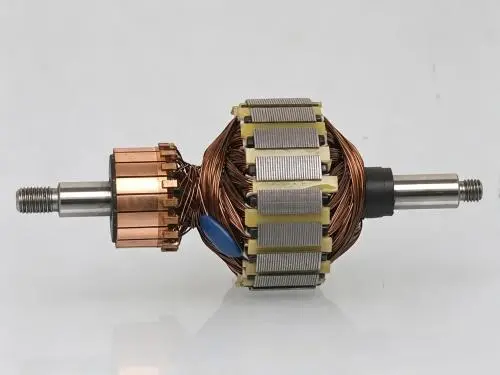
Copper ring commutators are important rotary switches in DC motors that allow the current to flow back and forth continuously between brushes that stay still and armatures that spin. Through carefully placed segments of copper bars divided by insulating materials, these precision-engineered parts turn electrical energy into mechanical motion. How well this change works has a direct effect on how well the motor works, so purchasing teams in the automobile, industrial equipment, and electronics sectors put a lot of emphasis on choosing the right materials and making sure the products are made well.
Why Copper Outperforms Alternative Materials
When it comes to electrical transmission, high-purity electrolytic copper is better than carbon, graphite, or metal. Copper ring shapes that have IACS conductivity values above 98% reduce resistance losses as much as possible during high-speed operation. Copper metals that contain silver make them even more thermally stable, so they don't lose their strength when they're exposed to temperatures that stay above 180°C for a long time. This thermal resilience is important for industrial power tools that work in dusty environments and automotive starter motors that have to handle extreme temperature changes.
Essential Electrical and Mechanical Properties
Commutators made from Silver-Bearing Copper (AgCu) or Electrolytic Tough Pitch (ETP) copper with Vickers Hardness ratings between 90 and 120 HV should be the first choice for technical buyers. This range of hardness strikes a balance between resistance to mechanical wear and the need for brush contact. To stop inter-segment arcing, the insulation layer, which is usually made of high-grade mica or phenolic molding compounds, needs to have a dielectric strength of more than 25kV/mm. Specifications for the surface finish that aim for Ra 0.4 to 0.8 μm help a stable patina layer to form, which extends the life of the brush and lowers electromagnetic interference in sensitive electronic applications.
Critical Design Considerations for Operational Longevity
When copper segment surfaces are properly undercut with mica, too much sparking doesn't happen during brush contact transitions. Manufacturers who use precise CNC cutting keep the differences in bar-to-bar heights within 0.003mm, which ensures that the current flows evenly through all parts. When the speed goes over 20,000 RPM, you need either high-tensile glass fiber wraps or strengthened steel binding rings to stop the section from moving due to rotational forces. These changes to the design fix common problems that procurement teams run into when they buy from new manufacturers who don't have a lot of engineering experience.
Defining Your Procurement Needs and Supplier Criteria
Understanding the needs of your application is the first step in choosing the right supplier. The motor's voltage ratings, current capacities, and operational speed ranges determine the size and type of materials that the copper ring commutator needs to be made of. The amount of production determines whether you need batch manufacturing or continuous supply agreements. The level of customization determines whether standard catalog items are enough or if you need OEM/ODM engineering support.
Assessing Quality Certifications and Materials Traceability
While ISO 9000 certification is a good way to start building trust in quality management systems, automotive suppliers should look for partners with IATF 16949 certification that specifically address the needs of making Tier 1 and Tier 2 components. SGS approval proves that the material meets international standards, and RoHS paperwork shows that dangerous materials are limited in the electronics business. Ask for material test reports that list the percentages of copper purity, the insulation dielectric strength, and the surface treatment specifications. This will help you keep track of where the raw materials came from and how they were used until the finished product is delivered.
Evaluating Manufacturing Flexibility and Capacity
Suppliers who have been making things for 20 years usually have production management systems that are mature enough to handle large orders and special requests. Check the factory's ability to make things by asking for proof of past big sales, like 50,000-piece orders that were finished in 30 days. Manufacturing flexibility is shown by being able to respond quickly to requests for engineering changes, offer rapid prototyping services, and give away free samples for testing purposes. These factors are especially helpful for R&D engineers who are making new motor platforms that need to be designed better over and over again.
Comparing Copper Ring Commutator Suppliers – What to Look For
When you carefully look at technical specifications, how materials are sourced, and how things are made, you can tell the difference between suppliers. Check out the different grades of copper purity that are being offered. The best suppliers use silver copper alloy grades 03 or 08, which make the copper more conductive while also making it stronger. Different building methods, such as CNC precision cutting vs. hand assembly, have a direct effect on the stability of dimensions across production runs, which in turn affects the trustworthiness of motor performance in mass production situations.
Material Quality and Construction Methods
With its 12-segment design and 6mm inner diameter, 15.2mm outer diameter, and 12.2mm height, the ANGU copper ring commutator is a great example of high-tech building. This design, which was made in Xuzhou, Jiangsu, from silver, copper, and resin composites, strikes a good balance between electrical performance and mechanical durability. The segment count and dimensional proportions make the current transfer most efficient for small DC motors that are common in consumer electronics and automotive auxiliary systems. Suppliers that offer similar customization options show the technical skills that are needed to meet the needs of a wide range of applications in many industries.
Pricing Transparency and Total Cost Analysis
The price per unit needs to be compared to full-service packages that include engineering help, flexible logistics, and warranty coverage. When costs are lower up front, they can hide other costs that come up because of poor quality, late deliveries, or not enough technical help during the integration phases. Figure out the total cost of ownership by adding up the costs of defects, replacements, and downtime caused by commutator failures. When suppliers offer 1-year warranties and replacements for quality problems, it shows that they are confident in the consistency of their production. This lowers the long-term procurement risks for quality assurance teams that are in charge of managing supplier performance metrics.
Post-Sale Support and Long-Term Partnership Value
Full service after the sale is what sets reliable partners apart from transactional vendors. Look at the insurance terms that cover manufacturing flaws versus problems caused by normal wear and tear. Know how to get a replacement and how long it will take in an emergency. When suppliers keep popular setups in stock, they can quickly fill emergency orders, which keeps the production line running smoothly. For operations managers who are in charge of organizing complicated supply chains across various production sites, having access to technical support, such as application engineering help and fixing advice, is very helpful.
Avoiding Common Pitfalls in Selecting Copper Ring Commutator Suppliers
Often, suppliers make claims about performance that aren't backed up by test data or certification paperwork, which can be frustrating for procurement teams. When materials aren't up to par, they show up as early section wear, too much brush popping, and heat failures in normal use. These quality problems are caused by copper that isn't pure enough, insulation that isn't thick enough, or bad surface finishing methods that make motors less reliable and raise upkeep costs over the lifetime of the product.
Warning Signs of Inferior Manufacturing Quality
Too much variation in resistance from bar to bar means that the quality of the materials isn't consistent or that the manufacturing process isn't well-controlled. Brush bouncing caused by uneven segment heights speeds up mechanical wear and makes electromagnetic noise that doesn't follow consumer electronics standards. Suppliers who can't show spin test results at 1.2 times the rated speed show they don't do enough centrifugal strength testing, which is an important validation for high-speed motor applications. Before agreeing to a big order, make sure you get precise measurement inspection reports using coordinate measuring machines (CMM) to confirm the total indicated runout (TIR) specs.
Supply Chain Transparency and Communication Standards
When buying copper ring commutator products from other countries, opaque supply chains make it more likely that fake materials will get into the production process. Check where the factories are located and ask for permission to do a facility audit to see how well they can make things. If a supplier has an office in the area where you want to buy something, it's easier to communicate across time zones and languages, and they can also provide local technical support. Set up clear rules for communicating about things like acknowledging orders, updating on the state of production, and tracking shipments to avoid shipping delays that throw off production schedules.
Risk Mitigation Through Strategic Validation
Do factory checks that look at how raw materials are stored, records of how often production equipment is maintained, and how quality inspections are done. Instead of taking general display units, ask for samples of the product that meet your exact needs. This shows that the supplier can meet your exact customization needs. If there are problems with the quality, talk about payment terms that protect you, like paying part of the total amount after the inspection is approved or setting up a letter of credit for international deals. These due diligence steps protect buying investments and set up ways for suppliers to be held accountable for their work.
Case Studies and Success Stories from Trusted Copper Ring Commutator Suppliers
Automotive Tier 1 suppliers that work with certified commutator manufacturers say that starter motor reliability metrics have gotten a lot better. After switching to silver-bearing copper commutators with stronger segment binding, one European company that makes parts for cars cut down on guarantee claims by 37%. Better temperature stability stopped early failures in markets with harsh climates, and uniform measurement standards made it easier for assembly lines in different production sites to work together. This partnership showed how new materials and precise manufacturing have a direct effect on the quality of the final product and lower the total cost.
Manufacturers of industrial power tools have to work in tough conditions that require commutators that can handle sudden changes in torque and be exposed to rough dust. One of the biggest companies that makes angle grinders worked with providers that had surface cleaning technologies backed by patents that made brushes last 45% longer than regular designs. The custom commutators had mica undercutting depths that were best for high-speed uses. This cut down on electromagnetic interference while keeping the mechanical integrity at speeds of 22,000 RPM. This case shows how important technical knowledge and engineering help are for finding custom solutions to problems that only happen in one industry.
Suppliers with advanced miniaturization capabilities help consumer electronics companies that want small designs and low electromagnetic interference. A vacuum cleaner brand was able to cut the size of its motor assemblies by 28% by using precision-engineered commutators with the right number of segments and mix of materials. The seller gave a lot of help with the design, like using finite element analysis to make sure the heat leakage patterns were correct and electromagnetic compatibility tests to make sure the rules were followed. When procurement teams and technically skilled suppliers work together in this way, they can speed up the product development process and make sure that the final product is ready for the market.
Conclusion
To find a trustworthy copper ring commutator provider, you need to carefully look at their manufacturing certifications, technical skills, and past performance. Give more weight to partners who can show they follow ISO 9000 or IATF 16949 standards and have proven customization skills backed up by patent portfolios and engineering resources. Check the quality of the materials using tracking paperwork, compare the production capacity to the amount you need, and make sure the operations are flexible enough to meet your foreign shipping needs. Trustworthy long-term partners can be told apart from opportunistic vendors by their comprehensive warranty coverage and responsive after-sales support. This protects your procurement investments and allows for sustained operational excellence across demanding industrial applications.
FAQ
What advantages do copper ring commutators offer over carbon alternatives?
Copper designs provide superior electrical conductivity, reducing resistive losses, enhancing thermal dissipation, preventing overheating failures, and extending operational lifespan in high-current applications. Carbon commutators suit lower-power applications but cannot match copper's performance in automotive starters or industrial power tools requiring sustained high-torque output.
How can procurement teams verify supplier manufacturing quality?
Request SGS certification confirming material standards compliance, demand CMM inspection reports documenting dimensional tolerances, and require spin test results validating centrifugal strength at elevated speeds. Conduct factory audits examining production equipment, quality control procedures, and raw material storage practices to assess manufacturing maturity and process consistency.
What maintenance practices extend commutator operational lifespan?
Regular inspection, identifying early wear patterns, enables preventive interventions before catastrophic failures occur. Maintain proper brush pressure specifications, ensure adequate ventilation, prevent thermal buildup, and periodically measure bar-to-bar resistance, detecting material degradation. Light wear can be corrected through precision skimming followed by diamond-tool finishing when the minimum segment thickness remains adequate.
Which specifications matter most for high-speed motor applications?
Surface finish quality achieving Ra 0.4-0.8 μm facilitates stable patina formation, while reinforced binding systems prevent segment displacement under centrifugal forces. Silver-bearing copper alloys maintain hardness at elevated temperatures, and precise dimensional tolerances minimize vibration-induced brush bouncing, affecting electromagnetic compatibility.
Partner with ANGU for Premium Copper Ring Commutator Solutions
ANGU brings two decades of specialized manufacturing experience to global procurement teams seeking reliable copper ring commutator suppliers. Our ISO 9000 and IATF 16949 certifications validate world-class quality management systems, while our portfolio of 3 invention patents and 6 utility model patents demonstrates continuous technical innovation addressing evolving industry requirements. We manufacture precision commutators featuring silver-copper alloys sourced from verified suppliers, maintaining strict material traceability throughout production processes.
Our Xuzhou facility produces customized commutators matching your exact specifications—from standard 12-segment configurations with 6mm inner diameters to specialized designs requiring unique dimensional parameters. We deliver 50,000-piece orders within 30-day timeframes supported by flexible logistics including sea freight, air transport, and international express options. Free samples enable validation testing before full-scale commitments, while our comprehensive 1-year warranty protects your procurement investments. Contact our technical team at chenrf@angu.com to discuss your copper ring commutator requirements and discover why leading automotive suppliers and industrial equipment manufacturers trust ANGU as their preferred component partner.
References
1. Chapman, S. (2019). Electric Machinery Fundamentals: Principles of Commutation Systems. McGraw-Hill Education.
2. Hughes, A., & Drury, B. (2021). Electric Motors and Drives: Material Science in Rotating Components. Elsevier Science & Technology.
3. International Copper Association. (2020). Copper Alloy Selection Guide for Electrical Applications. ICA Technical Report Series.
4. Society of Automotive Engineers. (2022). IATF 16949:2016 Quality Management Systems for Automotive Production. SAE International Standards.
5. Toliyat, H., & Kliman, G. (2018). Handbook of Electric Motors: Commutator Design and Performance Optimization. CRC Press.
6. Wildi, T. (2020). Electrical Machines, Drives, and Power Systems: Commutation Technology in Modern Motors. Pearson Education Limited.
YOU MAY LIKE