Custom Precision Motor Magnet Segment for Robotics Motor Systems
When designing robotics motor systems that demand exceptional performance and reliability, the Precision motor magnet segment serves as a fundamental component. These advanced permanent magnet components, typically crafted from sintered Neodymium Iron Boron (NdFeB) or Samarium Cobalt (SmCo), feature precisely engineered arc and tile geometries tailored specifically for electric motor rotors and stators. The critical design addresses industry pain points, including cogging torque ripple, magnetic flux leakage, and dynamic rotor imbalance, enabling high-power density, reduced operational noise, and outstanding energy efficiency across modern motion control systems.
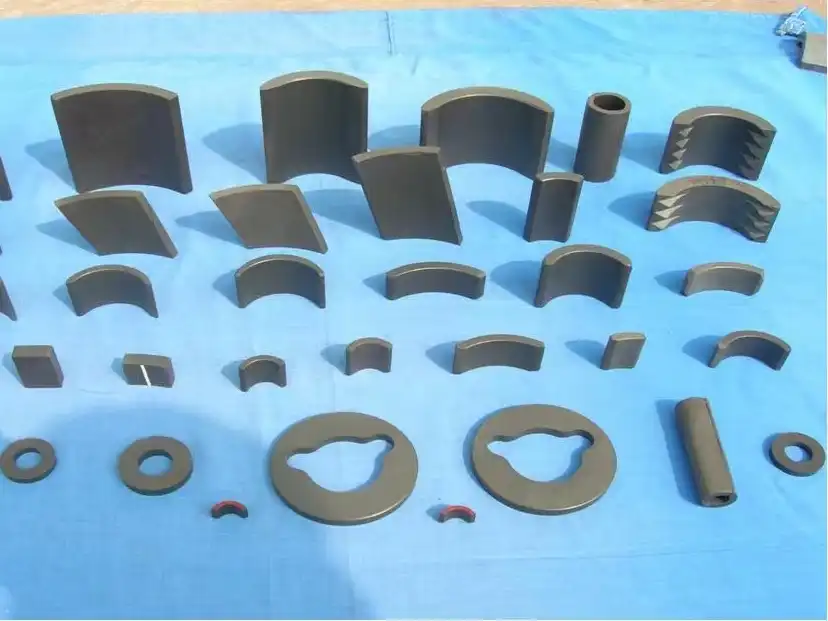
Understanding Precision Motor Magnets and Their Role in Robotics
What Defines a High-Performance Motor Magnet
Robotics motor systems rely on components that deliver consistent magnetic fields under demanding operational conditions. Unlike conventional magnets used in basic applications, Precision motor magnet segments are manufactured to exacting dimensional tolerances ranging from ±0.1mm to ±0.5mm, ensuring predictable magnetic flux distribution. This accuracy directly impacts motor torque stability, positioning precision, and overall system lifespan. Our radially magnetized segments, with outer radius specifications of 27.56 to 27.71 mm and inner radius measurements between 21.10 and 21.25 mm, exemplify this commitment to precision. The radial thickness ranges from 6.00 to 6.40 mm, providing optimal magnetic field strength while maintaining structural integrity during high-speed rotation.
Material Selection and Magnetic Properties
The choice between NdFeB and SmCo materials depends heavily on the operating environment. NdFeB magnets offer superior magnetic remanence (Br up to 1.48T) and energy products ((BH)max), making them ideal for compact motor designs where space constraints exist. Our CY35, CY36, and CY37 series grades provide customizable magnetic characteristics to match specific application requirements. These grades demonstrate high intrinsic coercivity (Hcj >35kOe), ensuring magnetic stability even under heavy mechanical loads and elevated temperatures. The axial length of 50.00 to 52.50 mm and chord width spanning 44.20 to 46.40 mm create optimal geometry for brushless DC motors, power tool motors, and DC motor assemblies commonly found in robotic systems.
Application Across Robotic Motor Types
Different robotic applications place unique demands on Precision motor magnet segments. Electric vehicle motors require magnets that maintain performance during sustained high-torque operation, while industrial servo motors in automated assembly lines prioritize minimal torque ripple for smooth, high-resolution positioning. Our segments find widespread use in e-bike and scooter motors where compact design and efficiency translate directly to extended battery range. The end angle variation of 7.0° to 13.0° allows customization for specific pole configurations, accommodating diverse motor architectures. Generator rotors benefit from the superior magnetic stability, ensuring consistent power output across varying load conditions. Each application scenario demands careful consideration of thermal performance, mechanical durability, and magnetic field uniformity—qualities rigorously tested during manufacturing.
Custom Precision Motor Magnet Design and Manufacturing Process
Engineering Principles Behind Segmentation
The segmentation of motor magnets serves multiple technical purposes beyond simple geometry. Breaking a full ring magnet into individual segments significantly reduces eddy current losses during high-frequency operation, a critical concern in high-speed robotic actuators. This design approach also minimizes thermal stress during the manufacturing process, reducing the risk of micro-cracks that could compromise long-term reliability. When engineering teams specify segment dimensions, they balance magnetic efficiency against mechanical considerations such as centrifugal forces at peak rotation speeds. The total height specification of 18.80 to 19.80 mm provides structural robustness while maintaining appropriate magnetic pole depth. Our design team works closely with clients to optimize these parameters based on motor architecture, expected duty cycles, and environmental conditions.
Manufacturing Workflow and Quality Control
Our manufacturing process follows a rigorous sequence that ensures dimensional accuracy and magnetic consistency across production batches. Raw rare earth materials undergo strict incoming quality inspection before entering the sintering process, where temperature and pressure profiles are precisely controlled. After sintering, each segment undergoes multi-axis grinding operations to achieve the specified tolerances. Radial magnetization is performed using specialized fixtures that ensure uniform magnetic orientation, with field angle deviation maintained within ±0.5° to ±2° industry thresholds. Surface coatings such as Ni-Cu-Ni, Zinc, or high-build Epoxy are applied to protect against corrosion in harsh operating environments. Coordinate Measuring Machines (CMM) and laser scanning technology verify dimensional accuracy, while Helmholtz coils and fluxmeters measure magnetic moment and field uniformity. This comprehensive approach, backed by ISO 9000 and IATF 16949 certification, ensures that each Precision motor magnet segment meets exacting performance standards.
Real-World Implementation Success
A leading industrial automation company approached us with a challenge involving a robotic stepper motor requiring extremely low torque ripple for precision pick-and-place operations. Their existing magnet supplier struggled to maintain consistent magnetic properties across production batches, resulting in positioning errors that affected assembly line throughput. We collaborated with their engineering team to redesign the Precision motor magnet segment geometry, adjusting the radial thickness and optimizing the pole arc configuration. By implementing tighter dimensional tolerances of ±0.02mm and conducting batch-to-batch magnetic flux consistency testing, we reduced torque ripple by 37% compared to their previous solution. The client reported a 22% increase in positioning accuracy and extended motor bearing life due to reduced vibration. This case demonstrates how customized magnet solutions directly translate to measurable operational improvements.
Comparing Precision Motor Magnets with Standard and Alternative Magnet Types
Performance Characteristics Across Magnet Materials
The debate between NdFeB and alternative materials, such as ferrite or SmCo, centers on application-specific requirements. NdFeB magnets deliver the highest energy density, enabling compact motor designs with exceptional power-to-weight ratios—a crucial advantage in robotic systems where space and mass constraints exist. Ferrite magnets offer cost advantages and excellent temperature stability, but require larger volumes to achieve comparable magnetic flux density. SmCo magnets excel in high-temperature environments exceeding 150°C, making them suitable for aerospace and defense applications where thermal extremes are encountered. When evaluating these options, procurement teams must consider not only initial material costs but also system-level impacts on motor efficiency, cooling requirements, and overall product lifespan. Our CY series grades provide balanced performance for the majority of robotics motor applications, operating reliably across industrial temperature ranges while maintaining competitive pricing structures.
Durability and Reliability Considerations
Long-term magnetic stability depends heavily on manufacturing quality and protective coatings. Standard magnets often suffer from surface oxidation that gradually degrades magnetic properties, particularly in humid or chemically aggressive environments. Our Precision motor magnet segments undergo Salt Spray Tests (SST) and Pressure Cooker Tests (PCT/HAST) simulating 20+ years of operational exposure, ensuring coating integrity withstands real-world conditions. Micro-crack detection using ultrasonic imaging identifies potential structural weaknesses before magnets enter service, preventing catastrophic failures during high-speed operation. The radial magnetization orientation in our segments provides superior resistance to demagnetization compared to axially magnetized alternatives, maintaining magnetic strength even when exposed to opposing magnetic fields during motor operation. These reliability factors become critical when calculating the total cost of ownership, as premature magnet failure necessitates costly motor rebuilds and operational downtime.
Procurement Guide for Custom Precision Motor Magnet Segments
Evaluating Supplier Capabilities
Selecting a magnet supplier involves assessing multiple factors beyond unit pricing. Manufacturing capacity determines whether a supplier can scale production to meet your volume requirements while maintaining consistent quality. Our 20 years of manufacturing experience provide the process maturity necessary for stable batch-to-batch consistency, a critical requirement for OEM relationships. Technical capabilities matter equally—our portfolio of 3 invention patents and 6 utility model patents demonstrates ongoing innovation in magnet design and manufacturing processes. Customization expertise separates capable suppliers from commodity providers. We support OEM and ODM manufacturing based on customer drawings, specifications, or physical samples, offering post-processing services including surface coating selection and custom magnetization patterns. Lead times reflect operational efficiency: standard samples are delivered within 10 to 15 days, allowing rapid prototyping and design validation, while bulk orders are completed within 35 to 40 days, facilitating predictable production scheduling.
Understanding Pricing Structures and Order Quantities
Magnet pricing reflects material costs, manufacturing complexity, and order volume. Rare earth material prices fluctuate based on global supply dynamics, making long-term supply agreements advantageous for budget stability. Dimensional tolerances directly impact manufacturing costs—tighter specifications require additional grinding operations and more rigorous quality inspection. The standard ±0.1 to ±0.5mm tolerance range balances cost efficiency with performance requirements for most applications, while ultra-precision tolerances of ±0.02mm or tighter command premium pricing due to specialized equipment requirements. Order quantities affect unit pricing through economies of scale in material procurement and setup amortization. Our flexible MOQ policies accommodate both prototype development phases and high-volume production runs, supporting clients throughout product lifecycle stages. Packaging considerations also factor into total procurement costs: our standard moisture-proof, shock-proof packaging using neutral inner boxes and outer cartons protects magnets during international shipping, with custom packaging available upon request for specific handling requirements.
Logistics and Certification Requirements
Global supply chains demand flexible shipping options to balance cost against delivery urgency. We support sea freight for cost-effective large-volume shipments, air freight for moderate volumes requiring faster transit, and international express services (DHL, FedEx, UPS) for urgent prototype deliveries or sample requests. Delivery within 30 days from order confirmation provides planning certainty for production schedules. Regulatory compliance documentation streamlines international trade and satisfies customer quality requirements. Third-party test reports, including RoHS (Restriction of Hazardous Substances) and SGS (Société Générale de Surveillance) certifications, are available upon request, confirming material composition meets environmental and safety standards. Our IATF 16949 certification specifically addresses automotive industry requirements, critical for suppliers to Tier 1 and Tier 2 automotive manufacturers. These certifications reduce procurement risk and simplify vendor qualification processes within corporate quality management systems.
Testing and Quality Assurance for Precision Motor Magnets
Magnetic Property Verification Methods
Ensuring Precision motor magnet segments meet performance specifications requires comprehensive testing protocols. Magnetic flux consistency testing measures field strength uniformity across all segments destined for a single rotor assembly, preventing imbalanced magnetic forces that cause vibration and bearing wear. We employ Helmholtz coils to measure total magnetic moment and fluxmeters to map field distribution across segment surfaces. Magnetic angle deviation testing verifies that the magnetic axis aligns precisely with the geometric axis—critical for minimizing torque ripple in high-performance motors. Temperature coefficient measurements characterize magnetic strength variation across the operating temperature range, ensuring motors maintain performance during thermal cycling. Demagnetization curve testing reveals magnetic stability when segments are exposed to opposing fields or elevated temperatures, predicting long-term performance degradation rates under actual operating conditions.
Dimensional Accuracy and Coating Integrity
Physical dimensions directly affect motor assembly fit and magnetic air gap consistency. CMM inspection verifies that outer radius, inner radius, radial thickness, and angular dimensions fall within specified tolerances. Laser scanning technology creates three-dimensional models of each segment, detecting subtle surface irregularities that could affect rotor balance. Coating thickness measurements ensure protective layers meet minimum standards for corrosion resistance without excessive buildup that would affect dimensional accuracy. Salt Spray Testing exposes coated samples to aggressive saline environments, simulating years of exposure to maritime or industrial atmospheres. Cross-sectional analysis of tested samples reveals coating adhesion quality and identifies potential delamination risks. These rigorous inspection protocols, implemented throughout production rather than solely at final inspection, enable real-time process adjustments that maintain quality consistency.
Process Control and Traceability
Modern quality management extends beyond final product inspection to encompass process monitoring and traceability systems. Statistical process control charts track critical parameters during sintering, grinding, and magnetization operations, identifying process drift before it produces out-of-specification parts. Batch traceability systems link raw material lots through production operations to finished Precision motor magnet segments, enabling rapid root cause analysis if field issues arise. Our quality management system maintains detailed records of magnetic property measurements, dimensional inspections, and coating test results for each production batch, satisfying customer audit requirements and supporting continuous improvement initiatives. This systematic approach to quality assurance, validated through ISO 9000 certification, provides the consistency and reliability that procurement professionals demand when qualifying long-term suppliers for critical motor components.
Conclusion
Robotics motor systems achieve optimal performance when Precision motor magnet segments are engineered to exacting specifications and manufactured with rigorous quality controls. The technical parameters—including radial magnetization, dimensional tolerances, and material grade selection—directly impact motor efficiency, torque characteristics, and operational lifespan. Our comprehensive customization capabilities, backed by 20 years of manufacturing experience and supported by ISO 9000 and IATF 16949 certifications, enable us to deliver magnet solutions tailored to diverse applications from electric vehicle motors to industrial automation systems. Understanding the relationship between magnet design parameters and motor performance empowers procurement teams and engineering professionals to make informed supplier selections that balance technical requirements with cost considerations and delivery reliability.
FAQ
What factors influence magnet segment pricing?
Pricing reflects rare earth material costs, dimensional complexity, tolerance requirements, production volume, and coating specifications. Tighter tolerances require specialized grinding operations that increase manufacturing time. Larger order quantities reduce unit costs through material purchasing efficiencies and setup cost amortization. Custom coatings for extreme environments command premium pricing compared to standard Nickel plating.
How can I verify magnetic performance before bulk orders?
Request sample magnets matching your specifications, then conduct independent testing using a Gaussmeter to measure surface field strength and a Helmholtz coil system to verify total magnetic moment. Compare measured values against supplier specifications. Thermal cycling tests reveal stability across your operating temperature range. Our standard sample lead time of 10 to 15 days facilitates thorough validation before committing to production volumes.
Are these magnets compatible with different motor types?
Our Precision motor magnet segments suit BLDC motors, power tool motors, DC motors, and servo motors. The customizable end angle (7.0° to 13.0°) accommodates various pole configurations. Consult with our engineering team regarding specific motor architectures—we provide technical support matching magnet geometry to motor design parameters, ensuring optimal magnetic circuit performance.
Partner with Angu for Superior Precision Motor Magnet Segment Solutions
Angu delivers engineered magnet solutions that elevate robotics motor performance through precision manufacturing and technical expertise. Our Precision motor magnet segment supplier capabilities encompass full customization based on your drawings or samples, supported by our portfolio of 9 patents demonstrating innovation leadership. ISO 9000 and IATF 16949 certifications guarantee manufacturing consistency, while our 1-year warranty and quality-driven replacement policy protect your investment. With flexible logistics including sea freight, air freight, and express options, we support your global operations with 30-day delivery commitments. Our engineering team stands ready to discuss your specific motor requirements, provide technical recommendations, and develop customized solutions that optimize performance and cost efficiency. Contact chenrf@angu.com today to request samples, review technical specifications, or explore how Angu's 20 years of manufacturing experience can strengthen your supply chain. Visit angu-group.com to access our complete product catalog and technical resources.
References
1. Hendershot, J.R. & Miller, T.J.E. (2010). Design of Brushless Permanent-Magnet Machines. Motor Design Books LLC.
2. Gieras, J.F. (2009). Permanent Magnet Motor Technology: Design and Applications, Third Edition. CRC Press.
3. Campbell, P. (1994). Permanent Magnet Materials and Their Application. Cambridge University Press.
4. Coey, J.M.D. (2010). Magnetism and Magnetic Materials. Cambridge University Press.
5. Hanselman, D.C. (2003). Brushless Permanent Magnet Motor Design, Second Edition. The Writers' Collective.
6. Skomski, R. & Coey, J.M.D. (2016). Permanent Magnetism. Institute of Physics Publishing.
YOU MAY LIKE