Reliable Copper Ring Commutator for High Speed Motors
When high-speed motors power your automotive assembly lines, industrial equipment, or precision electronics, the component managing electrical current transfer becomes mission-critical. A copper ring commutator serves as the rotary electrical switch within DC and universal motors, reversing current direction between the rotor and external circuit to enable continuous mechanical rotation. For procurement managers evaluating starter motors, fuel pumps, power tools, or home appliances requiring speeds exceeding 15,000 RPM, selecting a commutator that balances conductivity, thermal stability, and wear resistance directly impacts equipment uptime and total cost of ownership.
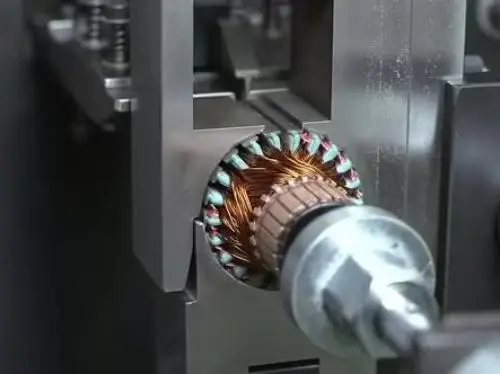
Understanding Copper Ring Commutators in High-Speed Motors
Why Copper Dominates High Speed Applications
Copper was chosen as the main material because it has a high electrical conductivity value of at least 98% IACS (International Annealed Copper Standard). This feature makes sure that there aren't many resistive losses during current transfer, which lowers the amount of heat that is generated, which speeds up the breakdown of components. Its mechanical strength keeps segments from moving or 'bar jumping' at high speeds where spinning forces are higher than 20,000 RPM. This is a failure mode that would cause the motor to shut down catastrophically.
In addition to being a good conductor, copper is also a great thermal manager. The material's thermal conductivity of 400 W/m·K quickly gets rid of heat, keeping the structure strong when automotive starter motors go through extreme temperature changes from -40°C to 150°C. Copper alloys containing silver make this even better by raising the temperature at which the metal starts to soften. This keeps the metal from losing its strength during long periods of high heat load operation.
Operational Mechanisms and Failure Prevention
The commutator works with copper bars that are divided by insulation materials, which are usually high-quality mica or phenolic moulding compounds that have a dielectric strength of more than 25kV/mm. As the carbon brushes touch the rotating segments, the direction of the current changes at exact intervals. This keeps the electromagnetic field orientated so that torque delivery is always the same.
Some common ways that things break are too many sparks from brushes that aren't seated properly, thermal warping from not enough heat dissipation, and insulation breakdown from voltage spikes. These issues are fixed by precision undercutting of mica below copper segments (which makes sure there is smooth brush contact), reinforced steel rings for managing centrifugal force, and surface finishes between Ra 0.4 and 0.8 μm that help a stable patina layer form.
Comparing Copper Ring Commutators With Other Commutator Types
Material Properties and Performance Benchmarks
The choice of materials has a big impact on working factors for a copper ring commutator. Carbon ring commutators are less expensive, but they have a higher electrical resistance (10–15 times that of copper), which means they generate excessive heat in high-current situations. In comparison, a copper ring commutator provides better electrical conductivity, lower resistance, and improved thermal performance for demanding motor applications. Graphite types have qualities that make them self-lubricating, but they lose their ability to carry electricity and their mechanical strength when they are rotated at high speeds for a long time.
Copper slip rings are similar in that they are made of the same material, but they are physically different from a copper ring commutator. They maintain electrical contact without switching the current, so they can only be used in AC systems or for signal transfer and not for switching DC motors. Benchmarking data from the automotive industry shows that copper ring commutator designs maintain 97–99% efficiency across a range of loads, while carbon alternatives only maintain 88–92% efficiency. This means that in batch production environments, using a high-quality copper ring commutator can save measurable amounts of energy, improve motor reliability, and reduce long-term operating costs. With excellent conductivity, wear resistance, and stable performance, copper ring commutator components are widely used in power tools, automotive motors, and industrial DC motor systems.
Application-Specific Suitability Analysis
Automotive starter motors need to be able to give torque quickly while being exposed to high and low temperatures and vibrations. In this case, silver-copper alloys (AgCu) with a Vickers Hardness (HV) of 90 to 120 can withstand repeated contact cycles without breaking. Copper is durable and requires less upkeep, which is good for industrial angle grinders that work in dusty areas. For example, carbon brushes on copper commutators usually last 800 to 1,200 hours of use, while carbon rings only last 400 to 600 hours.
Low electromagnetic interference (EMI) is important for home appliances like vacuum cleaners. Copper's ability to keep commutation clean with little arcing lowers radio frequency noise. This makes sure that FCC Part 15 and CE EMC standards are met without the need for extra filtering parts that make the design more complicated.
Manufacturing and Quality Considerations for Copper Ring Commutators
Precision Manufacturing Processes
The first step in production is choosing the raw materials. Depending on the temperature needs, electrolytic tough pitch (ETP) copper or special metals are used. The steps in the production process are:
Material Preparation and Alloying: Spectroscopic analysis of copper ensures that the composition is free of oxygen. Adding silver (0.03-0.08% for Tuy Silver Copper grades 03 and 08) changes the structure of the grains to make the copper better at handling heat.
Precision Machining: For bar-to-bar height variation, CNC turning can get dimensions to within 0.003mm. Total indicated runout (TIR) measurements below 0.005mm keep brush wear from being uneven. Segment geometry is based on what the customer wants. Standard configurations include 12-segment designs with a 6mm inner diameter, a 15.2mm outer diameter, and a 12.2mm height. Custom profiles can also be made to fit specific motor designs.
Insulation Assembly: The pieces are held together with thermosetting materials that are bonded with resin and can work continuously at temperatures above 180°C. Inserting a mica sheet keeps the electrical isolation even when the device is under centrifugal stress.
Surface Finishing: Diamond tools make mirror finishes that speed up the formation of a protected patina, which is a layer of copper oxide that keeps brush contact resistance stable.
Quality Control Protocols and Certifications
Multi-stage verification is used in factories that follow ISO 9000 and IATF 16949 standards for producing advanced copper ring commutator components. Centrifugal spin tests turn copper ring commutator parts at 1.2 times their rated speed under high-temperature conditions to make sure they are mechanically sound and able to withstand demanding operating environments. To ensure insulation reliability, dielectric strength (hi-pot) testing applies voltages that are higher than operational maximums. When testing the resistance from bar to bar on a copper ring commutator, manufacturers can identify production defects that cause uneven current distribution and reduced motor efficiency.
SGS certification provides third-party confirmation of the material composition and dimensional accuracy of copper ring commutator products, meeting the traceability requirements of professional procurement teams. Material certificates, dimensional inspection reports, electrical performance data, and quality records are included in batch documentation. These documents are essential for OEM evaluations, automotive supplier audits, and quality system compliance in the automotive industry.
A case study from a Tier 1 automotive provider showed that changing from standard ETP copper to silver-bearing alloys in a copper ring commutator reduced commutator-related field failures by 63% over three production years. By improving the durability and reliability of copper ring commutator assemblies, maintenance intervals increased from 50,000 to 78,000 working cycles, while warranty costs dropped by $1.2 million per year across the product range. These results demonstrate that high-quality copper ring commutator solutions can improve motor performance, extend service life, and provide significant economic value for automotive and industrial applications.
Procurement Guide: Selecting and Purchasing Copper Ring Commutators
Technical Compatibility and Selection Criteria
Aligning the motor specifications is the first step in making a purchase choice. Some important factors are the number of segments (which affects how smoothly the commutation happens), the maximum current, the maximum diameter and height, and the maximum speed of spinning. Insulation class is based on voltage needs; for example, 24V car uses are different from 230V industry tool needs.
When judging a supplier's skills, you have to look at how flexible they are with customisation. OEM/ODM manufacturing can handle custom motor designs and offers technical help for making prototypes. When suppliers offer free samples, they can be tested on a bench before committing to mass production. This lets you check the electrical performance, mechanical fit, and heat behaviour in real-world situations.
Supplier Evaluation and Certification Requirements
Suppliers you can trust show that their factories are mature by showing certifications and a history of operations. IATF 16949 certification covers quality systems specific to the automotive industry, such as PPAP (Production Part Approval Process) documentation and FMEA (Failure Mode and Effects Analysis) protocols. ISO 9000 compliance makes sure that processes are always the same.
Patent portfolios show how technically skilled a company is; invention patents that cover alloy formulations or manufacturing processes show that the company is investing in new ideas. Transparency in production capacity is important. Suppliers who promise to deliver 50,000 pieces within 30 days make the supply chain more reliable for planning production schedules. Logistics flexibility (sea freight, air freight, and fast shipping through DHL, FedEx, and UPS) meets the needs of foreign distribution and immediate restocking.
After-sales support frameworks differentiate strategic partners from transactional vendors. One-year warranties with replacement guarantees for quality issues protect against batch defects. Quick expert help fixes problems with applications during the integration stages, which shortens the time it takes to start a new product.
Cost Optimization Strategies
Bulk order negotiations for copper ring commutator products use economies of scale, and tiered price systems reward customers who commit to purchasing a certain amount every year. However, balancing cost and quality remains the most important factor when selecting a copper ring commutator supplier. When inferior commutators fail 15% more often, the initial savings are quickly lost due to increased warranty claims, production downtime, and damage to brand reputation. High-quality copper ring commutator components provide better electrical conductivity, wear resistance, and long-term reliability, making them a more valuable choice for demanding motor applications.
The total cost of ownership for a copper ring commutator includes the product price, shipping costs, applicable duties or tariffs, inventory management expenses, and the expected service life of the component. Premium copper ring commutator products that cost 18–22% more but last 40% longer often deliver a better return on investment, especially in situations where motor replacement costs are significantly higher than the value of the commutator itself. By choosing durable copper ring commutator solutions with stable performance and strict quality control, manufacturers can reduce maintenance frequency, improve motor efficiency, and achieve greater long-term cost savings in automotive, power tools, and industrial equipment applications.
Optimizing Performance and Longevity of Copper Ring Commutators
Maintenance Best Practices and Inspection Protocols
To make commutators last longer, they need to be maintained in a planned way. Every 500 hours of operation for industrial equipment and once a year for car use, visual inspections find early signs of wear, such as uneven surface patterns, too much copper dust buildup, or the formation of visible segment steps. Verifying the tightness of the brush spring keeps the contact pressure steady, which stops arcing caused by not enough contact force.
In dusty or humid places, keeping things from getting contaminated is very important. Particulates that speed up abrasive wear can't get into sealed motor housings or positive-pressure ventilation systems. Managing lubrication is tricky because motor bearings need grease, but commutator surfaces need to stay dry because oils attract conductive trash that can cause short circuits.
Monitoring electrical parameters finds degradation before it happens. If the resistance measurements from bar to bar show a difference of more than 5% from the baseline, it means that the insulation is wearing away unevenly. Infrared thermography finds hotspots that are caused by bad brush contact or insulation breakdown between segments and shafts.
Innovations Enhancing Durability and Efficiency
Advances in material science keep making things work better. Nano-grain copper structures make things harder without losing their ability to carry electricity. This makes them last longer in rough settings. New resin mixes with ceramic fillers make them more thermally stable, so they can be used continuously at temperatures that would have normally caused them to break early.
New techniques in manufacturing include using lasers to create micro-patterns on the surface that help the patina form and the brush seat better. Machine vision algorithms in automated visual inspection systems can find flaws in dimensions that humans can't see. This makes sure that quality standards are met with no flaws, which is important for safety uses in cars.
Using standardised acceptance tests to check the quality after the purchase saves the money spent on procurement. When a seller sends something for inspection, the procedures should include important tests like using coordinate measuring machines (CMM) to check the dimensions, checking the dielectric strength, and destroying a sample to make sure it stays mechanically sound under centrifugal loads.
Conclusion
When choosing reliable copper ring commutators for high-speed motors, you have to think about technical specs, manufacturing quality, the reliability of the supplier, and the total cost. Material qualities, especially those of silver-containing copper alloys with controlled grain structure, have a direct effect on how long something works and how well it does its job in tough situations. Manufacturing precision, which is proven by ISO 9000 and IATF 16949 certificates, makes sure that measurements are correct and that batches are always the same, which is important for automatic assembly processes. Purchasing plans that focus on partnerships with suppliers that allow customisation, clear quality documentation, and quick after-sales support lower supply chain risks and boost performance. It is possible for companies to save money on motor-dependent operations and increase equipment uptime by combining new material innovations with advanced maintenance techniques.
FAQ
What differentiates copper commutators from carbon alternatives in high-speed applications?
In high-speed situations, what makes copper ring commutators different from carbon alternatives? Copper ring commutators have 10–15 times less electrical resistance than carbon rings. This means that they produce less heat and lose less energy when they are running at high speeds. This better conductivity means 5-7% more efficiency in industrial motor uses, and longer part life because it better gets rid of heat. While carbon types work well in low-current situations, they don't stand up to the heat stress of automobile starting motors or industrial power tools that spin faster than 15,000 RPM.
How do I verify a copper ring commutator matches my motor specifications?
How can I be sure that a copper ring commutator fits the needs of my motor? Check the segment count, inner/outer diameter, and height of the measures against the gaps in the motor housing and the shaft's measurements. Make sure that the current rating is 15-20% higher than the motor's peak draw. Make sure the voltage rating is the same as or higher than the system voltage and that the insulation class is right. Before placing an order for mass production, ask for free samples to be tested on a bench under real load conditions.
Can manufacturers customize commutator designs for proprietary motor configurations?
Can manufacturers change the designs of commutators to fit specific motor configurations? Suppliers with a good reputation and OEM/ODM skills can adapt to specific needs by changing section geometry, material makeup, and insulation systems. Design compatibility is ensured by engineering help during the prototype process. For custom tooling, the minimum order quantity is usually between 5,000 and 10,000 units, and the lead time is 6 to 8 weeks longer than for standard products.
Partner With a Trusted Copper Ring Commutator Manufacturer
Choose a reliable copper ring commutator manufacturer to work with. ANGU has been making high-speed motor parts for 20 years and has ISO 9000 and IATF 16949 certifications, as well as 3 invention patents and 6 utility model patents in precision commutator technologies. Our 12-segment copper ring commutators with silver-copper alloys (Tuy Silver Copper 03/08) and a 6mm inner diameter, 15.2mm outer diameter, and 12.2mm height have been used reliably in electronics, industrial equipment, and cars.
We promise to get you 50,000 pieces within 30 days, and we can ship them by sea freight, air freight, or fast shipping to fit your production plans. SGS approval verifies the quality of the materials and the accuracy of the measurements, and free samples let you check the performance before placing large orders. Custom OEM/ODM manufacturing lets you change designs to fit the specifics of your motor, and it comes with full tech support and a one-year guarantee.
Get in touch with our tech support team at chenrf@angu.com to talk about your copper ring commutator needs. ANGU has the manufacturing quality, supply chain reliability, and responsive support that your procurement strategy needs, whether you're looking for parts for a new product or ways to make existing motor designs work better. You can look at our full line of components and request technical specs by going to angu-group.com.
References
1. Bonnett, A. H. (2018). Root Cause Failure Analysis for AC Induction Motors in the Petroleum and Chemical Industry. IEEE Transactions on Industry Applications, Volume 54, Issue 3, pp. 3057-3069.
2. Hughes, A., & Drury, B. (2019). Electric Motors and Drives: Fundamentals, Types and Applications (5th Edition). Newnes Publishing, Oxford, United Kingdom.
3. Toliyat, H. A., & Kliman, G. B. (2017). Handbook of Electric Motors (2nd Edition). CRC Press, Boca Raton, Florida.
4. Society of Automotive Engineers. (2020). Surface Vehicle Standard J2764: Commutator and Slip Ring Service for Rotating Electrical Machines. SAE International, Warrendale, Pennsylvania.
5. International Copper Association. (2021). Technical Reference: Copper in Electrical Rotating Machines — Material Properties and Performance Benchmarks. ICA Publications, New York.
6. Zhang, L., Wang, H., & Chen, S. (2019). Thermal Analysis and Optimization of High-Speed Motor Commutators Using Silver-Bearing Copper Alloys. Journal of Materials Engineering and Performance, Volume 28, Issue 7, pp. 4312-4325.
YOU MAY LIKE