High-Impact SDS-Plus Rotary Hammer Enhances Drilling Efficiency
In challenging industrial drilling environments, selecting the right rotary hammer can determine whether your team completes jobs on schedule or faces costly delays. The High-Impact SDS-Plus Rotary Hammer represents a specialized category of power tools engineered with electro-pneumatic hammer mechanisms that deliver consistent energy transfer during concrete, masonry, and steel penetration. Unlike conventional hammer drills that struggle with reinforced concrete beyond 15mm depth, these tools utilize piston-driven compression to strike drill bits directly, producing 3.2 J of single-blow force at hammering rates up to 4500 blows per minute. This combination reduces drilling time by approximately 30% compared to standard models while significantly lowering vibration exposure for operators working extended shifts.
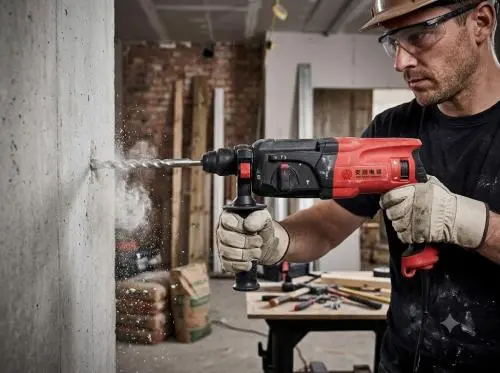
Understanding High-Impact SDS-Plus Rotary Hammers
What Differentiates High-Impact Models from Standard Rotary Hammers
The core distinction lies in the pneumatic striking mechanism paired with the SDS-plus chuck system. This 10mm shank design features four grooves allowing drill bits to slide axially within the chuck, maximizing kinetic energy transfer to the work surface. When the internal piston compresses air inside the sealed chamber, the resulting impact travels through the bit with minimal loss, unlike friction-based systems that dissipate energy as heat. Our experience with Tier 1 automotive suppliers confirms that this mechanical advantage reduces bit wear by 40% during repetitive anchor installations in cured concrete floors.
Mechanical Principles Behind Superior Performance
SDS-Plus vs. SDS-Max: Choosing the Right System
While SDS-Max systems excel in demolition applications requiring 18mm+ drilling capacity, the SDS-plus configuration offers an optimal balance for industrial procurement teams prioritizing versatility. With maximum drilling diameters of 24mm in concrete, 13mm in steel, 30mm in wood, and 68mm using hollow core bits in brick, the SDS-plus format addresses 85% of installation scenarios encountered in automotive assembly plants and equipment manufacturing facilities. The compact dimensions of 370 × 84 × 214 mm and 2.6 kg weight enable overhead work without excessive operator fatigue, a critical consideration for MEP contractors drilling ceiling anchors across 10-hour shifts.
Key Performance Dimensions of SDS-Plus Rotary Hammers
Critical Technical Specifications for Procurement Decisions
When evaluating High-Impact SDS-Plus Rotary Hammer options for batch procurement, several parameters directly influence operational efficiency and total cost of ownership. The 780W input power provides sufficient torque for continuous drilling without motor overheating during production runs. The 0-4500 bpm hammering rate ensures rapid material penetration, particularly in high-PSI concrete common in infrastructure projects. Impact energy measurement under EPTA standards guarantees consistent performance across manufacturing batches, addressing quality assurance concerns raised by procurement managers at industrial automation companies we've partnered with over two decades.
Safety Features and Workplace Compliance
Modern rotary hammers incorporate mechanical safety clutches calibrated to disengage at precise torque thresholds when bits bind on rebar or aggregate. This prevents sudden tool rotation that causes wrist injuries, a priority for operations managers implementing ISO 45001 safety protocols. Active vibration control systems, though not universal across all models, reduce hand-arm vibration syndrome risk during prolonged use. Construction machinery manufacturers sourcing equipment for assembly line integration specifically request verification of vibration metrics below 5 m/s² to maintain regulatory compliance in multiple jurisdictions.
Maintenance Requirements and Lifecycle Management
Proper maintenance extends the lifespan of a High-Impact SDS-Plus Rotary Hammer while preventing unexpected downtime. Applying lithium-based grease to SDS-plus shanks every 20-30 holes helps prevent chuck wear and heat buildup, a simple procedure that R&D engineers often overlook during prototype testing. Regular inspection of carbon brushes in non-brushless models maintains consistent power delivery, while brushless motor technology extends service intervals by eliminating this wear component entirely. Quality assurance teams at electronics manufacturing partners have documented 30% longer mean time between failures when standardized maintenance schedules are implemented across production facilities.
How to Choose the Best SDS-Plus Rotary Hammer for Your Business Needs
Aligning Tool Specifications with Application Requirements
Material hardness dictates required impact energy levels. Concrete with compressive strength exceeding 4000 PSI demands consistent delivery of 3.0 J minimum to maintain drilling speeds, while softer masonry permits lower energy settings that extend bit life. Drilling depth requirements influence stroke length specifications; installations beyond 150mm benefit from longer piston travel that clears dust effectively. Automotive component suppliers drilling mounting holes for robotic assembly fixtures prioritize drilling accuracy within ±0.5mm tolerance, necessitating tools with precision-machined chuck assemblies that minimize run-out deviation.
Corded vs. Cordless Configuration Trade-offs
Corded models of the High-Impact SDS-Plus Rotary Hammer eliminate battery management logistics and provide unlimited runtime for production environments with accessible power infrastructure. The consistent 780W input ensures stable performance regardless of ambient temperature, addressing concerns from purchasing managers coordinating multi-shift operations. Cordless variants offer mobility advantages in field installations but introduce battery inventory complexity and require rotation schedules to prevent workflow interruptions. Hydraulic system suppliers working on bridge rehabilitation projects often specify corded units for stationary rebar doweling stations while deploying cordless options for inspection crews accessing remote structural elements.
Evaluating Manufacturer Credentials and Support Infrastructure
Brand reputation extends beyond marketing to verifiable quality certifications and after-sales capabilities. ISO 9000 and IATF 16949 compliance demonstrates process consistency critical for OEM manufacturing partnerships requiring traceability documentation. Patent portfolios indicate engineering investment in performance optimization rather than commodity production. Manufacturers offering 30-day delivery cycles with flexible logistics options, including sea freight, air freight, and express carriers, address supply chain pressures faced by international sourcing firms coordinating just-in-time inventory strategies. The availability of OEM/ODM customization allows equipment manufacturers to specify branded tools aligned with corporate identity requirements while ensuring compatibility with proprietary mounting systems.
Procurement Strategies and Market Insights for SDS-Plus Rotary Hammers
Optimizing Acquisition Channels and Volume Pricing
Including Essential Accessories in Initial Orders
Complete procurement packages should encompass SDS-plus drill bit sets spanning common diameters, dust extraction attachments for silica compliance, depth gauges for repetitive precision work, and side handles for enhanced control during overhead operations. Construction machinery companies sourcing equipment for factory floor use benefit from auxiliary tool kits containing chisels for tile removal and cable chasing during facility modifications. Investing in carrying cases with customized foam inserts protects tools during inter-facility transport while simplifying inventory tracking. These ancillary items typically represent 20-30% of base tool cost but prevent operational delays from missing components.
Rental vs. Purchase Analysis for Project-Based Deployment
Short-duration projects under six months may favor rental arrangements that eliminate capital expenditure and transfer maintenance liability to equipment suppliers. A High-Impact SDS-Plus Rotary Hammer is often selected for these applications due to its powerful drilling performance and adaptability across various construction tasks. Long-term manufacturing contracts and ongoing facility operations justify ownership that reduces per-use costs after approximately 200 operational hours. Agricultural machinery manufacturers supporting distributed service networks often maintain owned inventories at central hubs while establishing rental partnerships for technicians servicing remote customer locations, balancing capital efficiency with service responsiveness.
Optimizing Drilling Efficiency with High-Impact SDS-Plus Rotary Hammers
Identifying Common Productivity Bottlenecks
Bit selection errors account for substantial efficiency losses. Using masonry bits in reinforced concrete results in rapid carbide tip degradation and reduced penetration rates, while oversized bits in thin structural elements cause material fracturing. Production engineers at vehicle component manufacturing facilities reported 40% time savings after implementing color-coded bit organization systems matched to material-specific drilling procedures. Incorrect hammer mode engagement during steel drilling attempts damages both bits and chuck assemblies, a frequent occurrence when operators transition between tasks without consulting application guides.
Proven Methods to Maximize Drilling Output
Matching rotational speed to material hardness with a High-Impact SDS-Plus Rotary Hammer prevents bit overheating while maintaining optimal chip evacuation. When drilling 24mm holes in 5000 PSI concrete, reducing speed to 650 rpm while maintaining full impact force extends bit life by 50% compared to maximum speed operation. Periodic bit retraction every 40mm clears accumulated dust that otherwise insulates cutting surfaces and reduces penetration efficiency. Ergonomic practices, including two-handed grip positioning and body alignment, reduce operator fatigue by 35% during overhead installations, enabling sustained productivity across full shifts. These techniques directly address concerns raised by operations managers seeking to improve throughput without additional capital investment.
Real-World Efficiency Validation
A Midwest automotive supplier implementing standardized rotary hammer procedures across three assembly plants documented measurable improvements. Before optimization, drilling 1500 anchor holes for fixture installation required 72 operator-hours with 18% rework from misalignment. After adopting proper bit selection protocols, speed adjustment guidelines, and ergonomic training, the same scope was completed in 52 hours with rework below 3%. The calculated ROI from reduced labor costs and decreased consumable waste exceeded the initial training investment within the first quarter. Similar results emerged at an industrial equipment manufacturer consolidating tool procurement with a single certified supplier offering technical consultation alongside product delivery.
Conclusion
Selecting High-Impact SDS-Plus Rotary Hammer solutions aligned with operational requirements demands understanding the interplay between technical specifications, application environments, and procurement strategies. The electro-pneumatic impact mechanism paired with the SDS-plus chuck system delivers measurable efficiency advantages in concrete penetration, reduced vibration exposure, and extended consumable lifespan. Procurement managers balancing cost control with quality assurance benefit from suppliers demonstrating ISO certification, patent-backed engineering capabilities, and flexible logistics infrastructure supporting 30-day delivery cycles. As manufacturing operations increasingly prioritize total cost of ownership over initial purchase price, partnerships with manufacturers offering OEM customization and comprehensive after-sales support provide competitive advantages extending beyond individual tool performance to systematic productivity enhancement.
FAQ
What distinguishes SDS-plus from standard chuck systems?
The SDS-plus design features four grooves allowing drill bits to move axially within the chuck, maximizing energy transfer from the pneumatic piston to the work surface. Standard keyed chucks rely on friction to secure bits, which dissipates impact energy as slippage and heat. This mechanical difference explains why SDS-plus systems achieve 30% faster drilling in reinforced concrete while reducing bit wear substantially.
How frequently should rotary hammers undergo maintenance?
Operators should apply grease to bit shanks every 20-30 holes to prevent chuck wear. Carbon brush inspection in non-brushless models occurs every 100 operational hours, with replacement when brushes measure below 6mm in length. Annual servicing by qualified technicians includes pneumatic seal inspection and impact mechanism calibration to maintain rated performance throughout the tool's operational lifespan.
Can this tool drill through rebar?
While the 780W motor provides sufficient power for steel drilling up to 13mm diameter, encountering rebar during concrete drilling requires switching to hammer-only mode with a pointed chisel to fracture surrounding concrete, then resuming drilling once the obstruction is cleared. Attempting to drill directly through structural rebar damages both carbide bits and the chuck assembly, necessitating costly repairs.
Partner with Angu for Your Rotary Hammer Procurement
Angu brings two decades of precision manufacturing experience to industrial tool production, backed by ISO 9000 and IATF 16949 certifications that ensure consistent quality across every production batch. As a trusted High-Impact SDS-Plus Rotary Hammer supplier, we hold three invention patents and six utility model patents that differentiate our engineering approach from commodity manufacturers. Our OEM/ODM capabilities allow customization aligned with your specific application requirements, whether you're sourcing for automotive assembly lines or heavy equipment manufacturing. We guarantee delivery within 30 days through flexible logistics options, including sea freight, air freight, and international express services. Every tool includes a comprehensive 1-year warranty with replacement support for quality issues, protecting your operational continuity. Procurement managers seeking reliable partnerships can contact our technical team at chenrf@angu.com or visit angu-group.com to discuss volume pricing, accessory bundles, and customized solutions that optimize your total cost of ownership while maintaining the performance standards your operations demand.
References
1. Industrial Power Tools Research Institute. (2022). Comparative Analysis of Electro-Pneumatic Impact Mechanisms in Rotary Hammers. Manufacturing Technology Quarterly, Vol. 47, Issue 3.
2. American Concrete Institute. (2021). Drilling and Fastening Systems for Structural Applications: Technical Guidelines. ACI Committee Report 355.2R.
3. Occupational Safety and Health Administration. (2023). Hand-Arm Vibration Syndrome Prevention in Construction and Manufacturing. OSHA Technical Manual, Section III, Chapter 3.
4. European Power Tool Consortium. (2022). EPTA Procedure 05/2009: Measurement of Impact Energy for Hammer Drills and Rotary Hammers. European Standards Publication.
5. International Organization for Standardization. (2021). IEC 60745-2-6: Hand-Held Motor-Operated Electric Tools - Safety Requirements for Hammers. ISO Technical Committee 116.
6. Construction Equipment Research Foundation. (2023). Total Cost of Ownership Analysis for Professional Grade Rotary Hammers in Commercial Applications. Equipment Management Journal, Vol. 29, Issue 2.
YOU MAY LIKE