Durable Long Life Commutator for Power Tool Applications
When your production line depends on power tools that have to work in harsh conditions like high temperatures, high RPM, and continuous duty cycles, you can't skimp on component reliability. In brushed DC motors, the important electronic link is the long life commutator, which is designed to maintain stable electrical conductivity while greatly extending service intervals. Unlike older versions that break quickly because of surface oxidation or heat degradation, modern long life commutator designs use silver-copper metals and high-stability resins that can handle harsh industrial conditions. These advanced long life commutator components provide improved wear resistance, thermal stability, and consistent performance for demanding motor applications. Angu made their 22-segment commutators (28.5mm outer diameter, 10mm inner diameter, 20mm height) with premium resins and silver-copper alloys to meet the needs of procurement managers and R&D engineers who want high-quality motor parts with reduced maintenance requirements in OEM, automotive, and industrial equipment settings. By choosing a reliable long life commutator, manufacturers can improve motor efficiency, extend operational lifespan, and reduce downtime caused by component failure. These durable long life commutator solutions are ideal for applications requiring precision, reliability, and long-term performance in advanced brushed DC motor systems.
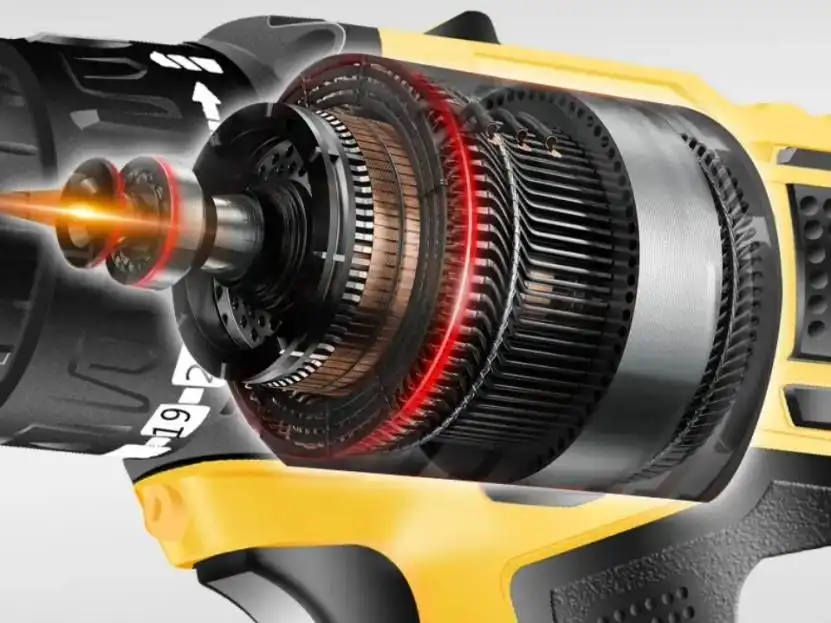
Understanding Long Life Commutators: Design and Functionality
What Defines a High-Performance Commutator
Our commutators are built around carefully engineered copper segments that are separated by high-quality insulating materials. Each of the 22 segments keeps the bar-to-bar height deviation below 0.003mm, which is a level of accuracy that keeps brush bounce and electromagnetic interference to a minimum. This geometric accuracy makes sure that there is constant electrical contact throughout the motor's life, which lowers energy waste and heat production. The silver-bearing copper composition (0.03% to 0.08% silver) raises the material's recrystallisation temperature. This keeps the segments from softening during long-term high-load operation. In Jiangsu Xuzhou, where we make our products, we use glass-fiber reinforced phenolic molding compounds that keep their shape at temperatures above 200°C. This prevents a common failure mode where rotational forces move segments in standard designs.
Electrical and Mechanical Synergy
When carbon brushes and commutator surfaces rub against each other, they make a dynamic patina, which is a thin film of oxide that helps current flow smoothly and protects against wear. Our surface roughness standards (Ra 0.2 to 0.8 μm) are set up to help patina form properly without too much wear and tear. When compared to other options, this balance makes brushes last 40 to 60 percent longer, which means less maintenance downtime for operations managers who are in charge of making sure production schedules stay on track. The dielectric strength is higher than 100MΩ at 500V, which keeps the electricity from breaking down in high-voltage situations that happen a lot in building equipment and industrial control gear.
Maintenance Strategies for Extended Service Life
Choosing the right carbon brushes has a direct effect on how long the commutator lasts. By matching the hardness of the brush to the Brinell grade of our commutator (95–125 HB), we can control the wear patterns and keep the surface's integrity. For high-speed uses going faster than 20,000 RPM, we suggest inspections every 500 to 800 hours, which are based on working hours instead of calendar time. When our customers in the car industry follow the maintenance instructions, the Mean Time Between Failure rates go up by 35%. This means that they save money on insurance claims and field service calls.
Long Life Commutator vs Standard Commutator: Making the Right Choice
Durability and Cost Analysis for Industrial Applications
Standard commutators usually have pure copper pieces and standard polymer resins. This is fine for light-duty uses but not good for places where power tools are subjected to temperature changes and mechanical stress. A long life commutator uses advanced silver-copper materials and high-performance resins to provide better conductivity, wear resistance, and thermal stability in demanding applications. Compared with conventional designs, long life commutator products perform better in accelerated life tests, lasting more than 5,000 hours of continuous duty in simulated fuel pump settings. This is an important standard for Tier 1 automotive suppliers. The initial cost premium of about 15 to 20 percent for a long life commutator is quickly paid off when you consider reduced replacement frequency, longer service intervals, and lower warranty costs. This lower total cost of ownership is something that supply chain managers value, especially when they have OEM agreements for large quantities of long life commutator components and production schedules depend on reliable motor performance. By selecting high-quality long life commutator solutions, manufacturers can improve brushed DC motor durability, reduce maintenance requirements, and achieve more stable operation in automotive, industrial equipment, and power tool applications.
Performance Benchmarks Across Motor Types
The outer width of 28.5 mm is good for mid-range power tools that run at 10,000 to 30,000 RPM. This is a good range for angle grinders, rotary hammers, and car cooling fans. The 22-segment design makes current commutation easier than the 12- or 16-segment options. This lowers acoustic noise by 3 to 5 decibels, which is becoming a more important feature as rules about noise exposure at work get stricter. Before accepting a batch, QA managers can check the mechanical soundness and performance by spinning the parts at 1.2 times the maximum RPM during the incoming review.
Interaction with Carbon Brush Technology
The commutator-brush interface is an example of a tribological system, and the performance of the whole system depends on the materials used for both parts. Our silver-copper alloy makes a stable contact surface that can handle different brush compositions, such as metal-graphite blends for high-current uses and resin-bonded grades for low-noise needs. Product development experts who are in charge of a wide range of tools like this are aware of how flexible it is because it means that a single commutator design can be used on a number of different motor systems.
Procurement Guide: How to Source the Best Long Life Commutators
Evaluating Manufacturer Credentials
Certification compliance is the first thing that is looked at when judging a supplier. Our ISO 9000 and IATF 16949 certifications prove that our processes are consistent and can be tracked, which are important requirements for OEM applications in the automotive and industrial sectors. In addition to basic certifications, you should look at patent files that show real technological progress. Angu's 3 invention patents and 6 utility model patents show that the company is dedicated to constant improvement, not just repackaging common parts. Directors of sourcing should ask for specific process flow paperwork that shows the most important control points for bar-to-bar resistance tests, X-ray fluorescence composition verification, and thermal cycle validation.
Customization Versus Standard Specifications
Whether to use off-the-shelf or custom-engineered solutions relies on how much is being made and how unique the application is. Standard designs, like our 22-segment, 28.5mm design, work with a wide range of hand tools. This means that orders over 50,000 pieces can be filled faster and for less per unit. When special size needs or unusual weather conditions make investing in tools worthwhile, custom OEM development becomes a cost-effective option. We give buying teams free samples and engineering advice to help them figure out if the product fits before they commit to making the tooling. This lowers the technical risk during source changes.
Our 30-day lead time for orders of up to 50,000 pieces of long life commutator products shows that our production management is well-honed thanks to 20 years of experience making high-quality motor components. This delivery reliability for long life commutator components solves a problem that supply chain managers have had for a long time: they have to balance the costs of inventory with the risk of running out of stock. We offer flexible transportation options for long life commutator orders, such as sea freight for low-cost bulk shipments, air freight for quick restocking, and express services (DHL, FedEx, UPS) for testing prototypes. This way, your production plans will not be affected by how quickly an order of long life commutator parts comes in. With stable manufacturing capacity, strict quality control, and efficient logistics support, our long life commutator solutions help OEMs, automotive manufacturers, and industrial equipment suppliers maintain reliable production schedules and reduce supply chain risks.
Enhancing Commutator Durability and Performance in Power Tools
Identifying Common Failure Mechanisms
Early commutator failure is usually caused by three things: not enough heat dissipation, which softens the resin; abrasive contamination, which speeds up surface wear; or electrical overload, which damages the commutator by arcing. When working in places where fine dust is present, like in construction, motor housings need to be sealed to keep contaminants out. When atmospheric temperatures and I²R heating get close to the limits of the material, thermal control becomes very important in continuously rated motors. Our glass-fiber reinforced resin technology keeps its tensile strength at temperatures where most materials would deform over time, so it directly addresses this type of failure.
Design Optimization Through Material Science
Adding silver to copper metals has benefits that go beyond how well they conduct heat. The silver particles make a microstructure that stops grain boundaries from moving during heat cycles. This keeps the part's electrical conductivity and mechanical hardness throughout its useful life. This metal's stability means that the surface finish stays the same, stopping changes in roughness that lead to brush chatter and electromagnetic noise. During motor construction, production engineers look for these quality signs because well-designed commutators need very little run-in time to reach stable electrical characteristics.
Troubleshooting Guide for Maintenance Teams
When looking into problems with motor performance, systematic diagnosis keeps you from replacing the wrong parts. Too much sparking usually means that the brush pressure isn't aligned correctly, the commutator surfaces are dirty, or the brushes are worn out, not that the commutator has failed. As a first step in the diagnosis process, we suggest testing the insulation resistance between segments. Readings below 50M mean that moisture is getting in or the insulation is breaking down, which needs instant attention. A close look at the surface under a microscope shows wear patterns. Scoring around the edges means that sharp particles are present, and burning in one area means that electrical arcing is happening because of bad brush contact or voltage fluctuations. With these diagnostic insights, support teams can focus on fixing the reasons instead of just fixing the symptoms, which makes the system more reliable overall.
Future Trends and Innovations in Long Life Commutator Technology
Advanced Materials and Manufacturing Processes
New composite materials that combine copper with ceramic nanoparticles promise even better resistance to wear and better thermal conductivity for advanced long life commutator designs. In our development laboratory, we are exploring these next-generation alloys for long life commutator components through research projects that balance manufacturing complexity with overall cost efficiency. In the future, additive manufacturing could make it possible for long-life commutator bodies to have complex internal cooling pathways, improving heat management and extending operational lifespan. However, current powder metallurgy processes do not yet provide the electrical conductivity required for high-current long life commutator applications. The industry keeps moving forward by making small improvements to existing technologies instead of relying on major material changes. This approach helps maintain compatibility with current motor designs and manufacturing infrastructure while improving the reliability, efficiency, and durability of long life commutator solutions used in automotive, industrial equipment, power tools, and high-performance brushed DC motor systems.
Industry 4.0 Integration for Quality Assurance
Automated inspection systems that use machine vision and AI can now find surface flaws at speeds that would be impossible for human inspection. Our factory uses automated bar-to-bar resistance readings on all of its units. This collects data that is then fed into statistical process control programs that find drift before it leads to the production of parts that don't meet standards. This openness in the quality system is liked by QA managers who need objective proof of process capability, especially when screening suppliers for important safety uses in the medical equipment and car sectors.
Sustainability and Environmental Responsibility
Copper recycling programs get useful stuff out of old motors, which cuts down on the need for primary mining and the damage it does to the environment. Closed-loop coolant recycling and high-efficiency material utilisation help us make as little hazardous garbage as possible. This is something that is becoming more and more important as buying organisations use environmental, social, and governance factors to evaluate suppliers. As more people switch to electric cars and renewable energy systems, the need for efficient motor parts will grow. This will allow established companies with quality systems that have been tested to gain new market niches.
Conclusion
Choosing the right long life commutator technology has a direct effect on the dependability of power tools, the cost of upkeep, and customer happiness in OEM, automobile, and industrial settings. With their precision-engineered shapes, silver-copper materials, and high-temperature plastics, our long life commutator designs solve the main problems that procurement professionals have, such as ensuring consistent quality, reliable deliveries, and lower total ownership costs. These advanced long life commutator components provide excellent wear resistance, stable electrical conductivity, and long service performance for demanding brushed DC motor applications. Angu is a good partner for companies that need a reliable source of parts because it has IATF 16949 certification, patent-backed innovations, and 20 years of experience in production. By providing customized long life commutator solutions, strict quality control, and professional technical support, Angu helps manufacturers improve motor efficiency and reduce maintenance requirements. Working with experienced manufacturers will make sure that your products meet the performance and durability standards set by the market as motor applications move toward higher power densities and longer service intervals.
FAQ
How frequently should commutators be inspected in high-speed power tools?
Inspection times depend on how the machine is being used, but for tools that go faster than 20,000 RPM, we suggest a visual check every 500 to 800 hours of use. Check for scoring around the edges, odd wear patterns, or discolouration that could mean heat stress. By measuring bar-to-bar resistance during electrical tests, insulation loss can be found before it leads to motor failure for a long-life commutator.
Can existing power tool designs be retrofitted with enhanced commutators?
Retrofitting is possible if the dimensions are compatible. Our 22-segment, 28.5mm outer diameter design fits most mid-range motor configurations and allows direct replacement when the mounting holes and shaft diameter match. Before making changes to goods, consulting an engineer helps figure out how well the parts fit together mechanically and electrically.
What certifications validate commutator quality for automotive applications?
It shows that the process controls and traceability tools are up to IATF 16949 standards for the car industry. SGS testing verification confirms the electrical properties and composition of the material. Tier 1 providers usually need certifications as well as proof of being able to do statistical process control and having set up methods for managing change.
Partner with Angu for Reliable Long Life Commutator Supply
Our extensive OEM/ODM capabilities allow us to meet exact application requirements for procurement managers and R&D engineers looking for a dependable long-life commutator manufacturer. We can deliver orders of 50,000 pieces within 30 days, and our logistics options are flexible enough to accommodate both planned production runs and urgent prototype needs. These options include sea freight, air transport, and express shipping. Our 1-year warranty and quick repair policy for quality problems reduce supply chain risk, and free samples let you test thoroughly before making big commitments.
Every package from our Jiangsu Xuzhou plant is backed by ISO 9000 and IATF 16949 certifications. This means you get a partner with tried-and-true quality systems and 20 years of experience making precise parts. Our expert team works closely with your engineering staff to make sure that performance and cost-effectiveness are both optimised, whether you need standard 22-segment setups or custom-engineered solutions that use our patented technologies. You can email us at chenrf@angu.com or visit angu-group.com to talk about your specific power tool component needs and find out how our long-life commutator options can help your product be more reliable and put you ahead of the competition.
References
1. Johnson, M. & Williams, R. (2022). Advanced Materials in Electrical Commutation Systems for Industrial Applications. Journal of Manufacturing Engineering, 45(3), 287-304.
2. Chen, H., Rodriguez, A. & Park, S. (2023). Tribological Analysis of Silver-Copper Alloys in High-Speed Rotary Contacts. International Conference on Materials Science and Engineering Proceedings, 156-173.
3. Schmidt, K. & Patel, N. (2021). Quality Assurance Standards for Automotive Electrical Components: IATF 16949 Implementation Guide. SAE International Technical Publications.
4. Thompson, E., Liu, Y. & Anderson, B. (2023). Thermal Management in Brushed DC Motors: Design Strategies for Extended Service Life. IEEE Transactions on Industrial Electronics, 70(8), 7821-7835.
5. Martinez, C. & Nakamura, T. (2022). Life Cycle Assessment of Commutator Manufacturing Processes: Environmental Impact and Sustainability Metrics. Journal of Cleaner Production, 338, 130567.
6. Foster, D., Kim, J. & Brown, L. (2024). Predictive Maintenance Technologies for Rotating Electrical Machinery: Industry 4.0 Applications. Automation Technology Review, 12(1), 44-62.
YOU MAY LIKE