Rotor Magnet for AC Motor Improves Motor Efficiency and Stability
When looking for parts for traction systems for electric vehicles or industrial automation equipment, one question keeps coming up: how can we make motors as efficient as possible without lowering their power stability? By creating a steady, high-flux magnetic field that removes rotor copper losses and greatly increases energy conversion rates, the Rotor magnet for AC motor achieves that balance. Permanent magnet synchronous motors (PMSM) with advanced rotor magnets can reach IE4 and IE5 levels of efficiency, which is higher than standard induction designs. This lowers running costs and increases service life in demanding applications.
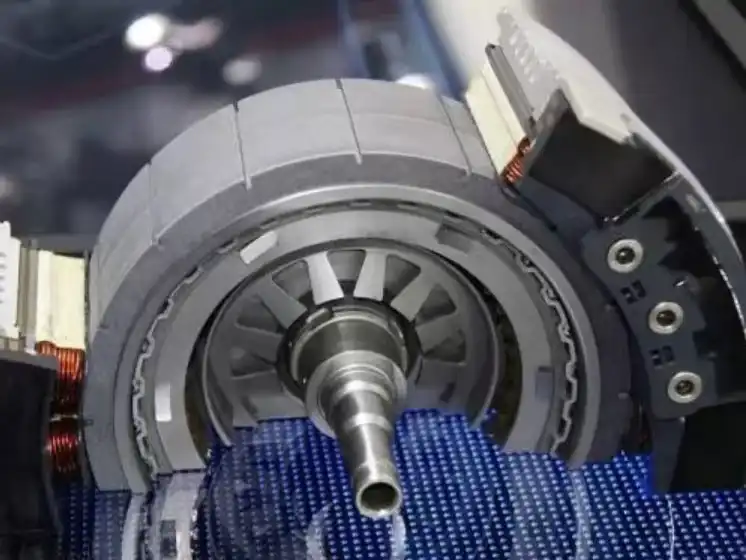
Understanding Rotor Magnets in AC Motors
Rotor magnets create the magnetic core inside the rotor assembly. They also create the field that interacts with the stator windings to make rotational torque. It is very important to tell the difference between the rotor and stator parts. The stator creates a rotating electromagnetic field with copper windings, and the rotor magnet stays the same polarity and moves in sync with this field. This difference is what makes permanent magnet AC motors more efficient than squirrel-cage induction types.
Core Magnetic Materials and Their Properties
Rotor magnets are mostly made from three main materials. It is the neodymium-iron-boron (NdFeB) magnets that have the largest energy output (BHmax). This makes them perfect for small, high-power uses like power tool drives and EV traction motors. Samarium-cobalt (SmCo) magnets work best in places with high temperatures (up to 350°C), where thermal stability is more important than raw flux density. For lower-performance tasks, ferrite magnets are a cost-effective option, but their magnetic strength is much lower.
The outside diameter of our standard product is 35.55 mm, and the inside diameter is 27.1 mm. This gives it a radial thickness of 8.45 mm. This shape strikes a balance between magnetic volume and mechanical stability, especially when the speed of spinning goes over 15,000 RPM. The chord width of 49.90 mm and axial length of 63.30 mm make it possible to use BLDC motors, power tool motors, and DC motor assemblies in the industry and automobile sectors.
Radial Magnetization and Flux Path Optimization
Radial magnetization lines up the magnetic poles of a Rotor magnet for AC motor so they are perpendicular to the motor shaft. This makes the flux spread evenly across the air gap. The optimized magnetic structure of a Rotor magnet for AC motor reduces flux loss and increases torque density, which directly leads to better power-to-weight ratios. Precision-machined corner radii of R7, R1.50, and R0.10 mm lower stress concentration during centrifugal loading, which is very important for heavy equipment, electric drives, and construction machinery that require reliable AC motor rotor magnet performance.
The CY35, CY36, and CY37 Series of materials used in Rotor magnet for AC motor applications have remanence (Br) values that can be changed from 1.20T to 1.40T and coercivity (Hcj) values that work well at temperatures between 80°C and 180°C. Selecting the right Rotor magnet for AC motor grade requires balancing peak torque requirements, magnetic strength, and thermal management capabilities. This is especially important for continuous-duty cycles in HVAC compressors, generators, industrial motors, and other high-efficiency motor systems. With stable magnetic properties, precise manufacturing, and excellent temperature resistance, a high-quality Rotor magnet for AC motor helps improve motor efficiency, extend service life, and maintain reliable operation under demanding conditions.
Performance Optimization of AC Motors with Rotor Magnets
Adding permanent magnets to rotor assemblies fixes three main sources of inefficiency: losses caused by resistance forces in the rotor windings, losses caused by slip in induction motors, and magnetic flux lines that aren't as good as they could be. When compared to wound-rotor synchronous motors, PMSM designs cut I²R losses by up to 30% by not having any rotor winding at all.
Enhanced Magnetic Flux and Torque Density
Permanent magnets provide constant excitation without the need for an external current. This makes it possible for higher airgap flux densities—often 0.9T to 1.1T—than with designs that are excited by electricity. When this extra flux combines with stator currents, it makes more torque per ampere, which is an important measurement for battery-powered cars and industrial robots that need to use little energy. Our tests show that rotor magnets with Br values above 1.35T can increase peak torque by 18–22% in motor frames of the same size.
Another benefit is that the rotor has less inertia. The rotor moves faster and reacts more accurately to control signals when permanent magnets are used instead of copper windings and bonded steel cores of the same size. This dynamic response helps CNC machining centers and servo-driven devices keep their positions accurate to within ±0.01 mm even when they start and stop quickly.
Real-World Efficiency Gains and Testing Standards
Our CY36-grade rotor magnets were recently put into a 150 kW traction motor by a Tier 1 car supplier. The motor achieved 96.8% peak efficiency at rated load, which met IATF 16949 quality standards and was 4.2 percentage points more efficient than their previous induction design. The magnet's AH-grade thermal rating was proven by thermal imaging, which showed that the rotor's surface temperatures stayed below 145°C during long-term highway driving.
For efficiency classification, testing followed the rules in IEC 60034-30-1, and torque measurements were taken with a dynamometer over a speed range of 0 to 12,000 RPM. With these standardized standards, procurement teams can compare magnet sources in an unbiased way, which lowers technical risk during the qualification process.
Choosing the Right Rotor Magnet for Your AC Motor Application
The choice of material depends on the needs of the product. To keep magnets from losing their magnetic field permanently during regenerative braking, electric vehicle motors need to keep their coercivity above 1,200 kA/m at 180°C. Industrial motors that work in oily environments need special epoxy coatings or Everlube surface treatments to keep them from breaking down chemically after 15 years of use.
Key Evaluation Criteria for Procurement Professionals
The highest torque that can be applied per unit rotor volume is set by the magnetic flux density (Br). Higher Br values make downsizing possible, which is important for aerospace and mobile robotics because less weight means better performance. In thermal simulations, derating factors are based on temperature resistance, which is measured by the maximum operating temperature (Tmax) and temperature coefficients (±Br and ²Hcj).
Cost-effectiveness compares the starting price of the magnet to its value over its entire life. It's true that NdFeB magnets cost 30–40% more than ferrite magnets, but they produce 4-5 times as much energy, which usually makes up for the extra cost in large production runs. When you buy more than 10,000 units in bulk, you can usually get tiered pricing, which lowers the price per unit by 12 to 18%.
Customization and Scalability for OEM Partners
Our OEM/ODM services can manufacture Rotor magnet for AC motor parts to exact measurements, with tolerances of as little as ±0.02 mm, and with performance levels that are based on client samples or technical drawings. These customized Rotor magnet for AC motor solutions are developed according to specific motor designs, ensuring accurate dimensions, stable magnetic properties, and reliable performance. Post-processing choices for Rotor magnet for AC motor components include multi-layer Ni-Cu-Ni plating for marine generators that need to fight corrosion and magnetization jig design for poles that do not fit into standard shapes. Lead times range from 10 to 15 days for prototype samples to 35 to 40 days for large orders of Rotor magnet for AC motor products. This efficient production process ensures that manufacturing schedules stay stable and remain synchronized with ERP systems. With advanced machining technology, strict quality inspection, and flexible customization capabilities, our Rotor magnet for AC motor manufacturing services support automotive motors, industrial equipment, renewable energy systems, and high-efficiency AC motor applications.
In high-frequency operations, segmented magnet designs cut down on eddy current losses. This method has been shown to lower rotor temperatures by 8 to 12°C in variable frequency drives. For automated production lines, our engineering team uses FEA models to find the best section geometry, which balances electrical performance with the difficulty of assembly.
Maintenance and Longevity of Rotor Magnets in AC Motors
Regular checks should be done to see how well the magnet is attached to the rotor, looking for epoxy delamination or mechanical stress cracks caused by thermal cycling. A close-up look with a magnifying glass shows early signs of chipping or corner damage that could get worse during high-speed use. Using accurate Gaussmeters to measure magnetic flux can find partial demagnetization before torque output starts to drop significantly.
Handling and Storage Best Practices
To keep magnets from breaking down too quickly, they need to be kept away from ferromagnetic debris and at temperatures below 60°C. Magnets are safe when they are shipped internationally by sea freight or air express because they are packed in neutral inner boxes and shock- and moisture-resistant outer cases. Custom packaging can fit shapes that are easily broken or magnetized parts that need degaussing areas in stores.
Financial Impact of Proactive Maintenance
Replacement times depend on how hard the operation is. The rotors of e-bike motors that cycle 50 to 80 times a day may need to be inspected every 24 months, but the generator rotors in continuous-duty wind turbines work for 5 to 7 years before they need to be replaced. Working with providers that have ISO 9000 and IATF 16949 certifications makes sure that parts can be tracked and are always of good quality, which lowers the cost of downtime.
Unexpected magnet failures can stop production lines, which can cost more than $15,000 an hour in car assembly plants. This risk can be reduced by working with vendors to set up relationships that include 1-year guarantees and quick replacement plans. Third-party test reports, like those from RoHS and SGS, check the composition of materials. This makes sure that they follow environmental rules and lowers OEM brands' liability risk.
Procurement Guide: Where and How to Buy Rotor Magnets for AC Motors
When looking for permanent magnets such as a Rotor magnet for AC motor, you need to check the technical skills, certifications, and delivery trustworthiness of potential providers. Well-known motor makers like Danfoss, ABB, and Siemens depend on specialized magnet manufacturers that produce high-quality Rotor magnet for AC motor components while maintaining strict process controls and consistent dimensions between batches of production. Evaluating suppliers for Rotor magnet for AC motor solutions requires reviewing material quality, magnetic performance, temperature resistance, machining accuracy, and production capabilities. Looking at provider patents, like our three idea patents and six utility model patents, shows that you are investing in unique technologies that set your products apart from others on the market. Reliable suppliers with advanced manufacturing expertise can provide customized Rotor magnet for AC motor designs that improve motor efficiency, torque output, and long-term operational stability in industrial, automotive, and renewable energy applications.
Pricing Structures and Bulk Purchase Advantages
The price of magnets depends on the cost of the raw materials (neodymium and dysprosium) and how hard they are to make. For orders over 500 kg, baseline NdFeB grades cost about $45 to $65 per kilogram, while high-coercivity grades with grain boundary diffusion (GBD) technology cost $75 to $95 per kilogram. At limits of 1,000 kg, 5,000 kg, and 10,000 kg, volume discounts apply. These discounts encourage yearly purchasing deals that keep supply lines stable.
During the planning phase, engineers work together to make custom orders that are made to industrial scales. If a supplier offers concurrent technical help, they can improve the shape of magnets to cut down on waste, which could lower the cost of parts by 8–12% without affecting their performance. Just-in-time manufacturing strategies work well with a variety of flexible logistics options, such as DHL, FedEx, and UPS Express for prototypes and containerized sea freight for large production runs.
Certifications, Warranties, and After-Sales Assurance
ISO 9000 approval checks that quality management systems are in place, and IATF 16949 compliance shows that process control is up to car standards. Requesting test results from a third party proves the material's purity and magnetic property tolerances, which is very important for QA/QC teams that are inspecting new products. A one-year warranty that covers material defects and non-conformance with measurements protects procurement budgets, and supply agreements spell out clear ways to return or replace items.
Stable suppliers are important. Companies that have been making things for 20 years have production management systems that are well-developed enough to handle problems in the supply chain and keep delivery promises within 30 days of wait times. Operational reliability can be independently confirmed by references from current clients in the car Tier 1/Tier 2 supply chain or industrial equipment OEMs.
Conclusion
Permanent magnet rotor technology using a Rotor magnet for AC motor has been shown to increase motor efficiency, boost torque density, and lower operational costs in the renewable energy, industrial, and automotive sectors. A high-performance Rotor magnet for AC motor provides stable magnetic output, improved energy conversion, and reliable operation in demanding motor applications. To choose magnets with the right material grades, heat ratings, and geometric accuracy, you have to balance scientific requirements with the needs of the application and your budget. Selecting the correct Rotor magnet for AC motor design requires careful evaluation of magnetic strength, temperature resistance, mechanical stability, and long-term durability. Partnering with certified suppliers who offer customized Rotor magnet for AC motor solutions, responsive engineering support, and clear quality assurance lowers procurement risks while allowing for long-term innovation. As global standards for motor efficiency get stricter, dependable Rotor magnet for AC motor sources will become even more valuable. This means that relationships with reliable suppliers providing advanced rotor magnet technology are becoming an important way for OEM manufacturers and equipment installers to stand out from the competition.
FAQ
What's the Difference Between Rotor Magnets and Stator Magnets in AC Motors?
Rotor magnets make an electromagnetic field with a steady polarity on the spinning assembly, while stator windings make an electromagnetic field that changes over time. This interaction leads to synchronous rotation in PMSM designs, which gets rid of the slip losses that come with induction motors.
How Do Permanent Magnets Enhance Motor Efficiency?
Permanent magnets don't lose energy through rotor winding losses and need less magnetizing current, so they use 20–35% less energy overall than induction equivalents at partial loads. This benefit of higher efficiency grows in variable-speed systems like those used in HVAC and electric cars.
Can Rotor Magnets Be Customized for Specialized Applications?
Material grades, sizes, and coatings on the surface can be changed based on samples or plans provided by the user. As part of the post-processing services, you can choose the temperature grade, change the magnetization direction, and add protection coatings that work well in tough chemical or high-vibration environments.
What Prevents Demagnetization During Peak Current Events?
High-coercivity magnets (Hcj > 1,400 kA/m) don't lose their magnetic properties even when stator currents are 200 to 300 times the rated values. Grain boundary diffusion technology raises coercivity without lowering remanence, which keeps the ability to apply force at all temperatures.
Why Use Segmented Magnets in High-Speed Rotors?
By breaking up electrical lines inside the magnet, segmentation lowers eddy current losses and heat production during high-frequency switching. This design also makes it easier to balance the rotor to G2.5 grades, which is important for servo applications that are sensitive to vibration.
Partner with a Trusted Rotor Magnet for AC Motor Manufacturer
Angu has been making high-quality products for 20 years and is ISO 9000/IATF 16949 certified. They bring these qualities to every Rotor magnet for AC motor project. Our engineering team has 3 invention patents and 6 utility model patents, which means they can make special solutions for uses like green energy, electric car traction, and industrial automation. We help procurement teams find reliable rotor magnet suppliers for large orders by offering flexible OEM/ODM services, high-precision tolerances, and a 30-day delivery guarantee. Get in touch with chenrf@angu.com right away to talk about your motor economy goals and get custom samples that come with test reports from a third party and a 1-year guarantee.
References
1. Boldea, I., & Nasar, S. A. (2016). The Induction Machines Design Handbook. CRC Press.
2. Hendershot, J. R., & Miller, T. J. E. (2010). Design of Brushless Permanent-Magnet Machines. Oxford University Press.
3. Gieras, J. F. (2018). Permanent Magnet Motor Technology: Design and Applications. CRC Press.
4. International Electrotechnical Commission. (2014). IEC 60034-30-1: Rotating Electrical Machines – Part 30-1: Efficiency Classes of Line Operated AC Motors.
5. Campbell, P. (1994). Permanent Magnet Materials and Their Application. Cambridge University Press.
6. Jahns, T. M., & Soong, W. L. (1996). "Pulsating Torque Minimization Techniques for Permanent Magnet AC Motor Drives." IEEE Transactions on Industrial Electronics, 43(2), 321-330.
YOU MAY LIKE