Fuel Injector Efficiency: Maximizing Performance and Savings
When talking about how efficient fuel injectors are, it's important to know what part modern spray technology plays. By breaking fuel into very small drops (usually less than 50 to 60 microns in Sauter Mean Diameter), a High Atomization Fuel Injector is a big step forward in improving engine performance. It makes sure that all the fuel burns completely. This exact engineering directly fixes inefficient combustion, cutting down on wasted fuel and toxic fumes while increasing power output. By switching from traditional ways of delivering fuel to optimized atomization patterns, these injectors make a real difference in both operating costs and environmental compliance. This makes them a must-have for companies that supply cars and companies that make industrial equipment.
Understanding High Atomization Fuel Injectors: Technology and Benefits
The Science Behind Superior Atomization
Early mechanical ideas for fuel injection systems have changed a lot over time. High Atomization technology uses special nozzle shapes and improved fluid dynamics inside the nozzle to make the fuel's surface area-to-volume ratio as high as possible. When fuel comes out of micro-orifices that were precisely drilled with a laser, it meets controlled turbulence that breaks the liquid stream into a uniform mist. This method gets rid of the common issue of "wall wetting," which happens when liquid fuel sticks to the sides of the cylinder and doesn't burn fully. By making sure that the fuel and air mix thoroughly and quickly, combustion chambers keep the spark fixed even when the engine is under different loads and temperatures.
Measurable Performance Gains
Extended System Longevity
Aside from improving function right away, atomization also makes long-term upkeep easier. Complete burning keeps carbon deposits from building up on valves and piston caps, which extends service intervals and lowers the risk of knock or pre-ignition events. The professional-grade units are made of corrosion-resistant stainless steel and high-temperature plastic, so they can handle tough working conditions and keep working well for their whole life. Diamond-like carbon coatings on injection systems keep them from wearing down even when pressures go above 350 bar. They also keep tight limits that keep spray patterns and flow accuracy over hundreds of thousands of kilometers.
Comparing High Atomization Fuel Injectors with Standard and Low Atomization Injectors
Performance Benchmarking
Standard fuel injectors make droplets that are about 80 to 120 microns in size, which is fine for basic burning but not enough for today's needs for economy. Low atomization versions, which are common in older diesel engines, make sprays that are even coarser than 150 microns, which causes smoke to be visible and makes the engine hard to start when it's cold. High Atomization Fuel Injector technology is different because it produces droplets that are more uniform in size and allows the liquid fuel to evaporate more quickly. According to tests conducted by a third party, these units reduce hydrocarbon emissions by 22% compared to regular injectors and improve fuel distribution across the combustion chamber by 12%. This level of consistency prevents overly rich or overly lean areas, which can reduce efficiency and increase emissions.
Electric Versus Mechanical Actuation
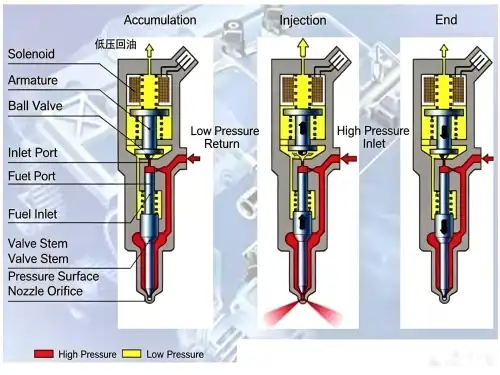
When procurement teams look at High Atomization Fuel Injector choices, they come across two main types of actuator technologies. Solenoid-based electric injectors have reaction times of less than 1.5 milliseconds, which makes it possible to change the pulse width precisely, which is needed for multi-injection methods to work during combustion cycles. Even faster responses are possible with piezoelectric versions, but they cost more, which is why they are used in high-performance gasoline direct injection applications. Even though mechanical injectors are strong and cheap, they don't have the dynamic control needed for lean-burn cycles or for adjusting fuel supply during rapid load changes. Which technology to use relies on the needs of the product. Most automakers prefer electric actuation because it provides both precise fuel control and reliable performance.
Brand Comparison Analysis
Leading makers set themselves apart with unique design features. Bosch injectors have adaptive spray aiming, which changes the patterns based on where the input valve is placed. Denso works on multi-hole designs that make it easier for mixtures to form in small combustion chambers. Delphi puts a lot of emphasis on durability through advanced coating technologies that make parts last longer in commercial vehicles. Siemens uses its knowledge of technology to add diagnostic tools that allow for planned upkeep. These different methods let procurement professionals match the strengths of each provider with the needs of each application, such as putting durability first for fleet operations or performance first for OEM car uses.
Maintenance and Troubleshooting: Ensuring Long-Term Efficiency
Recognizing Performance Degradation
Early discovery of injector problems keeps the engine from getting damaged, which costs a lot of money, and keeps it running efficiently. Rough running, less responsive throttle, and higher fuel usage are all common signs. Diagnostic tools that check the regularity of the flow rate and the symmetry of the spray pattern can find problems before they get bad enough to make the car unsafe to drive. When carbon builds up on the tips of injectors, the quality of the atomization slowly decreases. This can be seen with special flow bench tests. When compared to reactive maintenance methods, fleet owners who do regular diagnostics every 100,000 kilometers report 40% fewer unplanned repair events.
Professional Cleaning Protocols
Fuel Quality Management
The amount of pollution in the fuel is directly related to how long an injector lasts. When water gets on precisely polished surfaces, it leads to rust, and when particles get on valve seats, they wear out faster. Putting in high-efficiency fuel filters with a rating of 5 microns or less keeps sensitive parts from breaking down too soon. Different regions have different fuel quality standards, so buying teams have to choose the right materials. For example, FKM and FFKM seal compounds don't break down quickly in high-ethanol blends like E85, but normal elastomers do. When looking for injectors for foreign areas with different fuel requirements, it's important to understand these important factors.
Procurement Guide: How to Choose and Buy High Atomization Fuel Injectors
Critical Selection Criteria
Evaluating Supplier Credentials
Quality assurance tells the difference between suppliers who are trusted and those who aren't. The ISO 9000 and IATF 16949 certifications show that the quality management system is in line with the standards of the car business. When suppliers show patent files like three invention patents and six utility model patents, it means they are investing in engineering on a regular basis instead of just copying parts. Experience in manufacturing is very important. For example, factories that have been around for 20 years can offer process stability that younger companies can't match. These qualifications lower the risk of buying something, especially for long-term OEM deals that need consistent batch quality and quick problem settlement.
Total Cost Ownership Analysis
The purchase price of a High Atomization Fuel Injector is only one part of the total costs over the life of the product. For just-in-time manufacturing, 30-day lead time agreements are useful because they help with planning production based on how reliable deliveries are. Logistics choices like water freight, air freight, and fast options (DHL, FedEx, and UPS) make it possible for supply chain management to be flexible across global operations. One-year replacement promises and warranty coverage for quality problems protect against early failures, and OEM/ODM services let you customize the specifications without having to spend money on new tools. These factors work together to show what the real value is, which is often enough to explain small price increases for sellers who offer full support.
Bulk Ordering Considerations
Maximizing ROI with High Atomization Fuel Injectors: Case Studies and Future Outlook
Real-World Performance Validation
Tier 1 automotive makers that use advanced injectors in powertrain systems say they see measurable benefits. After updating 500 trucks with precision atomization systems, one commercial vehicle maker saved 11% on fleet fuel costs. The lower diesel consumption paid for the systems within 18 months. After using injectors with tighter flow tolerance (within ±4% injection volume accuracy), a company that makes farming equipment cut warranty claims by 35%. This made the engines last longer under different loads. By showing real financial returns from upgrading components, these documented results go beyond theoretical performance claims to support purchase.
Emerging Technology Trends
Regulatory Compliance Strategies
Environmental rules are getting stricter all over the world. Real-driving emissions tests and limits on the number of particles are pushing injector technology forward. As the use of China VI grows, parts that meet China IV and China V standards may need to be upgraded, which will increase the need for systems that can produce ultra-low emissions. More and more, European markets need gasoline particulate filters, which means that injectors need to reduce the formation of particulates during cold starts, which is exactly when atomization quality is most important. Active buying plans that include injectors that are better than the current legal limits protect car bases for the future and keep them from having to be redesigned, which can be expensive, when standards change.
Conclusion
Fuel injector efficiency has a big impact on how well an engine works, how much it costs to run, and how well it meets environmental standards. A High Atomization Fuel Injector uses advanced atomization technology that has demonstrated benefits, such as better combustion quality, longer component life, and lower emissions. When purchasing these systems, people in charge have to weigh the technical specifications against the reputation of suppliers, making sure that the choices made meet the needs of current applications while also preparing for future regulatory requirements. The strategic value of advanced injection technology goes beyond the cost of individual parts and includes the total cost of ownership. This means that making smart sourcing decisions is essential for maintaining a competitive advantage in gasoline engines and industrial equipment markets.
FAQ
What causes reduced fuel atomization over time?
Over time, repeated heat cycles leave carbon deposits on the tips of the injectors. These deposits gradually mess up spray patterns and make droplets less regular. Changes in fuel quality that add contaminants speed up this process of degradation.
Can high atomization injectors work with alternative fuels?
Professional-grade units use special seal materials, like FKM elastomers, that don't break down when mixed with ethanol up to an E85 concentration. However, the ECU still needs to be recalibrated for the best air-fuel ratio control.
How do I verify injector flow accuracy?
Specialized flow benches check the output over a range of pulse widths and compare the results to the manufacturer's specs. Deviations greater than ±4% tolerance mean that parts are worn out and need to be replaced to keep the engine running smoothly.
What maintenance intervals optimize injector lifespan?
Every 100,000 kilometers, ultrasonic cleaning gets rid of deposits before they lower the quality of atomization, and replacing the inner fuel filter as directed by the maker keeps particles from getting to sensitive parts.
Partner with Angu for Precision Fuel Injection Solutions
High Atomization Fuel Injectors are made by Angu, which has been making high-quality products for 20 years. They use ISO 9000 and IATF 16949 quality methods along with nine patents for their innovative engineering. Our OE 96332261 injector has a pressure leak test that checks for 100% leaks and an accuracy of ±4% in the injection volume. This makes sure that it will work well in Chevrolet and Daewoo vehicles. As a seller of High Atomization Fuel Injectors with a lot of experience, we help global procurement teams by offering OEM/ODM customization, 30-day shipping times, and full warranty coverage for one year. Logistics that can handle water freight, air freight, and fast shipping can meet the needs of a wide range of supply chain stakeholders. Email our engineering team at chenrf@angu.com to talk about how our precision parts can improve the performance of your fuel system while lowering the total cost of ownership through their proven reliability and quick after-sales support.
References
1. Stone, Richard. Introduction to Internal Combustion Engines. 4th Edition. SAE International, 2012.
2. Zhao, Fuquan et al. Automotive Gasoline Direct-Injection Engines. SAE International, 2002.
3. Heywood, John B. Internal Combustion Engine Fundamentals. 2nd Edition. McGraw-Hill Education, 2018.
4. Baumgarten, Carsten. Mixture Formation in Internal Combustion Engines. Springer Berlin Heidelberg, 2006.
5. Worldwide Fuel Charter Committee. Gasoline and Diesel Fuel Quality Standards and Recommendations. 6th Edition, 2019.
6. Society of Automotive Engineers. Fuel Injection System Performance and Emissions Testing Standards. SAE Technical Paper Series J1832, Revised 2020.
YOU MAY LIKE