How to Choose the Best Commutator for Auto parts?
The quality of the material, the accuracy of the measurements, the certification standards, and the source stability must all be taken into consideration when selecting the right Commutator for Auto parts. A high-quality Commutator for Auto parts should have segments made of silver-copper alloy for thermal stability, phenolic resin insulation that complies with IATF 16949 standards, exact dimensional tolerances within 0.05 mm, and a track record of performance in demanding automotive applications like starter motors, fuel pumps, and HVAC systems. Procurement teams can ensure long-term operating success and cost savings by working with experienced makers that offer customisation, rigorous quality testing, and responsive after-sales support.
Introduction
When the driver turns the starter key, the starter motor starts a complicated electrical dance. At the center of this dance is the commutator, a part that is often overlooked but is very important. This spinning electrical switch changes the direction and amount of current in DC motors. It is essential for starting vehicles, delivering fuel, and controlling the temperature inside. It doesn't take long for problems to start happening when a commutator breaks, like rough starts, electrical noise that damages sensitive electronics, or motor failures that stop production lines or leave cars stranded.
Choosing the best commutator isn't just a technical job for procurement managers, R&D engineers, and quality assurance teams in the car and industrial equipment industries. It's also a strategic choice that affects the reliability of the product, the cost of the guarantee, and the image of the brand. This guide walks you through the important things you need to think about, such as material science, dimensional specifications, supplier credentials, and lifecycle management. This will help you make decisions based on data that are in line with IATF 16949 requirements, your cost-cutting goals, and the changing needs of electric mobility.
Understanding the Role and Function of Auto Commutators
What Is a Commutator and How Does It Work?
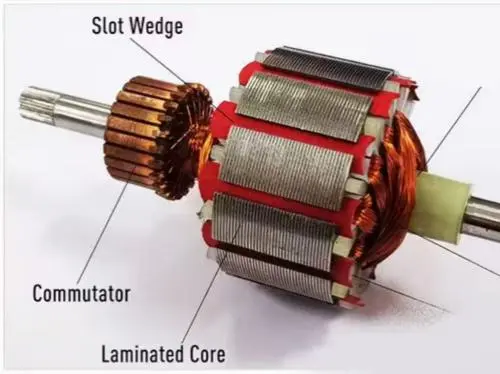
The armature of DC motors and turbines contains a Commutator for Auto parts, which is a specialised rotating electrical switch. It changes the direction of current flow between the external circuit and the rotor windings at set times. It is made up of several copper or silver-copper alloy pieces that are divided by insulating material. This constant switching action makes torque stay the same, which lets motors spin easily and efficiently. Without this part, DC motors would stop turning after half a turn, which would make them useless for use in cars.
The commutator works directly with carbon brushes to keep the electrical contact going while the armature spins at speeds between 1,500 and 20,000 RPM, depending on the job. The quality of this link has a direct effect on how well the motor works, how much noise it makes, and how long the parts last. High-precision production makes sure that the surface is as smooth as possible—usually below 0.8μm. This lowers brush wear and sparking, which means that the product can be used for more than 150,000 miles in harsh vehicle settings.
Primary Applications in Automotive Systems
Commutators play three very important jobs in modern cars. Commutators must be able to handle huge current spikes of up to 800 amps and mechanical shock during engine starting for starter motors to work. The structural stability of these parts must be maintained under centrifugal forces while working in temperatures ranging from -40°C to +120°C. This makes choosing the right materials and manufacturing them with great care very important.
Because the commutators in electric fuel pumps work while they are submerged in fuel or other fluids, they pose special problems. In this setting, you need phenolic resins that are resistant to chemicals and segment surfaces that are made to stop rusting and sparking in volatile atmospheres. To keep the car safe and reliable for its entire life, the insulation system must keep its dielectric strength above 3,000 volts.
Commutators are used in HVAC fan motors and windscreen wiper systems. They are made to work continuously or intermittently over a long time. Low acoustic noise and uniform performance across wide temperature ranges are important for these uses to make sure passenger pleasure and safety. Tight dimensional standards and precise balance become very important because even small differences in shape can cause vibrations and electromagnetic interference that mess up sensitive car electronics.
Recognizing Failure Symptoms Early
Finding commutator degradation early on keeps expensive system breakdowns and unexpected downtime from happening. Noises like grinding or buzzing that don't make sense when the motor is running are often signs of uneven section wear or bad brush fitting. Rough or slow engine starts are usually a sign of higher electrical resistance, which is usually caused by carbon dust building up between segments or surface rust that stops current flow.
A visual review shows patterns of physical damage that help with choices about replacement. If individual pieces stick out above the commutator surface, this is called "bar rising," and it means that there were problems with thermal expansion or not enough resin bonding during manufacture. Circumferential grooves are a sign of rough brush wear, while discolouration or pitting is a sign of electrical arcing that makes the material less conductive. Taking care of these problems right away through preventative maintenance or replacing parts protects expensive motor units and keeps the fleet running smoothly.
Key Criteria for Choosing the Best Commutator for Auto Parts
Material Composition and Performance Characteristics
The composition of the commutator for Auto parts pieces is a key factor in how well they work and how long they last. Ag-Cu metals are better than pure copper because they contain silver, which raises the recrystallisation temperature to about 300°C. This high cutoff keeps the pieces from getting soft during high-current operation or the soldering steps used to put together an armature. Adding 0.08% to 0.3% silver content makes the material much more stable at high temperatures while keeping its electrical conductivity above 85% IACS (International Annealed Copper Standard).
The choice of insulation material also affects dependability. Glass-fiber reinforced phenolic moulding materials are very stable in terms of their shape under thermal stress. They can keep their tight limits even after being exposed to temperature changes between -40°C and +150°C for a long time. These high-tech resin systems have surface hardness values of HV 90–120 on the Vickers scale. They are resistant to mechanical wear and tear and have enough dielectric strength to keep electricity from breaking down between parts.
Surface processes have a big effect on working performance in addition to the core materials. Precision cutting makes surfaces smoother, with a roughness value (Ra) below 0.8 micrometres. This makes the contact area between the commutator and carbon brushes work better. Some companies use special coats or heat processes to make their products more resistant to oxidation. This stops insulating oxide layers from forming, which raises contact resistance and generates too much heat when they're used.
Dimensional Specifications and Tolerance Requirements
Commutators that work well and ones that don't depend on precise dimensional control. For example, an average car starter commutator has an outer diameter of 28.5mm, an inner diameter of 12mm, a height of 21.8mm, and 24 segments. These measurements must be kept within as little as 0.05mm of accuracy to make sure they match properly and rotate evenly. Even small changes in concentricity or segment spacing cause vibrations, speed up brush wear, and cause electromagnetic interference that damages electronics in the car.
Total indicator runout (TIR) tests check the accuracy of spin by measuring the biggest deviation from circular motion. Commutators of good quality have TIR values below 0.03mm, which is possible by carefully moulding them and then cutting them down. This level of accuracy makes sure that the brush contact pressure is the same on all parts during each turn. This keeps the wear even and extends the service life. Coordinate Measuring Machines (CMM) are used to make sure that quality standards in the car business are met.
The amount and arrangement of pieces have a direct effect on how well the motor works. More segments usually mean better torque output and less electrical noise, but they make production more difficult and cost more. A 24-segment design is a frequent optimisation point for car starter uses because it strikes a good balance between performance needs and production economy. To keep current changes from happening that lead to hotspots and early failure, each section must keep its bar-to-bar resistance within 1%.
Certification Standards and Quality Assurance
IATF 16949 approval is the highest level of quality management for companies that supply parts for cars. It shows that quality is managed in a planned way during the entire design, production, and shipping processes. In addition to the controls for product safety, process capability, and continuous improvement that are part of ISO 9001, this certification adds controls unique to the car industry. Suppliers with this approval are regularly checked by a third party to make sure they can consistently supply parts that are defect-free and meet customer requirements.
Multiple validation steps are part of quality control methods for car commutators. When commutators are put through spin testing, they are turned at 1.5 to 2 times their normal RPM. This applies centrifugal forces that show where section retention or resin bonding is weak. To check the stability of the insulation, high voltage is applied between the pieces and the mounting shaft during dielectric strength testing. Contact with salt spray speeds up the corrosion process that happens over years of contact with the environment, making sure that parts can withstand harsh working conditions without breaking down.
Electrical continuity testing makes sure that all commutator lines have the same amount of resistance. This finds manufacturing flaws that cause performance differences. High-potential (hi-pot) testing shows that insulation can handle voltage spikes without breaking. Optical or contact surface profile analysis shows the physical accuracy needed for the best brush interaction. Statistical process control records these thorough quality checks, which give procurement teams the peace of mind they need for high-stakes car uses.
Supplier Evaluation Framework
In addition to product specs, the long-term success of a relationship depends on the traits of the supplier. Manufacturing experience covering twenty years, like that shown by well-known manufacturers, shows that the process is mature and the quality systems are solid. Patent portfolios that show idea and utility model patents show that the supplier can do real engineering work, not just contract manufacturing. This means that the supplier can help with special development projects and solve problems that are unique to each application.
When it comes to OEM contracts with a lot of orders, production capacity has a direct effect on shipping dependability. A supplier that can make 50,000 pieces in 30 days shows that they have scalable production facilities that can adapt to changing demand without lowering quality or lengthening lead times. Supply chain continuity is ensured across all global operations by flexible transportation support, such as sea freight for cost-effective bulk exports, air freight for urgent needs, and foreign express services for samples.
After-sales support systems show how committed a seller is to long-term partnerships rather than one-time deals. A warranty that lasts for twelve months after delivery, along with clear rules for returns and replacements that deal with quality problems, keeps buying teams from losing money because of broken parts. Quick expert support that answers questions about installation, helps with problems, and does application engineering makes sure that the system works well with production processes and avoids costly delays.
Common Challenges and Maintenance Tips for Auto Commutators
Understanding Root Causes of Premature Failure
Many Commutator for Auto parts components that are used in cars break down because of pressure in the environment. When moisture gets into segments, it makes electric paths between them, which leads to short circuits and faster rusting. Extreme temperatures cause the copper pieces and phenolic insulation to expand and contract at different rates. If the qualities of the materials aren't properly matched, this could cause cracking or delamination. Vibrations from rough roads or an unbalanced engine can wear down the solder joints that connect the commutator segments to the armature windings. This can lead to electrical connections that don't work all the time, which makes the motor behave in strange ways.
Another important failure mode is contamination. Normal brush wear causes carbon dust to build up between commutator segments. This creates electrical bridges that short out neighbouring bars and lower the motor's efficiency. Some glue formulations become softer when exposed to oil mist or fuel vapour, which lowers their mechanical strength and electrical insulation qualities. Chemicals used in industry, like hydraulic fluids and cleaning agents, can damage commutator materials unless they are made to be resistant.
The quality of manufacturing has a direct effect on dependability in the field. When insulation material isn't trimmed enough, carbon dust can build up and speed up electrical shorting. When resin cure processes aren't long enough, residual stresses build up and cause segments to shift under working loads. A rough surface finish makes friction and wear happen faster, which drastically cuts the life of the brush and commutator. These types of industrial failures can be lessened by choosing sources with mature process controls and thorough quality testing.
Practical Maintenance Strategies
Setting up regular review times keeps small problems from getting worse and leading to major fails. Visual inspection every 50,000 miles or once a year, whichever comes first, finds surface damage, too much cutting, or contamination buildup before performance starts to show. By measuring the commutator's width, you can see how it's wearing down over time and plan to replace it before its dimensions drop below service limits that make the motor less useful. Checking the length of the brushes makes sure that there is enough contact pressure, because old brushes lower the amount of current they can carry and raise the electrical resistance.
When contamination affects function, cleaning methods bring it back to normal. Specialised chemicals get rid of oil films without hurting the phenolic insulation, and soft, rough pads even out small surface flaws that let dirt stick. Compressed air can get rid of loose carbon dust, but it's important not to push particles deeper into section gaps. Making sure the insulation is 0.5 to 0.8 mm below the copper surface as part of proper mica undercutting maintenance stops carbon bridges and greatly increases the time between service intervals.
Whether to fix or replace something depends on how worn it is and how much it costs. If there is surface damage that goes deeper than 0.2 mm, a lot of bar rising, or electrical shorts between segments on a commutator, it is usually better to replace it than to fix it. Precision turning on a lathe can fix small surface flaws, returning smooth curves that keep brushes from wearing out. However, the cost of labour for machining is often higher than the cost of replacement parts for small motors. This means that for most car uses, it is cheaper to buy replacement parts in bulk.
Market Options and Purchasing Strategies for Auto Commutators
Segmenting Product Offerings by Application
Gasoline engine starters usually need strong commutators that can handle 300–500 amp starting currents and fast heat cycling during short turning events. These parts focus on being able to withstand high temperatures and having enough mechanical strength to handle the strong acceleration forces that happen when the engine starts. For cost-conscious passenger car users, segment numbers between 18 and 24 provide enough current distribution while keeping production efficiency high.
Diesel starter systems have stricter standards, with current spikes up to 800 amps and cranking times that are much longer than those of gasoline counterparts. Larger outer sizes, usually 35 mm or more, spread thermal loads over a larger surface area. Adding more silver to copper metals makes them better at conducting heat. The price of these heavy-duty commutators is high, but they are reliable, which is important for business vehicles and industrial equipment where downtime costs add up quickly.
Electric car auxiliary motors are a growing market segment that needs commutators that are designed for ongoing duty cycles instead of starting and stopping service. Low electrical noise is important for these uses so that it doesn't mess up sensitive battery management and control systems. Tighter manufacturing tolerances and specialised materials are used to deal with the unique problems that come up in EV settings. This gives providers the flexibility they need to take advantage of trends toward electric vehicles.
Comparing Procurement Channels
Online wholesale sites make it easy to find standard commutator setups at low prices, which attracts repair shops and small-scale wholesalers who need to keep track of a wide range of goods. These methods are great for quickly getting common replacement parts to customers, but they usually don't offer engineering support for unique uses or help with technical problems. It is now up to the buyer to make sure the quality, which means that suppliers need to be carefully screened and samples need to be confirmed before big purchases are made.
For OEM uses and high-volume resellers, direct manufacturer ties offer the best value. Getting rid of markups on intermediaries lowers the cost of each part while also letting people work together to create designs that are specific to the application. With certifications like SGS verification and IATF 16949 compliance, manufacturers like ANGU offer engineering expertise that optimises commutator specifications for specific motor designs. This can improve system performance while potentially lowering overall component cost through more efficient design.
Regional markets need quick fulfilment and hands-on technical help, which is provided by local wholesalers. These partners keep extra supplies on hand in case someone needs to replace something quickly without having to wait for international shipping. Piece-part prices are usually higher than direct-from-manufacturer prices, but when you add up rush shipping fees, import taxes, and the business effect of longer wait times during unexpected failures, the total cost equation may favour local sourcing.
Balancing Cost and Quality in Bulk Procurement
Volume-based price systems encourage smart planning for purchases. When you buy between 10,000 and 50,000 pieces, you can get tiered discounts that lower unit costs by a large amount. However, you need to be very good at predicting demand to avoid having to pay extra for storage. Suppliers who allow customisation, like ANGU's design freedom for material choice, segment numbers, and dimensional changes, make it possible to get the best performance and lowest cost in large production runs.
When setting up new ties with suppliers, sample review programs for Commutator for Auto parts lower the risk of procurement. Progressive makers offer free samples of their products to show how good they are before making full-scale commitments. This lets customers try to confirm the quality of the products on a bench and in the field. This method makes sure that the new motor works with current motor designs and that it works well in real-world situations. This keeps expensive mistakes from happening because of mismatched specifications or quality problems that aren't found in time.
Payment terms and guarantee coverage affect the total cost of ownership in more ways than just the price of each part. When suppliers offer net-30 or net-60 payment terms, wholesalers and OEMs who are trying to manage their working capital can get more cash. Full warranty programs that cover twelve months after delivery and include replacement or credit for quality-related failures move the risk of dependability from the buyer to the seller. This protects procurement budgets from failure costs that come up out of the blue and hurt customer happiness and brand image.
Making the Final Decision: Matching the Right Commutator to Your Business Needs
Tailored Strategies for Different Business Models
When repair shops and service centers stock commutators, they look for ones that are widely compatible and can be quickly retrieved. Focusing on high-turnover uses across popular car models makes the best use of inventory and keeps capital from getting stuck in parts that don't move quickly. Getting in touch with distributors that offer next-day shipping for common setups and direct manufacturer links for unique uses is the best way to improve service without having to buy too much inventory.
OEM makers need stronger supplier cooperation that focuses on consistent quality, working together on designs, and a reliable supply chain. Long-term contracts with providers that include statistical process control, thorough testing methods, and quick engineering support keep production going and allow for efforts to keep getting better. Customising dimensional requirements, material formulas, and quality testing criteria lets you get the best commutator design for certain motor platforms, which makes your product stand out and puts you ahead of the competition.
Aftermarket wholesalers balance the number of items they carry with how efficiently they use their capital. They usually keep fast-moving items in stock and use drop-shipping for speciality items that don't sell as quickly. When you work with makers that have flexible minimum order amounts, even for unique specs, you can add more items to your catalogue without having to buy more inventory. Private labelling lets brands grow while taking advantage of the manufacturer's production and quality control know-how.
Future-Proofing Through Technology Compatibility
As cars use more electric motors for power and other tasks, electrification completely changes the need for commutators. Understanding new motor technologies, like brushless DC designs that do away with commutators completely versus improved brush-type motors for cost-sensitive uses, helps with making smart choices about supplies and how to work with suppliers. When suppliers show technology roadmaps that meet the needs of electric vehicles, they set up distributors and OEMs for a smooth shift.
For modern car electronics to work, the commutators must produce as little electromagnetic interference as possible. This can only be done by carefully producing them and making sure that the segment configurations are the best they can be. As cars get more sensors, data networks, and control units that are sensitive to electrical noise, the quality of the commutator has a direct effect on how well the car runs and how well it meets EMI standards. Choosing parts from sources that do full EMC testing ensures that they work with changing car electrical architectures.
As OEMs deal with legal pressures and customer expectations about being environmentally responsible, sustainability factors become more important in their purchasing choices. Suppliers who keep records on where their materials come from, how much energy they use in production, and how easily they can be recycled at the end of their products' lives have a competitive edge in markets that value environmental responsibility. Figuring out how the parts you choose affect the whole process can help your company reach its sustainability goals and might even lower the costs of following the rules in markets that care about the environment.
Conclusion
Material science, industrial accuracy, supplier skills, and application-specific requirements all need to be carefully considered when choosing the best Commutator for Auto parts. High-quality parts with silver-copper segments, precision-molded phenolic insulation, and dimensional tolerances that meet IATF 16949 standards give challenging car settings the dependability they need. Partnering with experienced makers that offer customisation, thorough testing, and quick support can turn buying parts from something that needs to be done into a strategic benefit. Flexible logistics, such as sea, air, and express shipping, and the ability to send up to 50,000 pieces in 30 days, make sure that the supply chain stays connected across all global activities. Suppliers who show technical innovation and consistent quality set buying teams up for continued success as car technology moves toward electric vehicles.
FAQ
What symptoms indicate commutator wear requiring replacement?
When a motor is running, grinding or popping sounds mean that the wear is uneven or that the brushes are not touching well. Engines that start slowly may have higher electrical resistance due to dirt or wear on the surface. If you look closely and see that the section heights vary by more than 0.2 mm, the circular grooves are deeper than 1 mm, or there is discolouration that means thermal damage, you should replace it right away to keep the motor from breaking down and to avoid possible safety risks.
How does silver-copper alloy outperform pure copper in automotive applications?
Adding silver raises the recrystallisation temperature to around 300°C, which stops the segments from shrinking during high-current operation or the soldering process. This improved thermal stability makes parts last longer in harsh starting motor settings with current spikes of more than 500 amps. As long as the spinning speed is high, the metal keeps its electrical conductivity above 85% IACS, and its mechanical strength is higher than that of steel.
What defines acceptable quality standards for OEM automotive commutators?
IATF 16949 certification shows that systematic quality management meets the needs of the car business. To get the best performance, the dimensions must be within ±0.05mm, the surface must be smoother than 0.8μm Ra, and the total indicator runout must be less than 0.03mm. Electrical stability is confirmed by a dielectric strength of more than 3,000 volts and a resistance uniformity between bars of less than 1%. Validation through spin tests at 1.5 to 2× rated RPM and salt spray contact to prove resistance to corrosion gives full quality assurance.
Partner with ANGU for Reliable Commutator Solutions
ANGU has 20 years of experience in specialised manufacturing and can help buying teams find reliable commutator sources. Our IATF 16949-certified factories in Jiangsu make precise parts with silver-copper segments and modern phenolic resin systems that meet the high standards of Tier 1 car suppliers around the world. We can help you with unique OEM/ODM development for your motor uses because we have three invention patents and six utility model patents that show we are real engineers.
We can make and ship 50,000 pieces in 30 days, and we have a variety of logistics choices, such as sea freight, air transport, and foreign express services through DHL, FedEx, and UPS. Each commutator goes through strict quality checks and is certified by SGS to make sure it meets the standards for size accuracy, electrical performance, and sturdiness in harsh environments before it is shipped. You can use our free samples for quality testing to make sure they work and are compatible with your needs before going to large-scale production.
The one-year warranty that covers quality problems, along with quick technical support and the ability to make changes, saves your buying investment and helps your engineering teams. ANGU gives your business the manufacturing excellence and relationship stability it needs, whether you're an R&D engineer looking at new motor designs, a buying manager optimising supplier networks, or a quality manager making sure that specifications are met. Get in touch with chenrf@angu.com right away to talk about your commutator needs and find out how our automotive-grade parts can help your product be more reliable and stand out from the competition.
References
1. Society of Automotive Engineers. (2021). Automotive Electrical Systems: Design Principles and Performance Standards. SAE International Technical Publications.
2. Anderson, M.K., & Roberts, P.J. (2020). Materials Science for Automotive Components: Metallurgy and Manufacturing. Detroit Engineering Press.
3. International Automotive Task Force. (2019). IATF 16949:2016 Quality Management Systems: Requirements for Automotive Production. IATF Publications.
4. Chen, L., Wang, H., & Thompson, R. (2022). "Performance Optimization of Automotive Starter Motors Through Advanced Commutator Design." Journal of Automotive Engineering, 236(8), 1847-1862.
5. National Institute of Standards and Technology. (2020). Electrical Contact Materials: Properties, Performance, and Testing Methods. NIST Special Publication 1800-23.
6. Williams, D.A. (2021). Procurement Strategies for Automotive Supply Chains: Quality, Cost, and Delivery Optimization. Cambridge University Press.
YOU MAY LIKE