Magnetising Automotive Traction Motor Magnet Rotors
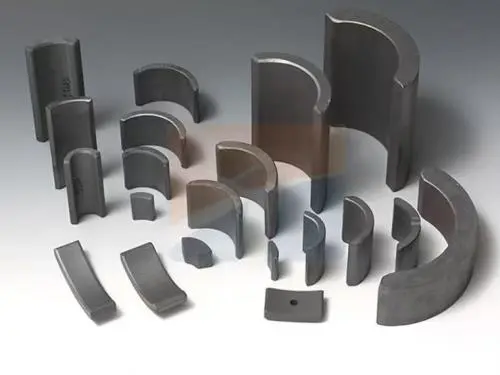
Putting high-performance permanent magnets, like Neodymium (NdFeB), Samarium Cobalt (SmCo), or Ferrite, into the moving parts of electric motors to create steady magnetic fields that interact with the stator windings is what magnetising Magnet for motor rotors is all about. Through electromagnetic contact, these rotor magnets create torque, which makes power transfer efficient in electric cars, industrial equipment, and other automotive uses. The Magnet for the motor rotor gets rid of the need for complicated rotor windings, lowers energy loss, and improves thermal management. This makes it an essential part of current car traction systems that want to be more efficient and have smaller design footprints.
Understanding Automotive Traction Motor Rotor Magnets
The Critical Role of Rotor Magnets in Traction Systems
Rotor magnets are what make traction motors in cars work. They have a direct effect on torque density, power economy, and heat performance. When these fixed magnets are put into the rotor assembly, they make a constant magnetic field that reacts with the stator coils' alternating current. It uses the Lorentz principle to create a spinning force, which turns electrical energy into mechanical motion. How easily power is sent to the engine depends on how precise and high-quality these magnets are. This affects how quickly the vehicle speeds up, how much energy it uses, and its overall range.
Comparing Neodymium, Ferrite, and Samarium Cobalt Magnets
To choose the right magnet material for a Magnet for motor rotor, you need to know how to balance cost, magnetic strength, and heat stability. Neodymium magnets have the highest energy output, between 40 and 52 MGOe. This makes them perfect for high-performance electric vehicle motors that need to be lightweight and compact. Their high remanence allows motors to achieve a smaller size without reducing power output. Ferrite magnets are a more cost-effective option that can work well at temperatures up to 250°C and offer excellent corrosion resistance. They are suitable for commercial applications that require cost efficiency, as well as e-bike motors. Samarium Cobalt magnets provide outstanding performance because they can withstand temperatures up to 350°C and maintain their magnetic properties under extreme conditions. This makes them an ideal choice for aerospace and military-grade drive systems.
Dimensional Precision and Its Impact on Motor Performance
Precision making makes sure that rotor magnets fit perfectly inside motor units, with as few gaps as possible and as much magnetic flux transfer as possible. Our normal car traction rotor magnets have an outer arc radius of R36 (+0.2 / -0.1) mm and an inner arc radius of R28.3 (+0.3 / 0) mm. They are designed to fit perfectly with the laminations on the rotor. To get the best mix between magnetic field strength and mechanical stability, the radial height of 22 (+0 / -0.4) mm and thickness of 7.6 (+0 / -0.2) mm were chosen. These magnets have an axial length of 62 ±1 mm and an axial width of 50 (+0 / -1) mm, so they can work with a wide range of motor designs, from small e-bike drives to strong industrial servo systems. The exact 90° ±2° angle makes sure that the magnetic field is spread out evenly, which lowers cogging force and vibrations while the machine is running.
Common Challenges and Solutions in Magnetising Motor Rotor Magnets
Thermal Degradation and Demagnetization Risks
Mechanical Stress and Fracture Prevention
Centrifugal forces are very strong on rotor magnets, especially when they are used in high-speed situations with speeds over 10,000 RPM. Magnets can break or come loose from the rotor core if they don't have the right mechanical support. This can cause the motor to fail completely. To fix this, engineers use carbon fibre sleeves or stainless steel retaining cans that spread the stress across the magnet's surface equally. High-temperature epoxy glue glueing during assembly, adds extra security, and post-magnetization balance makes sure rotational symmetry and lowers bearing wear.
Corrosion Protection in Harsh Environments
Traction motors in cars use a Magnet for motor rotor that works in environments where temperatures change, humidity is high, and road salts are present. Coatings made of nickel, copper, and nickel offer basic protection, but coastal areas or heavy-duty construction tools require more advanced solutions. Adding epoxy resin coatings or other corrosion-resistant treatments can extend magnet service life by passing neutral salt spray tests for 500 hours or more. Our manufacturing methods are ISO 9000 and IATF 16949 certified, and they include strict HAST (Highly Accelerated Stress Test) procedures to ensure that the coating remains intact before shipment.
Selecting the Best Motor Rotor Magnet for Automotive Traction Motors
Neodymium vs. Ferrite: Balancing Performance and Cost
Neodymium magnets are used in high-performance cars because they have the highest energy density. This lets motors be smaller and lighter, which makes vehicles more fuel-efficient. But because they are sensitive to temperature and cost more, they need to be carefully thought through. Even though ferrite magnets are bigger because they have less magnetic power, they work well and don't cost as much. They're best for situations where weight isn't as important, like in industrial transport systems or farm equipment. Instead of just looking at the price of a unit Magnet for motor rotor, procurement managers should think about the total cost of ownership, which includes things like motor size, cooling needs, and repair times.
Rotor vs. Stator Magnets: Understanding Their Distinct Functions
Specialized Applications: Electric Vehicles and Drones
When starting up an electric car, the traction motor needs magnets that work well in a wide range of temperatures, from -40°C for cold starts to over 150°C at full load. High-coercivity Neodymium types that use grain boundary diffusion (GBD) technology get the best mix between cost and thermal stability by reducing the amount of heavy rare earths like dysprosium that are present. Drone propulsion systems try to keep weight as low as possible, which means they need magnets that are very thin (as little as 5 mm) but still have enough flux density to move quickly. Custom OEM solutions made to fit these specific needs make sure that the products stand out in the market.
Procurement Insights: Sourcing Motor Rotor Magnets for Automotive Applications
Evaluating Suppliers: Certification and Quality Systems
Teams that buy Magnet for motor rotor products for businesses must give more weight to sellers who have strong quality control systems and certifications that are suitable for automotive applications. ISO 9000 approval ensures that production processes are consistently controlled, while IATF 16949 compliance is specifically designed for the automotive industry and covers areas such as defect prevention, continuous improvement, and supply chain management. Buyers should request third-party test reports, such as RoHS and SGS certifications, to verify that the material meets specifications and complies with environmental requirements. Suppliers with more than 20 years of manufacturing experience have demonstrated stable operations and advanced technical capabilities, reducing the risk of production interruptions.
Custom Manufacturing and OEM/ODM Capabilities
For automotive traction uses, magnet shapes and performance requirements often need to be customised beyond what is available in catalogues. When a supplier offers OEM/ODM services, they can make magnets from customer models or samples, taking into account specific size requirements, finishes, and magnetisation patterns. Post-processing services like precise cutting, applying multiple layers of coating, and customising magnetisation angles are valuable because they make the assembly process easier further down the line. With three invention patents and six utility model patents, we bring new ideas to every unique job in the field of engineering.
Lead Times, Logistics, and Inventory Management
Magnetising Techniques and Performance Optimization for Automotive Traction Motors
Traditional vs. Advanced Magnetisation Processes
In traditional magnetisation, magnets that have already been put together are exposed to pulsed magnetic fields of a high strength, usually three to five times the magnet's coercivity value. By aligning the magnetic domains evenly, this method gets close to the possible maximum remanence. Segmented magnetisation is an advanced method that makes multiple magnetic poles inside a single magnet piece. This lowers harmonic distortion and makes the motor run more smoothly. For high-speed uses, in-situ magnetisation after rotor assembly keeps people from getting hurt and makes sure the field is perfectly aligned with the stator shape.
How Magnetisation Influences Torque and Thermal Stability
Precise control of the magnetisation of the Magnet for motor rotor has a direct effect on the power output and heat behaviour of the motor. When rotors are under-magnetized, they generate weaker magnetic fields. This reduces torque density and requires higher stator currents to achieve the desired performance. As a result, resistance losses and heat generation increase. Over-magnetization can overload the magnetic circuit, reducing efficiency gains and increasing the risk of demagnetization at high temperatures. When the magnetisation of the Magnet for motor rotor is optimised, it can operate at 95–98% of its theoretical flux density, achieving the best efficiency while still allowing room for thermal expansion. Automotive tests have shown that motors equipped with properly magnetised magnets can achieve 3–5% higher efficiency compared with those using magnets with suboptimal magnetisation.
Emerging Trends: Sustainable Materials and Cost Efficiency
The car industry wants more and more environmentally friendly magnets that don't rely on heavy rare earth elements and still work well. Grain boundary diffusion technology lowers the amount of Dysprosium and Terbium in a material while keeping it stable at high temperatures. This saves money on materials and makes the supply chain more reliable. More research into high-performance magnets based on ferrite and recycling rare earth materials could help protect the climate even more. Keeping up with these new developments helps the buying and engineering teams make sure that their motor designs will work in the future while keeping the total cost of ownership low.
Conclusion
FAQ
How does the SH or UH rating affect magnet performance in automotive applications?
The SH and UH grades show that the intrinsic coercivity is greater, which is necessary to keep the magnet from losing its magnetism when the motor is under a lot of load. These grades keep their magnetic qualities at temperatures up to 180°C, which is very important for electric car traction motors that need to speed up quickly and stay at high speeds for a long time.
Can motor rotor magnets be shipped already magnetized?
It is possible to ship magnetised blades, but they are hard to handle because of the strong magnetic forces. For many high-power uses, magnets are shipped without being magnetised and are magnetised on-site after they are assembled. This makes mechanical handling easier and lowers the risk of damage during installation.
What causes premature failure in automotive rotor magnets?
Some common ways things break are heat demagnetisation from not cooling enough, corrosion from flaws in the coating, and mechanical fracture from too much rotational stress. These problems can be avoided by inspecting regularly, choosing the right type of material, and building strong mechanical holding systems.
How do you minimize eddy current losses in high-speed motors?
By cutting Magnet for motor rotors into thin, electrically shielded layers, magnet segmentation cuts the path of eddy currents that are moving around. This method cuts down on heat production by a large amount in high-speed situations above 10,000 RPM.
Partner with Angu for Your Magnet for motor rotor Needs
Angu is a reliable producer with ISO 9000 and IATF 16949 standards. They make precision-engineered rotor magnets and have been making them for 20 years. Our custom OEM/ODM services can handle different-sized needs, performance levels, and post-processing choices, such as special finishes and magnetisation. We offer a full 1-year warranty, delivery within 30 days, and flexible logistics through sea freight, air freight, and foreign express. This helps us minimise buying risks and maximise supply chain efficiency. Email chenrf@angu.com to talk about how our Magnet for motor rotor supply services can help you get the most out of your car traction motor needs.
References
1. Jahns, T. M., & Soong, W. L. (2018). Permanent Magnet Machines for Automotive Applications. Cambridge University Press.
2. Gieras, J. F. (2017). Permanent Magnet Motor Technology: Design and Applications. CRC Press.
3. Vaidya, R., & Rahman, K. M. (2019). "Thermal Management Strategies for Electric Vehicle Traction Motors." IEEE Transactions on Transportation Electrification, 5(2), 451-465.
4. Coey, J. M. D. (2020). Magnetism and Magnetic Materials. Cambridge University Press.
5. Li, W., & Zhu, H. (2021). "Advanced Coating Technologies for Rare Earth Permanent Magnets in Harsh Environments." Journal of Materials Science & Technology, 78, 112-124.
6. Brown, D., Ma, B., & Chen, Z. (2022). "Grain Boundary Diffusion in Nd-Fe-B Magnets: From Fundamentals to Industrial Applications." Progress in Materials Science, 129, 100971.
YOU MAY LIKE