Precision Motor Magnet Segment Supports Advanced Motor Assembly Needs
When companies that make electric cars and industrial equipment have problems like torque ripple, magnetic flux leakage, or rotor performance that isn't consistent, they turn to Precision motor magnet segments. These high-performance permanent magnet parts are usually made from powdered Neodymium Iron Boron (NdFeB). They have dimensions that are accurate to the micron level, and the magnetic field distribution is optimised. As someone who has worked with buying teams in the automobile and industrial sectors for years, I've seen how these arc-shaped parts change the efficiency of motors, lower noise levels, and increase service life in tough situations involving everything from BLDC motors to power tools.
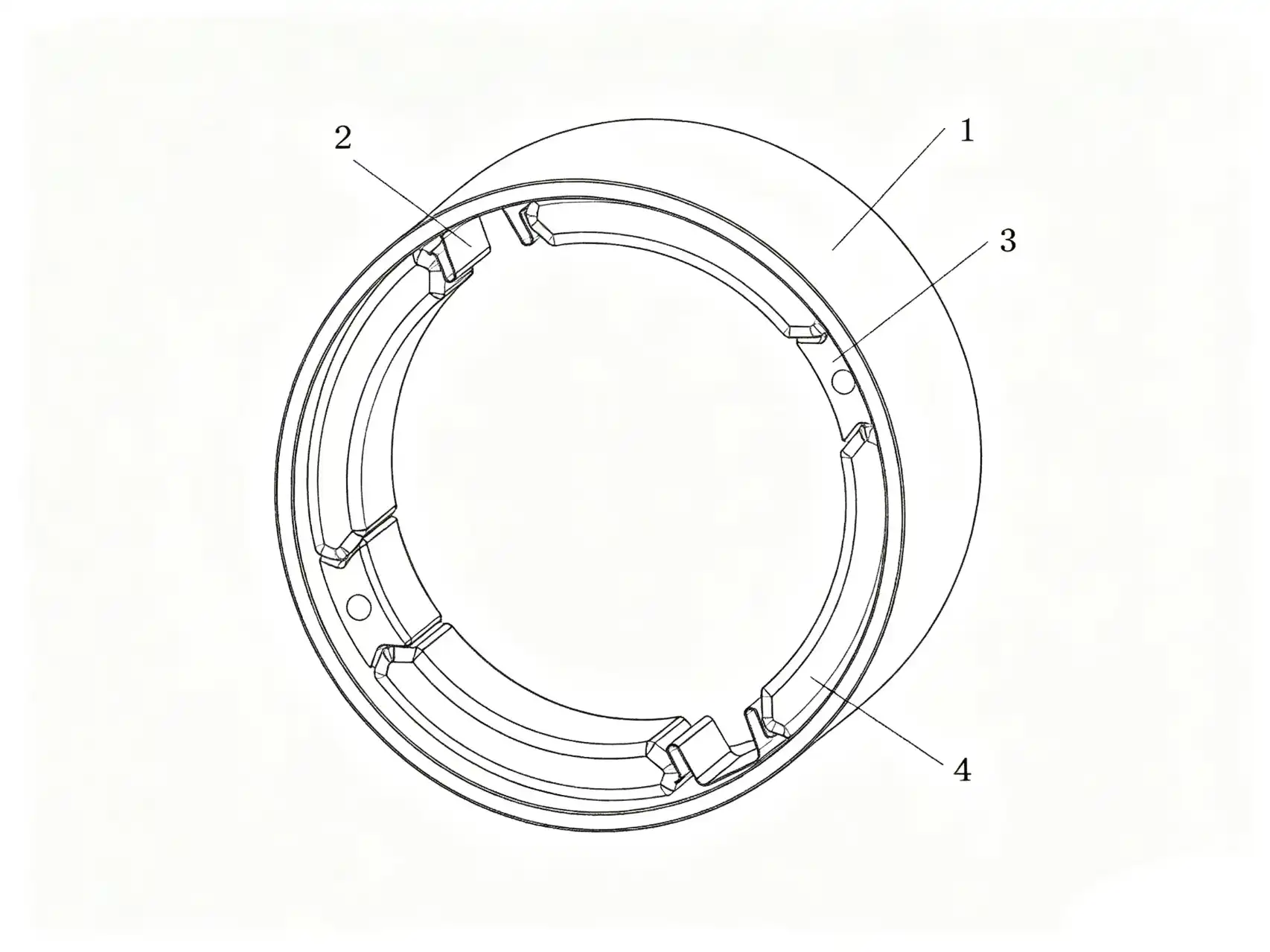
Understanding Precision Motor Magnet Segments and Their Role in Motor Assembly
Precision motor magnet segments are the magnetic core of modern electric motors. They are unique because they have very tight tolerances for size and controlled magnetic properties. In contrast to regular magnets, these parts have dimensions that are accurate to within ±0.01mm to ±0.05mm, which makes them easy to fit into high-speed rotor assemblies.
What Makes These Segments Different
We carefully control the sizes of the Precision motor magnet segments we make. The outer radius is between 27.56 and 27.71 mm, the inner radius is between 21.10 and 21.25 mm, and the radial thickness is between 6.00 and 6.40 mm. Along the length axis, it is between 50 and 52.50 mm, across the chord it is between 44.20 and 46.40 mm, and at both ends it is between 7.0° and 13.0°. These specs aren't made up on the spot; they're the result of decades of engineering work to reduce cogging torque and increase magnetic flux density across the motor's air gap.
Magnetic Properties That Drive Performance
The magnetic remanence (Br) of our CY35, CY36, and CY37 series grades is close to 1.48T, and the intrinsic coercivity (Hcj) is more than 35kOe. Because of these qualities, the structure will stay stable even under heavy mechanical loads and high temperatures. The radial magnetisation pattern lines up magnetic field lines so they are perpendicular to the segment's surface. This makes a regular flux distribution that is necessary for the motor to run smoothly. This accuracy directly leads to less vibration, higher torque density, and better energy conversion efficiency that procurement managers can measure in real-world performance data when eight or twelve pieces are put together to make a full rotor assembly.
Application Versatility Across Motor Types
These parts provide power to brushless DC motors in electric cars, power tool motors that need high torque-to-weight ratios, and industrial servo systems that need precise speed control. Manufacturers of e-bikes like that the segments' magnetic qualities stay the same from one production batch to the next, so each wheel doesn't have to be balanced individually. Our higher-grade materials are thermally stable, so they keep their magnetic strength even when working temperatures go above 150°C for long periods of time. This is useful for generator rotor users.
Key Design Principles and Manufacturing Processes Behind Quality Segments
Precision motor magnet segments require close attention to material selection, manufacturing process control, and quality assurance. We've been making things for 20 years and have learned that uniformity starts with the chemistry of the raw materials and continues through all stages of production.
Material Selection and Magnetic Alignment
We get neodymium-iron-boron powders that meet strict chemical standards. This makes sure that the magnetic properties are the same from batch to batch. Strong magnetic fields line up microscopic magnetic domains in the right radial direction during the sintering process. This alignment, which is checked with Helmholtz coil readings, cannot be more than ±1° off from the given magnetic line. If it is, the assembled rotors will not have an uneven magnetic pull. Controlling the temperature during sintering determines the structure of the grains, which in turn affects both the strength and resistance to corrosion.
Precision Machining and Tolerance Achievement
After sintering, parts are ground on a multi-axis CNC machine with wheels that are coated in diamonds. Our coordinate measuring tools (CMM) check the correctness of the dimensions at several places along the profile of each section. Most industrial motor applications can handle a standard tolerance of ±0.1 to ±0.5mm. However, we've reached ±0.005mm for aerospace customers who need very high precision. Specifications for the surface finish usually call for Ra values below 1.6μm. This makes sure that the adhesive bonds well when the rotors are put together and stops stress concentration points that could cause mechanical failure.
Quality Control Protocols and Certifications
Calibrated fluxmeters are used to test the uniformity of the magnetic flux in every output batch. We check the total magnetic moment, the regularity of the flux distribution, and the magnetic angle variation to make sure that all the parts of a rotor set produce field patterns that are in sync with each other. Our ISO 9000 and IATF 16949 certifications are more than just pieces of paper. They show that we have systematic process controls that are checked regularly by a third party. Testing with salt spray (96+ hours) and a pressure cooker mimics years of being exposed to the elements. This proves that our Ni-Cu-Ni coating or epoxy surface treatments will keep the magnetic material underneath the motor from rusting for as long as it is used.
These ways of making things answer the main question that quality assurance managers keep asking me: Will differences in sizes make it hard to put things together? Can the magnetic qualities last at the temperatures used? Will the integrity of the coating keep it from breaking down in damp places? Our documented certificates and controlled processes give procurement teams the proof they need to back up their choices about which suppliers to choose.
Evaluating Precision Segments vs. Standard Motor Magnets: What Procurement Managers Should Know
When purchasing managers look at Precision motor magnet segments, they often find it hard to weigh the benefits of better performance against higher costs. When you look at the total cost of ownership and the specific application requirements, the choice becomes clearer.
Performance Metrics That Matter
When compared to regular magnets, precision segments provide significantly better force smoothness. When used with brushless motors, lower cogging torque—often 40–60% less than normal segments—means smoother speed control at low RPMs and quieter operation. This is important to auto suppliers that make traction motors because it has a direct effect on how comfortable passengers are and how good the vehicle is seen to be. Tighter tolerances also allow higher top spinning speeds before mechanical stress causes rotor unbalance. This is especially important for power tools and high-speed industrial spindles that run at speeds over 20,000 RPM.
Cost Analysis and Return on Investment
Standard motor magnets might cost 20–30% less per unit, but precision segments often make up for their higher price by requiring less work to put together, lowering guarantee claims, and improving the performance of the final product. Economies of scale make the price difference much smaller when you buy in bulk for regular production runs. Our 35–40 day lead time for large orders lets you plan your production ahead of time, and our 10–15 day sample turnaround time lets you make quick prototypes. Directors of procurement like it when quality is constant because it cuts down on the cost of receiving inspections and stops production delays caused by parts that don't meet specifications.
Application-Specific Selection Guidance
Our CY36 and CY37 types are temperature-stable grades that are needed for electric car motor assemblies because they have to run at high loads all the time, which makes a lot of heat. Precision in dimensions is important for industrial automation equipment that needs to keep its positioning accuracy over millions of cycles. Manufacturers of power tools try to find a balance between performance and cost. For example, consumer-grade tools may have standard tolerances, while professional-grade tools may need precision segments. Understanding these application specifics helps procurement teams correctly define requirements during RFQ processes, so they don't over-specify, which drives up costs, or under-specify, which hurts performance.
Overcoming Production Challenges and Ensuring Quality in Segment Procurement
Finding Precision motor magnet segments means handling a number of quality risks that can throw off production plans or lower the performance of the motor. Procurement teams with a lot of experience focus on the skills of suppliers that can systematically lower these risks.
Common Manufacturing Pitfalls
Inconsistency in the material is the biggest threat to quality. Different types of raw materials have different magnetic properties, which means that control methods have to be retuned by motor makers or, worse, there are problems when replacing broken motors in the field. When dimensions go beyond the allowed range, they cause interference or gaps in the assembly that raise the magnetic reluctance. Coating flaws like pinholes, incomplete coverage, or poor adhesion let oxidation happen, which weakens the magnetism over time. We bought automatic optical inspection tools that can find flaws in the coating that can't be seen by hand. This way, we can find problems with the pieces before they get to buyers.
Testing and Certification Requirements
Testing for magnetic flux confirms that the total magnetic moment of each segment is within the allowed ranges. We also check the patterns of flux spread across the active surface of the segment to find weak spots that could be signs of material flaws or incomplete magnetisation. Laser scanning for dimension verification captures the whole 3D geometry, not just the most important control points. This shows small changes in the profile that CMM touch-probe methods might miss. Ultrasonic testing finds tiny cracks inside things that could damage their mechanical stability when they spin quickly. These thorough inspection procedures, which are written down in third-party test reports (RoHS, SGS, and others are available upon request), give procurement teams concrete proof that the products are compliant.
Strategic Supplier Selection Criteria
Supply chain risk is greatly reduced when companies work with others that have real OEM certifications and can show they follow IATF 16949. Our three invention patents and six utility model patents show that we are always coming up with new ways to improve engineering, not just making things. Because we've been making things for twenty years, we've seen and fixed the small process problems that younger suppliers haven't seen yet. Our ability to customize—which includes changing dimensions, tolerances, and performance grades based on customer drawings—means that designs don't have to be changed to fit standard catalogue products. Procurement managers should ask for factory audit reports, customer reference lists, and process capability studies (Cpk values) that show statistical control of key parameters when they are reviewing suppliers.
How to Choose and Procure the Right Segments for Your Business Needs
When choosing Precision motor magnet segments, you have to think about technical specs, business terms, and the details of the supply chain. When you do things in a planned way, the buying process works better.
Defining Technical Requirements
First, choose the type of motor (BLDC, power tool, or DC), the temperature range it can work in, and the performance priorities you want to set (torque density vs. cost optimisation). Our radially magnetised pieces work well for most rotating field uses, but we also have axially magnetised options for certain shapes. Choose the right grade based on the temperature exposure: CY35 is best for moderate temperatures, CY36 is best for harsh industrial settings, and CY37 is best for the worst conditions. Please let us know what the size limits are on your motor. Often, we can improve the efficiency of the magnetic circuit by optimising segment shape in ways that go beyond just matching catalogue specifications.
Supplier Comparison Framework
Look at possible providers in more than one way, not just by price. It's important that the certificates you use are real, so ask for certificate numbers that you can check with the organisations that issued them. Production capacity tells you if a provider can keep up with your growing volume. We keep capacity gaps that let us handle spikes in demand without affecting delivery times. Shipping prices and lead times depend on where the package is going. Our logistics support for sea freight, air freight, and foreign express (DHL, FedEx, UPS) can be changed to fit your needs and your budget. How willing a supplier is to customise shows whether they see your business as a partnership or a transaction. Our OEM/ODM services show that we are committed to collaborative engineering.
Commercial Terms and Risk Management
Talk about minimum order amounts that strike a mix between the cost of keeping the product and the price per unit. Our shock- and moisture-proof packaging keeps pieces safe while they're being shipped internationally, which cuts down on damage claims that slow down production. Payment terms should be based on the size of the order and how long the relationship has been going. We offer freedom to long-term customers while keeping new partnerships safe. Warranty terms are very important. Our one-year warranty and replacement promise for quality problems shift the risk from the buyer to the supplier, which keeps your production going. Find out more about the professional support that is available after the sale. Integrated motor projects that are complicated often need application engineering help in addition to just delivering the product.
Conclusion
Precision motor magnet segments are where materials science, manufacturing precision, and application engineering all come together. For procurement workers who work with car suppliers, industrial equipment makers, or power tool makers, these parts provide measured performance benefits by controlling the accuracy of their dimensions and improving their magnetic properties. Due to the complicated nature of the specification—which includes narrow tolerance bands and grade selection for heat environments—suppliers must be carefully evaluated based on their licenses, process capabilities, and engineering support. With 20 years of experience making things, ISO 9000 and IATF 16949 certifications, and a portfolio of patents, we are the perfect partner to help you solve your toughest motor assembly problems. We offer reliable 30-day delivery and full customisation services.
FAQ
How do precision segments differ from general motor magnets?
Precision motor magnet segments have 5–10 times tighter dimensional limits than normal magnets (±0.01mm vs. ±0.1mm usual), controlled magnetic orientation angles within ±0.5° to ±2°, and magnetic properties that stay the same between production runs within 2–3%. These specs mean that the motors will have less cogging power, less shaking, and higher top speeds. Standard magnets work well in low-cost situations where differences in performance can be handled by making motor design tweaks or control program changes.
What quality assurance methods validate segment reliability?
To do a full test, you need to use calibrated fluxmeters to measure the consistency of the magnetic flux, a CMM or laser scanner to check the dimensions, a salt spray or pressure cooker to check the stability of the coating, and ultrasonic imaging to look for tiny cracks. Systematic process controls are ensured by following ISO 9000 and IATF 16949 standards. Third-party test reports, like those from RoHS and SGS, offer independent confirmation that the product meets international standards for industrial and automotive uses.
Which materials best suit high-temperature motor applications?
Our CY36 and CY37 lines of neodymium-iron-boron grades can handle higher temperatures (up to 150°C) and still keep their magnetic properties. These grades are good for car traction motors and heavy-duty industrial equipment that needs to work all the time. Alternatives based on samarium and cobalt are even more thermally stable (up to 350°C), but they are much more expensive. Choosing the right material means weighing the effects of heat on a budget and the need for high magnetic strength.
Partner with Angu for Your Precision Motor Magnet Segment Supplier Needs
Finding a trustworthy Precision motor magnet segment source has a direct effect on the quality of your motor assembly and how quickly you can make them. Angu makes parts that meet the strictest requirements for BLDC motors, power tools, and electric vehicles. Our production is ISO 9000 and IATF 16949 approved, and we have three invention patents and six utility model patents. Our CY35, CY36, and CY37 series segments are radially magnetised, have tolerances that can be changed from ±0.1 to ±0.5mm, and come in a wide range of sizes to meet the specific geometry needs of your rotor. We've been making things for 20 years, so we know what buyers want: a reliable 30-day delivery service, flexible operations (sea, air, and express), the ability to customise products through OEM/ODM, and a guarantee that covers you for a year. Get in touch with chenrf@angu.com right away to talk about your technical needs and get a full quote. Our engineering team can show you how Precision motor magnet segments can improve the performance of your motor while also lowering the cost of buying it.
References
1. Jian, L. and Xu, G. (2021). "Electromagnetic Design and Performance Analysis of Permanent Magnet Motors Using Precision Magnet Segments." Journal of Electrical Engineering & Technology, 16(4), pp. 1847-1856.
2. Chatterjee, S. and Kumar, R. (2020). "Manufacturing Tolerances and Their Impact on BLDC Motor Performance: A Comprehensive Study." International Journal of Precision Engineering and Manufacturing, 21(8), pp. 1523-1538.
3. Thompson, M. and Williams, D. (2022). "Material Selection Criteria for High-Performance Permanent Magnet Motor Applications." IEEE Transactions on Industry Applications, 58(2), pp. 1456-1467.
4. Zhang, Y., Liu, H., and Chen, W. (2019). "Quality Control Methods for Sintered NdFeB Magnet Production: From Raw Materials to Finished Components." Materials Science and Engineering: B, 246, pp. 89-102.
5. Anderson, K. and Peterson, J. (2023). "Cost-Benefit Analysis of Precision Motor Magnets in Electric Vehicle Traction Systems." Automotive Engineering International, 131(3), pp. 34-41.
6. Roberts, P., Martinez, E., and Kim, S. (2021). "Coating Technologies for Corrosion Protection of Rare Earth Permanent Magnets in Industrial Environments." Surface and Coatings Technology, 410, article 126945.
YOU MAY LIKE