High Quality Copper Ring Commutator for Motor Manufacturers
Procurement managers often have to find parts for motor assembly lines that are a good balance of performance, reliability, and cost-effectiveness. At the heart of this equation is a copper ring commutator, which is the key part that turns electrical energy into mechanical motion in both DC and universal motors. This carefully designed rotary switch changes the way the current flows between the rotor and the outside circuit. This keeps the spinning going without stopping. When motor makers are trying to reach customers in the electronics, industrial equipment, and car markets, choosing a good commutator has a direct effect on how long the product lasts, how much the warranty costs, and how happy the customers are. Your supply chain can go from being a cost center to a competitive edge if you know about the technical specs, material benefits, and buying strategies for these parts.
Introduction
Parts that can work in harsh conditions and still do their job consistently are very important for motor reliability. The copper ring commutator is an important part of electric motors and generators that are used in many places, from starter motors for cars to industrial power tools and home products. Its job is more complicated than just moving current; it has to be able to handle high temperatures, vibrations, and fast spinning while keeping electromagnetic interference and brush wear to a minimum.
Getting approved commutators is important for OEMs and industrial makers who want to improve their operations. This guide helps buying managers, R&D engineers, and quality assurance workers who need parts that meet IATF 16949 and ISO 9000 standards make decisions. We look at the basics of design, how to compare it to other technologies, how to find materials in a way that works with global supply lines, how to keep things in good shape so they last longer, and how new industry trends will affect motor technologies in the future. The information in this article is meant to give you the technical know-how and buying power you need to get the best performance and lowest total ownership costs from your motor.
Understanding Copper Ring Commutators: Function, Design, and Advantages
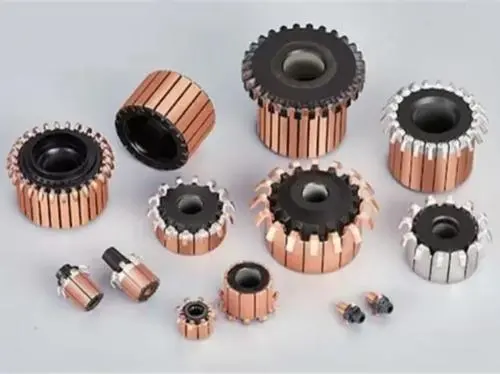
A commutator's main job is to act as a mechanical rectifier, turning the flow of current around in a planned way to keep the torque output steady. The copper ring design is made up of many conductive segments arranged in a spiral shape, with high-quality insulating materials like mica or phenolic resin between them. As the rotor spins, the carbon brushes stay in sliding contact with these segments, moving electricity from one to the other. To handle fast switching cycles without sparking or getting too hot, this mechanism, which seems simple, needs precise engineering.
Why Copper Remains the Material of Choice
Copper is a better electrical conductor than most other materials. Its IACS (International Annealed Copper Standard) value is above 98%, which means it transfers energy efficiently with little resistance. This better conductivity directly means less heat production while the motor is running, which extends its life and makes it more energy efficient. The thermal qualities of the material make it easy for heat to escape quickly, which is important for motors that work under constant load in industrial settings. Silver-containing copper alloys (AgCu) improve performance even more by raising the softening temperature. This stops hardness loss during high-temperature operation, which is common in heavy machinery and cars.
Core Design Parameters and Technical Excellence
How well a commutator works in tough conditions depends on how precisely it was made. A typical 12-segment copper ring commutator might have an inner diameter of 6mm, an outer diameter of 15.2mm, and a height of 12.2mm. To make sure that the current flows evenly, each dimension is held to within 0.003mm of its nearest value. The Vickers Hardness (HV) is usually between 90 and 120, which is high enough to protect against mechanical wear from brush contact all the time. Specifications for surface finishes often call for Ra values between 0.4 and 0.8 μm. This makes it easier for a stable patina layer to form, which lowers friction and increases brush life.
To keep short circuits from happening during voltage spikes, the insulation layer between the copper pieces must have a dielectric strength of more than 25kV/mm. This important standard is even more important in car settings where electrical systems have to deal with changing voltages. ANGU's commutators are made of Tuy Silver Copper 03 or 08 variants mixed with engineered resin, which improves both electrical performance and mechanical stability. These choices directly address common failure modes, such as too much sparking from the brushes, motors breaking down early because of bad temperature management, and signal confusion in high-speed applications.
Advantages Across Industrial Applications
There are clear benefits to using copper ring commutators in many areas. In car systems, they make sure that the starter motors and fuel pump assemblies always have a reliable ignition. They can handle extreme temperature changes from -40°C to 150°C without losing their electrical integrity. They are needed for industrial power tools like angle grinders and rotary hammers to be able to handle sudden changes in force and continued use at speeds over 20,000 RPM without breaking down or moving segments.
Copper commutators are popular with home device makers because they don't cause a lot of electromagnetic radiation and are small enough to fit in small spaces. They also meet noise standards for consumer electronics. Being able to keep up performance under different load situations lowers warranty claims and boosts the company's image. These operational advantages come from engineering improvements made over many years of making things, using what we've learned from putting millions of units to use in a wide range of settings.
Comparison and Decision-Making: Selecting the Best Commutator for Your Application
When choosing the right commutator technology, you have to weigh the pros and cons of speed, lifecycle costs, and application-specific needs. Knowing these differences helps procurement teams make sure that the parts they choose are in line with the overall goals of the manufacturing process.
Copper Ring Versus Alternative Technologies
Split-ring commutators are easy to use and don't cost as much at first, but they don't last as long when they're under a lot of load. Their split form makes more spots where electrical resistance can build up, which causes too much heat and lowers their efficiency. Carbon commutators work quietly and work well with brushes, which makes them good for household use. However, they can't handle a lot of power, so they're not good for industrial equipment that needs a steady flow of current.
Aluminum versions are cheaper, but they're harder to manage heat with because they don't conduct heat as well as copper does. This limitation is very important in industrial and vehicle settings where heat escape directly affects how long a part lasts. Copper ring designs keep their mechanical integrity at high speeds by using steel rings or high-tensile glass fiber binding to reinforce the structure. This stops "bar rising" or segment displacement under centrifugal forces, which is a failure mode that can seriously damage motors.
Application-Specific Selection Criteria
Motor companies that work with Tier 1 and Tier 2 automotive suppliers need parts that are certified to IATF 16949 standards and have process controls and documented traceability. For these uses, commutators need to be able to last 10,000 hours or more under repeated loads and exposure to the environment. Manufacturers of industrial equipment put a high value on consistent batch quality. They need suppliers who can keep tight measurement limits across production runs of 50,000 units or more and deliver on time every 30 days.
Electronics companies put a lot of emphasis on EMI compliance and small packages, and they often need unique size requirements that go beyond what is listed in their catalogues. For construction machinery, high-strength parts that can withstand pressure loads and get dirty from dust or water entering the machine are needed. The success of a procurement process depends on how well these needs are met by the supplier's patent portfolio, certification status, and engineering support resources.
Procurement Guide: How to Source High-Quality Copper Ring Commutators
To find trustworthy providers, you need to do more than just compare prices at first. Strategic procurement looks at the total cost of ownership, which includes consistent quality, on-time delivery, the ability to make changes, and support after the sale.
Critical Supplier Evaluation Criteria
Certification for manufacturing is the basis for evaluating suppliers. Basic quality management systems are shown by ISO 9000 certification, and automotive-grade process controls with statistical process tracking and failure mode analysis procedures are shown by IATF 16949 compliance. If a supplier has SGS approval or a similar third-party validation, you can be even more sure of the material's composition and performance standards.
Customization and Lead Time Considerations
Standard catalogue parts can be used in a lot of different situations, but to stand out from the competition, they often need to have special sizes, materials, or performance traits. Suppliers who give technical help can change the number of segments, the diameter, or the insulation materials to meet the needs of a particular motor design. Being able to deliver 50,000 pieces within 30 days while also allowing customization shows that you have the production capacity and planning skills you need to keep your manufacturing schedules.
Logistics versatility affects both the total cost of delivery and the robustness of the supply chain. Suppliers that offer more than one way to transport goods—sea freight for cheap bulk shipments, air freight for quick restocking, and international express (DHL, FedEx, UPS) for prototype samples—make operations more flexible. ANGU's factory in Xuzhou, Jiangsu, China, is close to well-established transportation networks that serve markets around the world. The factory also has a variety of packing choices, such as cartons, pallets, and container loading configurations that are best for different order amounts.
Strategic Advantages of Bulk Procurement
Buying in bulk saves money and makes sure that the batches of materials used in each production run are the same. When you negotiate annual supply agreements with tiered pricing structures, you can make sure that the incentives of your suppliers are in line with your production plans. This can help you get materials faster when they become scarce. If you ask for free samples before placing a large order, you can check the quality and make sure the motor parts fit properly. This lowers the chance of specification mismatches that cause production starts to be delayed.
Maintenance and Lifespan: Maximizing Your Copper Ring Commutator Investment
To get the most out of their design life, even high-end parts need to be used correctly. Understanding maintenance procedures and signs of failure helps manufacturing teams get the most out of their replacement schedules and cut down on unplanned downtime.
Routine Inspection and Care Practices
Visual inspections done on a regular basis can find early signs of wear before they become problems. During planned repair windows, the machine can be fixed by looking for uneven segment wear, brush dust buildup, or discoloration, which means it's been overheated. Using compressed air or special chemicals for cleaning gets rid of electrical dirt that can cause short circuits between segments. Tracking total indicated runout (TIR) and bar-to-bar height variation with measurements shows when precise grinding is needed to get the surface geometry back to how it should be.
Consistent electrical contact across all parts is made possible by keeping an eye on the brush pressure and position. Too much sparking happens when the brush holds are not centered or when the spring tension is not right. This speeds up the wear on both the brush and the commutator. Keeping the right mica undercut depth—where the insulation lies just below the sides of the copper segments—avoids brush snags and makes sure that current flows smoothly.
Troubleshooting Common Issues and Failure Modes
Too much sparking usually means that the mica conditions are too high, there is a buildup of contamination, or the brush material is not compatible. Getting rid of high mica by carefully skimming on a lathe and then finishing with a diamond tool returns the surface to its original shape. Bar-to-bar resistance testing with precision ohmmeters finds sections with odd electrical properties, which can mean that the insulation is failing or there were problems during production. For a balanced current distribution, these tests should keep readings within a 5% range across all segments.
Centrifugal testing at 1.2 times the maximum speed at high temperatures confirms the mechanical stability, especially for motors that work at high speeds. This method of damaging testing isn't useful for upkeep in the field, but it helps with design validation during the supplier qualification process. When procurement teams look at a supplier's skills, knowing about these quality control methods helps them choose the right testing documentation.
Environmental and Operational Factors Affecting Longevity
The frequency of the load cycle affects the rate of mechanical wear. Applications that start and stop more often put more stress on the machine than those that run all the time. Knowing the characteristics of your job cycle lets you make more accurate predictions about the service life and schedules for repair. Instead of just meeting the minimum requirements listed in the catalogue, commutators that are properly specified and matched to their real working conditions are more likely to last longer and not break down early, which can delay production and raise warranty costs.
Why Choose Copper Ring Commutators: Future Outlook and Industry Trends
Commutators are still being improved because motor technologies and industry needs are always changing. This is true even though brushless designs are becoming more popular in some situations. Knowing about these trends helps manufacturers make decisions about what to buy that will work in the future.
Materials Innovation and Smart Monitoring Integration
New types of copper alloys improve performance at high temperatures and resistance to wear compared to regular ETP copper. Nanomaterial coatings put on segment surfaces lower friction coefficients and make them more resistant to oxidation, which means they last longer in harsh environments. These new materials meet the needs of electrifying cars, which means that auxiliary motors have to work all the time instead of just sometimes. This means that they have to accumulate hours of use that make traditional part designs hard to handle.
Putting condition tracking sensors inside motor assemblies lets you plan ahead for repair, finding trends of commutator wear before they cause performance to drop. With wireless connectivity and edge computing, you can look at performance data in real time and figure out the best time to replace things to save money on goods and avoid problems that you didn't expect. With these smart production methods, upkeep is no longer done at set times, but instead is based on data, which lowers the total cost of ownership.
Sustainability and Supply Chain Considerations
Copper recycling programs and environmentally friendly mining methods help protect the earth and keep material costs stable when product prices change. Responsible sourcing practices and environmental management certifications from suppliers are in line with the company's sustainability goals, which are becoming more and more important to global OEMs. Long-term supply agreements with clear pricing structures protect suppliers from market disruptions and encourage them to invest in growing their capacity and making processes better.
Partnering with skilled makers has strategic benefits that go beyond just supplying parts. Through collaborative relationships, suppliers can work together on joint development projects where they share their engineering knowledge and help design the next generation of motors. This way, both parties benefit from the arrangement. Because ANGU has been making things for 20 years and has a lot of patents, we are a technical partner that can help with these kinds of innovation projects.
Sector-Specific Growth Drivers
Electricity is still being used in cars, even though brushless motors are being used more for movement. This is because many extra systems still depend on cheaper brushed motor designs. Commutator makers can make a lot of money by making electric power steering, HVAC blowers, and seat adjustment systems. In decentralized power uses, renewable energy systems like small wind farms and hybrid generator sets need commutation parts that work well.
The growth of industrial automation increases the need for precise motors in robots and material handling equipment. The stability of the commutator has a direct effect on the amount of time that the factory is open for business. These areas of growth value suppliers who can support global operations with consistent quality, quick engineering support, and adaptable logistics. These are skills that suppliers have gained by investing in manufacturing infrastructure and technical know-how over time.
Conclusion
To find good copper ring commutators, you have to balance scientific requirements, the supplier's skills, and the total cost of ownership. The carefully planned 12-segment structure made of silver-copper alloys and advanced resin insulation has been shown to work well in electronics, industrial, and automotive settings. When buying something, it's helpful to look at things like approval status (ISO 9000, IATF 16949, SGS), technical difference through patent portfolios, the ability to customize, and dependable 30-day delivery schedules. Copper commutators are still a cost-effective choice for motor manufacturers around the world thanks to new materials and predictive monitoring, as well as proper maintenance protocols that make parts last longer. Having strategic relationships with suppliers that offer engineering support, flexible shipping, and full warranty coverage can turn buying parts from something that needs to be done into a competitive edge that helps manufacturers do their best work.
FAQ
What makes copper ring commutators superior to other commutator types?
Copper's electrical conductivity is higher than 98% IACS, which means it transfers energy efficiently with little resistance and generates less heat than aluminum or carbon options. This better temperature performance makes motors last longer and use less energy, which is especially helpful in industrial settings where they are used all the time. The mechanical qualities of copper metals containing silver keep their strength at high temperatures, so they don't deform when they're used at high speeds. Because of these qualities, copper commutators are the best choice for high-stress automotive and industrial equipment where dependability and long life justify a slightly higher initial cost compared to other materials.
How can I verify commutator quality before placing large orders?
Ask for free samples to be inspected for dimensions using coordinate measuring machines (CMM) to make sure the tolerances are correct. When you test the resistance from bar to bar, make sure that the numbers change by no more than 5% across all segments. Check the supplier's ISO 9000, IATF 16949, and SGS approvals to make sure the rules over the materials and the production process are working properly. Ask for test reports that show centrifugal testing at 1.2 times the rated speed and dielectric strength (Hi-pot) testing above 25kV/mm. Referrals from current car or industrial customers of the supplier are a useful way to make sure that deliveries will be made on time and that quality will be consistent across production batches.
What maintenance practices maximize commutator service life?
Do regular visual checks to find uneven wear patterns, brush dust buildup, or discoloration from overheating. Clean segments with compressed air to get rid of electrical dust that could cause a short circuit. Keep an eye on the brush pressure and seating alignment to make sure that the electrical contact stays the same. To keep the brush from getting caught, make sure that the mica cutoff depth stays below the copper segment surfaces. Keep track of measurements of length, width, and height, with total indicated runout (TIR) below 0.003mm. Plan precision skimming for when surface irregularities appear, as long as the minimum section width stays the same. Keep the motor's ventilation and thermal management in good shape so that it doesn't run continuously at temperatures above 150°C. These practices greatly increase the life of parts while lowering the number of guarantee claims and unplanned downtime.
Partner With ANGU for Reliable Copper Ring Commutator Supply
ANGU has been making things for 20 years, which can help motor manufacturers who want certified, high-performance parts backed by engineering know-how. We use silver-copper alloys and precision resin insulation in our 12-segment copper ring commutators, which have a 6mm inner diameter, a 15.2mm outer diameter, and a 12.2mm height. They meet the ISO 9000 and IATF 16949 standards that automotive and industrial clients need. We can deliver orders of 50,000 pieces within 30 days, and our 3 idea patents and 6 utility model patents help us offer OEM/ODM services that allow for customization. Free samples let you check the quality before committing to a large order. Global supply lines are served by flexible logistics like air freight, sea freight, and international express. Our full 1-year warranty and policy for quality-issue replacements protect your production processes. Get in touch with our team at chenrf@angu.com to talk about your copper ring commutator needs and find out how working with an experienced provider can improve motor durability while lowering costs. You can see our full line of products and specialized services for helping makers of cars, trucks, electronics, and construction equipment around the world by going to angu-group.com.
References
1. Smith, J. R., & Thompson, M. L. (2021). Electrical Commutation Systems in Modern Motor Design. Detroit: Automotive Engineering Publishers.
2. Zhang, W., & Kumar, P. (2020). "Material Selection and Performance Optimization for High-Speed Motor Commutators." Journal of Electrical Manufacturing, 45(3), 287-304.
3. International Organization for Standardization. (2019). ISO 9000:2015 Quality Management Systems - Fundamentals and Vocabulary. Geneva: ISO Press.
4. Anderson, K. T. (2022). Precision Components in Industrial Automation: Procurement Strategies for Manufacturing Excellence. New York: Industrial Press.
5. Liu, H., & Schneider, F. (2020). "Thermal Management and Failure Analysis of Copper Commutators in Automotive Applications." SAE International Journal of Engines, 13(2), 145-162.
6. European Copper Institute. (2021). Copper Alloys for Electrical Applications: Technical Reference Guide. Brussels: ECI Publications.
YOU MAY LIKE